



Antique Nude Drawing
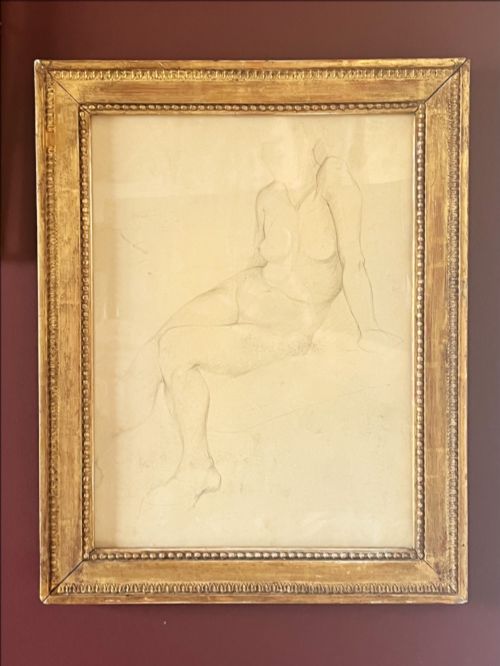
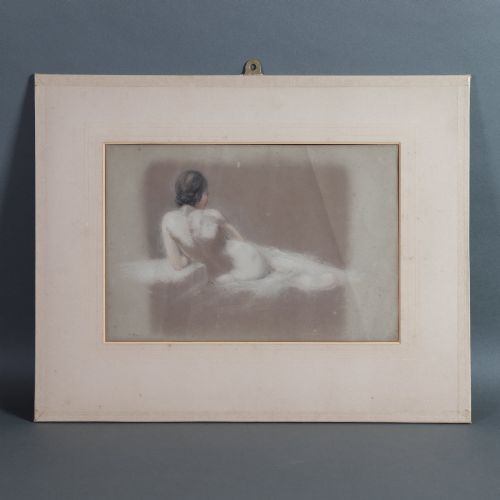
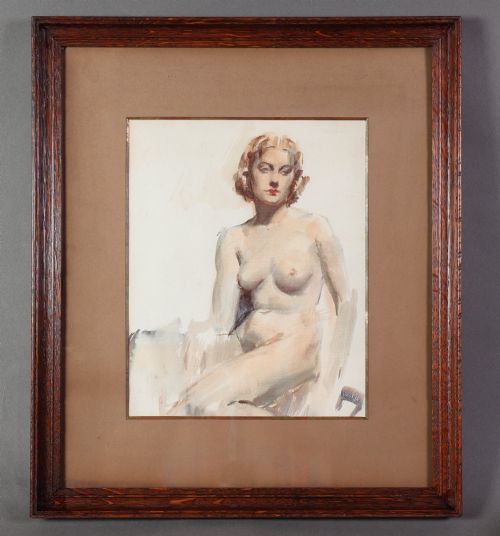
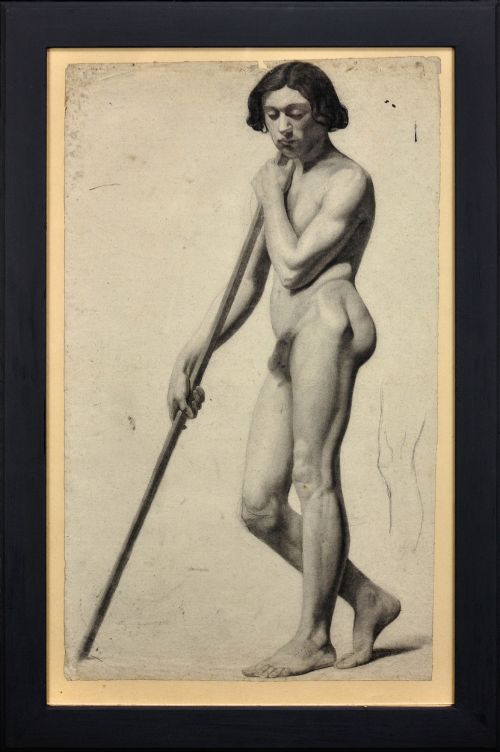
An antique nude drawing captures the human form through direct observation, offering collectors a direct link to academic training and historical figure studies.
Antique Nude Drawing
An antique nude drawing encompasses original works on paper executed across the eighteenth, nineteenth and early twentieth centuries. These pieces record the rigorous practice of life drawing within European schools and independent studios.
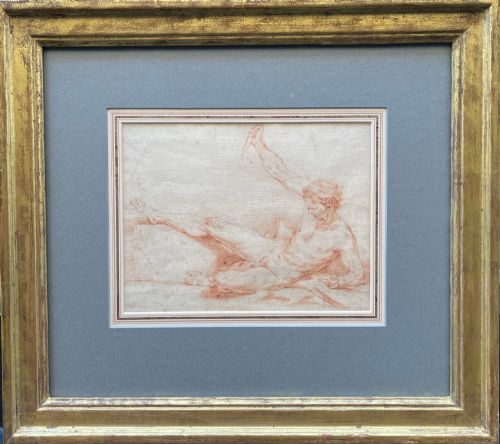
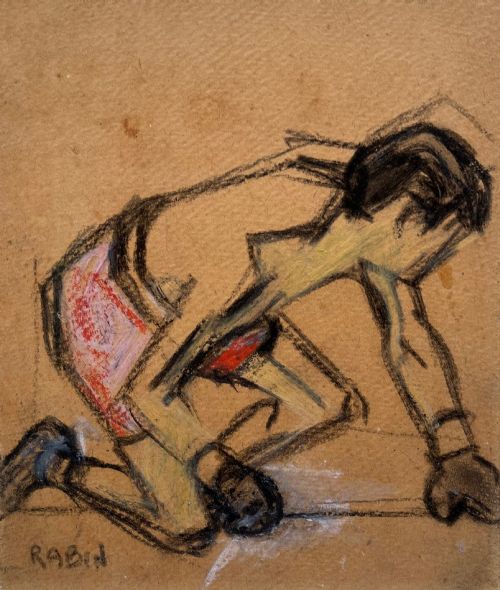
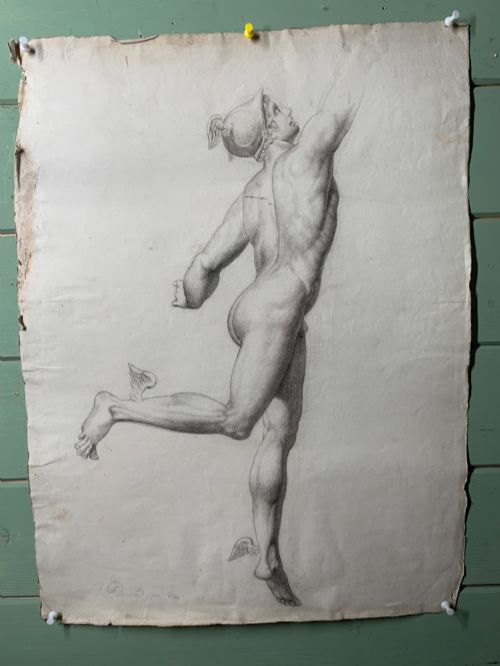
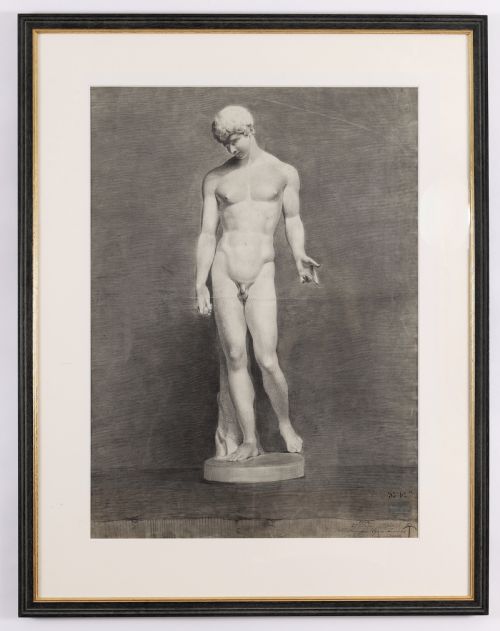
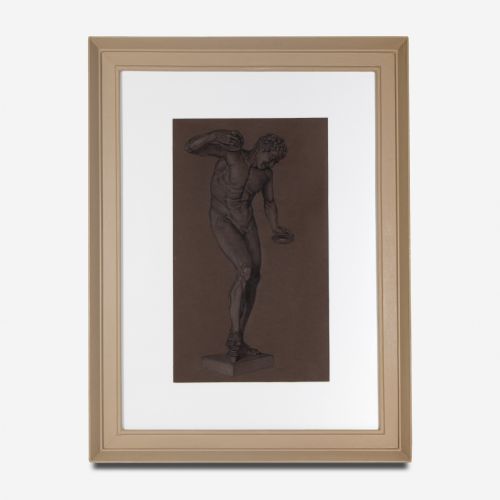
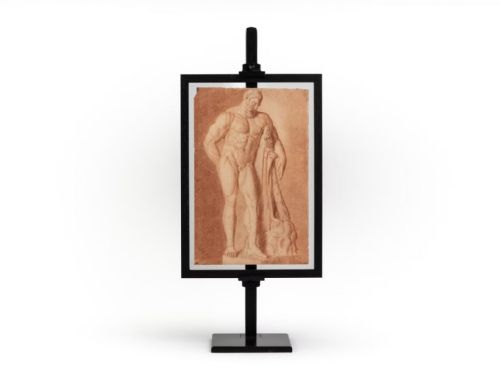
Collectors frequently encounter academic life studies depicting male and female figures in graphite, charcoal or red chalk. Works span distinct movements, from Neoclassical interpretations of classical sculpture to mid-twentieth-century explorations.
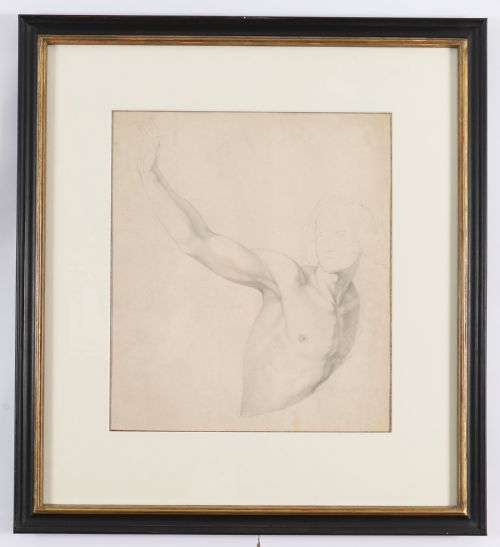
Framed drawings and mixed media studies on paper dominate the selection, often preserved in period wood or gilt frames. Each piece represents either a studio exercise or a finished composition intended for exhibition.
Materials and Techniques
Draftsmen relied primarily on paper supports, applying graphite, charcoal, red chalk and ink to build form and tone. Red chalk drawings, particularly those utilising Italian or French techniques, allowed artists to model musculature with subtle gradation.
Many works began as life studies in academies, where artists employed precise pencil work or expressive charcoal strokes to capture posture and light. Mixed media pieces combine these dry mediums with ink washes or white heightening on tinted papers.
Mounting and framing traditions protect these delicate works, with many surviving in period wooden surrounds or gilt frames that complement the draughtsmanship.
Listings feature works spanning the eighteenth century through the mid-twentieth century, executed in graphite, charcoal, red chalk and mixed media on paper.
Evaluating Quality in Draughtsmanship
Quality rests on the draughtsman's command of anatomy, proportion and light rather than the finish of the piece. Masterful handling of bone structure and musculature distinguishes rigorous academic studies from casual sketches.
The sensitivity of line and tonal balance dictate the visual impact of works in charcoal or graphite. Superior examples demonstrate confident execution without relying on excessive reworking or correction.
Provenance and documentation elevate individual sheets, particularly when a drawing links to known academies, Prix de Rome submissions or documented artists of the period.
William Etty·Hyacinthe Colin de Vermont·Henry Arthur Roberts·Pierre Paul Prud hon·Demetrios Galanis·William Edward Frost·Winifred Eugene Ballard·Henry Bird·Christian Landenberger·Emmery Rondahl·L Ducourant·Curt Ruger·Edward Sharpe·Sir John Everett Millais·Mariette Lydis·Raymond Veysset
The Antique Nude Drawing Glossary
- Academic life study
- A drawing executed from a live model within a formal art school setting. These works prioritise anatomical accuracy and tonal modelling.
- Red chalk
- A dry drawing medium made from iron-rich haematite, known as sanguine. Artists valued it for rendering warm flesh tones and subtle shadows.
- Recto and verso
- Terms denoting the front and back of a single sheet of paper. Drawings occasionally appear on both sides of historical sheets.
- Grand Prix de Rome
- A prestigious French scholarship competition. Submissions often required elaborate academic figure drawings.
- Deux crayon
- A drawing technique using two distinct coloured chalks, typically black and red on tinted paper. This method enhances depth and three-dimensional form.
Antique Nude Drawing: Frequently Asked Questions
What is an academic life study?
An academic life study is a detailed drawing of a human model produced as part of formal artistic training. These pieces focus on accurate anatomy, shading and proportion.
Such works were foundational for artists preparing for history painting or sculpture commissions in European academies.
How should I frame an antique drawing?
Antique drawings require conservation-grade mounting to protect paper supports from acid damage and environmental moisture. UV-filtering glass helps prevent fading in graphite, chalk and charcoal mediums.
Many collectors pair these works with period gilt wood frames that match the era of the draughtsmanship.
How do I date a charcoal nude drawing?
Dating relies on stylistic markers, paper watermarks where visible, and the framing context. Academic conventions shifted noticeably between eighteenth-century Neoclassicism and twentieth-century modernism.
Signatures, inscriptions or gallery labels on the reverse often provide documentary evidence of origin.
What is red chalk used for?
Red chalk, or sanguine, allows artists to achieve warm, flesh-like tones and delicate tonal transitions. It was a favoured medium for figure studies from the Renaissance through the nineteenth century.
Draftsmen used it to build muscular definition through cross-hatching and smudging.