

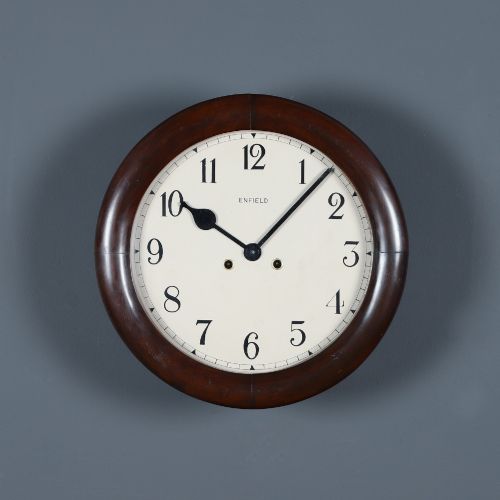
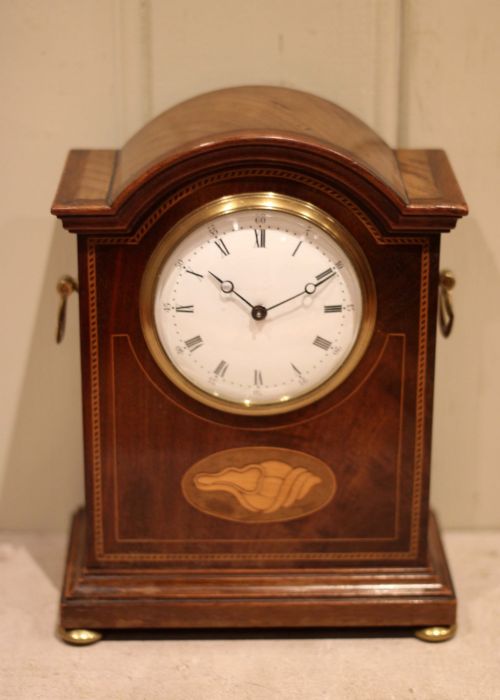
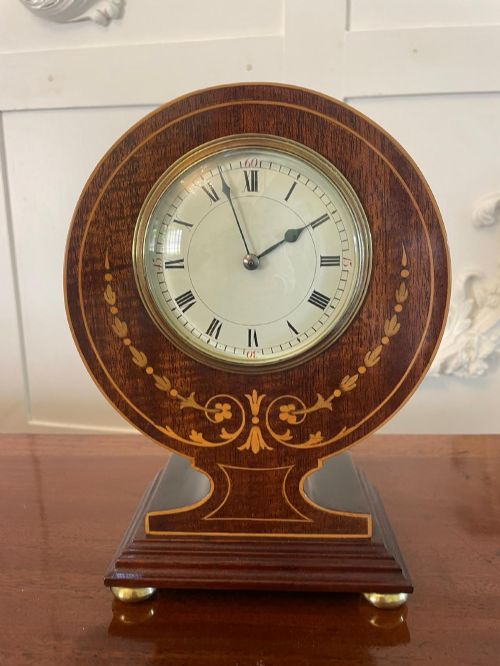
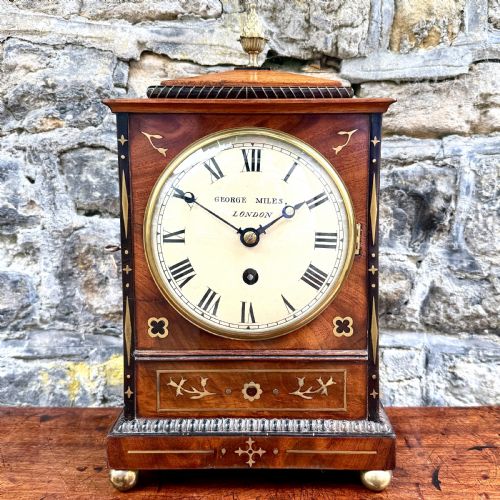
Mahogany Wooden Clock
A mahogany wooden clock brings rich timber grain and precise mechanical movement into a room, spanning wall dials to tall floor-standing timepieces.
Mahogany Wooden Clock
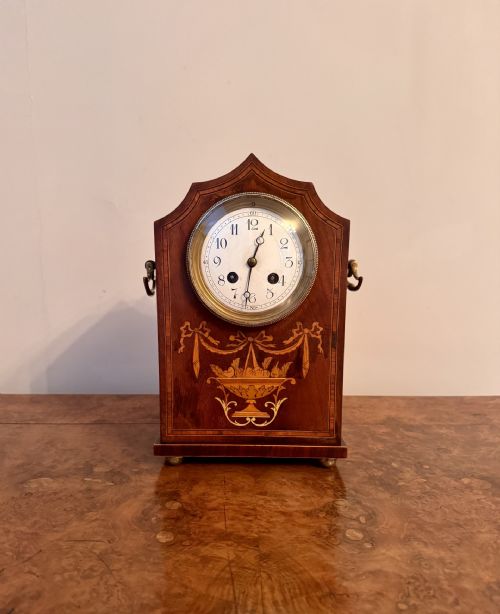
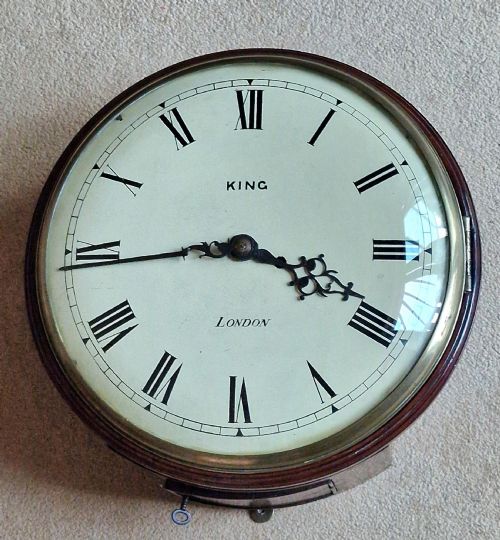
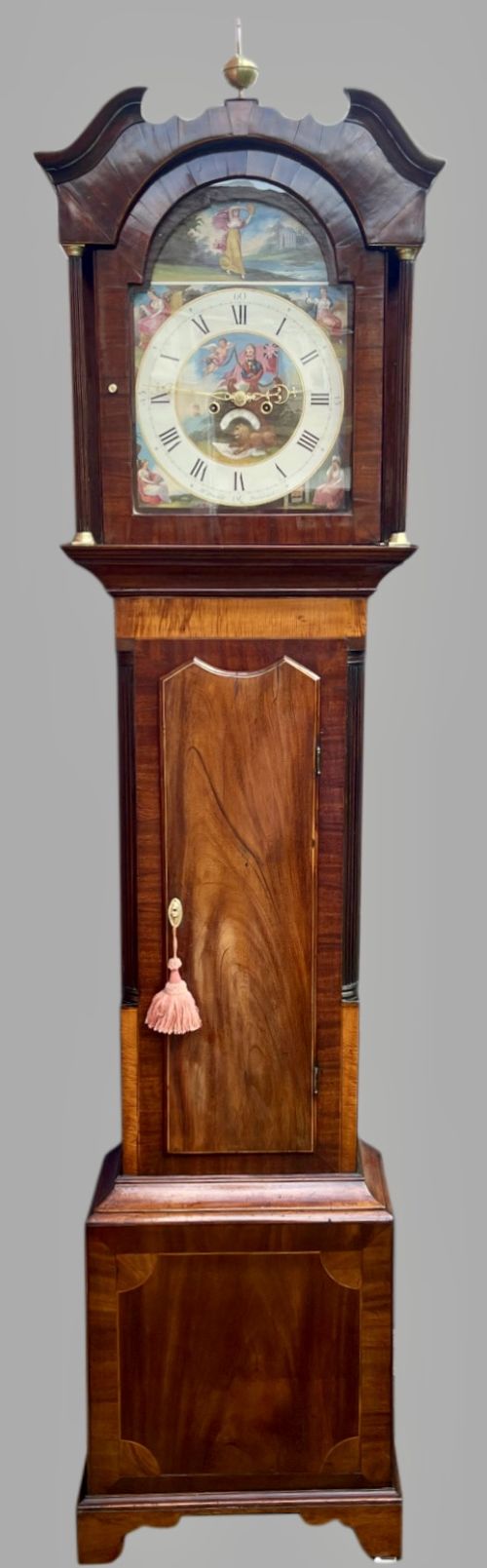
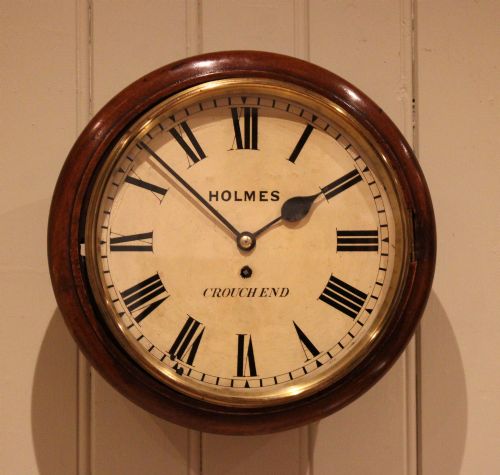
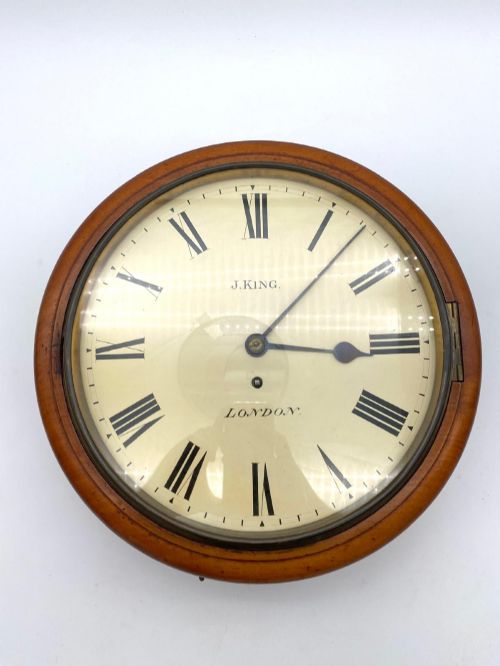
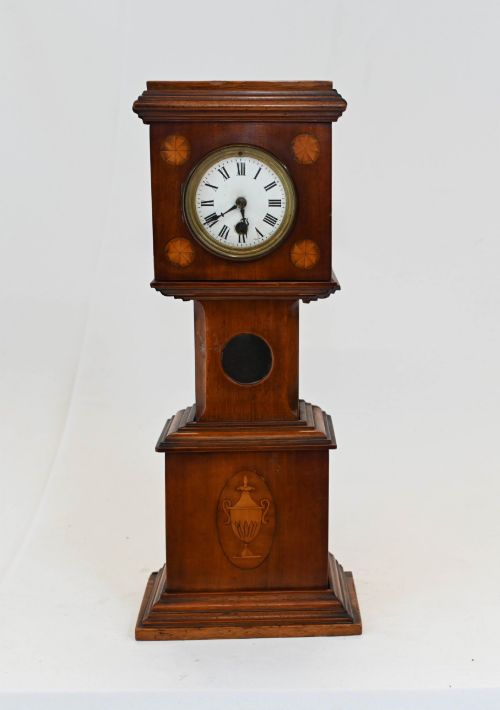
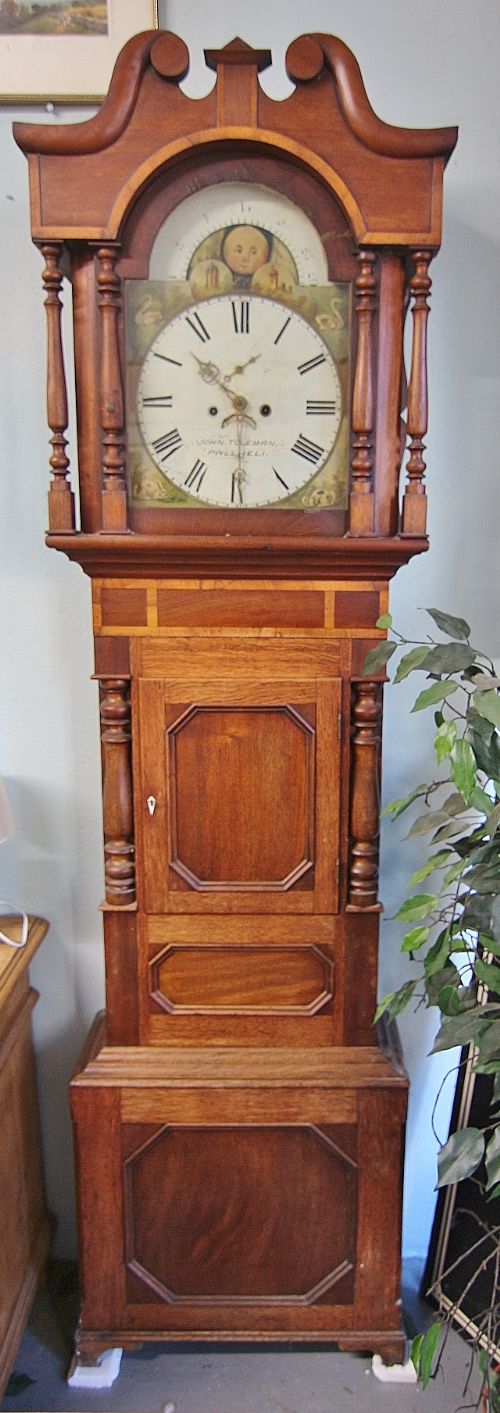
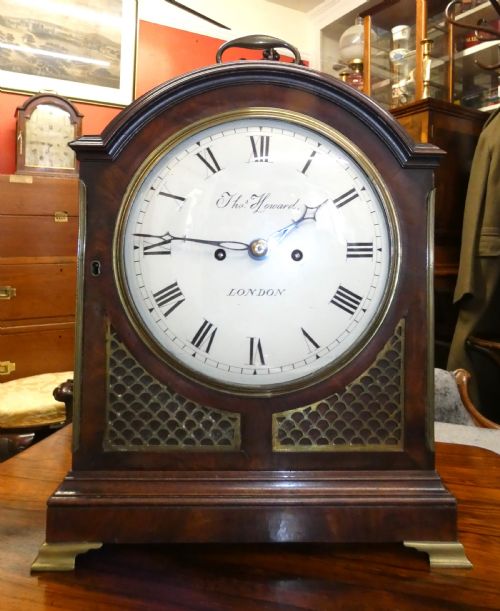
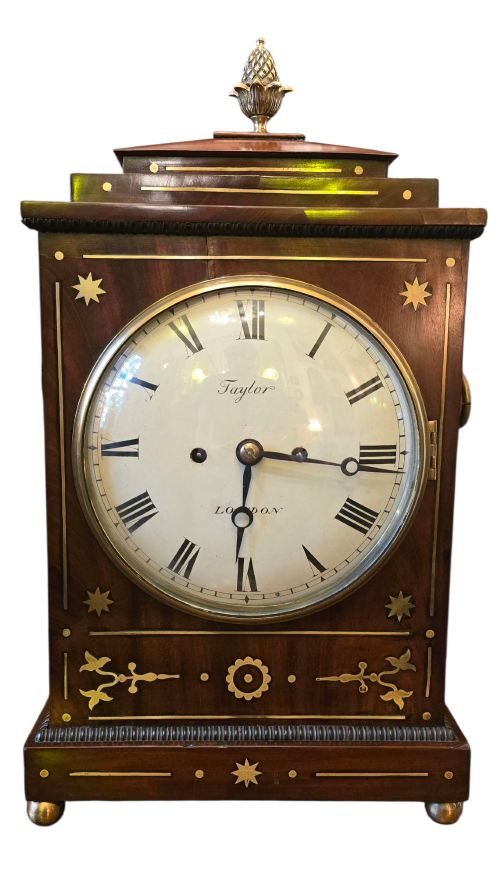
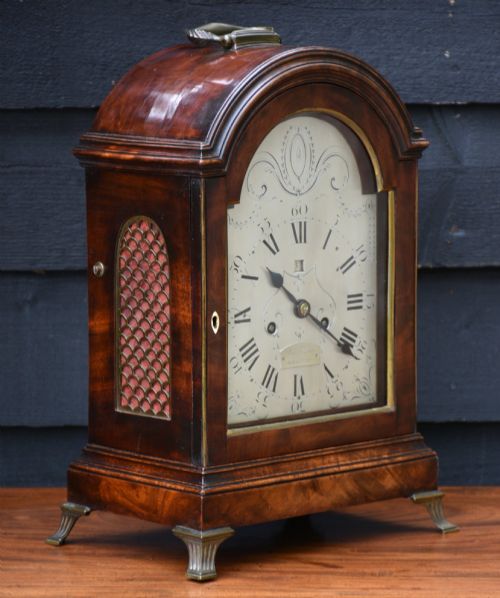
A mahogany wooden clock is a timekeeping device housed in timber case work, most frequently encountered here in tall longcase forms or compact mantel editions. The selection covers diverse formats including wall dials, bracket clocks, and architectural regulator cases dating from the Georgian era through to the mid-twentieth century. Buyers seeking a mahogany wooden clock will find both domestic timepieces for living spaces and utilitarian railway or station dials built for punctuality.
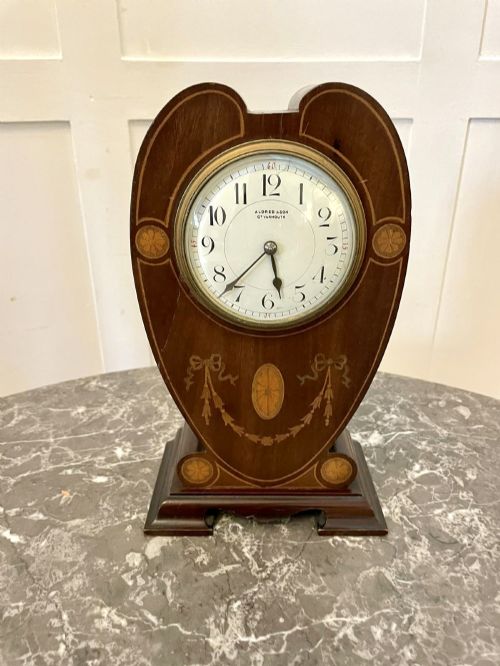
Regional variations appear across the selection, with Scottish makers contributing longcase examples alongside London workshops producing fine bracket clocks. Edwardian and Victorian mantel models frequently display satinwood inlay or brass mounts, reflecting the decorative tastes of their respective periods. Wall clocks range from fusee dial designs utilised by railway companies to American drop-dial formats.
How they were made
Cabinet makers constructed the timber enclosures with careful attention to grain alignment, often incorporating chamfered tops, arched dials, or glazed access doors. Movements were assembled by hand, utilising fusee chains, verge escapements, or eight-day spring-driven mechanisms designed to maintain consistent tension as the mainspring unwound.
Mahogany Wooden Clock Retail Price Guide 2026
Typical asking prices for mahogany wooden clock among the pieces listed under this phrase on Sellingantiques today, from the lower quarter to the upper quarter. They describe what is for sale here now, not the wider market.
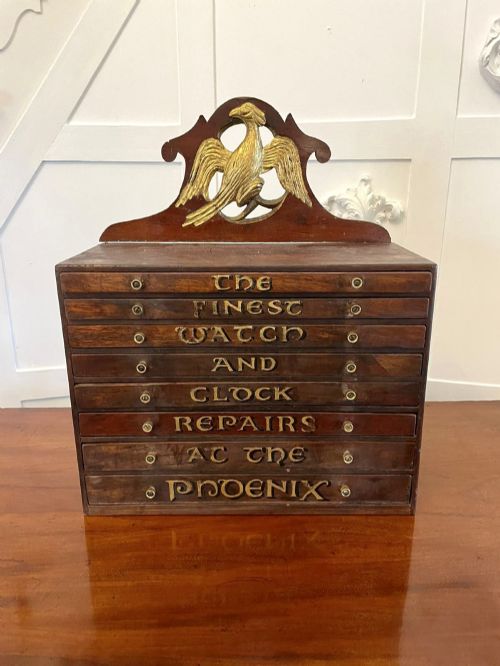
One extraordinary piece preserved in the archive is an original Hovis prize clock by an eccentric London maker.
What varies in quality
Quality in a mahogany wooden clock rests upon the crispness of the timber cabinetry and the sophistication of its internal movement. Finer examples display well-figured mahogany, subtle string inlay, and robust brass fusee movements signed by reputable makers rather than mass-produced assemblies. Dial execution also dictates standard, with hand-painted numerals and cast brass bezels surpassing simpler printed paper faces.
Proportion and architectural harmony separate standard domestic pieces from exceptional workshop output. A well-balanced case with original hood mouldings, sound fretwork panels, and untouched dial signatures commands greater appreciation among collectors than heavily altered or clumsily restored equivalents.
Taylor of London·Thomas Howard·Hendrie Ogg·Thomson of London·Green of Edinburgh·D. Straiton, Montrose·Tait, Peebles·Seth Thomas·William Gard, Exeter·George Clarke, Tring·Winsor Bishop Norwich
The Mahogany Wooden Clock Glossary
- Fusee
- A conical pulley used in mechanical clocks to equalise the torque of the mainspring as it winds down. This mechanism ensures even power delivery to the gear train throughout the winding cycle.
- Verge escapement
- An early type of clock escapement using a crown wheel and pallets attached to a vertical rod. It regulates the release of power in older bracket and table clocks.
- Longcase clock
- A tall pendulum clock housed in a wooden case consisting of a trunk and a hood. Often referred to as a grandfather clock, these pieces measure time via descending weights.
- Bracket clock
- A portable table or shelf clock historically designed to sit upon a wall bracket or desk. These pieces frequently feature striking mechanisms and carrying handles.
- Dial
- The face of the clock upon which the hours and minutes are indicated. Dials are constructed from brass, painted iron, or enamel, and signed by the clockmaker.
Mahogany Wooden Clock: Frequently Asked Questions
How do I wind a mechanical clock?
Most eight-day mechanical clocks require a key to wind the springs or draw up the weights via the winding holes on the dial face. Care must be taken not to over-wind the mechanism beyond its natural stop.
Ensure the key turns smoothly and matches the square arbor precisely to avoid damaging the internal components or slipping during the routine.
Where should I place a longcase clock?
A longcase clock requires a stable, dry interior wall away from direct sunlight, central heating vents, and damp exterior stone. Placing the case on a level floor ensures the pendulum swings evenly without catching.
Securing the tall wooden trunk to the wall using hidden brackets prevents accidental toppling in busy household environments.
How do I identify a fusee movement?
Look through the side glass or open the back door to inspect the conical grooved pulley connected to the mainspring barrel by a fine brass chain or cord. This distinct pulley system drives the gear train.
Fusee movements are typically found in higher-grade British wall, bracket, and mantel clocks dating from the eighteenth and nineteenth centuries.
What maintenance do these clocks need?
Mechanical clocks benefit from periodic professional cleaning and oiling to remove old dust and hardened lubricants from the brass gear pivots and pinions. Keeping the glass doors closed helps protect the paper or enamel dials from atmospheric grime.
Avoid applying domestic furniture polish directly to delicate dial surfaces or painted numerals during routine timber care.