


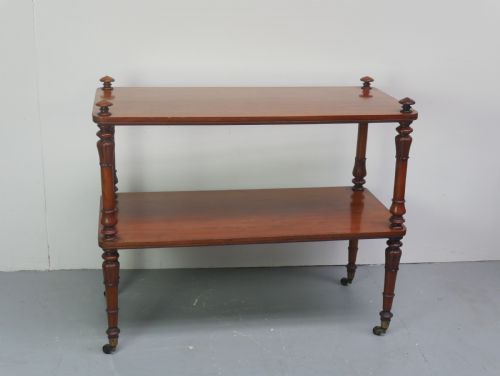
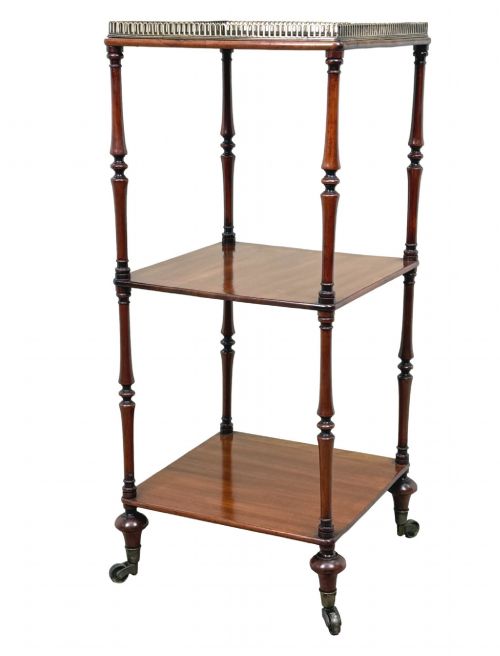


Mahogany Whatnot Table
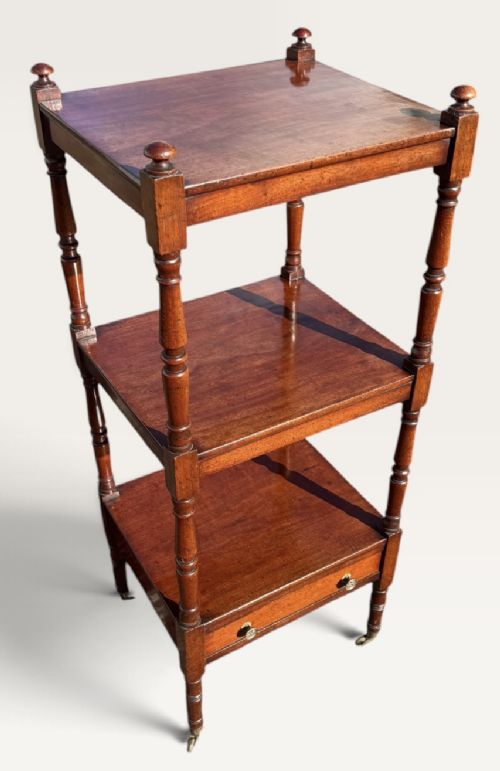
A mahogany whatnot table serves as a tiered display piece, bringing timber grain and layered shelving into domestic rooms.
Mahogany Whatnot Table
A mahogany whatnot table is a tiered stand designed for display and storage, appearing frequently in Victorian, Georgian, and Regency forms across these listings.
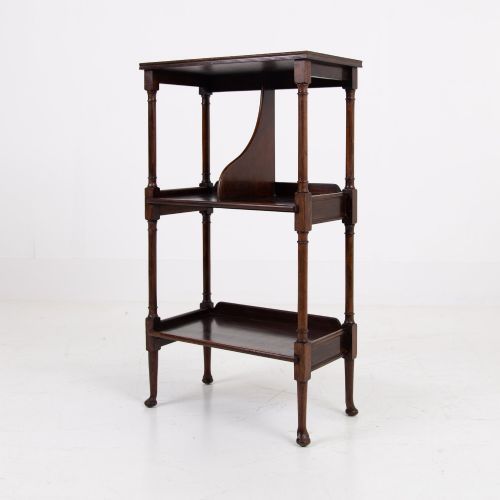
Buyers encounter multi-shelf etageres, bedside versions, and pieces combined with cellarettes, dumb waiters, or reading slopes.
The objects originate primarily from the nineteenth century, ranging from compact three-tier stands to large server combinations.
Materials and construction
Makers utilised solid mahogany and rosewood timbers, frequently incorporating brass elements, marble tops, and glass panels.
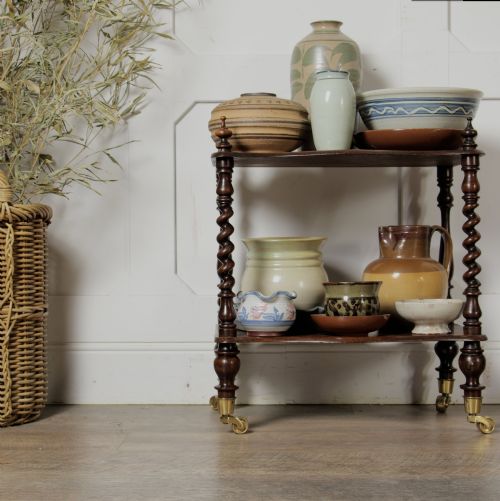
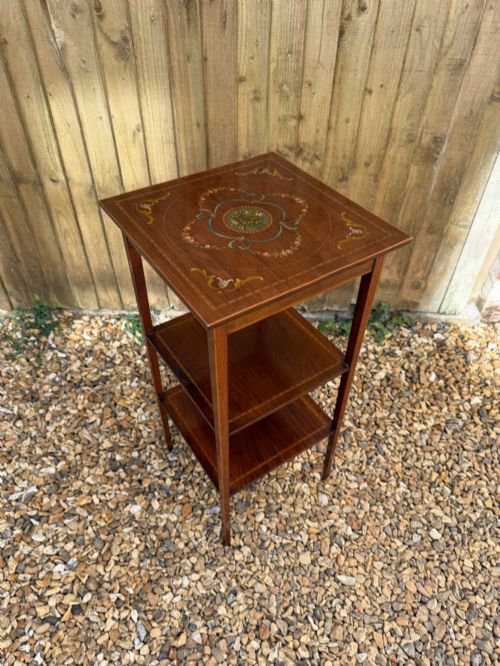
Decorative surface work includes boxwood inlay, painted details, and barley twist turnings supporting the stacked tiers.
Mahogany Whatnot Table Retail Price Guide 2026
Typical asking prices for mahogany whatnot table among the pieces listed under this phrase on Sellingantiques today, from the lower quarter to the upper quarter. They describe what is for sale here now, not the wider market.
The listings show mahogany alongside rosewood, marble, glass, and brass inlay across Victorian, Georgian, and Regency periods.
Judging quality in tiered stands
Quality rests in timber selection, such as golden mahogany or rich rosewood, coupled with crispness in turned supports and inlay.
Unusual structural forms, like adjustable reading slopes or integrated cellarettes, elevate certain examples above standard multi-tier shelving.
Gillows
The Mahogany Whatnot Table Glossary
- Whatnot
- A set of open shelves used for displaying ornaments or books. These tiered pieces originated in the eighteenth century and remained popular through the Victorian era.
- Etagere
- A piece of furniture consisting of a set of open shelves for displaying small objects. The term is frequently used interchangeably with whatnot in these records.
- Cellarette
- A lockable container for holding bottles of wine, sometimes integrated into the base of these stands. They keep beverages secure and close to hand during dining.
- Dumb waiter
- A tiered stand or revolving table used for serving food without servants present. Several listings combine this form with standard whatnot shelving.
- Barley twist
- A spiral turning resembling a twisted rope, carved into the vertical supports of stands. This decorative joinery technique appears on Victorian examples.
Mahogany Whatnot Table: Frequently Asked Questions
What is a mahogany whatnot table used for?
These tiered stands were originally designed to hold ornaments, books, and small decorative objects in principal rooms. They provide vertical display space without dominating a room's floor plan.
Today they function effectively as lamp tables, bedside stands, or open shelving units in sitting rooms and hallways.
How many tiers do these tables have?
The listings show pieces constructed with two, three, or four distinct wooden shelves supported by turned or carved uprights.
Height and shelf count vary according to the original purpose, ranging from compact bedside heights to tall display towers.
How do I date a Georgian piece?
Georgian and George III examples display restrained lines, fine timber grain, and proportioned joinery characteristic of the late eighteenth and early nineteenth centuries.
Comparing the shelf edges, turning style, and leg mounts against documented pieces helps establish the correct period.