




Mahogany What Not Shelf
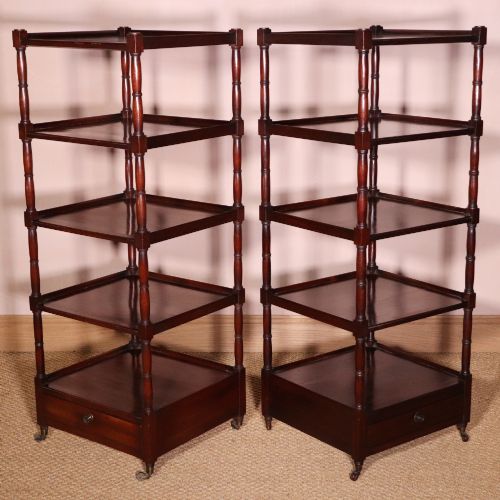
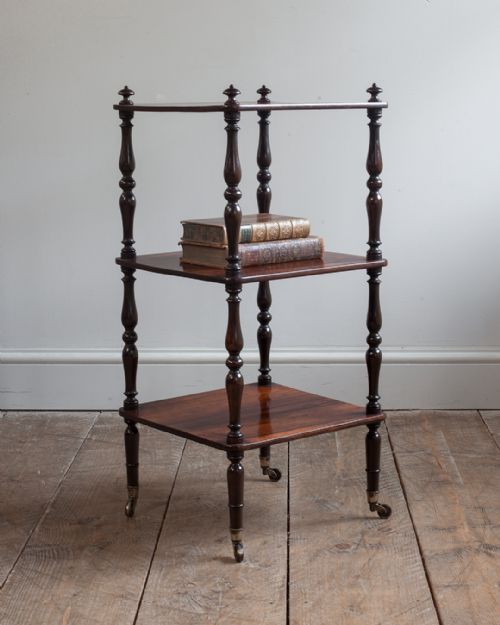
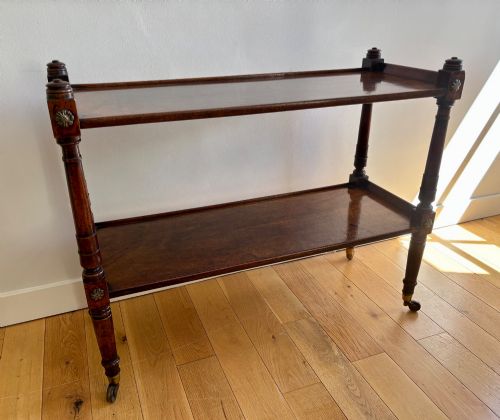
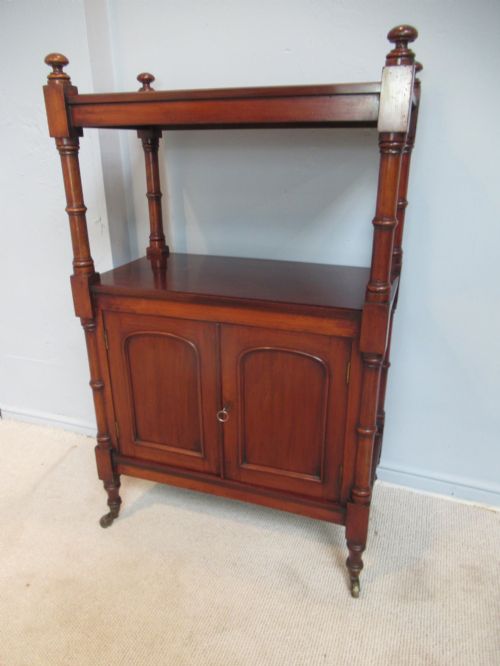
These mahogany what not shelf pieces are tiered open display units built to hold books, china and ornaments in style.
Mahogany What Not Shelf
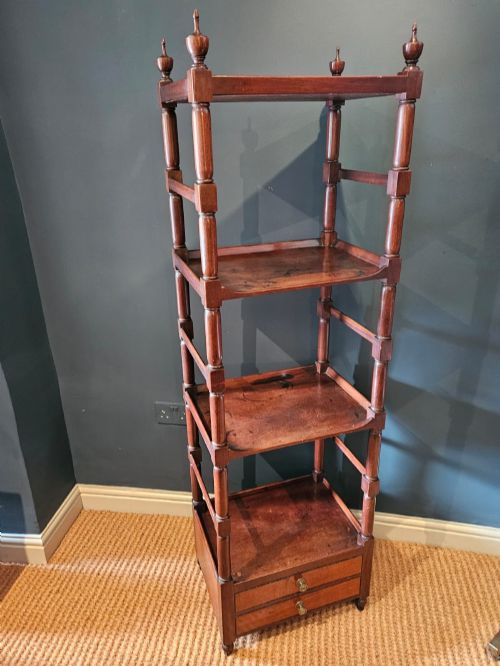
A mahogany what not shelf provides open tier storage for displaying books, ornaments and precious objects across multiple levels. You will most frequently meet four tier and three tier examples from the Regency, Georgian and Victorian periods.
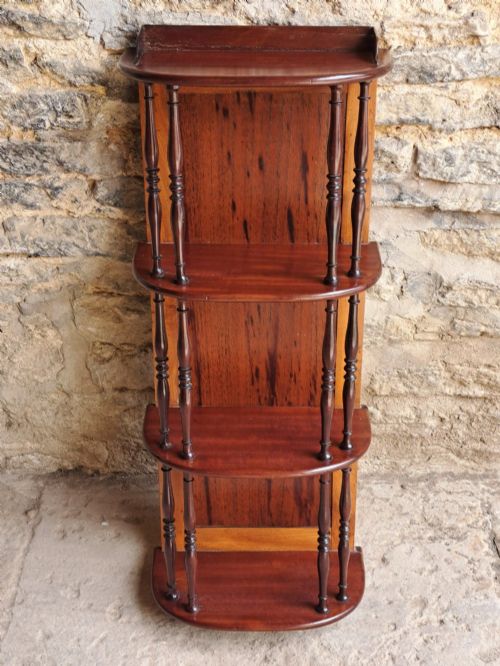
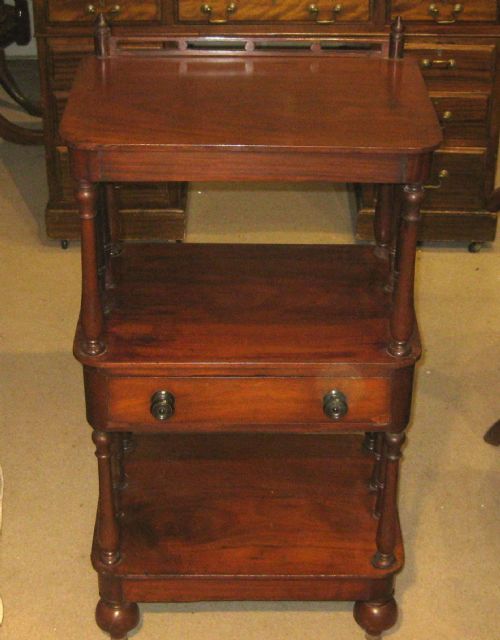
The form spans standing floor units with slender upright supports as well as compact wall hanging variants. Makers constructed these pieces from the late eighteenth century through to the end of the nineteenth century, adapting the number of tiers and incorporating drawers.
Regional workshops and cabinet makers produced these multi-level stands in various formats, including demi-lune shapes and etageres with turned columns. They served primarily in the parlour and drawing room to exhibit decorative possessions.
How they were made
Cabinet makers utilised solid mahogany alongside rich veneers to build the structural uprights and flat tiers of each unit. Selected examples incorporate rosewood and walnut elements, while marquetry veneers decorate more elaborate display surfaces.
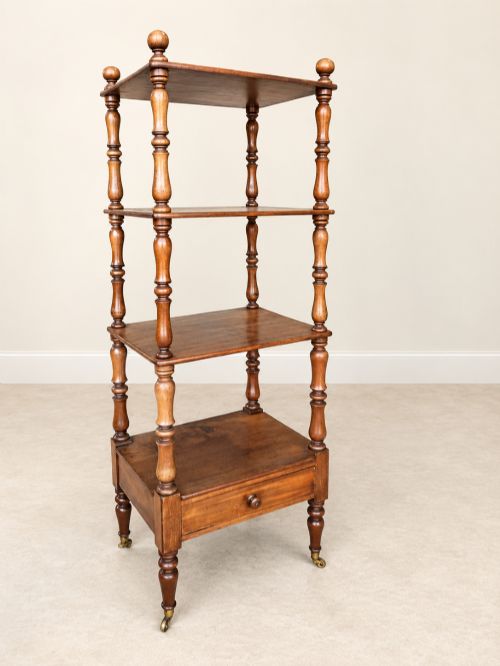
Turned wooden columns and barley twist supports connect the individual shelves, sometimes augmented by brass castors on the feet. Joinery techniques from the nineteenth century ensured stable weight distribution across three or four open levels.
Some upright columns twist like sugar canes to delight the eye.
What varies in quality
Quality rests upon the selection of timber grain, the crispness of the turned supports and the overall balance of the tiers. Superior examples display thoughtful proportions, fine marquetry detail and robust structural integration between the shelves and uprights.
Simpler workshop pieces offer utilitarian shelving without decorative flourishes, whereas top tier iterations feature integrated drawers, carved motifs and sophisticated column work that elevate the display function.
The Mahogany What Not Shelf Glossary
- Mahogany
- A durable tropical hardwood prized for its deep reddish brown colour and smooth grain. Cabinet makers relied upon it extensively for fine furniture throughout the Georgian and Victorian eras.
- Etagere
- A French term for a piece of furniture consisting of a set of open shelves for displaying ornaments. These tiered stands mirror the function of traditional whatnots.
- Barley twist
- A type of column turning shaped to resemble a spiral of barley sugar. This decorative detail frequently supports the shelves on nineteenth century pieces.
- Demi-lune
- A half moon shape utilised for wall shelves and corner units designed to sit flush against a room surface. It maximises display space in compact footprints.
- Marquetry
- The art of applying pieces of veneer to a structure to form decorative patterns and pictures. Craftsmen applied floral and geometric designs to the top surfaces of select display units.
Mahogany What Not Shelf: Frequently Asked Questions
Where did they place these shelves?
These units stood in principal reception rooms such as drawing rooms and parlours where guests could admire displayed porcelain and leather bound volumes. Their open construction made them accessible from all sides when positioned away from walls.
Smaller wall hanging versions provided vertical storage above sideboards and tables in more confined spaces throughout the home.
How many tiers do they have?
Most surviving examples feature three or four horizontal shelves supported by slender vertical columns. Each successive tier typically narrows slightly toward the top to create a balanced silhouette.
Selected formats include single drawer bases beneath the lowest shelf for storing smaller correspondence or linens.
Are they sturdy enough for books?
The original design accommodated lighter reading material, albums and decorative ornaments rather than heavy encyclopaedias. The slender turned supports distribute weight efficiently across the lower shelves.
Placing heavier volumes on the bottom tier maintains stability and prevents undue strain on the upper column joints.
How do I date a unit?
Georgian and Regency versions exhibit restrained classical proportions and finer timber selections with subtle column turnings. Victorian iterations often introduce heavier barley twist supports, darker finishes and occasional marquetry decoration.
Construction methods, screw types and secondary woods visible beneath the shelves provide further clues to the decade of manufacture.