

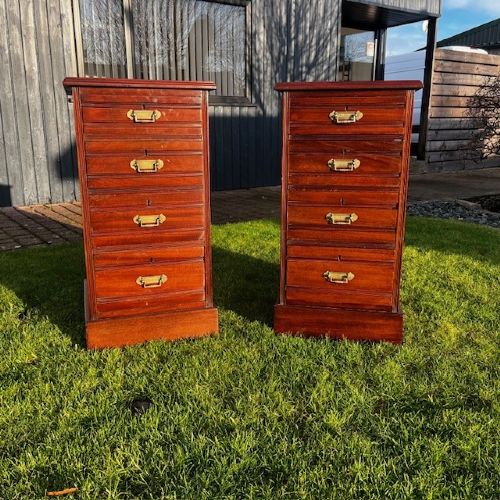


Mahogany Wellington Cabinet
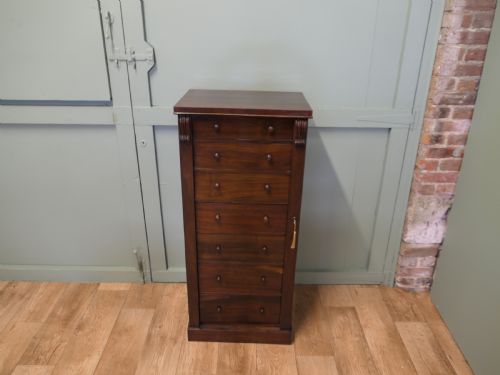
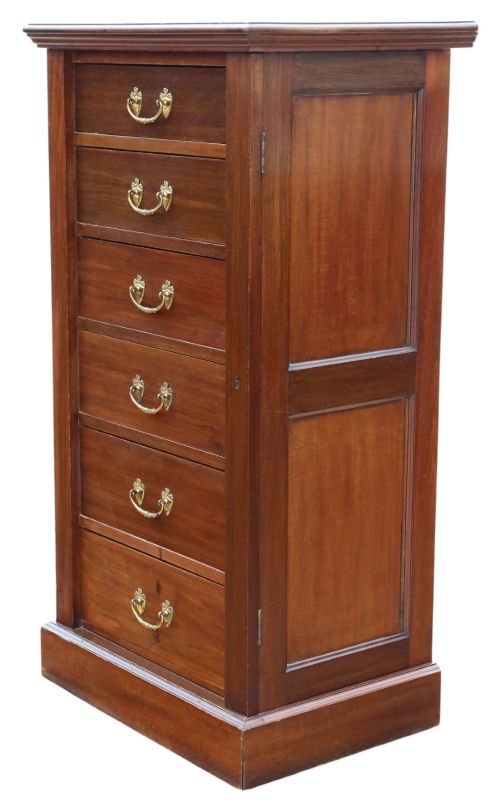
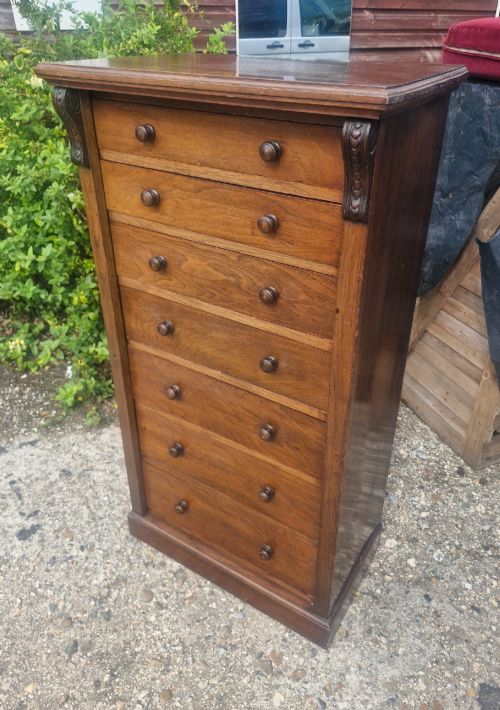
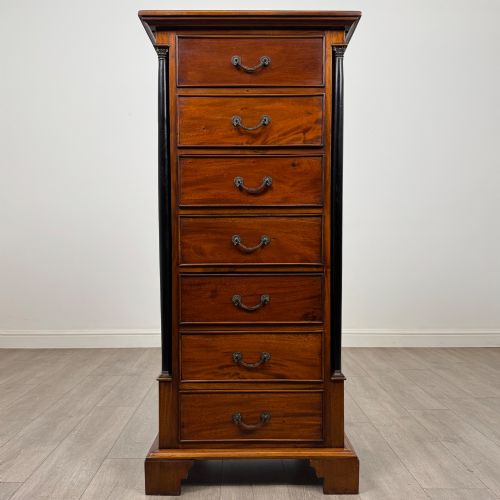
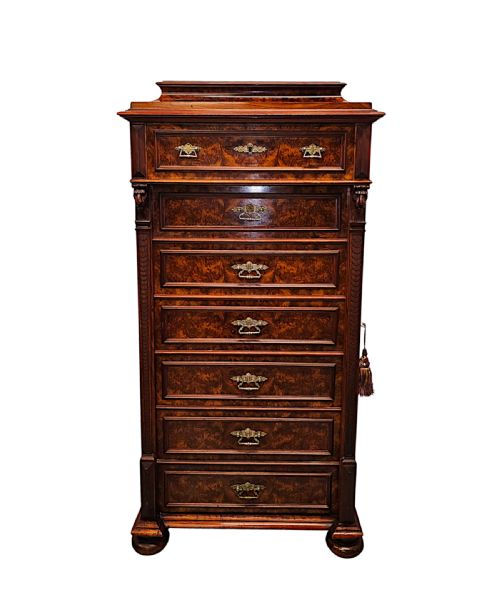
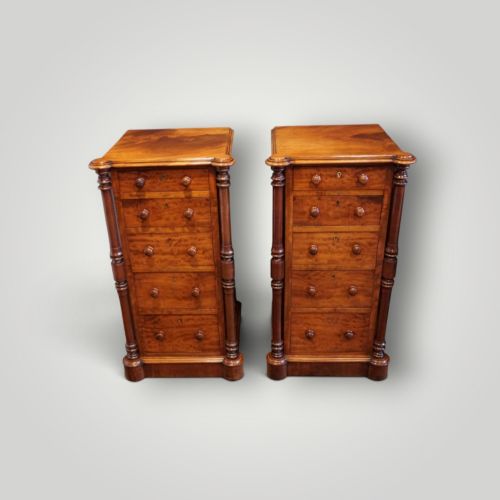
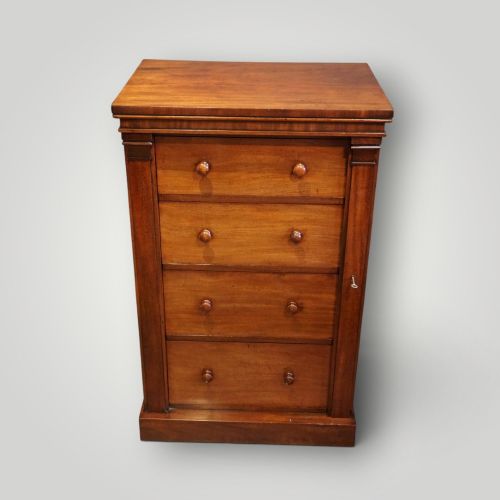
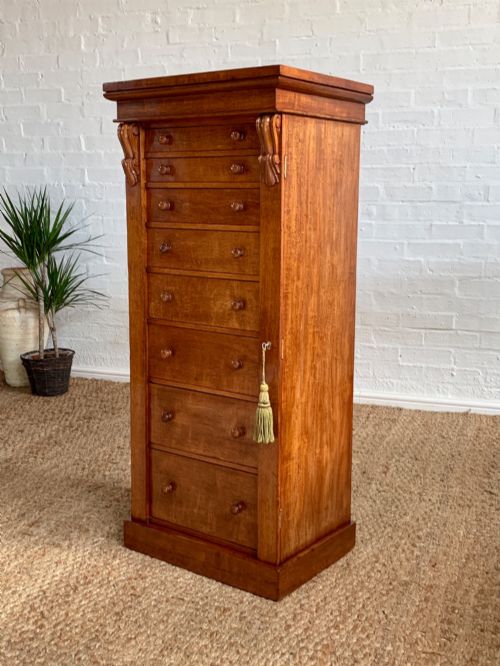
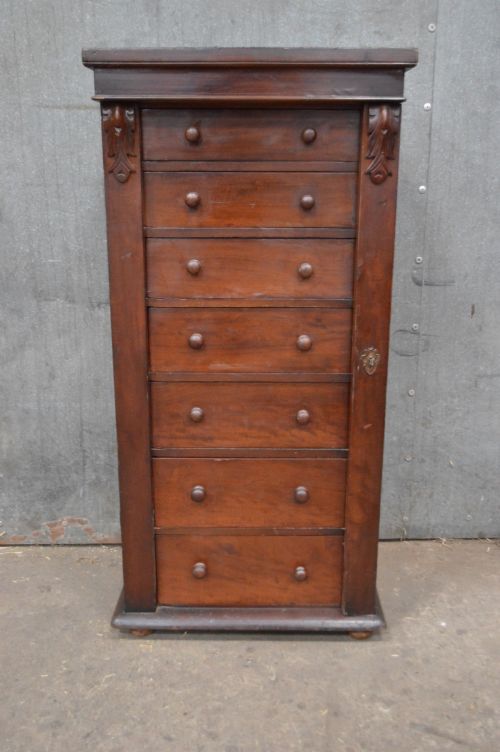
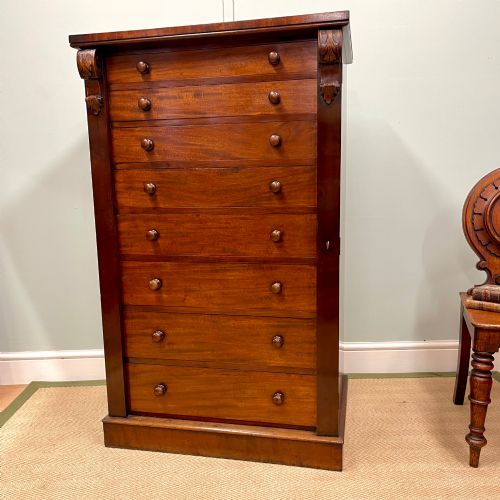
A mahogany wellington cabinet offers slim proportions and a locking side stile, making it a practical choice for small spaces.
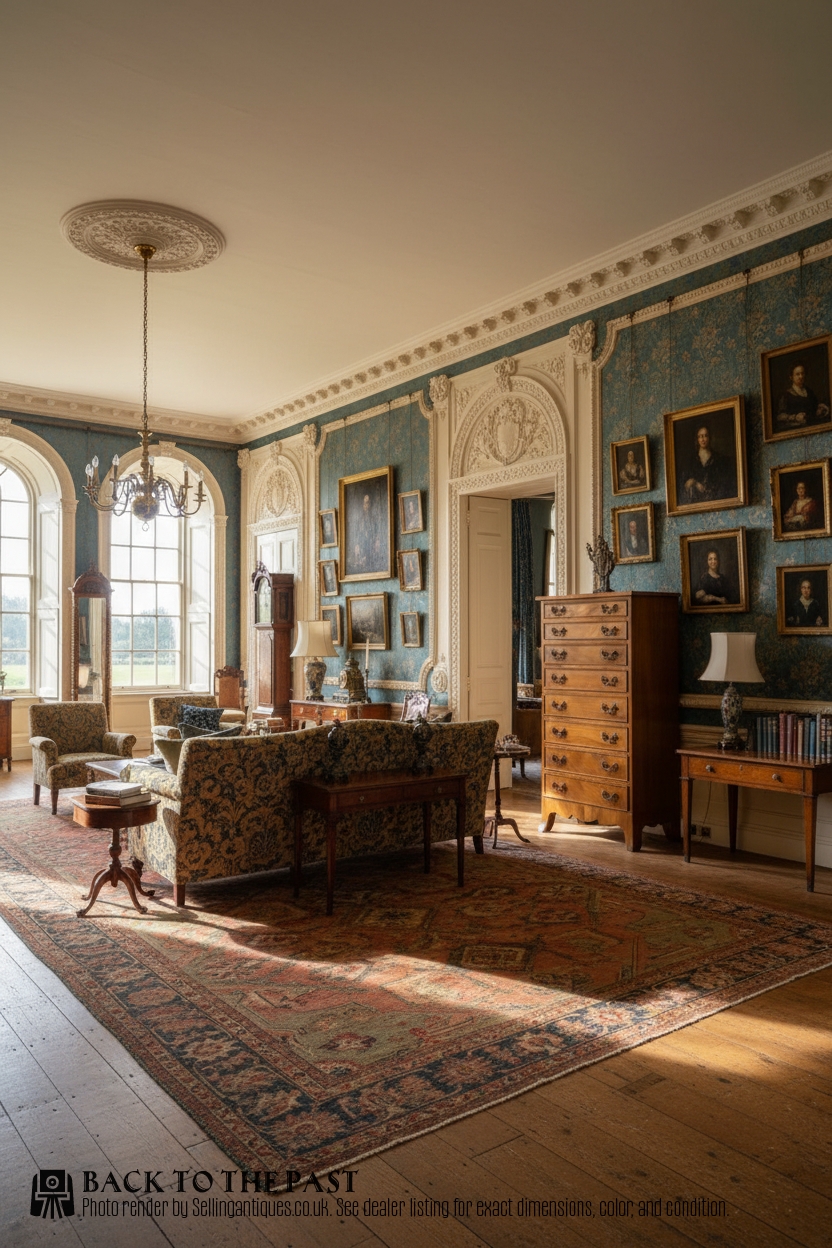
How they were made
Cabinet makers built these pieces using solid mahogany and flame mahogany veneer, sometimes incorporating satinwood inlay or brass details. Drawer construction relied on traditional joinery housed within tall, narrow carcases designed to maximise vertical storage while minimising floor space.
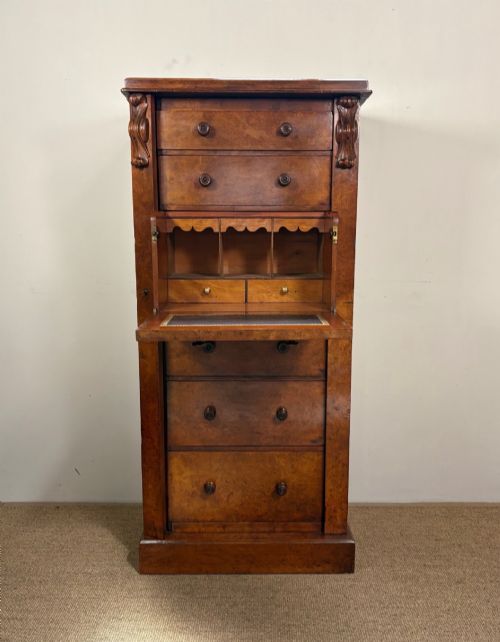
The defining mechanical feature is the locking stile, a pivoting or removable wooden flap secured by a small brass key that blocks the drawer paths when shut. Original turned knobs, leather writing surfaces in secretaire variants, and internal dividers for collectors or filing purposes complete the construction.
What varies in quality
Quality rests heavily on the selection of timber, particularly the grain figure visible in flame mahogany or fiddleback mahogany veneers. Finer pieces display carefully matched wood surfaces across the drawer fronts and structural harmony in the proportions of the narrow carcase.
The integrity of the locking mechanism and its key dictate operational quality, as does the survival of original turned knobs and internal fittings without later adaptation. Finer execution shows in the crispness of inlaid satinwood details and the precision of the side stile hinge.
Child-sized versions exist alongside massive outsized chests, proving that nineteenth-century storage needs applied to all statures.
Warings Liverpool·Maple and Co·James Shoolbred
The Mahogany Wellington Cabinet Glossary
- Wellington chest
- A tall, narrow Victorian chest of drawers featuring a hinged locking side stile that secures every drawer simultaneously. The design allows secure storage in limited floor spaces.
- Flame mahogany
- A veneer cut from timber where the branch junctions meet the main trunk, creating a distinct flickering flame pattern. Cabinet makers used it on prominent surfaces for visual impact.
- Secretaire chest
- A cabinet incorporating a fitted writing drawer with a drop-front desk surface. It combines the vertical storage of a tall chest with a compact workspace.
- Collectors chest
- A specialised cabinet fitted with shallow drawers designed to hold specimens, coins, or small objects. These pieces often feature glass or panelled doors protecting the internal drawers.
- Fiddleback mahogany
- A figured timber variety exhibiting ripples across the grain that resemble the back of a violin. This material appears on select Edwardian examples.
Mahogany Wellington Cabinet: Frequently Asked Questions
What is a wellington cabinet?
A wellington cabinet is a tall, narrow chest of drawers defined by a hinged locking side bar that secures all the drawers at once. This mechanism was originally designed to keep private papers and valuables secure.
The form dates principally to the nineteenth century and offers generous vertical storage while taking up minimal floor space in a room.
How do I use one at home?
These cabinets suit tight spaces such as hallways, alcoves, or bedside areas where standard wide chests will not fit. The narrow drawers work well for organising accessories, documents, or small collections.
Larger versions function effectively as standalone storage focal points, while miniature versions sit easily on top of desks or larger tables.
How do I tell Victorian from Edwardian examples?
Victorian pieces tend to feature heavy, solid proportions with rich figured mahogany veneers and simple turned wooden knobs. They prioritize structural presence and deep polish.
Edwardian examples often incorporate lighter decorative elements, such as satinwood stringing and inlaid details, reflecting changing tastes at the turn of the twentieth century.
Why does the side bar lock all drawers?
The locking stile is a hinged wooden flap that overlaps the edge of every drawer face when closed and locked with a key. When the bar is in place, none of the drawers can be opened.
This single-point locking system provided secure storage for personal journals and correspondence before modern locking desk mechanisms became common.