


Mahogany Wash Basin
A mahogany wash basin brings Georgian and Victorian craftsmanship into your home, offering practical elegance and timeless timber character.
Mahogany Wash Basin
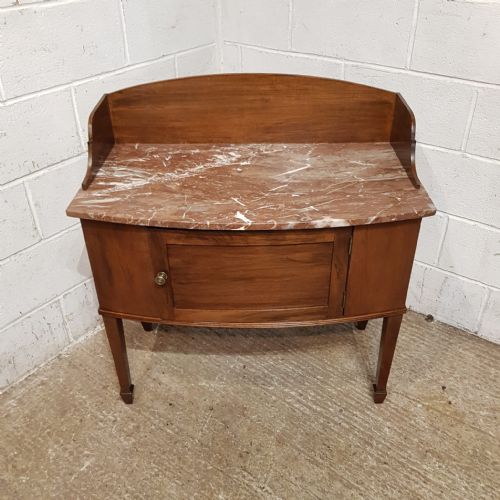
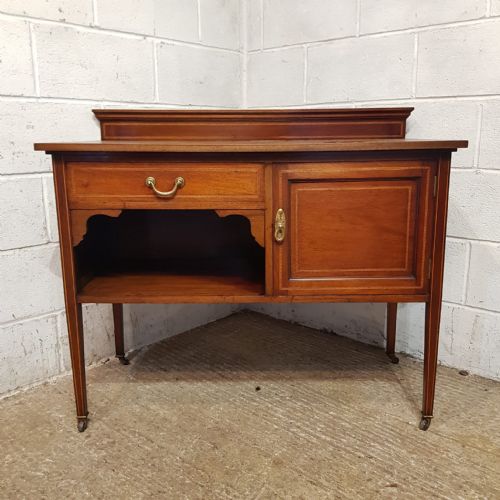
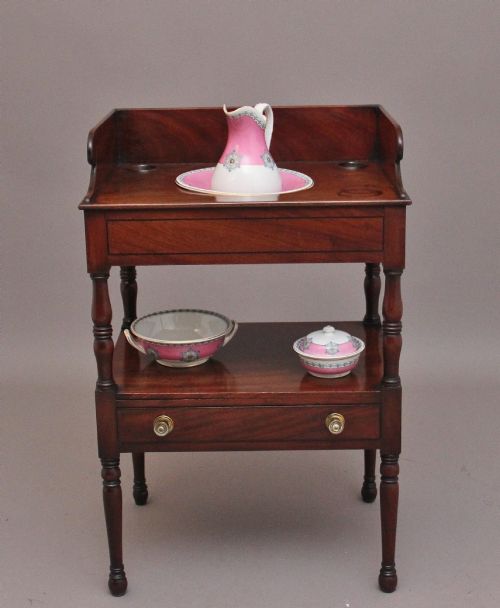
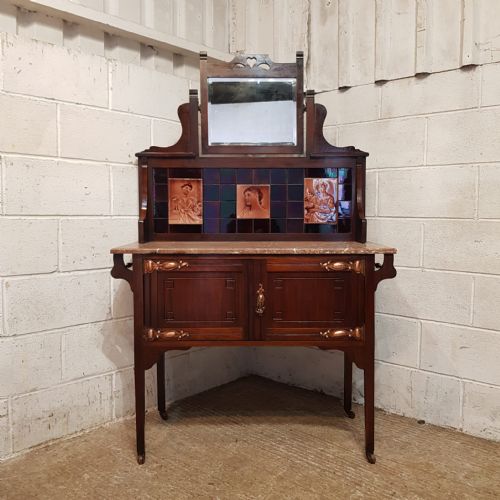
A mahogany wash basin spans several centuries of British domestic life, originating primarily from the Georgian, Regency, and Victorian eras. These items served as functional washing stations before plumbed bathrooms became standard in homes.
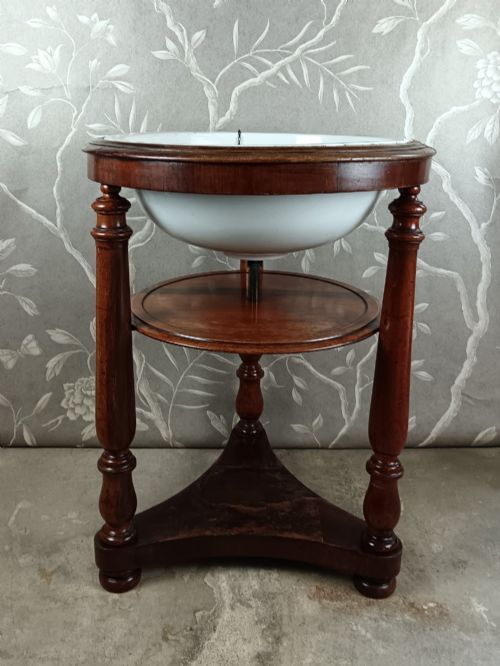
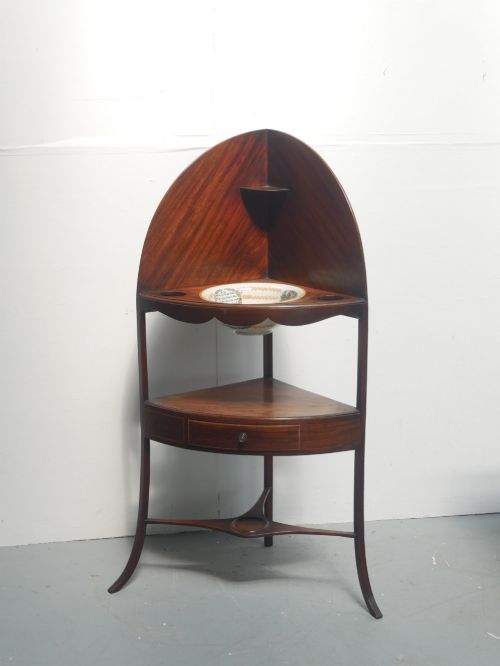
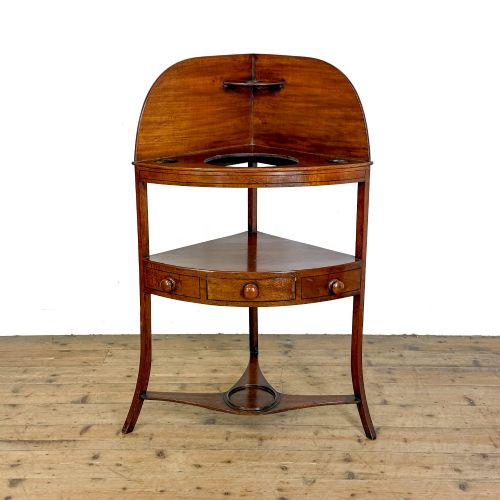
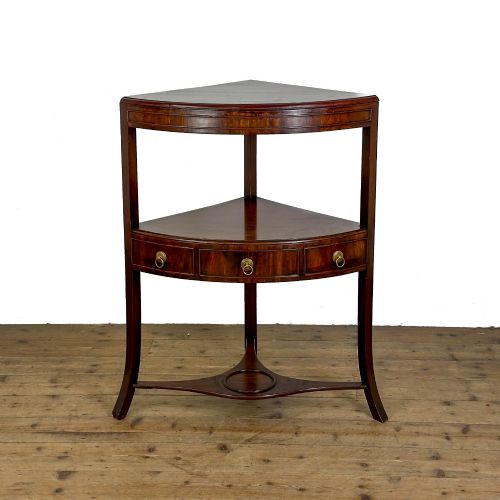
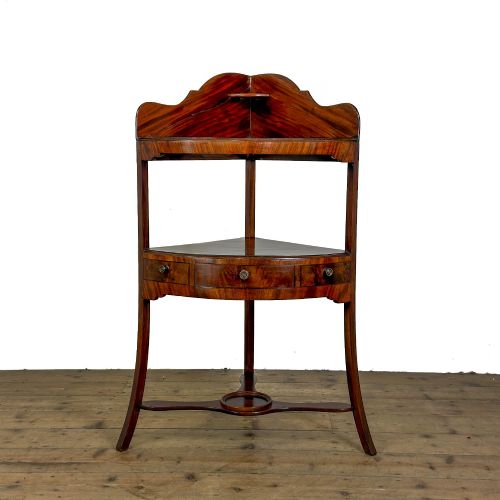
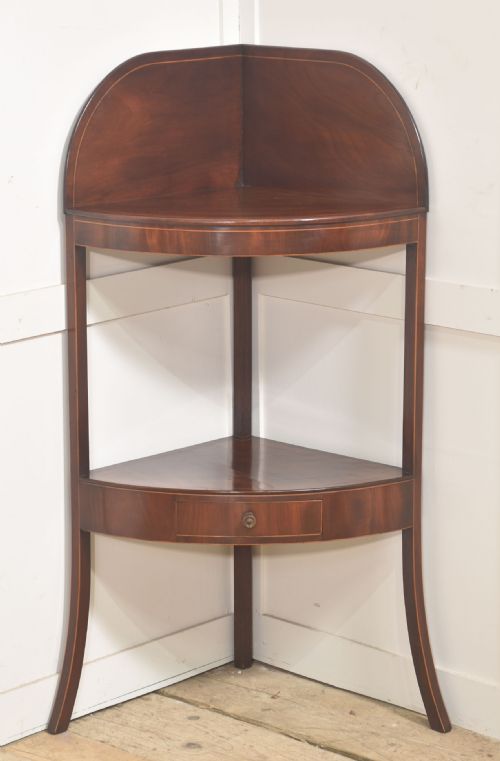
The selections here most frequently appear as corner washstands, square basin stands, and round campaign pieces designed to fit neatly into domestic spaces. Alongside traditional washstands, the evidence includes related forms such as wig stands and plant stands.
Originating across periods from the eighteenth century to the early twentieth century, these wooden fixtures combine sturdy utilitarian design with refined cabinet-making traditions.
How They Were Made
Cabinet makers utilised dense mahogany as the primary timber, often enhancing the surfaces with delicate boxwood inlay. Structural integrity relied on traditional joinery techniques suited to supporting heavy ceramic basins and marble tops.
Metal fittings in brass and copper appear alongside ceramic bowls and glass elements to complete the functional aspects of the furniture. Marble tops and fold-down covers provided durable, water-resistant surfaces for daily grooming routines.
Some washstands double as wig stands, keeping seventeenth-century hairpieces neatly aired and powdered.
What Varies in Quality
The refinement of the timber figure and the subtlety of boxwood inlay distinguish the finer examples from simpler utilitarian pieces. Superior construction is evident in the crispness of moulded edges and the careful integration of brass hardware.
Gillows Lancaster
The Mahogany Wash Basin Glossary
- Corner washstand
- A triangular furniture piece specifically engineered to fit snugly into the corner of a room to save floor space.
- Campaign washstand
- A portable washing unit designed for travel, often featuring collapsible tripod or triform frames.
- Wig stand
- A specialised small-scale stand featuring ring supports originally intended to hold gentlemen's wigs.
- Boxwood inlay
- Contrasting pale wood inserted into mahogany surfaces to create decorative geometric or linear borders.
- Triform stand
- A three-legged support structure commonly found on round basin stands and occasional tables.
Mahogany Wash Basin: Frequently Asked Questions
What is a mahogany wash basin?
A mahogany wash basin is a piece of antique furniture built to hold a basin and water pitcher for personal washing before modern plumbing.
These stands date from the eighteenth to the early twentieth century and frequently feature specialised compartments for soap and grooming accessories.
How were corner washstands used?
Corner washstands were placed in bedrooms and dressing rooms to maximise space while providing a stable surface for morning ablutions.
The triangular design allowed them to utilise unused corner areas efficiently without obstructing movement in smaller chambers.
Can I use an antique washstand today?
These pieces adapt readily to modern interiors as plant stands, lamp tables, or decorative hallway furniture.
Many owners remove missing basins to use the marble or wooden top surfaces for displaying ornaments or holding everyday items.
How do I identify a Georgian washstand?
Georgian washstands display classical proportions, subtle boxwood stringing, and timber characteristics typical of the late eighteenth century.
Look for traditional joinery methods and simpler rectilinear or curved forms that predate the heavier styles of the Victorian era.