


Campaign Washstand
These campaign washstand pieces are clever folding or modular travelling furniture designed for officers and travellers, offering practical ablutions on the move.
Campaign Washstand
When you search for a campaign washstand, you are looking at folding or dismantling pieces designed for officers, gentlemen travelling on duty, or marine use on ships and yachts. These pieces date across the Georgian, Regency, and Victorian periods, reflecting the practical needs of travel in earlier centuries.
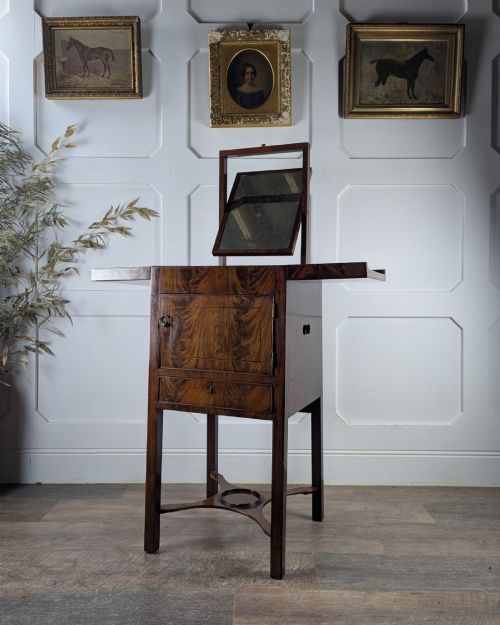
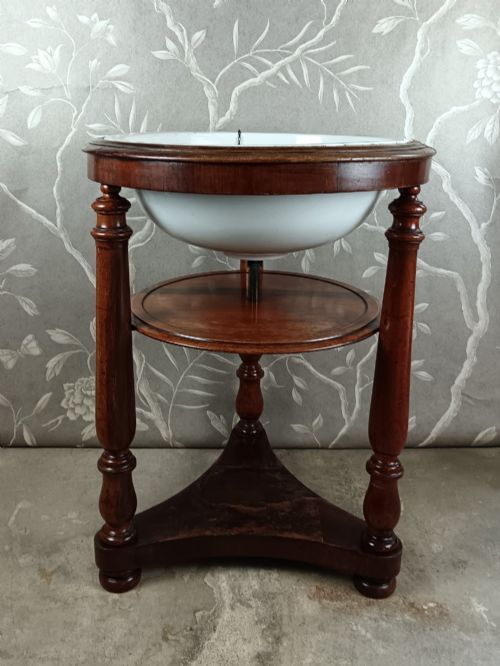
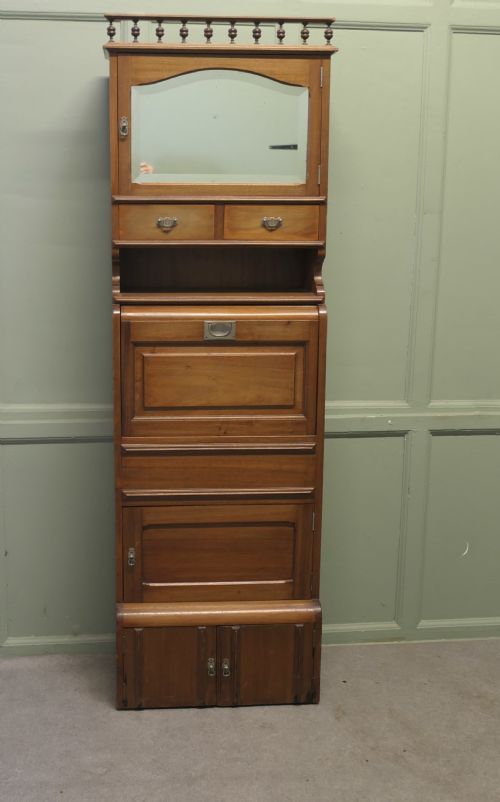
You are most likely to meet mahogany examples on this page, often mounted in brass with clever folding tops or triform stands. The selection includes round basin stands, combined bedside units, and vanity cabinets built for marine interiors.
Makers designed these items to pack down tightly for transport by land or sea without sacrificing stability when assembled. Many pieces show clever engineering such as hinged tops, pull-out sections, and integrated compartments for ceramic basins and glassware.
How they were made
Cabinetmakers used durable timbers like Cuban mahogany, satinwood, walnut, and teak to withstand the rigours of travel and damp marine environments. These woods were chosen for their density and grain stability, ensuring the furniture endured frequent dismantling and assembly.
Brass fittings, hinges, and corner brackets were integrated to reinforce joints and protect vulnerable edges during transit. Skilled joiners utilised interlocking panels and screw-in components so pieces could pack down flat into compact footprints.
Officers managed to maintain immaculate shaving standards while sleeping under canvas thanks to these clever folding stands.
What varies in quality
The sophistication of the folding mechanism and the tightness of the joinery separate simpler utility items from finer officer-grade pieces. Superior examples feature well-fitted brass mounts and smoothly operating hinges that lock securely into place without wobble.
The choice of timber grain and the neatness of secondary woods also indicate the standing of the original maker. Pieces with well-matched Cuban mahogany or fine satinwood inlay display a higher grade of workshop execution.
Gillows Lancaster·Army & Navy
The Campaign Washstand Glossary
- Campaign furniture
- Portable furniture built for military officers, travellers, and marine use abroad. These items typically feature folding legs, dismantling frames, and protective brass corners.
- Triform stand
- A three-legged support structure commonly found on round basin stands. This design prevents rocking on uneven floors aboard ships or in tents.
- Cuban mahogany
- A dense, richly grained hardwood favoured in high-end Georgian and Victorian cabinetmaking. It resists warping and takes a fine polished finish.
- Bidet stool
- A low sanitary seating item often fitted with a ceramic liner and enclosed within a wooden cabinet. Regency examples sometimes bear maker stamps.
- Washbowl stand
- A dedicated frame designed to hold a ceramic basin and water jug for morning ablutions. These range from simple folding rings to elaborate multi-tiered tables.
Campaign Washstand: Frequently Asked Questions
How do campaign washstands fold?
Many pieces feature hinged frames, removable basin rings, and folding legs that dismantle to fit inside companion chests or travel crates. This allowed officers to pack their quarters quickly during military campaigns.
Other designs utilise interlocking wooden sections and screw-in uprights that require no tools to assemble or take apart. The clever engineering ensures stability despite the lack of permanent glue joints.
Were these used on ships?
A significant portion of these pieces were built specifically for marine use on naval vessels, private yachts, and passenger boats. Compact dimensions and secure basin housings prevented spills during rough seas.
Ship versions often incorporate teak or specially sealed mahogany to resist salt air and moisture. They served officers and wealthy passengers who required private washing facilities in cramped cabins.
How do I date a campaign washstand?
Dating relies on timber choices, brass hardware styles, and overall construction methods typical of Georgian, Regency, or Victorian workshops. Earlier pieces from the George III era often show lighter satinwood accents and refined proportions.
Later Victorian examples tend to use heavier brass mounts and utilitarian locking mechanisms. Checking for maker stamps or patent marks can also narrow down the production period.
Are ceramic basins original?
Ceramic bowls and glass inserts found in these stands are frequently matched replacements rather than the original factory components. Because pottery and glass broke easily during travel, owners regularly replaced them over time.
When evaluating a piece, look at how the basin sits within the wooden ring or support. A proper fit indicates the stand accommodates standard sizes of the period.