



Mahogany Upholstered Love Seat
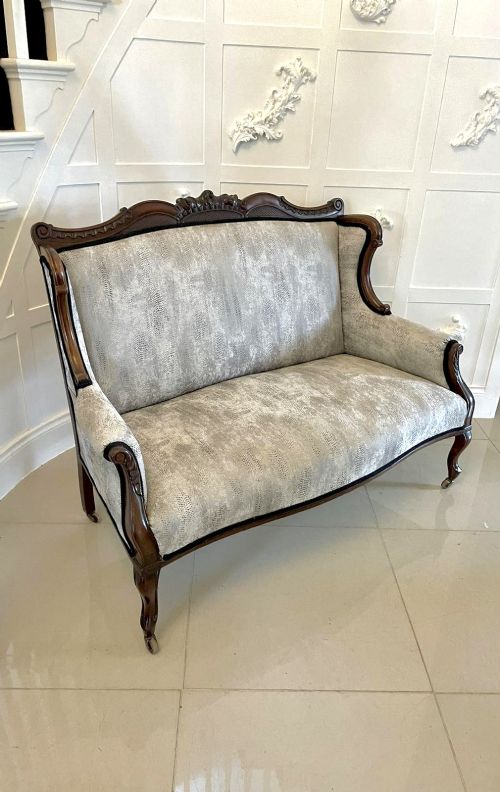
A mahogany upholstered love seat offers compact two-seater comfort, combining rich timber frames with tactile textile covers across periods from the Georgian era to the Edwardian period.
Mahogany Upholstered Love Seat
When you search for a mahogany upholstered love seat, you encounter compact settees and two-seater sofas designed for intimate seating. These pieces span centuries of cabinet making, appearing in forms from Georgian chair-back designs to Edwardian salon settees.
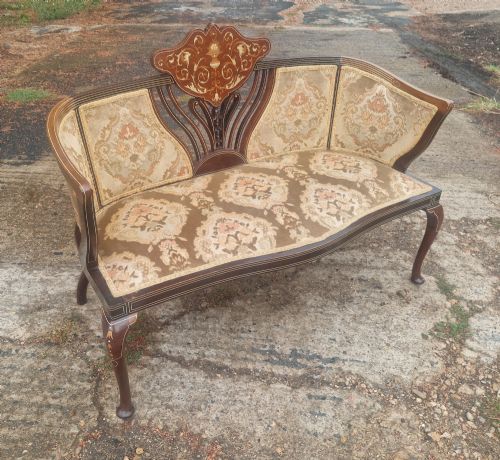
The Edwardian period supplies the highest concentration of examples on this page, often featuring inlaid mahogany frames and petite proportions. Alongside these lighter designs, Victorian and Georgian pieces offer deeper carving and sturdier frames.
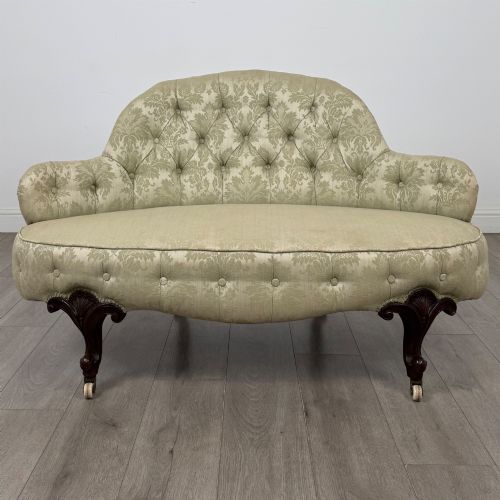
Makers adapted the form across different eras, resulting in variations like conversation seats with barley twist frames and double chair-back settees. Each variation maintains the core function of a small sofa built around a timber framework.
What varies in quality
The refinement of the timber carving and the crispness of any inlay set the finer examples apart from simpler workshop output. Superior pieces display thoughtful proportions and careful selection of mahogany grain, particularly on prominent areas like the crest rail and legs.
The integrity of the frame construction and the quality of the upholstery execution dictate the durability and finish of the settee. Examples that retain well-fitted joints and appropriate historical textiles demonstrate higher levels of original craftsmanship.
Listings feature Edwardian, Victorian, and Georgian periods, employing mahogany, velvet, brass, and damask across settees and sofas.
Butlers of Dublin
The Mahogany Upholstered Love Seat Glossary
- Mahogany
- A durable tropical hardwood prized for its deep reddish-brown colour and stable grain, forming the primary structural material for these settees.
- Inlay
- A decorative technique where contrasting materials like satinwood are fitted flush into the mahogany surface to create geometric or floral patterns.
- Chair-back sofa
- A settee design featuring a backrest constructed to resemble a row of linked chair backs, often associated with Georgian styles.
- Conversation seat
- An upholstered circular or multi-directional settee configuration allowing sitters to face different directions while conversing.
- Barley twist
- A decorative turning technique resembling a twisted rope, commonly found on Victorian and Edwardian wooden frame supports.
Mahogany Upholstered Love Seat: Frequently Asked Questions
What is a love seat?
A love seat is a small upholstered settee designed to comfortably seat two people. The compact proportions make them suitable for smaller rooms or specific bedroom placements.
Historically, these small sofas provided intimate seating within drawing rooms and parlours. They combine the soft comfort of a larger sofa with a footprint closer to an armchair.
How do I date a settee?
Dating relies on examining the timber frame style, upholstery methods, and decorative motifs. Georgian pieces often show restrained classical lines, whereas Victorian examples favour heavier carved ornament.
Edwardian settees frequently incorporate lighter inlaid satinwood details and slender tapered legs. Comparing the structural joinery helps narrow down the period of manufacture.
Where should I place a settee?
These compact settees fit well in bedrooms at the foot of a bed or along a hallway wall. Their modest scale also suits living room alcoves and reading corners.
Because the timber back is often finished, many examples can sit away from walls in open room layouts. Positioning depends on the scale of the surrounding furniture.
Are these seats comfortable?
Comfort depends on the internal padding and springing system used during manufacture or subsequent reupholstery. Edwardian and Victorian versions generally provide firm, supportive seating.
Many antique pieces have been restored with traditional stuffing to maintain their intended sit. Testing the depth and back angle helps determine daily usability.