






Mahogany Undertier Table
A mahogany undertier table brings a practical lower shelf to domestic living spaces, combining timber warmth with useful display space.
Mahogany Undertier Table
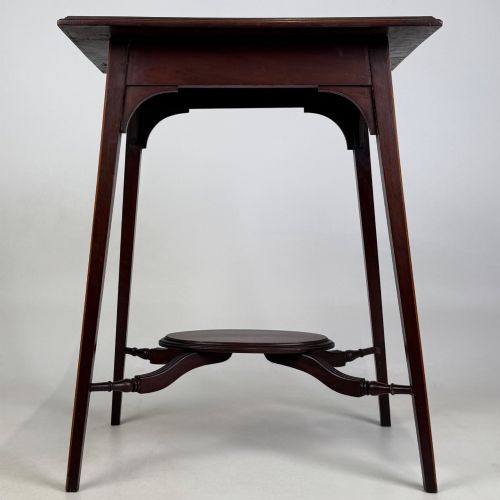
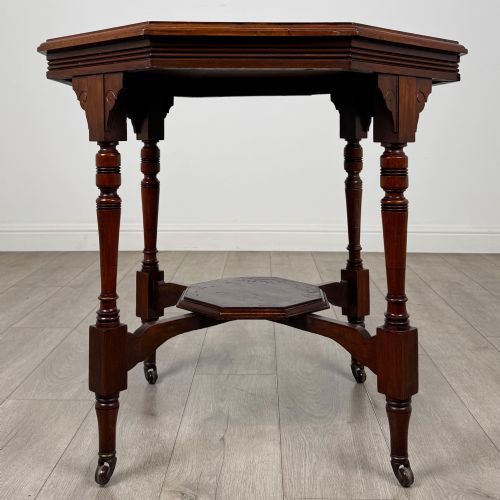
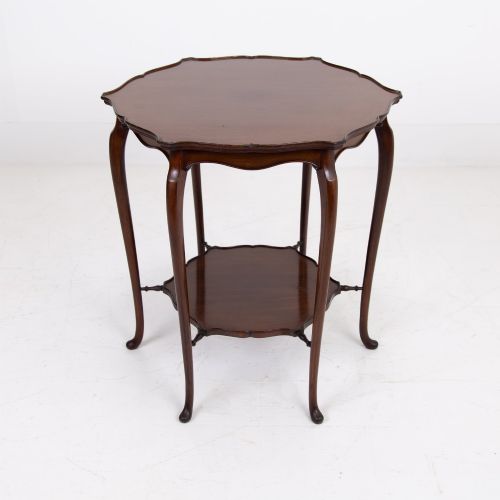
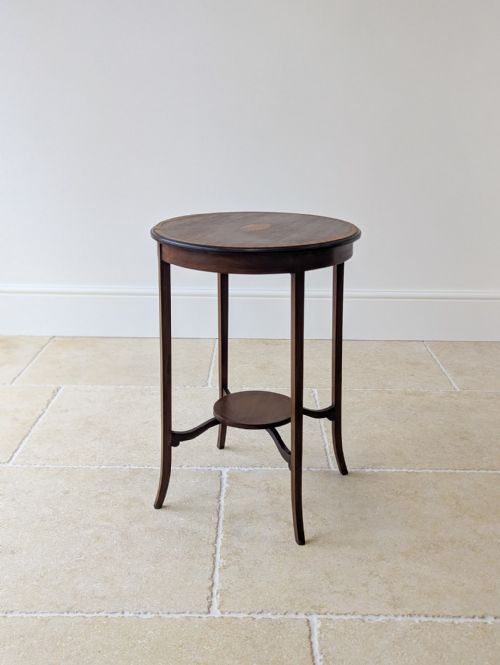
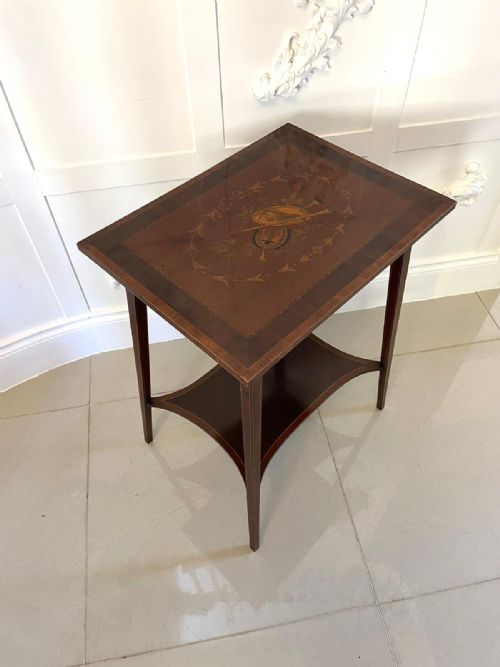
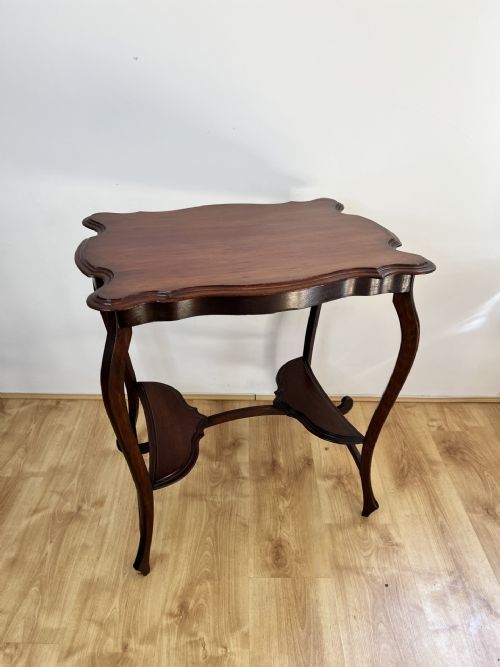
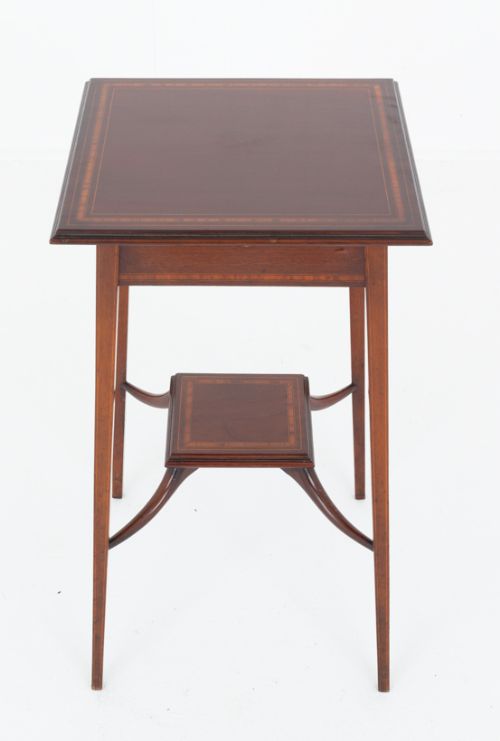
A mahogany undertier table is primarily encountered in Edwardian and Victorian forms, spanning occasional tables, side tables, and lamp tables. These pieces serve as functional surface furniture with an added lower shelf, known as the undertier, positioned between the legs.
Most examples originate from the late nineteenth century and the early twentieth century, reflecting revival aesthetics such as Sheraton, Chippendale, and Louis XVI styles. Buyers will frequently find octagonal, oval, circular, and kidney-shaped tables within this selection.
The primary form functions well beside seating or as a central room piece, offering dual surfaces for lamps, books, or decorative objects. Construction across these examples relies on solid timber frames and polished tabletops supported by slender turned or straight legs.
Materials and construction methods
Makers utilised solid mahogany and flame mahogany veneers for the primary surfaces, providing distinct grain patterns and deep red-brown tones. Secondary woods and decorative elements incorporated satinwood, rosewood, boxwood, and ebony to create contrasting borders and panels.
Inlaid decoration forms a central technique across these pieces, utilising marquetry and satinwood inlay to pattern tabletops and undertiers. Brass details appear on specific mounts and handles, while turned wooden legs provide structural support for the dual tiers.
One exceptional games table hides its recreational purpose beneath a refined Victorian exterior, built for quiet evenings of parlour cards.
Distinctions in construction and finish
Quality varies according to the precision of the timber selection, visible in the depth of flame mahogany figures and the crispness of marquetry and satinwood inlay. Finer examples display meticulous attention to the joining of the undertier shelf to the supporting legs.
The sophistication of the stylistic revival influences the overall execution, ranging from plain functional Edwardian tables to exhibition pieces featuring shaped tops and intricate multi-wood borders. Structural integrity in the legs and the flatness of the upper and lower tiers separate standard pieces from superior examples.
Howard And Son's·Haentgos Freres Paris
The Mahogany Undertier Table Glossary
- Undertier
- A secondary shelf positioned beneath the main tabletop. This lower surface provides additional space for storage or display.
- Marquetry
- Decorative woodwork where pieces of veneer are fitted into a ground material to form geometric or pictorial designs. It appears frequently on tabletops.
- Sheraton Revival
- A late nineteenth and early twentieth century design movement that reinterprets the late eighteenth century neoclassical style of Thomas Sheraton. It utilises light inlays and balanced proportions.
- Flame mahogany
- A veneer cut from the point where a branch joins the main trunk, producing a rippled, flame-like pattern. It is valued for its dramatic visual movement.
- Lamp table
- A small, portable table designed specifically to hold a lighting fixture. These pieces often incorporate an undertier for books or small items.
Mahogany Undertier Table: Frequently Asked Questions
What is an undertier table used for?
An undertier table provides two distinct display and storage levels within a domestic interior. The upper surface holds lamps, drinks, or decorative items, while the lower shelf accommodates books or smaller objects.
Historically, these tables functioned as occasional, side, or centre pieces in drawing rooms and parlours. Their compact footprint allowed them to sit beside seating without crowding the room.
How do I date a mahogany undertier table?
Dating relies on examining the timber, construction methods, and stylistic cues present in the piece. Pieces from the Victorian era often display heavier proportions and rich mahogany tones, while Edwardian examples frequently incorporate lighter inlaid decoration and satinwood elements.
Revival styles such as Sheraton, Chippendale, and Louis XVI provide further clues to the manufacturing period. Maker labels, where present, offer definitive production dates and origins.
Where should I place a centre table?
A centre table is designed to stand free within a room rather than against a wall. This allows access to the undertier and tabletop from multiple sides.
In period settings, these tables anchored the middle of a drawing room or library. Modern living spaces utilise them similarly as focal points or large lamp tables.
What is satinwood inlay?
Satinwood inlay involves setting contrasting strips or shapes of pale satinwood into dark mahogany surfaces. This technique creates borders, medallions, and geometric patterns.
Cabinetmakers utilised this method extensively during the Sheraton Revival period to add visual brightness to dark timber. The contrast highlights the contours of circular, oval, and octagonal tabletops.