
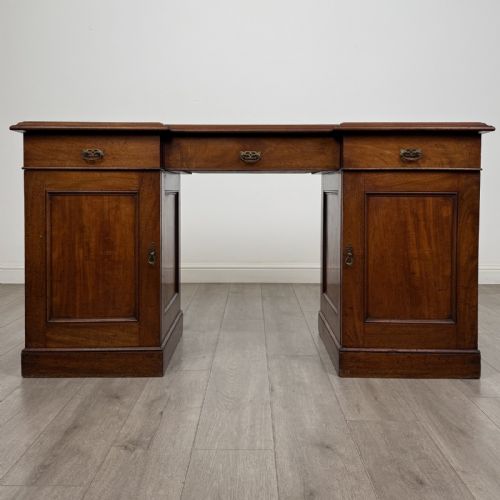
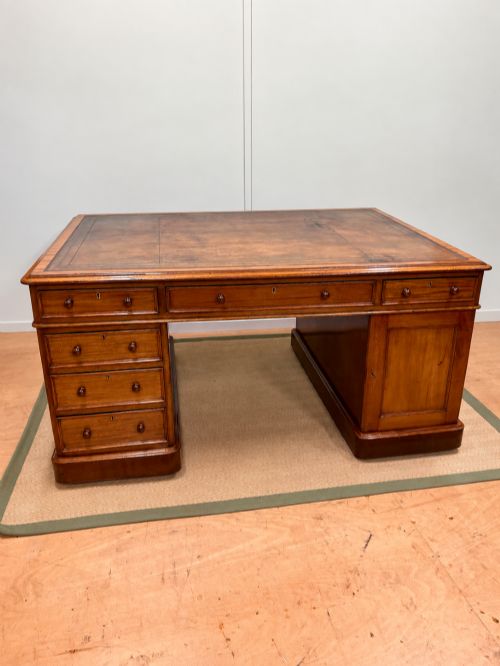
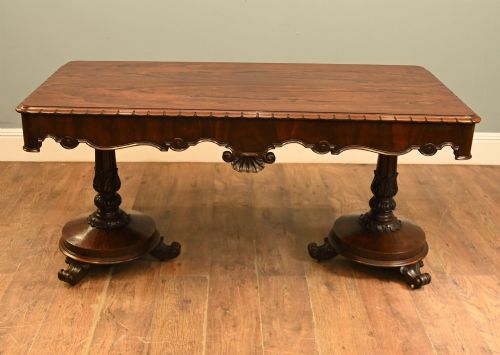
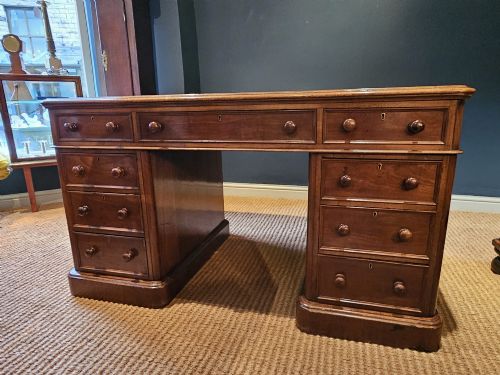
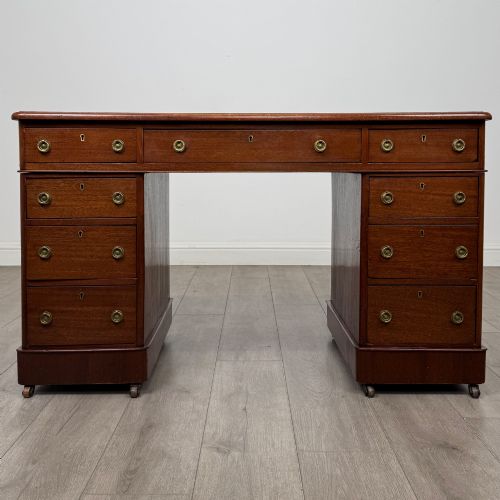
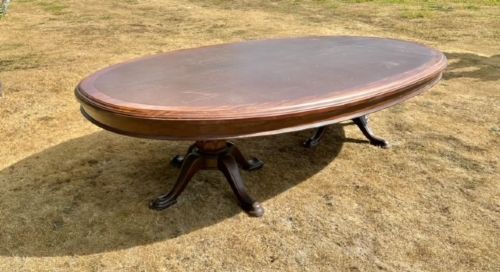
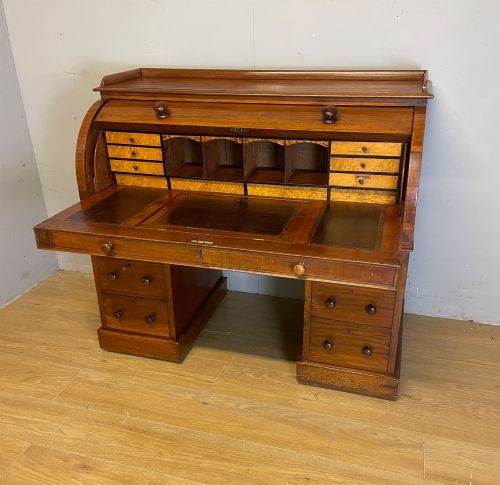
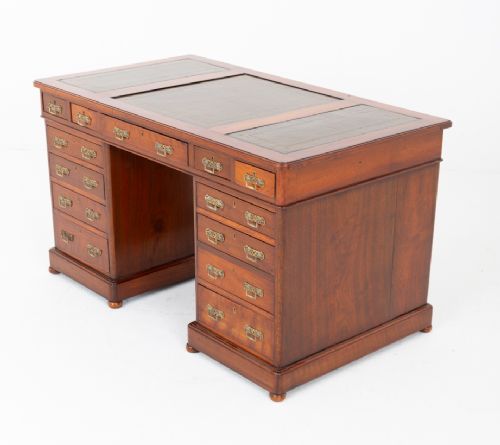


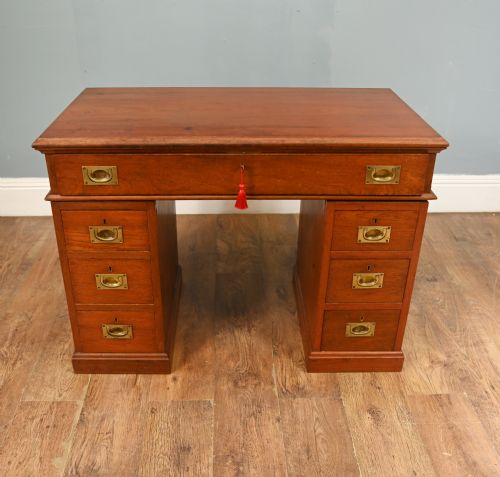

Mahogany Twin Pedestal Desk
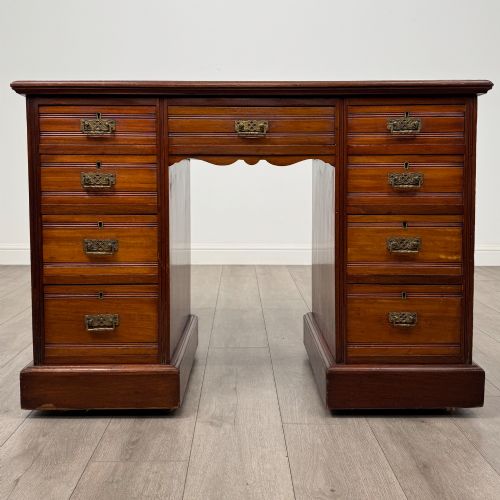
A mahogany twin pedestal desk is a substantial writing furniture piece featuring two banks of drawers supporting a central top, designed for serious study and correspondence.
Mahogany Twin Pedestal Desk
A mahogany twin pedestal desk represents the enduring standard of nineteenth-century study furniture, combining a broad writing surface with dual banks of drawers. The most common examples met on this page date from the Victorian period, though Edwardian and early twentieth-century interpretations also appear frequently.
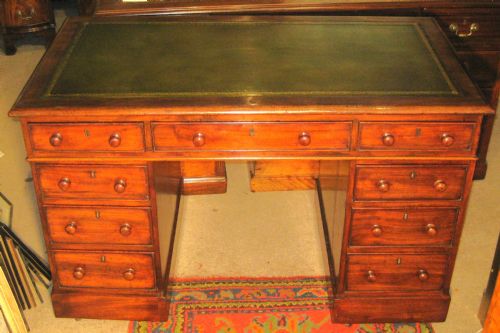
These pieces generally comprise three modular sections for ease of transport: two separate pedestals surmounted by a long writing box or top slab. Many incorporate inset leather writing surfaces, while larger boardroom and partners variants provide drawer storage on both sides for simultaneous use.
How They Were Made
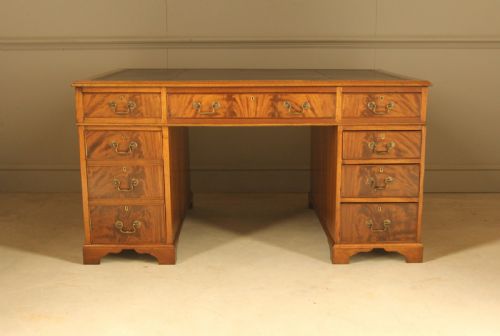
Cabinet makers utilised dense tropical mahogany, frequently selecting flame or curl grain veneers for drawer fronts to create striking figure patterns. Secondary timbers such as oak or pine commonly form the internal drawer linings and carcass framing.
Brass hardware, including bracket handles, ring pulls and occasionally campaign-style flush fittings, secures the drawers and corners. Leather writing inserts, often tooled with gilt borders, are glued directly to the upper writing surface.
Materials appearing alongside primary mahogany include brass, satinwood inlay, maple, walnut and chrome.
What Varies in Quality
The selection of timber grain largely dictates the visual hierarchy, with book-matched flame mahogany commanding greater prestige than plain straight-grained boards. Finer examples display meticulous dovetail joinery within the drawer construction and well-figured secondary timbers.
Proportional harmony and the retention of original brass hardware, locks and leather inserts distinguish workshop-made pieces from later utility furniture. Makers operating large retail establishments applied rigorous standards to internal framing and structural integrity.
Betty Joel·Gillows of Lancaster·Maple & Co·Edwards & Roberts·JAS Shoolbred·Druce & Co
The Mahogany Twin Pedestal Desk Glossary
- Pedestal desk
- A heavy writing table supported by two separate stacks of drawers instead of conventional legs. This format maximises storage capacity while offering a commanding presence in a library or study.
- Partners desk
- A large variant designed for two people to work opposite one another simultaneously, featuring drawer banks accessible from both sides. These typically incorporate grander dimensions and superior timber selection.
- Curl mahogany
- Timber harvested from the junction where branches meet the main trunk, yielding an intricate, feather-like grain pattern. Cabinet makers reserved this highly decorative veneer for principal drawer fronts.
- Campaign desk
- Portable military furniture constructed in modular sections with recessed brass handles for transport on campaigns. These pieces dismantle easily into separate manageable components.
- Dovetail
- A traditional wood joint formed by interlocking wedge-shaped fingers glued together for maximum tensile strength. Fine hand-cut dovetails indicate skilled cabinet making.
Mahogany Twin Pedestal Desk: Frequently Asked Questions
Can these desks be easily dismantled?
Most traditional examples separate into three distinct components: two individual pedestals and the top writing slab. This modular construction facilitates movement between rooms and upper floors.
Lifting the top requires two people to clear the locating dowels safely without straining the internal structural frame.
What is a partners desk?
A partners desk is a wide variation built with drawer banks and cupboards on both operational sides, allowing two individuals to sit opposite each other. These substantial pieces usually stood centrally within large estate libraries.
They represent the larger end of pedestal furniture production from the nineteenth century.
How do I date a mahogany desk?
Examine the secondary woods inside the drawer boxes, the style of the brass handles, and the construction methods used on the carcass. Victorian and Edwardian examples often feature machine-sawn elements and specific aesthetic markers.
Cabinet makers stamped or labelled certain pieces inside the top drawer, providing direct evidence of workshop origin and production era.