
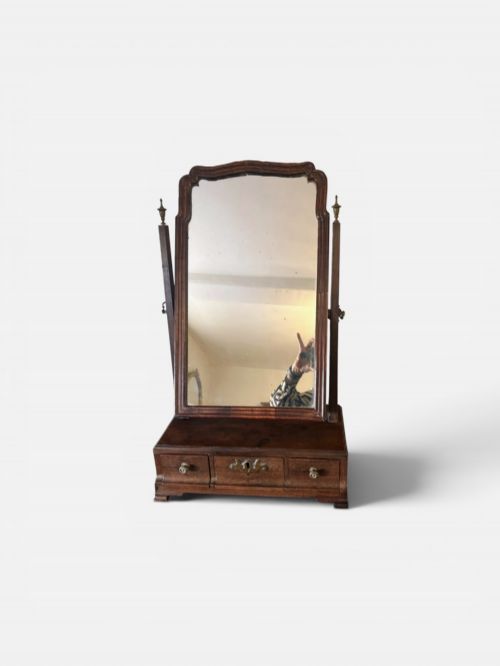
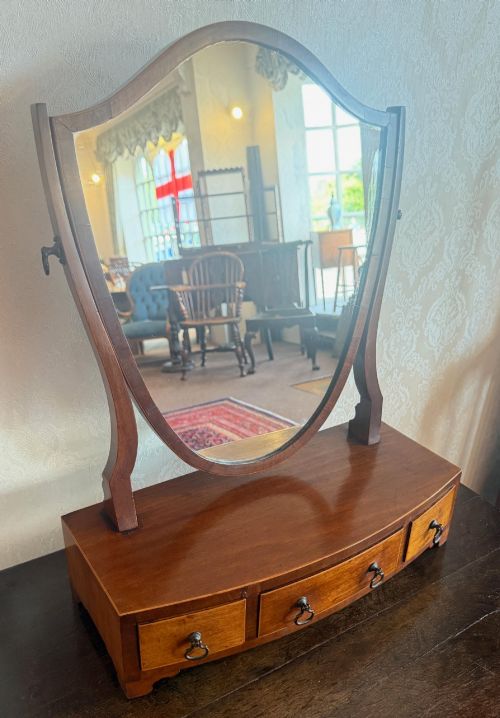
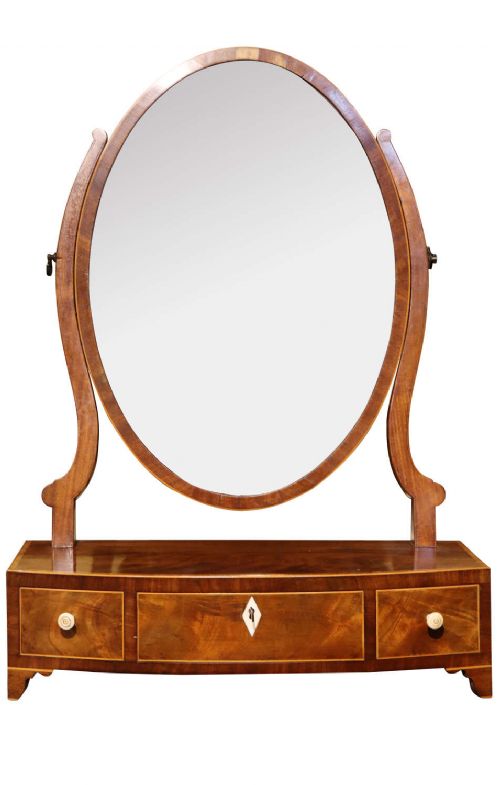
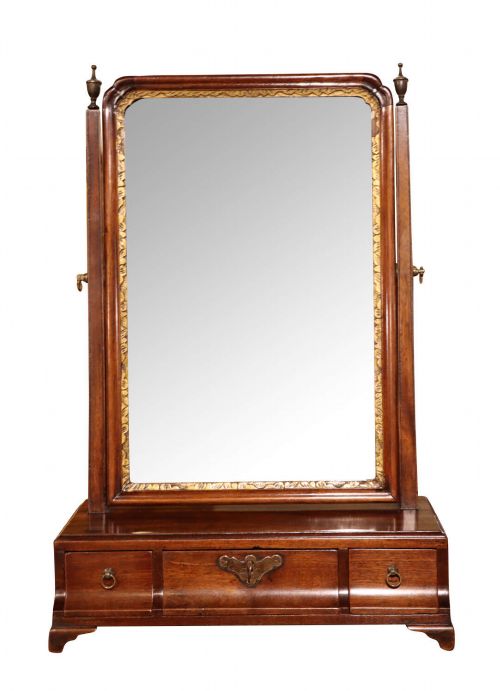


Mahogany Toilet Glass with Drawers
A mahogany toilet glass with drawers sits upon a dressing table to catch the morning light while housing small valuables.
Mahogany Toilet Glass with Drawers
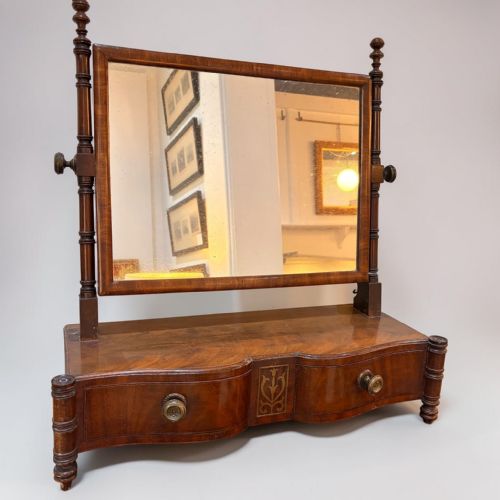
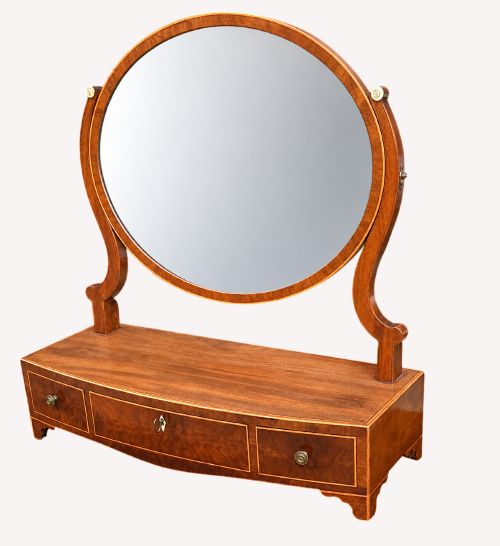
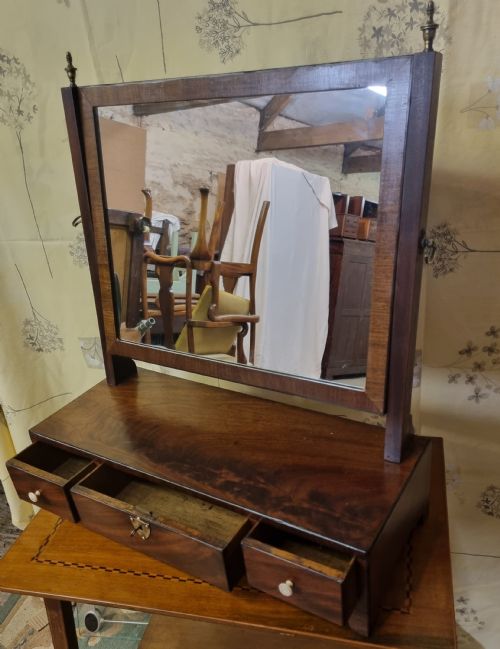
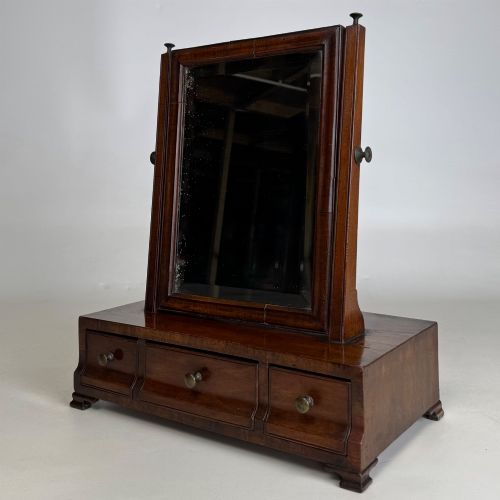
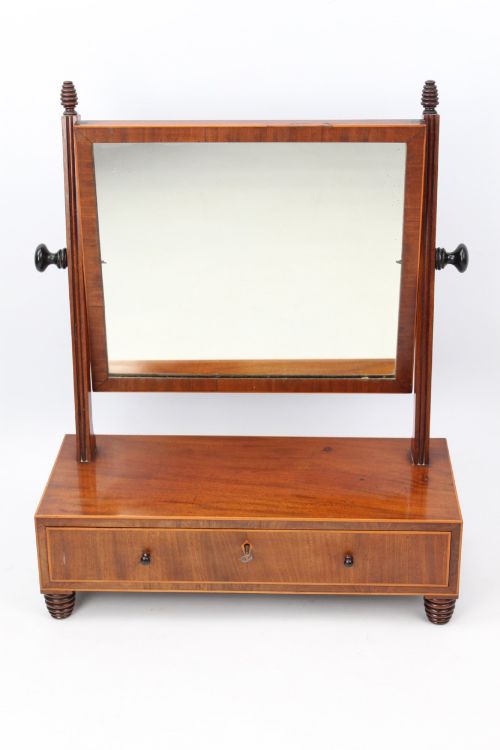
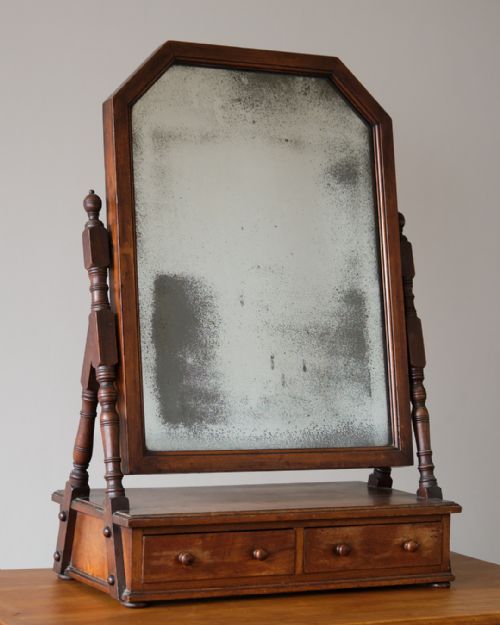
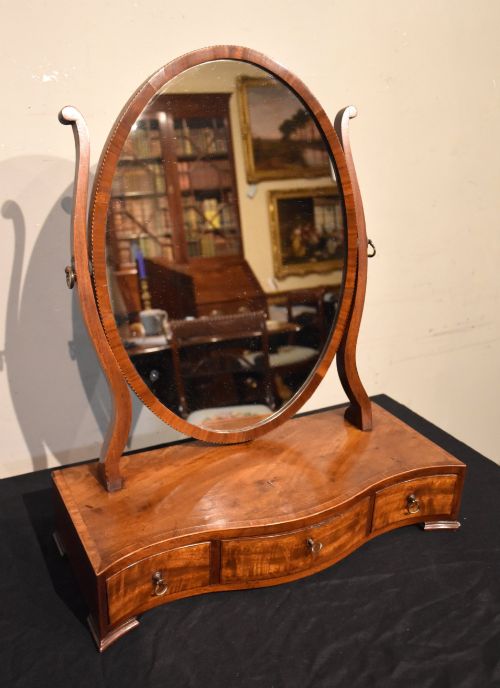
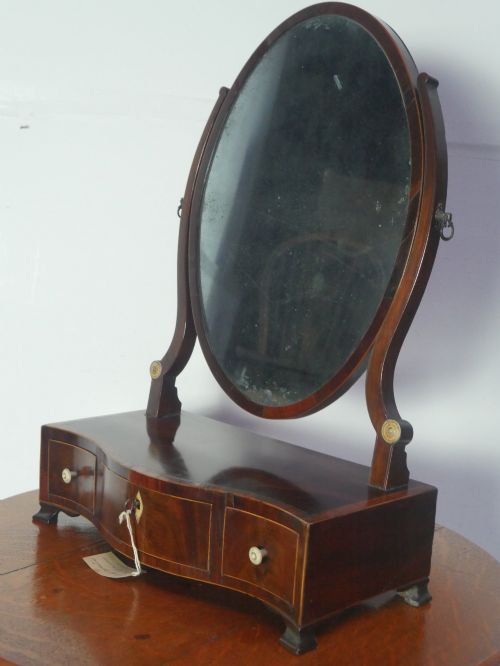
A mahogany toilet glass with drawers is a tabletop dressing mirror designed to tilt within upright supports above a small base fitted with storage compartments. These pieces range from compact Georgian examples to larger Victorian variations found across this page.
The form developed to serve morning grooming routines in bedrooms and dressing rooms before full-length cheval mirrors became common. Most pieces on this page originate from the eighteenth and nineteenth centuries, spanning Georgian, Regency, and Victorian periods.
Makers built these mirrors to sit securely on chests of drawers or dedicated dressing tables. The base typically incorporates one, two, or three small drawers intended for jewellery, cosmetics, and personal items.
How They Were Made
Cabinet makers constructed the frames and drawer boxes primarily in solid mahogany, sometimes incorporating walnut, burr maple, or satinwood inlay for decorative contrast. Timber selection dictated the weight and colour depth of each piece, ranging from pale eighteenth-century tones to rich Victorian finishes.
The mirror glass itself swings between two vertical uprights using brass screw knobs or pins that allow the user to adjust the angle. Base sections feature hand-cut dovetail joints on the drawers, often complemented by small bone or brass escutcheons and pulls.
Some drawers hide tiny secret compartments originally intended for love letters or hidden currency.
What Varies in Quality
Quality depends upon the precision of the cabinet work, particularly the fineness of the drawer dovetailing and the choice of figured timber veneers. Superior examples display balanced proportions between the mirror plate and the base, avoiding heavy or clumsy upright supports.
The condition and authenticity of the mirror glass and brass hardware significantly influence the standard of a piece. Original mercury plates or early replacement glass show subtle imperfections that enhance the character of period pieces compared to modern glass.
The Mahogany Toilet Glass with Drawers Glossary
- Toilet glass
- A period term for a dressing table mirror with integrated drawers. These items were positioned on tables for personal grooming.
- Swing mirror
- A mirror plate mounted on pivots between two upright posts allowing it to tilt. This mechanism lets the user adjust the viewing angle.
- Serpentine
- A curved shape resembling a snake, featuring a convex centre flanked by concave curves. This contour frequently appears on high-status drawer fronts.
- Marquetry
- Decorative woodwork formed by fitting contrasting veneers into a prepared background. Floral or geometric patterns frequently adorn eighteenth-century surfaces.
- Dovetail
- A joint formed by interlocking wedge-shaped fingers used in drawer construction. Hand-cut variations indicate traditional craftsmanship.
Mahogany Toilet Glass with Drawers: Frequently Asked Questions
Where should I place a toilet glass?
These mirrors sit comfortably on top of chests of drawers, sideboards, or dressing tables in a bedroom or hallway. Ensure the surface is stable and deep enough to support the footprint of the base.
Position the piece near a natural light source to make best use of the adjustable swing mirror plate during daily routines.
How do I date a mahogany mirror?
Examine the construction methods of the drawer boxes, the species of secondary timbers used inside, and the profile of the upright supports. Georgian examples often feature slender proportions and hand-cut dovetails.
Victorian pieces tend to be heavier in build, sometimes incorporating richer carving or burr veneers alongside mid-nineteenth-century brass hardware.
Are the mirror plates original?
Many surviving pieces retain either their original mercury glass or period replacements fitted during the nineteenth century. Original plates often exhibit light foxing, speckling, or minor distortion.
Replacement glass is common because fragile mirrors frequently broke over generations of daily domestic use and household moving.
What fits in the drawers?
The small compartments within the base were designed for personal items such as rings, pins, cosmetics, and small letters. The configuration ranges from a single long drawer to three small serpentine boxes.
Avoid overloading these shallow spaces with heavy modern items to preserve the historical drawer runners and internal timber partitions.