
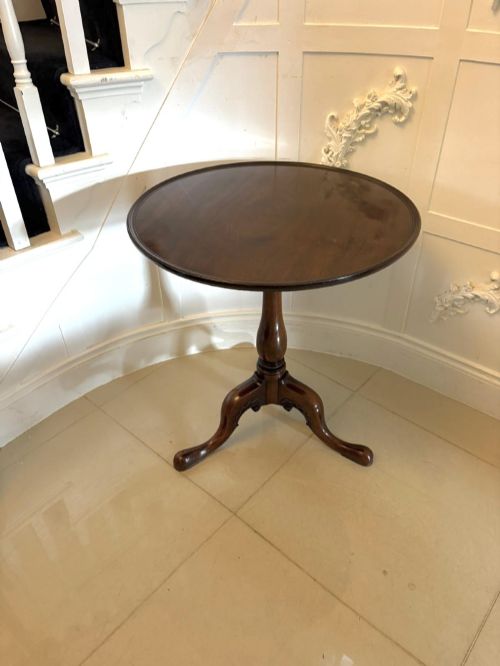
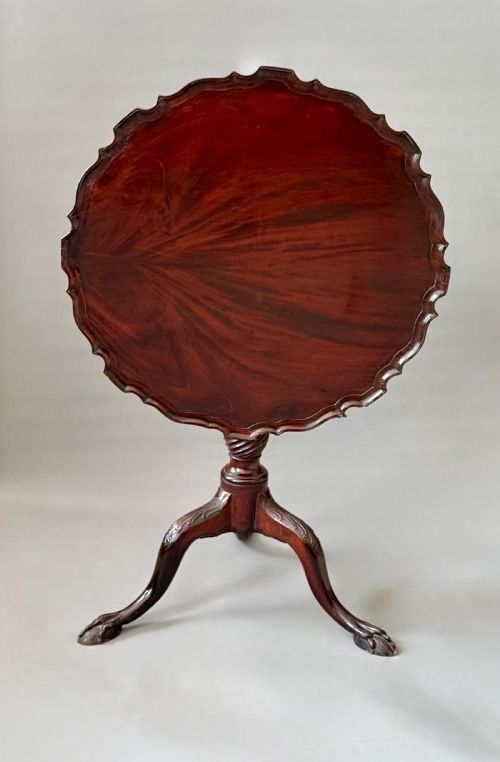
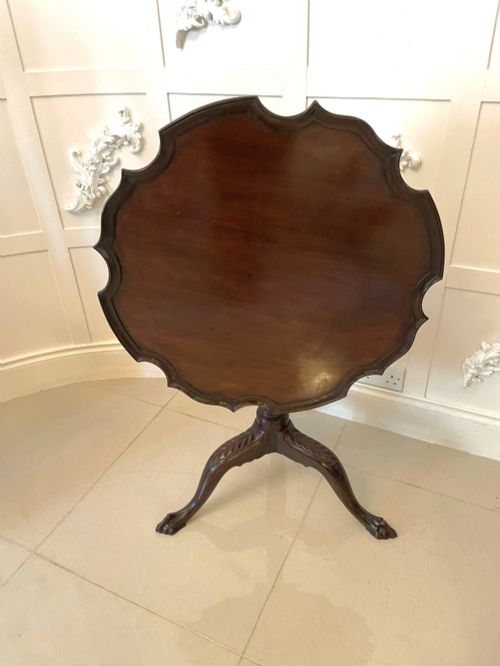
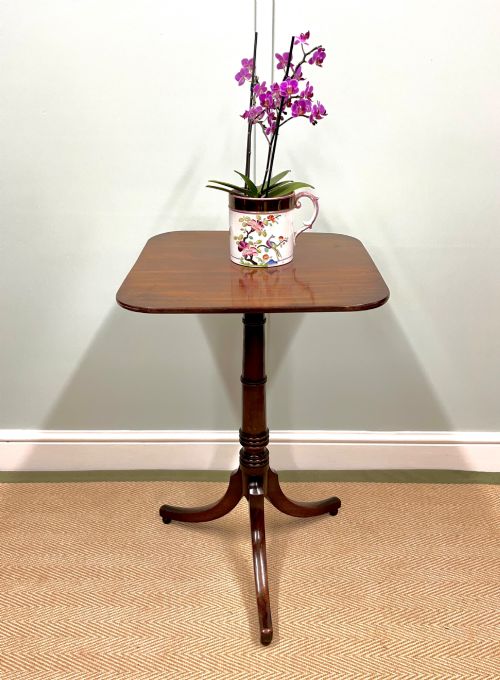
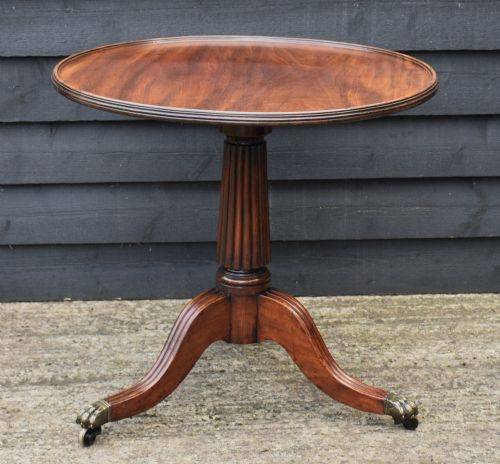
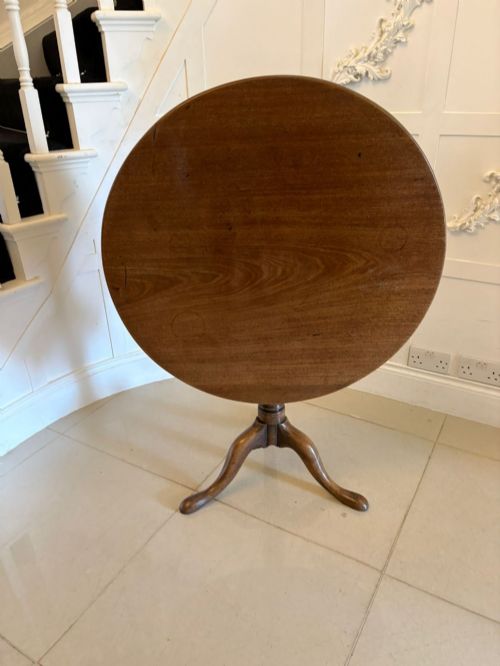
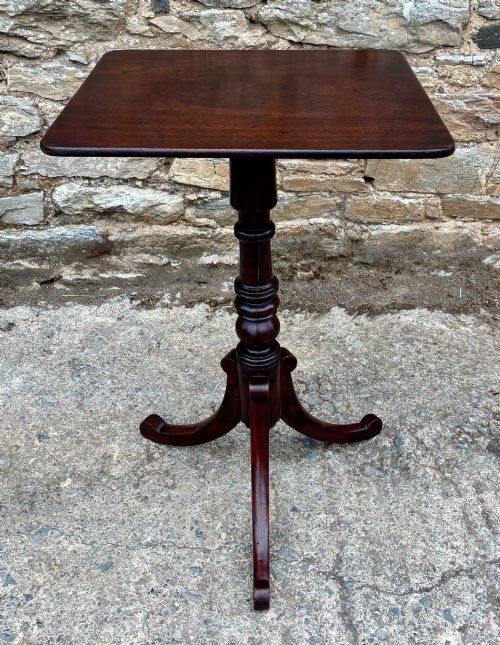
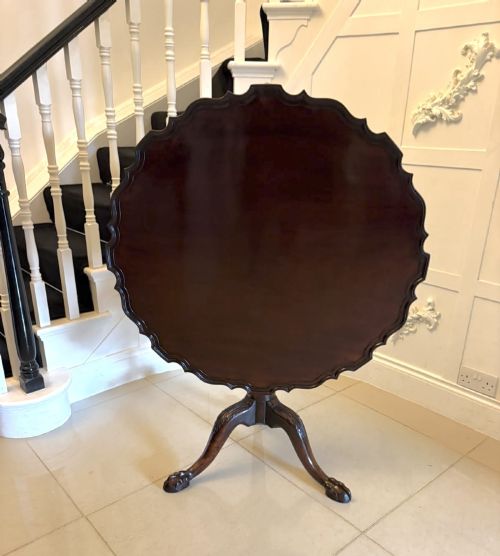
Mahogany Tilt Top Wine Table
A mahogany tilt top wine table combines a clever pivoting mechanism with a compact tripod base, offering practical versatility alongside eighteenth- and nineteenth-century cabinet-making skill.
Mahogany Tilt Top Wine Table
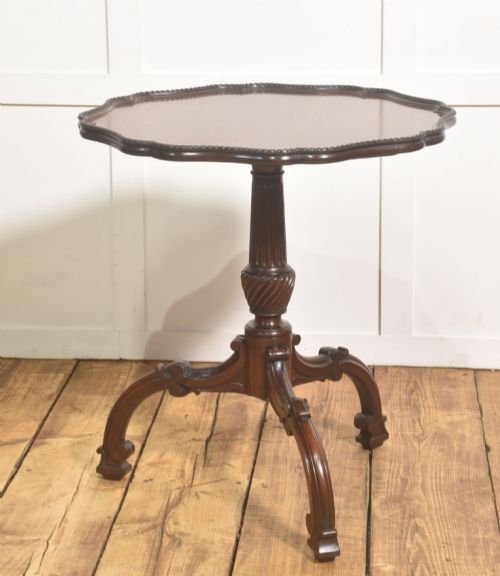
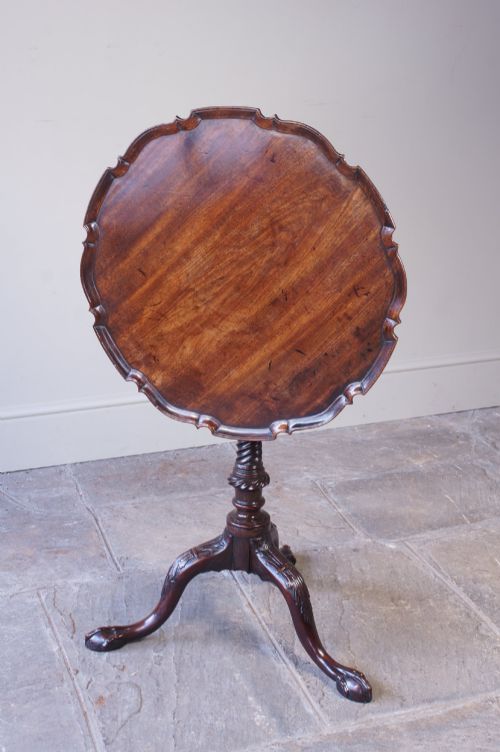
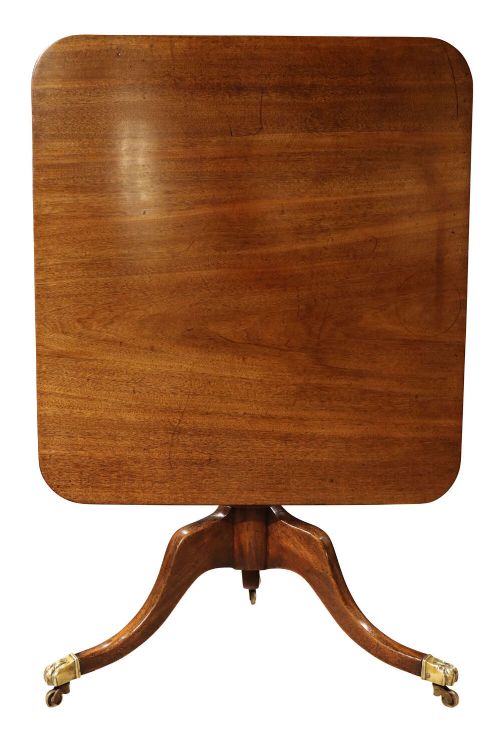
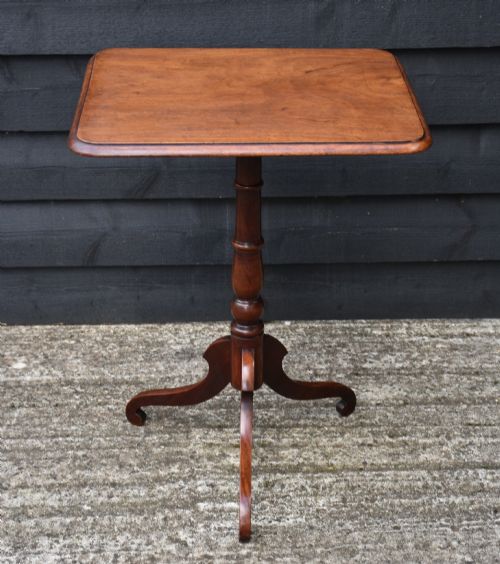
A mahogany tilt top wine table is a compact occasional piece designed to stand beside seating or against a wall when not in use. The top pivots on a catch or birdcage mechanism, allowing the surface to fold flat vertically to save space in smaller rooms.
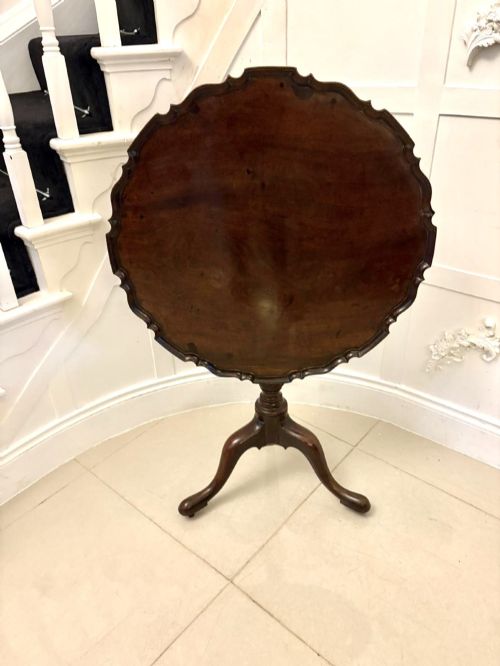
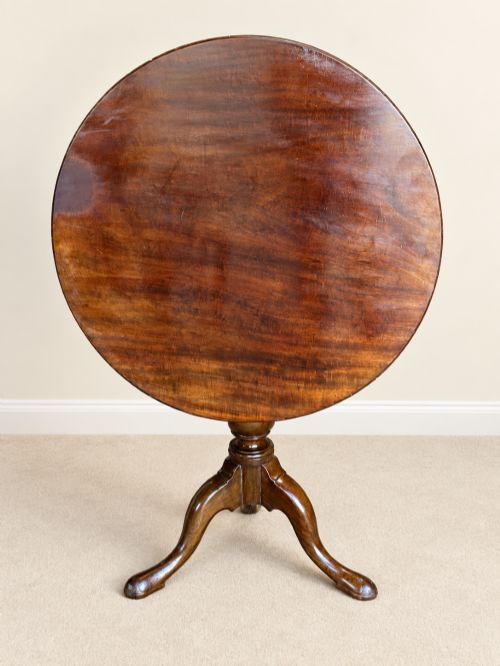
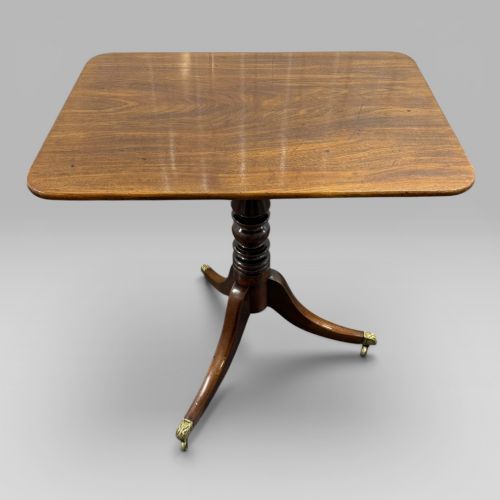
Most examples seen here date from the Georgian and Regency periods, featuring round, oval, octagonal or piecrust tops supported by a turned pillar and three splayed legs. Makers also produced later revival versions during the Victorian and Edwardian eras, mirroring earlier eighteenth-century designs.
While primarily associated with serving wine or tea, these small tables function well as general occasional or lamp tables. The combination of dense timber and steady tripod framing makes them enduring items for modern interiors.
How they were made
Cabinet makers built these tables predominantly from solid mahogany, occasionally utilising dense Cuban mahogany or accenting the surfaces with boxwood inlay, rosewood, brass or walnut. The timber was selected for its strength and rich grain, allowing the wood to be turned finely on a lathe without splitting.
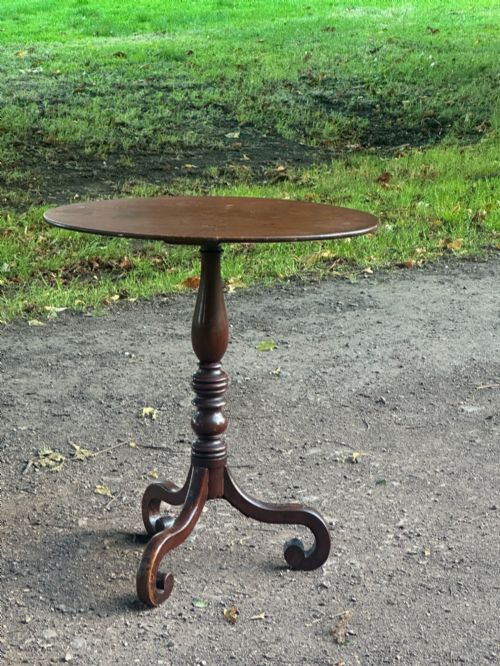
The pivoting action relies on a hinged block or a revolving birdcage mechanism fitted beneath the top, secured to a central turned pedestal. This pillar connects down to three shaped tripod legs, often ending in pad feet or spade feet.
Some Victorian owners enjoyed showing off their clever birdcage mechanisms by spinning the tea service in circles while guests looked on.
What varies in quality
Quality rests in the crispness of the timber carving and the stability of the tilting action. Finer examples display hand-carved piecrust edges, turned urn pedestals and well-fitted brass catches that prevent the tabletop from wobbling when locked horizontal.
The choice of mahogany also dictates worth, with figured Cuban timber and subtle boxwood stringing marking out superior workshops. Poorer construction shows in heavy, clumsy pillar turnings and loose pivot joints that fail to hold the tabletop steady.
Gillow
The Mahogany Tilt Top Wine Table Glossary
- Tilt-top
- A tabletop mounted on a pivoting hinge so it can be stored flat against the pillar when not in use. This clever space-saving device became standard on eighteenth-century tripod tables.
- Birdcage
- A revolving wooden framework fitted beneath the tabletop that allows the surface to both tilt and rotate. This mechanism is prized by collectors for its mechanical ingenuity.
- Piecrust edge
- A raised, scalloped tabletop border carved from a single solid piece of timber rather than applied in sections. It demands exceptional skill from the woodcarver.
- Tripod base
- A support structure comprising three splayed legs radiating from a central turned pedestal. This configuration ensures the table remains stable on uneven floorboards.
- Snap top
- An alternative term for a tilt-top table featuring a spring-loaded brass catch that locks the surface securely into the horizontal position.
Mahogany Tilt Top Wine Table: Frequently Asked Questions
What is a tilt top wine table used for?
These tables served as portable surfaces for holding glasses, bottles or small lamps during evening gatherings. Their tilting tops meant servants could tuck them away against the wall when the room was needed for dancing or dining.
Today, they suit narrow spaces, acting as bedside surfaces or occasional spots for drinks beside a sofa. Their historic pivoting function remains entirely practical for modern living.
How do you tell a Georgian table from a Victorian copy?
Georgian tables usually feature heavier, closely grained Cuban mahogany with hand-turned pillars and subtle patination built up over centuries. The timber components show traditional pegged joinery and hand-planed underside surfaces.
Victorian and later revival pieces often display shinier factory finishes, machine-cut screws, and lighter or redder timber tones. Examining the block beneath the top helps reveal whether the mechanism is eighteenth-century or a later replacement.
Why does the top tilt?
The pivoting mechanism allowed domestic staff to clear floor space quickly in smaller drawing rooms. A wooden catch or metal latch held the surface firmly upright when stored.
This clever design prevents the tables from taking up valuable room while displaying the attractive wood grain of the tabletop when folded down.