

Mahogany Tiered Buffet
These mahogany tiered buffets combine rich timber with stepped tiers to serve dining rooms with distinct period character.
Mahogany Tiered Buffet
A mahogany tiered buffet stands as a practical piece of dining furniture designed to hold dishes and serving items across multiple graduated levels. When you search for a mahogany tiered buffet, you encounter forms that span several distinct centuries and design epochs.
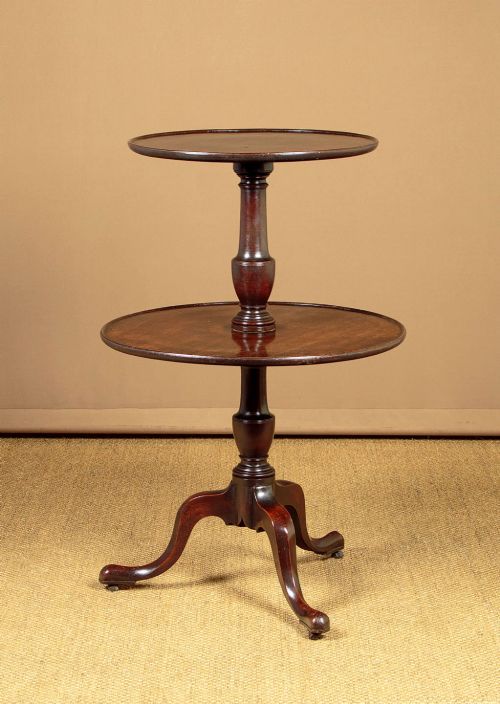
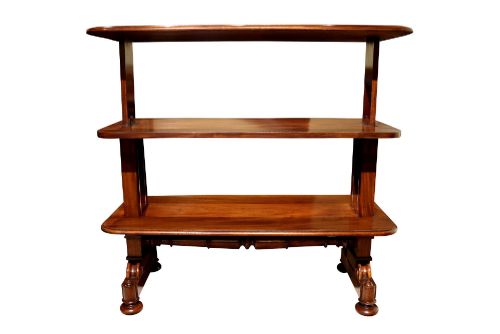
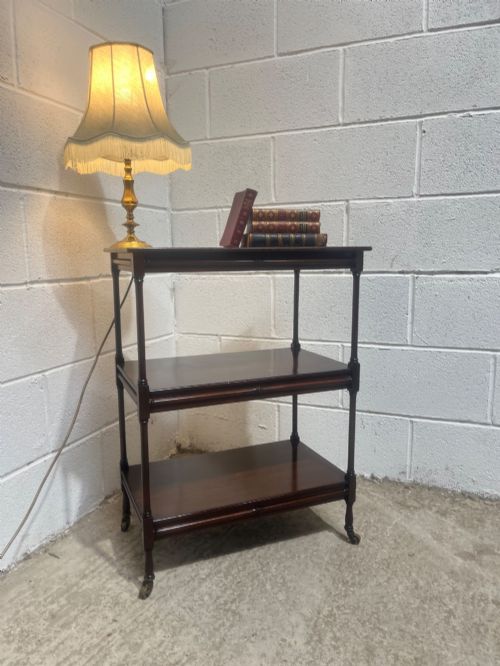
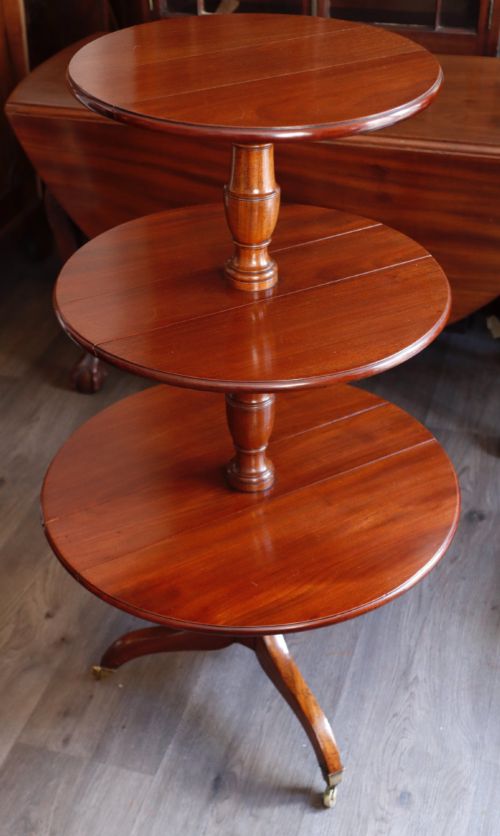
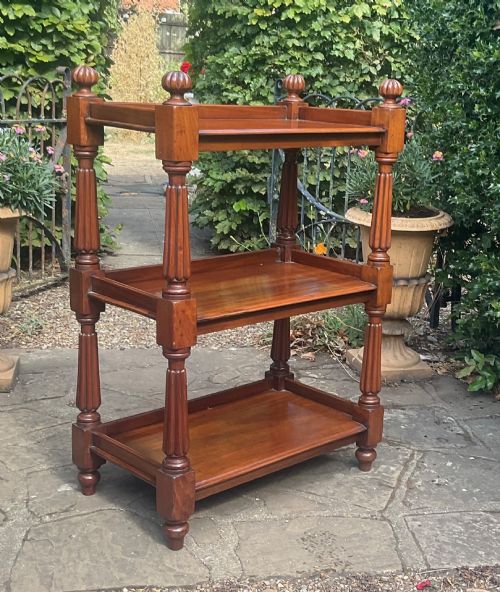
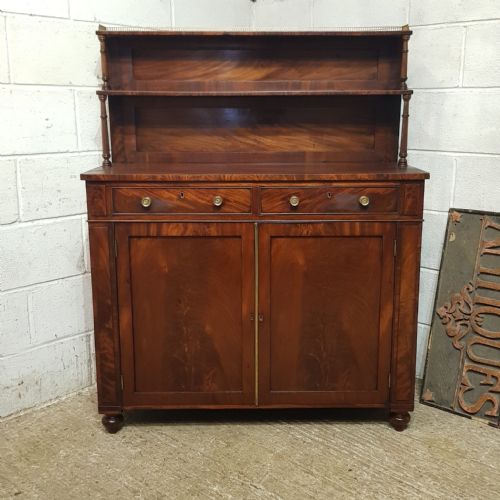
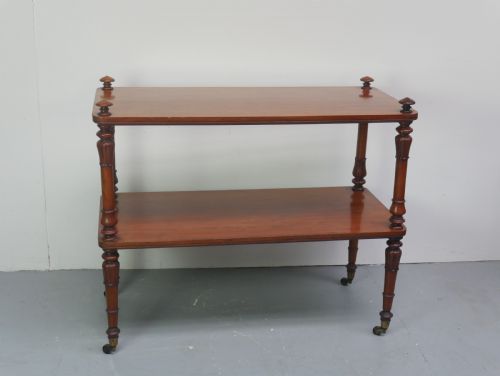
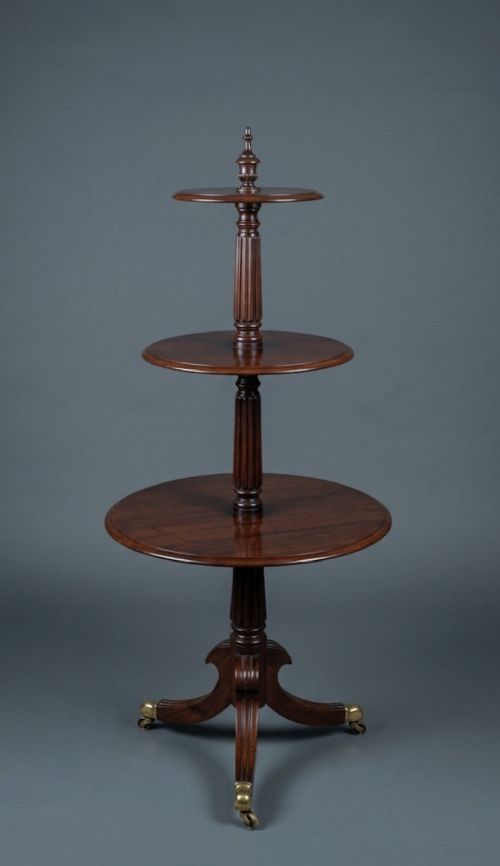
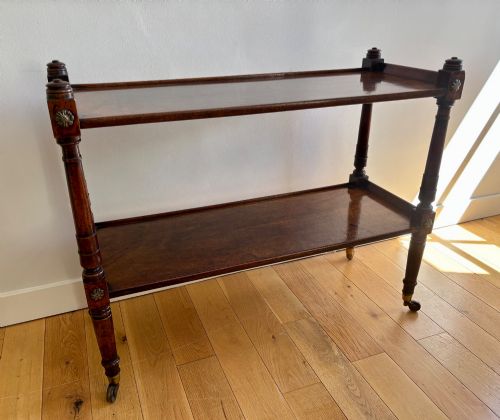
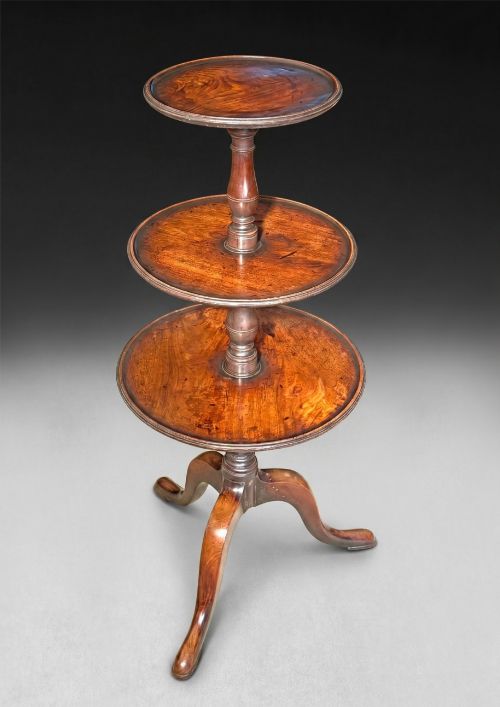
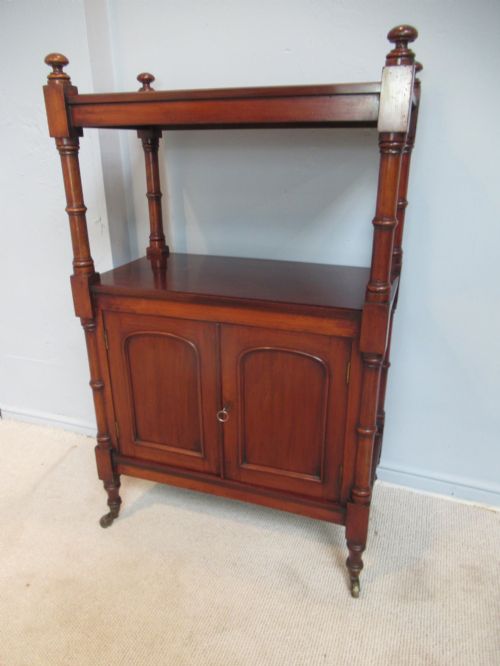
The pieces on this page appear most frequently as dumb waiters, etageres, and serving tables featuring two or three tiers. Makers constructed these items across Georgian, Regency, and Victorian periods, utilising circular, oval, and rectangular tier formats.
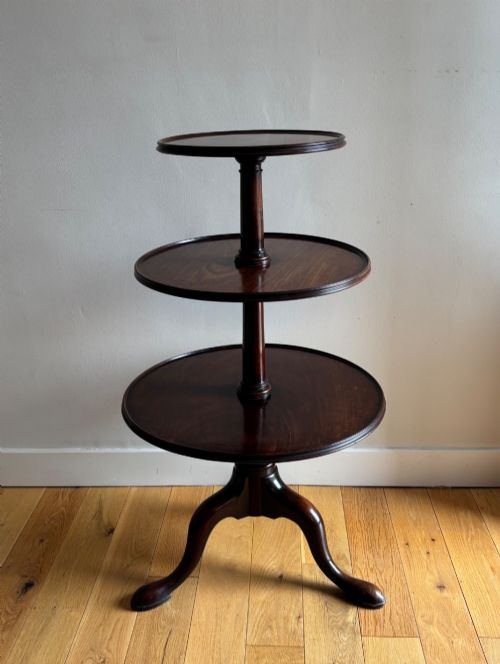
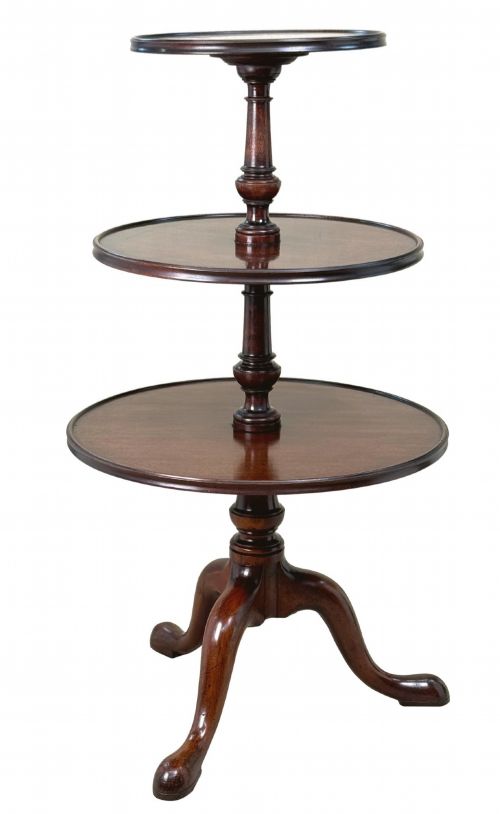
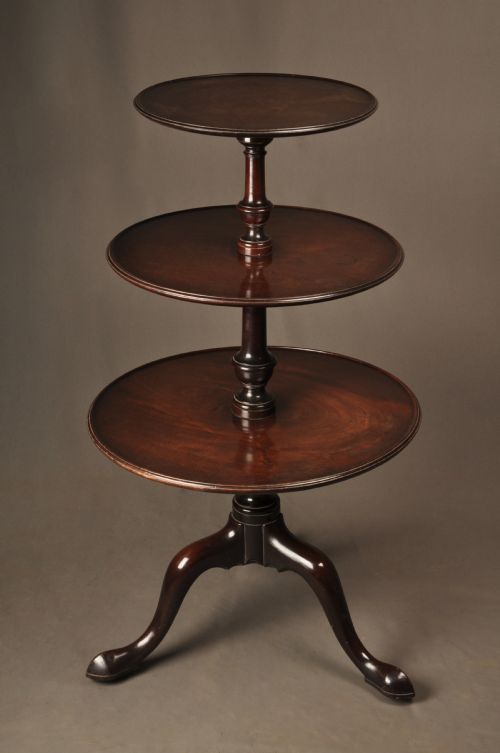
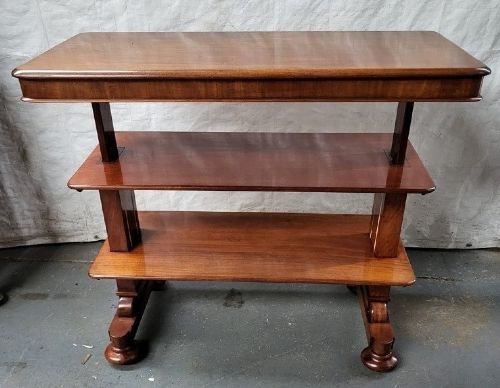
Examples range from early George III circular revolving designs supported on tripod bases to later William IV rise and fall versions and Victorian folding models. Buyers find both compact three-tier units and substantial freestanding serving tables suited for various dining spaces.
Materials and construction
Cabinetmakers built these tiered pieces primarily from solid mahogany and Cuban mahogany, sometimes selecting fiddleback varieties for enhanced grain movement. Workshops also incorporated brass for castors and mounts, alongside occasional ceramic elements, parcel gilt highlights, and ebonised wood details.
Construction techniques involved graduated tier platforms supported by robust central turned columns, tripod legs, or framed upright structures. Many examples feature rotating tiers, folding mechanisms, or rise and fall actions enabled by specialised hardware.
Mahogany Tiered Buffet Retail Price Guide 2026
Typical asking prices for mahogany tiered buffet among the pieces listed under this phrase on Sellingantiques today, from the lower quarter to the upper quarter. They describe what is for sale here now, not the wider market.
Some dining rooms relied on silent wooden assistants because guests preferred gossiping without the servants listening in.
What separates the tiers of quality
Quality depends heavily on the selection of timber, with dense Cuban mahogany and figured veneers representing the finer end of the spectrum. The crispness of the turning on central pillars and the original condition of brass castors further distinguish superior pieces from standard workshop output.
Design complexity marks the divide between ordinary items and exceptional examples, particularly in metamorphic actions, rise and fall mechanisms, and folding frameworks. Originality of surfaces and hardware remains paramount in determining the standing of any given piece.
The Mahogany Tiered Buffet Glossary
- Dumb Waiter
- A tiered serving stand designed to hold food and tableware without domestic staff present. These pieces typically feature rotating circular trays stacked vertically on a central column.
- Etagere
- A piece of furniture consisting of a number of open shelves for displaying small objects or serving items. These tiered stands provide multiple surfaces in a compact footprint.
- Cuban Mahogany
- A dense, dark timber harvested in the Caribbean and prized for its rich grain and deep colour. Cabinetmakers utilised this superior wood for high-status eighteenth and nineteenth-century furniture.
- Tripod Base
- A three-legged support structure commonly found beneath the central columns of circular dumb waiters. This configuration provides stable balance on uneven dining room floors.
- Metamorphic
- A descriptive term for furniture that alters its form or function through mechanical action. These clever designs include rising tiers and folding structures that adapt to changing spatial needs.
Mahogany Tiered Buffet: Frequently Asked Questions
How were dumb waiters used in dining rooms?
These tiered pieces held extra dishes, glasses, and cutlery close to the dining table during meals. Their multiple levels allowed diners to help themselves without servants hovering nearby.
Over time, households adapted these versatile stands for serving tea, displaying ornaments, or organising books in living spaces. Their tiered surfaces maximised vertical storage in compact rooms.
How do I tell a Georgian tier from a Victorian one?
Georgian examples often showcase restrained classical proportions, elegant tripod bases with pad or spade feet, and fine timber selection. They frequently employ simple rotating circular tiers designed for eighteenth-century dining etiquette.
Victorian versions tend to be heavier in build, sometimes incorporating mechanical elements like rise and fall actions or folding frames. They also introduce rectangular formats, castors, and varied wood treatments such as ebonised details.
Do these pieces suit modern homes?
Mahogany tiered buffets fit comfortably into contemporary interiors as bedside stands, plant holders, or hallway display surfaces. Their vertical stacking saves floor space while providing practical shelving.
Placing a three-tier stand in a corner or beside a sofa introduces period warmth and useful surface area. The rich dark timber tones anchor lighter modern colour schemes effectively.
What does a metamorphic mechanism do?
Metamorphic mechanisms allow the furniture to transform its height or configuration through sliding parts, screws, or hinges. These clever adjustments turn standard serving tables into rising tiers or compact folding units.
Such mechanical ingenuity reflects nineteenth-century preferences for space-saving multi-functional design. Operating these parts reveals the precise engineering embedded in the original construction.