
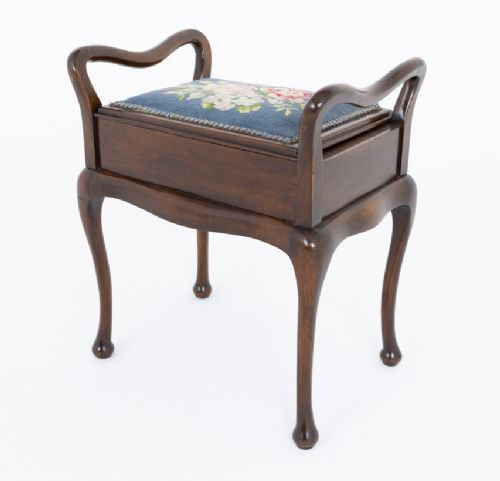

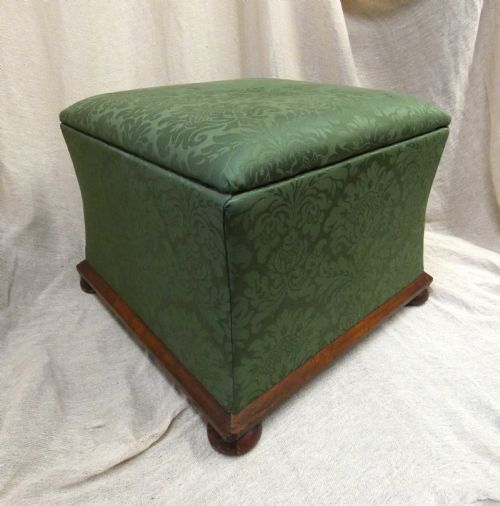


Mahogany Storage Stool
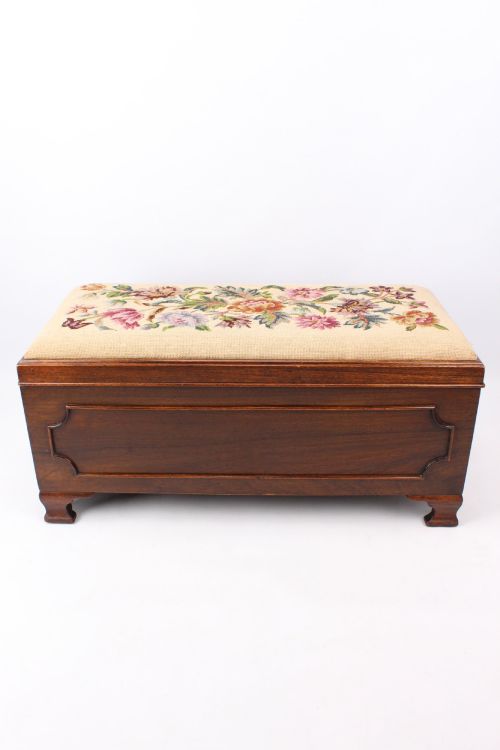
A mahogany storage stool combines timber construction with a practical internal compartment, offering a seat alongside concealed space for sheet music or linens.
Mahogany Storage Stool
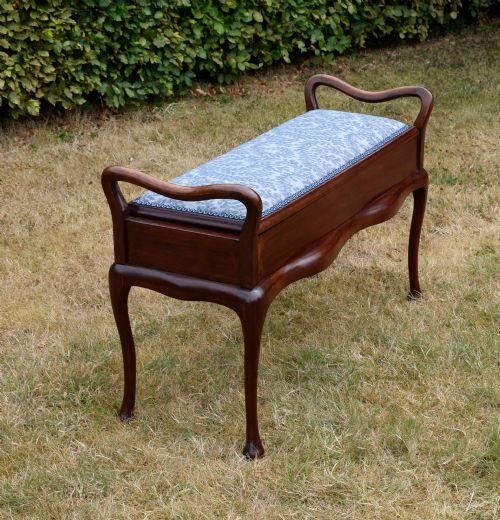
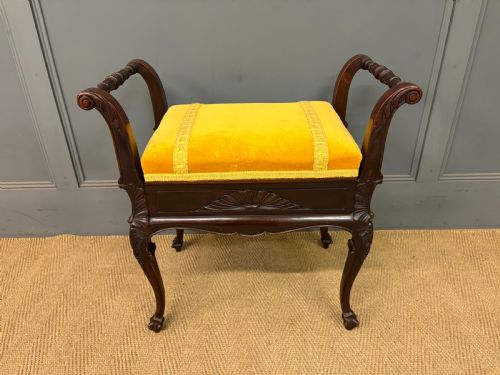
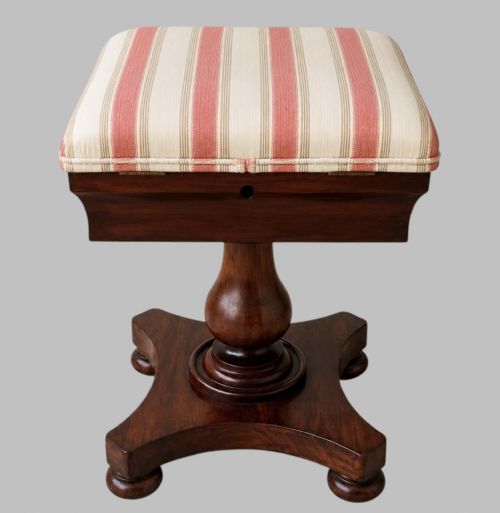
A mahogany storage stool serves multiple functions in a room by providing a solid timber seat that conceals an internal compartment beneath a hinged lid. When searching for a mahogany storage stool, buyers encounter numerous piano stools and music seats alongside larger ottomans, blanket boxes, and sewing box stools.
The pieces appearing on this page span the Regency, Victorian, and Edwardian periods, stretching into the early twentieth century. Edwardian piano stools equipped with storage make up a large portion of the selection, frequently paired with inlaid details or upholstered seats.
Form follows function across these examples, ranging from compact duet seats designed for instruments to substantial country house ottomans and waisted blanket boxes. The timber frame remains consistently mahogany, often combined with fabric, velvet, or needlework tops.
How they were made
Cabinet makers utilised solid mahogany and hardwood for the structural frames, constructing the concealed compartments with sturdy joints to support daily seating use. Lids were hinged securely to allow repeated lifting without compromising the stability of the box.
Upholstery techniques varied according to the period, incorporating fabric, wool, velvet, tapestry, or gros-point needlework over padded seats. Some pieces featured decorative inlay work embedded into the mahogany surfaces, alongside turned or carved wooden supports.
Musicians relied on hidden compartments to keep their favourite nocturnes out of sight from visiting guests.
What varies in quality
The calibre of a piece depends largely on the crispness of the mahogany timber framing and the refinement of any inlaid decoration. Substantial frames with well-executed joinery separate standard utility items from more ambitious workshop productions.
The execution and survival of the original upholstery, whether gros-point tapestry, Liberty fabric, or woven wool, influence the character of the seating top. Finer examples display harmonious proportions between the storage box base and the upholstered lid.
Hallett And Sons
The Mahogany Storage Stool Glossary
- Mahogany
- A durable hardwood valued for its deep reddish-brown colour and smooth grain, used extensively for cabinet furniture.
- Ottoman
- A low upholstered seat or bench, frequently fitted with a hinged lid to provide interior storage.
- Duet piano stool
- An extended seating bench designed for two players, often featuring a lift-up top to hold sheet music.
- Gros-point
- A type of coarse needlepoint embroidery utilised for durable upholstery on historical chair and stool seats.
- Inlay
- A decorative technique where contrasting materials such as lighter woods are fitted into recessed portions of the mahogany surface.
Mahogany Storage Stool: Frequently Asked Questions
What were mahogany storage stools originally used for?
These pieces served primarily as piano and music stools, holding sheet music beneath hinged seats next to upright or grand instruments.
Other variations functioned as sewing boxes, blanket chests, or general ottomans in period sitting rooms and bedrooms.
How do I date a mahogany storage stool?
Dating relies on observing the stylistic markers of the frame, such as Regency curves, Victorian heft, or Edwardian inlay work.
Comparing the construction methods of the internal storage box and the upholstery style helps narrow down the decade of manufacture.
Are piano stools comfortable for daily sitting?
Most period piano stools were built with firm padded tops designed for upright posture while playing instruments rather than lounging.
Many examples feature generous proportions or upholstered lids that provide adequate support for occasional seating in a hallway or living room.
How do I care for the mahogany wood?
Maintain the timber by keeping it away from direct heat sources and sudden temperature fluctuations that can dry out the finish.
Apply a light application of traditional beeswax periodically to nourish the surface and preserve the natural lustre of the hardwood.