

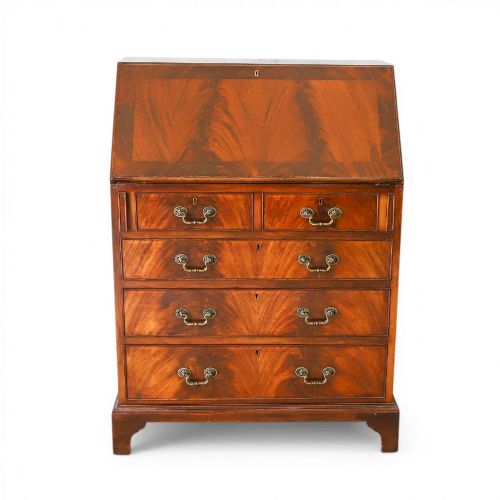
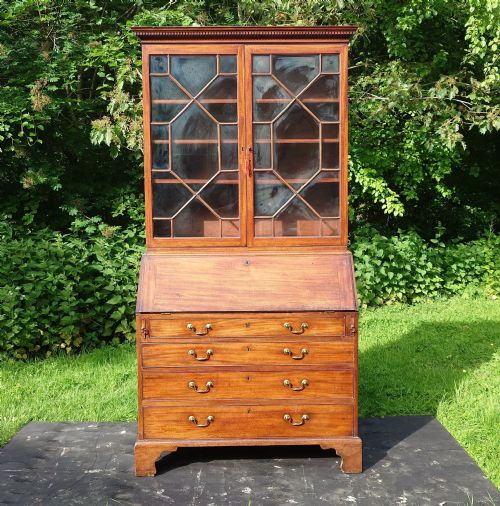

Mahogany Slanted Desk Cabinet
A mahogany slanted desk cabinet offers enclosed writing space and practical storage, combining rich timbers with period craftsmanship for any study.
Mahogany Slanted Desk Cabinet
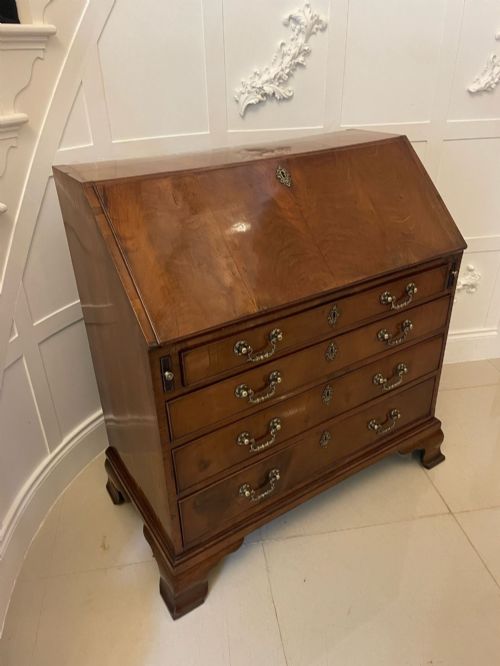
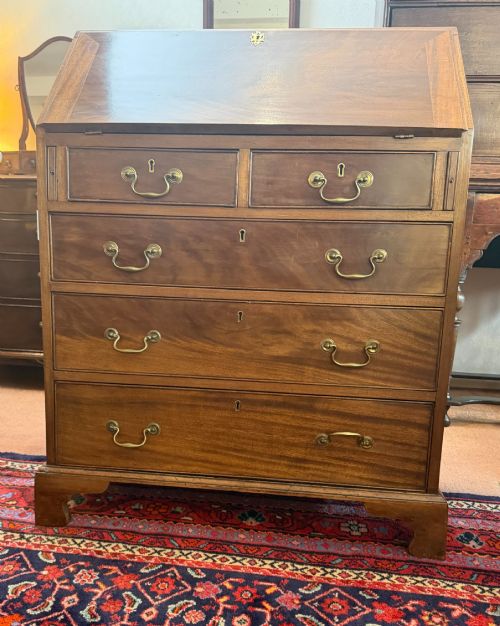
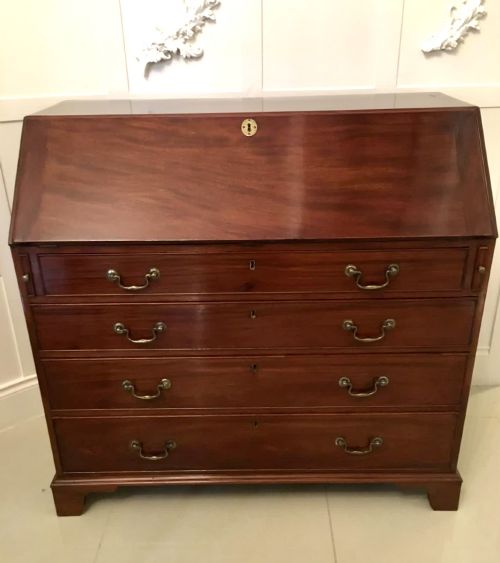
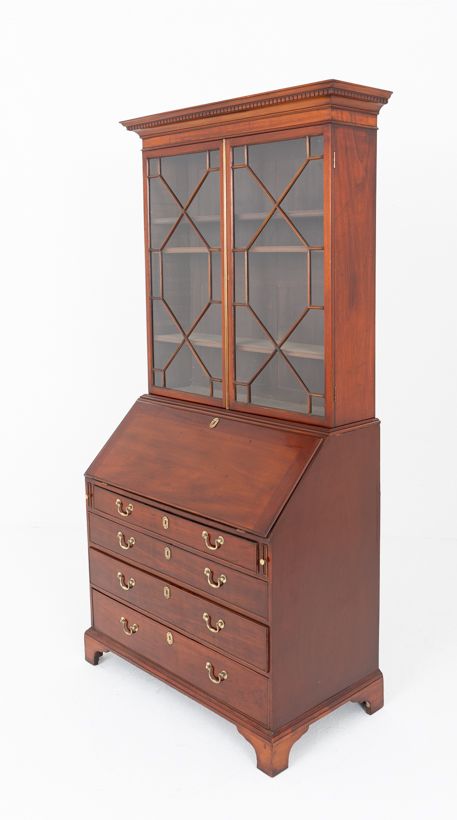
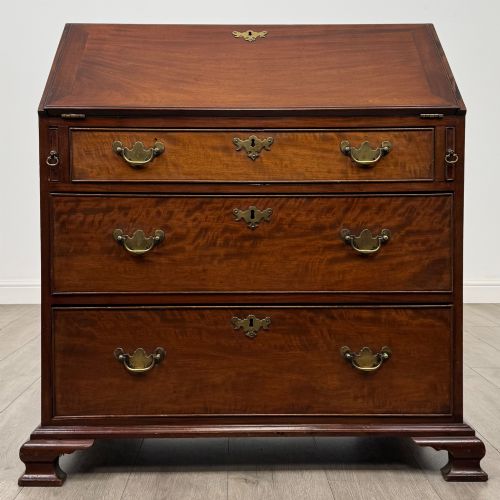
A mahogany slanted desk cabinet primarily encompasses bureau bookcases, bureaux, and writing desks produced across the eighteenth and nineteenth centuries. These pieces combine a hinged writing flap that opens on a slant with fitted interior drawers and pigeonholes for correspondence.
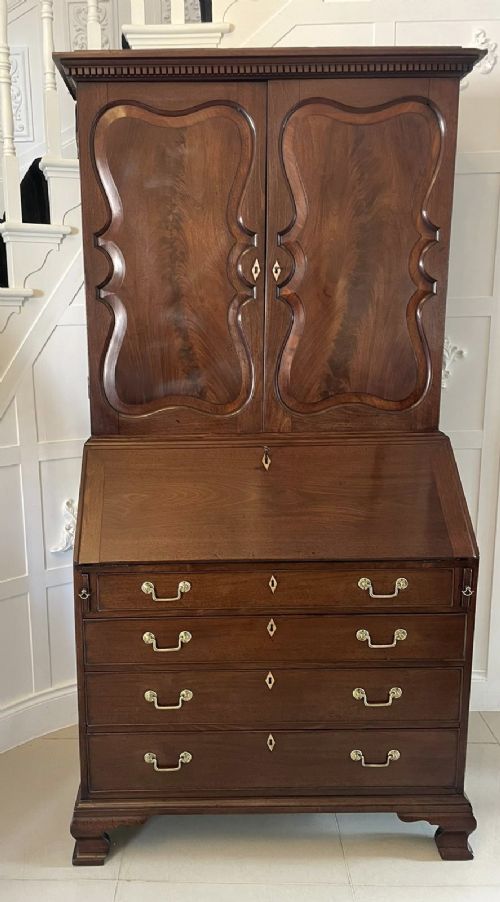
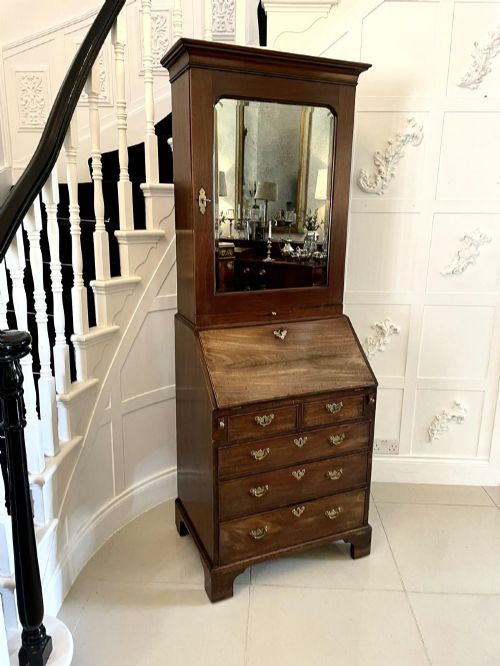
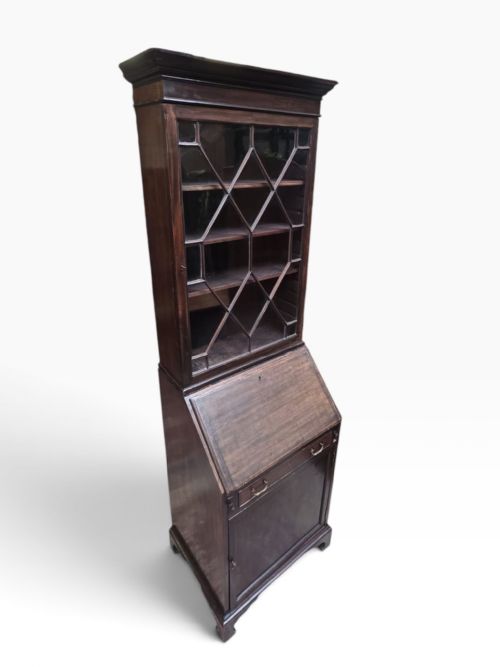
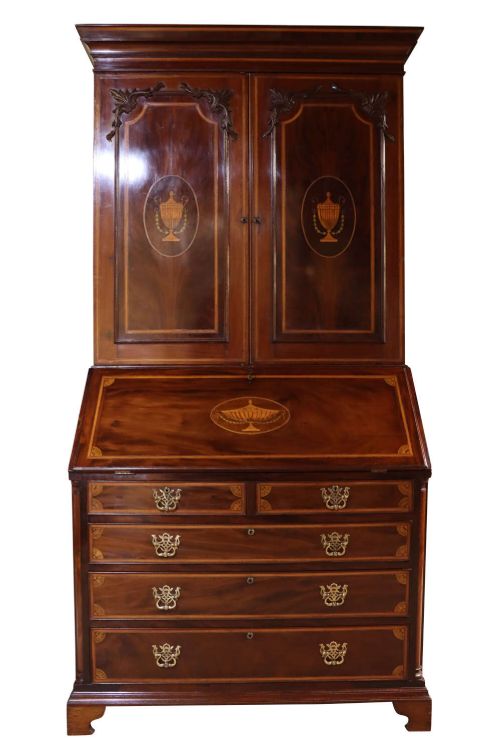
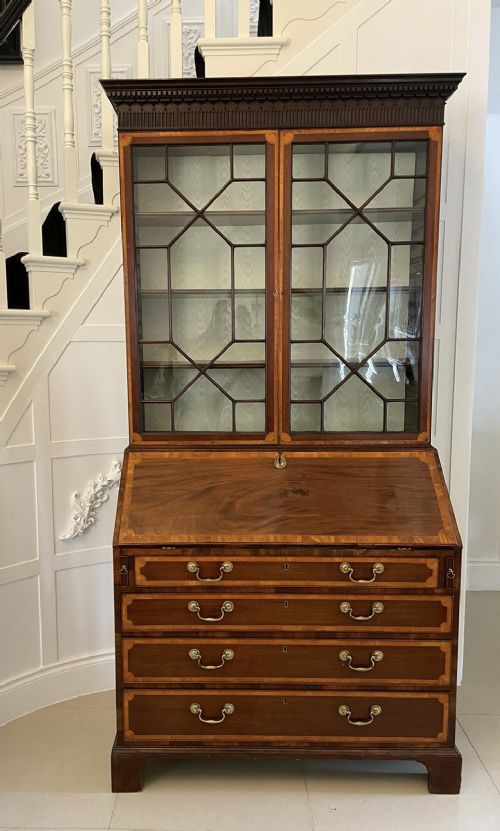
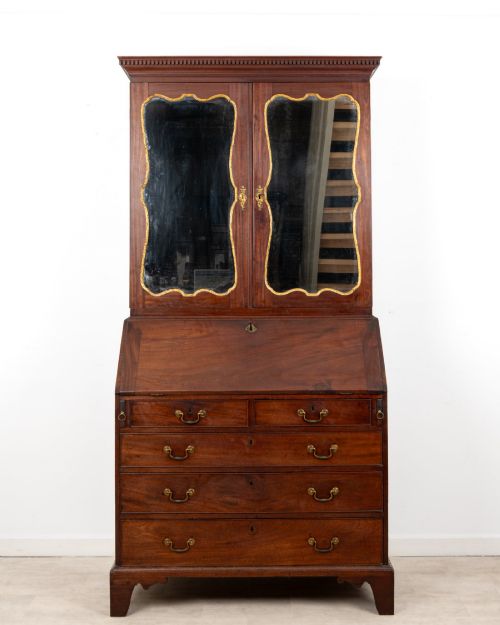
The versions most frequently met on this page span the Georgian and Edwardian periods, appearing alongside Regency and William IV examples. Buyers encounter both compact standalone writing boxes and tall two-part bureau bookcases fitted with glazed upper display sections.
Makers utilised dense primary timbers complemented by secondary woods, creating substantial household items designed for daily administration and document storage. The survival of these pieces demonstrates the enduring utility of modular desk and cabinet combinations.
Materials and Construction Techniques
Cabinet makers constructed these slanted desks using solid mahogany and figured veneers, often selecting flame mahogany for prominent fall fronts and drawer faces. Secondary timbers such as oak support internal framing and hidden drawer linings.
Wood inlay and brass hardware finish the exterior, while glass panels define the upper bookcase doors on taller forms. Satinwood stringing and brass escutcheons frequently accent the primary mahogany surfaces.
Joinery techniques include hand-cut dovetails on drawer construction and pegged joints within the structural carcase. Hinges and fall-front supports rely on robust brass fittings secured to heavy timber frames.
Hidden internal drawers and secret compartments inside these desks provided safe keeping for private letters and small valuables.
Distinctions in Execution and Age
Quality separates pieces through the selection of timber figures, such as highly figured flame mahogany, and the crispness of inlaid satinwood stringing. Finer examples display meticulous grain matching across the fall front and drawer banks.
The complexity of the internal fitments, including secret compartments, shaped pigeonholes, and small drawers, distinguishes superior workshops from standard production. Cabinet proportions also dictate standing presence, with tall and slim profiles achieving particular balance.
The integrity of original brass handles, locks, and glazed doors influences the overall standard of preservation. Pieces retaining untouched surfaces and period hardware exhibit the highest degree of historical authenticity.
Gillows
The Mahogany Slanted Desk Cabinet Glossary
- Bureau
- A desk featuring a sloping hinged lid that drops to form a writing surface, above a bank of lower drawers.
- Bureau Bookcase
- A two-part furniture form combining a lower sloping desk with an upper enclosed shelving or display cabinet.
- Flame Mahogany
- A veneer cut from timber where the branch meets the trunk, producing a distinctive flickering flame pattern.
- Davenport
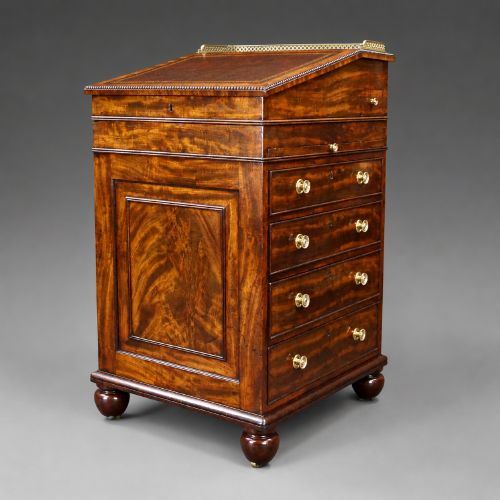
- A compact form of small desk featuring a slanted writing top and a pedestal of side drawers.
- Escritoire
- An antique term for a writing cabinet or desk used for correspondence and document storage.
Mahogany Slanted Desk Cabinet: Frequently Asked Questions
What is a mahogany slanted desk cabinet?
A mahogany slanted desk cabinet is a traditional piece of antique furniture designed for writing and storage, featuring a sloping fall-front lid that opens over interior drawers. These items range from compact standalone writing desks to tall bureau bookcases fitted with upper shelving.
Built primarily during the Georgian, Regency, and Edwardian eras, these cabinets served as functional household workstations for correspondence and record keeping.
How do I date an antique bureau?
Dating relies on examining construction methods, timber choices, and hardware styles across the piece. Georgian and eighteenth-century examples often feature hand-cut dovetails and solid oak drawer linings, while later Victorian and Edwardian pieces show machine assistance.
Stylistic shifts, such as the heavy proportions of William IV or the lighter satinwood stringing of the George III period, also indicate specific eras of manufacture.
Where were these desks placed?
These pieces traditionally stood in private studies, libraries, or parlours where correspondence and household accounts were managed. Their dual function as storage cabinets and writing desks made them central fixtures in period domestic administration.
Taller bureau bookcases also functioned as display furniture in formal reception rooms to showcase bound volumes and decorative objects behind glass doors.
How do I care for mahogany furniture?
Maintaining antique mahogany involves keeping pieces away from direct heat sources and strong sunlight to prevent timber warping and veneer fading. Regular dusting with a soft, dry cloth preserves the polished surface without the buildup of synthetic waxes.
Applying traditional beeswax sparingly helps nourish dry wood and maintain the natural lustre of older finishes over time.