

Mahogany Slanted Bureau
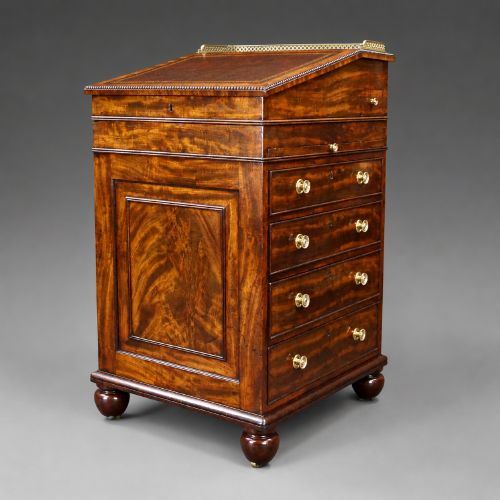
These mahogany slanted bureau pieces offer functional writing spaces wrapped in period timber, providing both practical storage and traditional presence for a room.
Mahogany Slanted Bureau
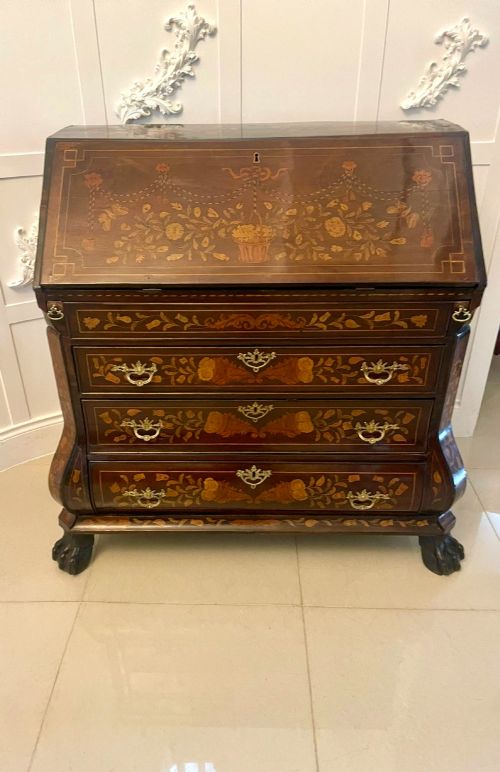
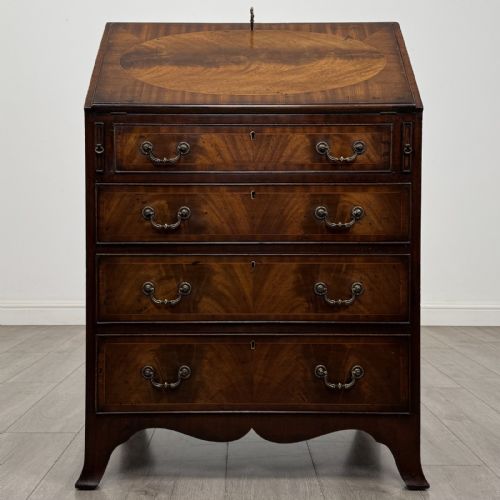
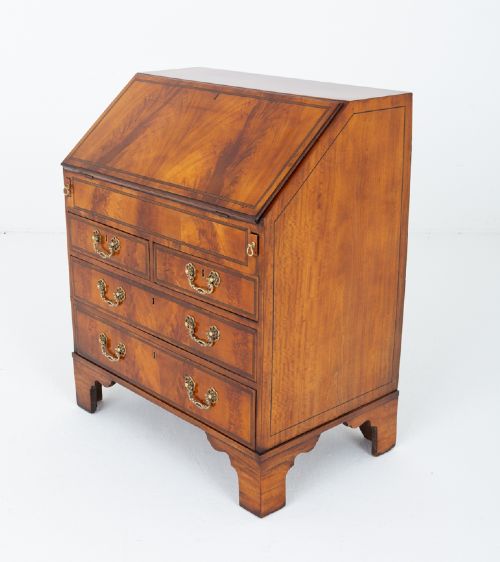
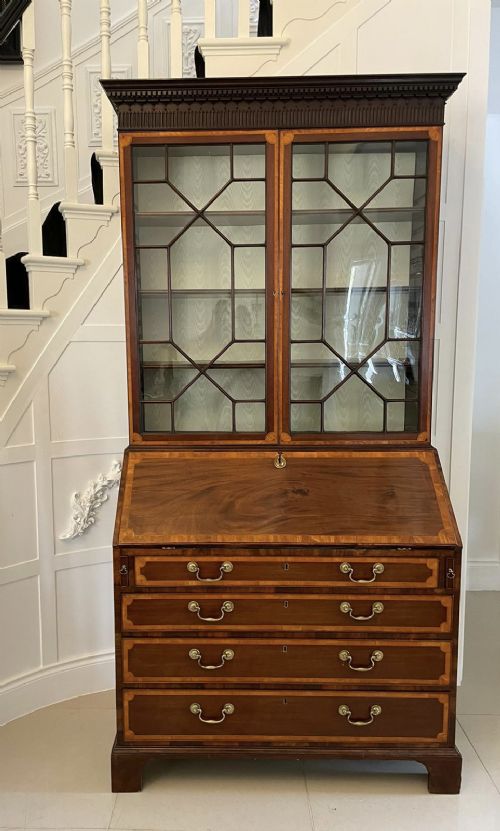
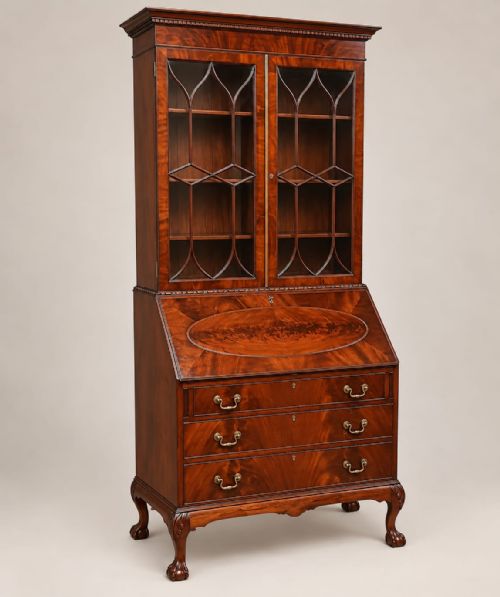
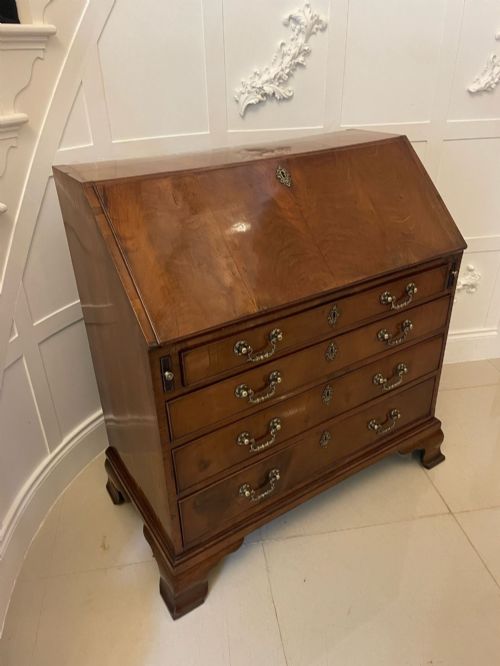
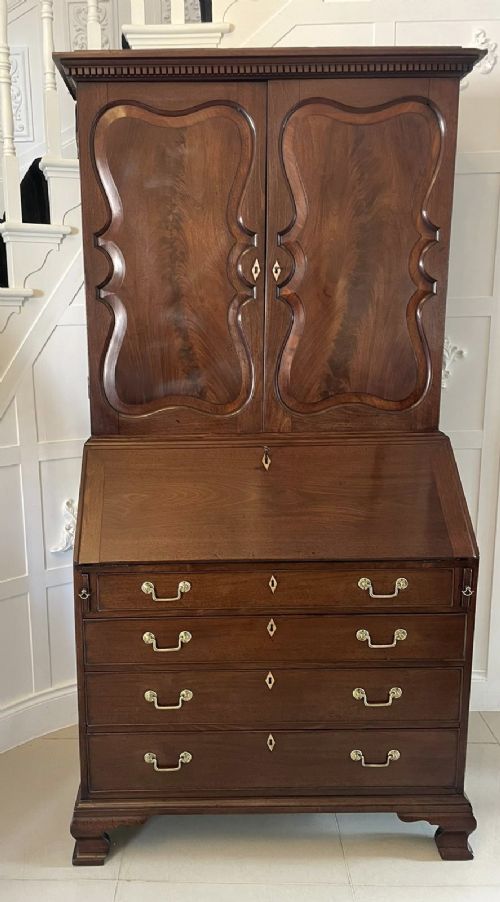
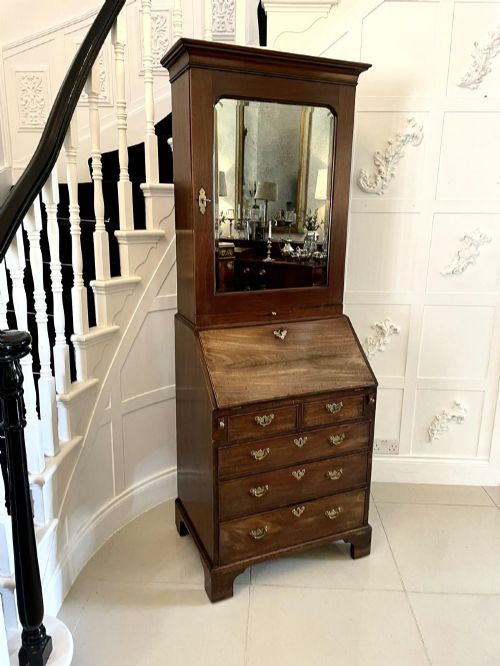
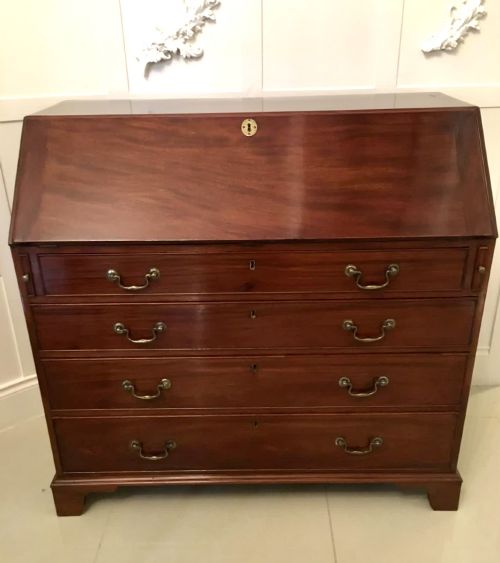
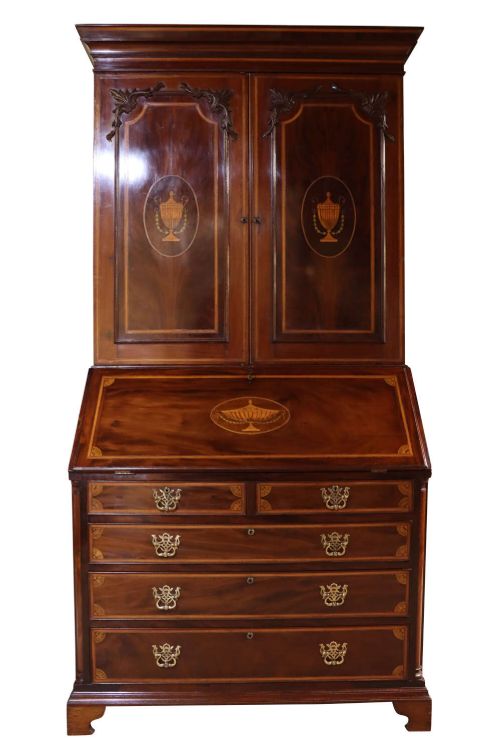
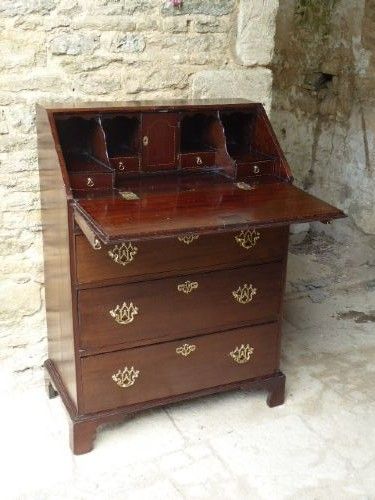
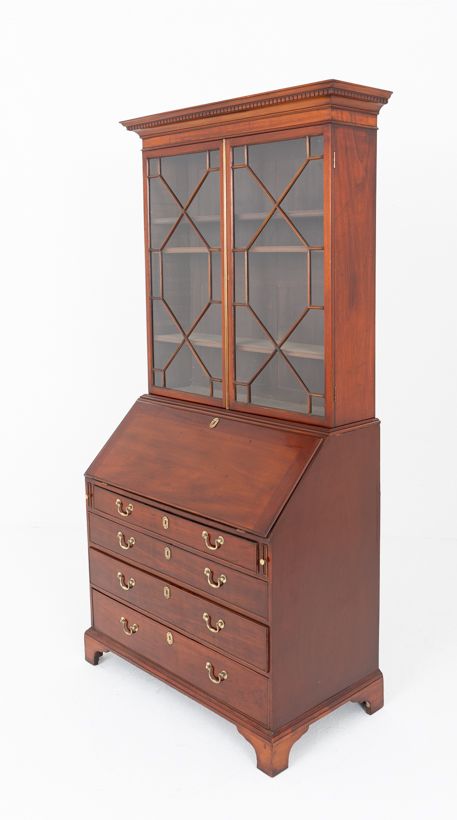
A mahogany slanted bureau provides a practical writing surface that drops down from a sloped front panel, concealing internal compartments. These pieces range from compact desk forms to taller bureau bookcases equipped with upper shelving.
The pieces appearing on this page stem predominantly from Georgian and 18th-century periods, alongside later Victorian, Edwardian, and 1930s examples. Buyers most commonly encounter standard freestanding desks or combined bookcase units finished in dark timber.
How they were made
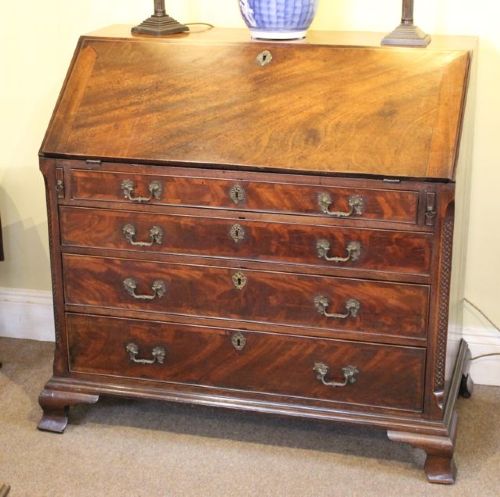
Cabinetmakers built these items primarily using solid mahogany and flame mahogany veneers, often incorporating secondary timbers such as oak. Workshops enriched the exteriors with contrasting fruitwood inlay, satinwood details, and brass hardware.
Structural integrity relied on traditional joinery methods to support the hinged fall front and internal drawers. Glazed panels appeared on the upper sections of bookcase variants.
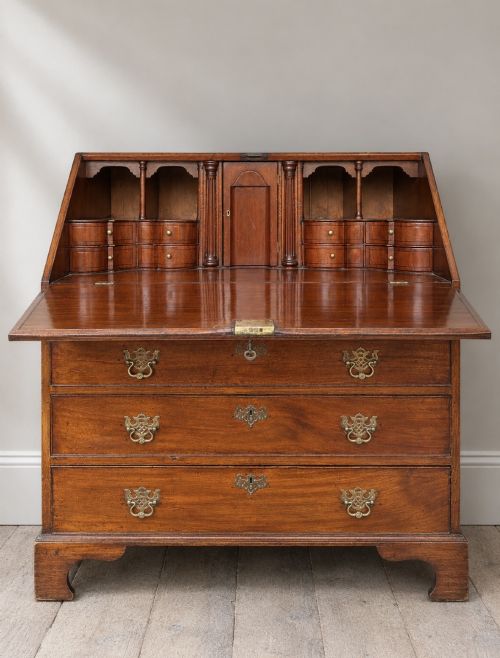
Many bureau interiors contain hidden secret drawers designed to safeguard family letters and small valuables from curious eyes.
What varies in quality
The depth of timber figure and the grain pattern determine the visual impact of the exterior. Highly figured mahogany or flame veneers elevate a piece significantly above plain timber surfaces.
Interior architecture defines the level of craftsmanship within the writing compartment. Elaborate pigeonholes, hidden compartments, and fine inlay work indicate superior workshop origin.
Gillows
The Mahogany Slanted Bureau Glossary
- Fall front
- The hinged slanted panel that pulls down to create a flat writing surface. This component conceals the interior drawers and pigeonholes when closed.
- Bureau bookcase
- A combination furniture form featuring a writing bureau base beneath an upper shelving or cabinet section. These tall units provide both display space and enclosed storage.
- Flame mahogany
- A decorative veneer cut from timber where the branches join the main trunk, producing a rippling, flame-like grain pattern. Cabinetmakers utilised this figure on prominent exterior surfaces.
- Bracket feet
- Simple architectural supports that lift the body of the furniture off the floor. They are typical of 18th-century case pieces.
- Secretaire
- A specialised writing cabinet or desk. The term often describes pieces with fitted internal writing drawers.
Mahogany Slanted Bureau: Frequently Asked Questions
What is a mahogany slanted bureau?
A mahogany slanted bureau is a traditional writing desk featuring a hinged sloping front that opens to reveal internal compartments and a flat working surface. These pieces combine concealed storage with everyday writing utility.
Most examples stand on bracket feet and incorporate drawer storage beneath the writing flap. Taller variants combine the desk base with an upper bookcase or display cabinet.
How do I date a mahogany bureau?
Dating relies on observing stylistic markers, construction methods, and timber characteristics. Pieces from the 18th century often display simpler bracket feet and dense mahogany grain, while Edwardian or later examples show different internal joinery.
Hardware such as brass handles and escutcheons also offer clues to the period of manufacture. Secondary timbers inside the drawers help confirm the era.
Where should I place a bureau?
These pieces suit living rooms, studies, or hallways where their compact footprint provides surface space without dominating the floor. The sloping front allows them to sit comfortably against walls in narrow areas.
Ensure sufficient clearance in front of the unit for the fall front panel to open fully. Placing them away from direct sunlight protects the mahogany finish.
How do I maintain the wood?
Maintain the timber by dusting regularly with a soft cloth and applying a traditional wax polish occasionally to nourish the surface. Avoid chemical cleaners that strip the historic finish.
Keep the furniture away from excessive heat sources and sudden temperature changes to prevent the mahogany and veneers from warping or cracking.