

Mahogany Slant Bureau
These mahogany slant bureau pieces offer practical writing surfaces combined with hidden pigeonholes, bringing classic Georgian and Victorian craftsmanship into the modern study.
Mahogany Slant Bureau
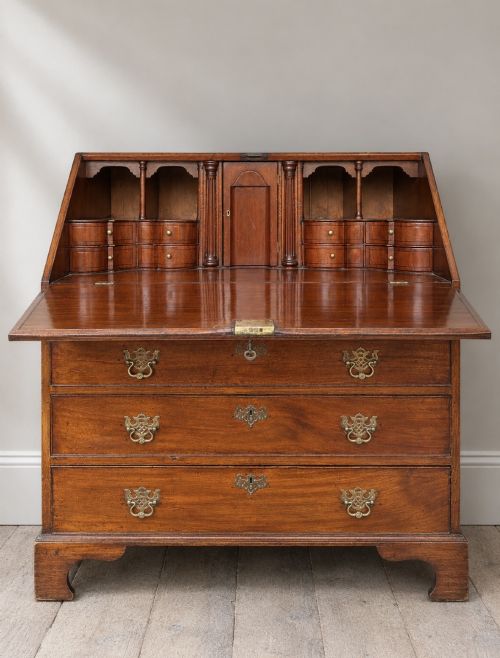
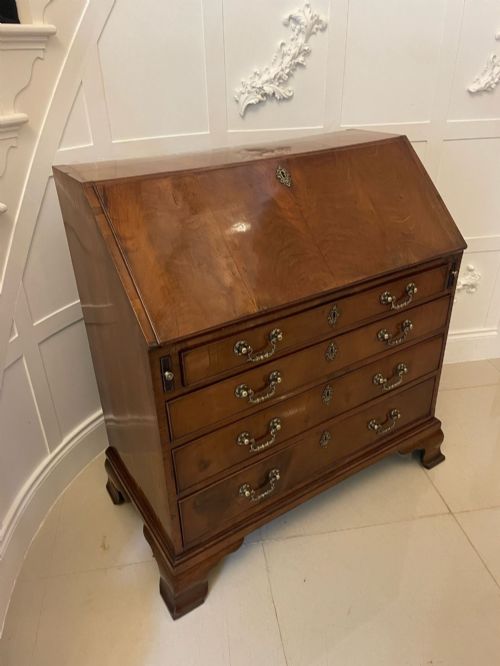
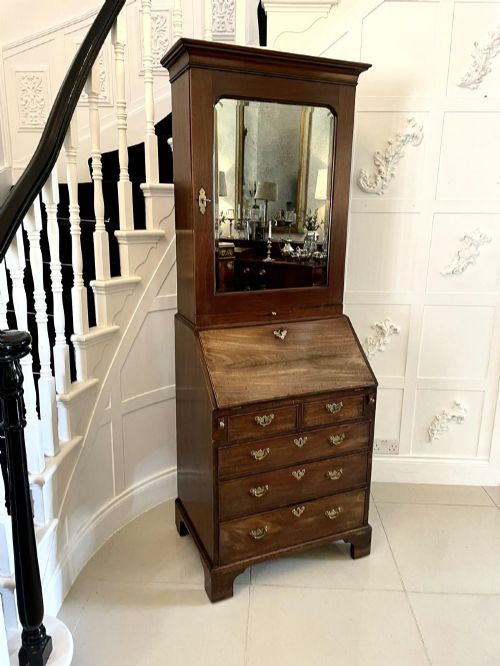
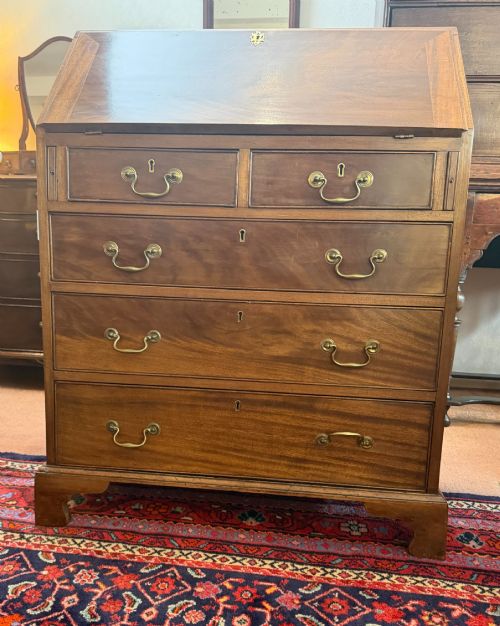
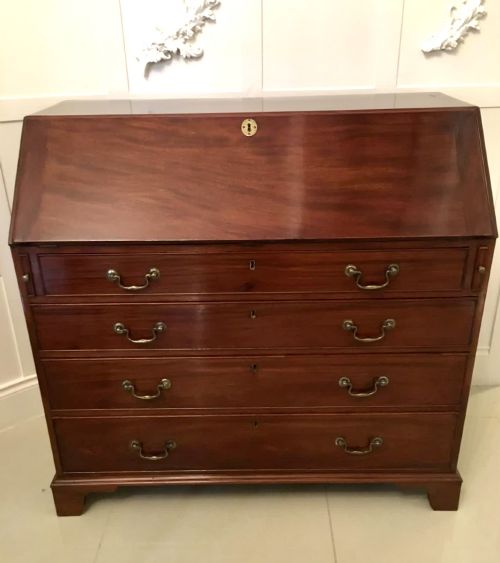
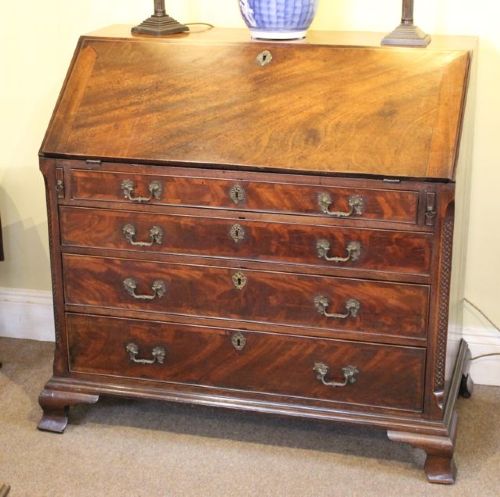
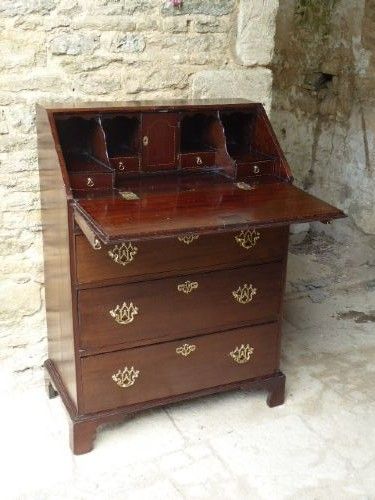
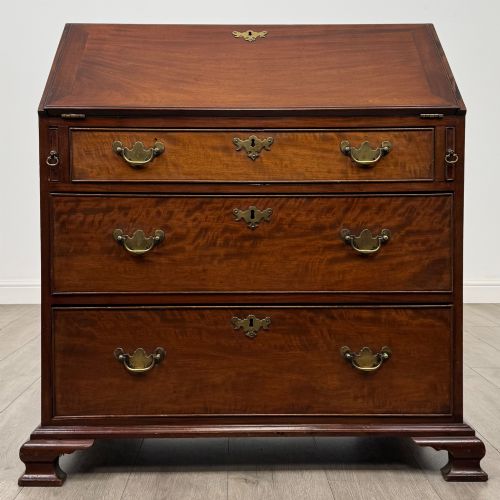
A mahogany slant bureau provides a sloping fall-front lid that opens to reveal fitted interior compartments, drawers and writing surfaces. These pieces appear primarily across Georgian, Regency, William IV, Victorian and Edwardian periods.
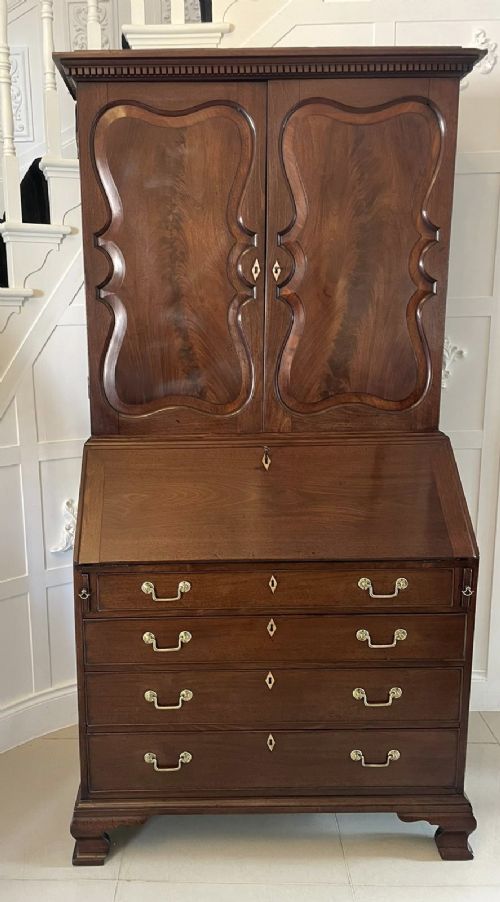
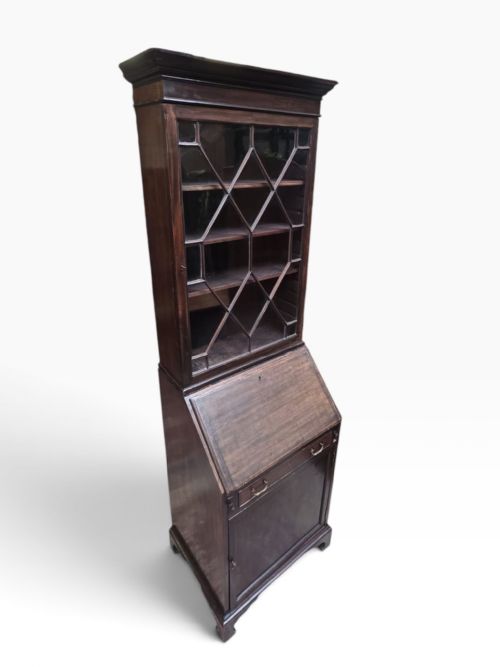
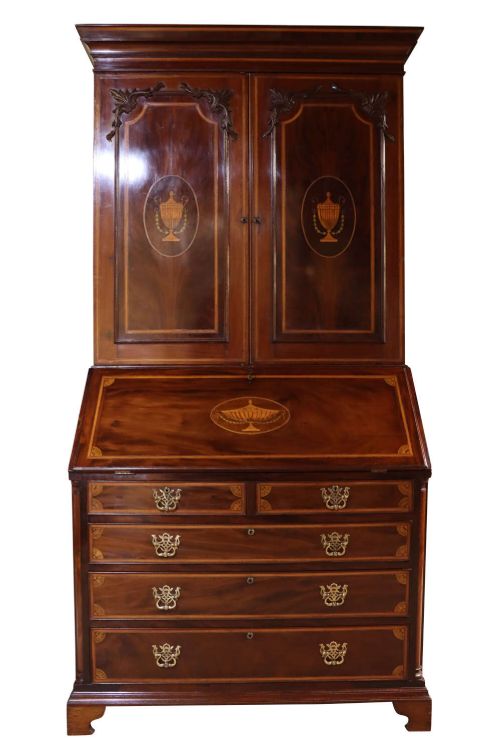
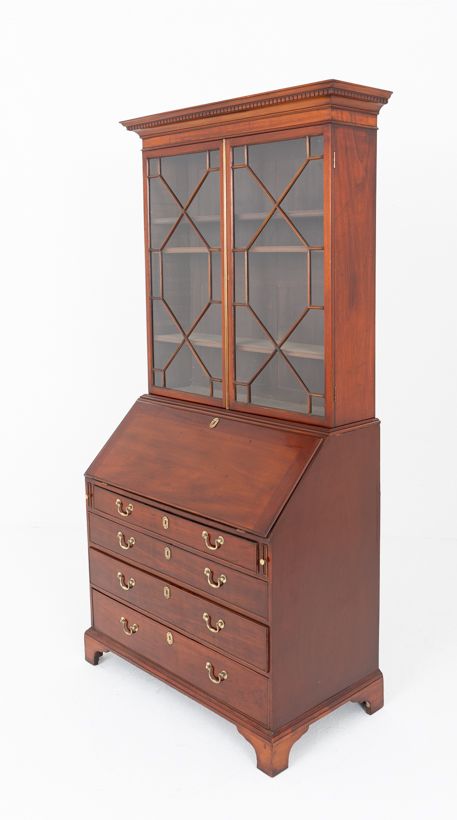
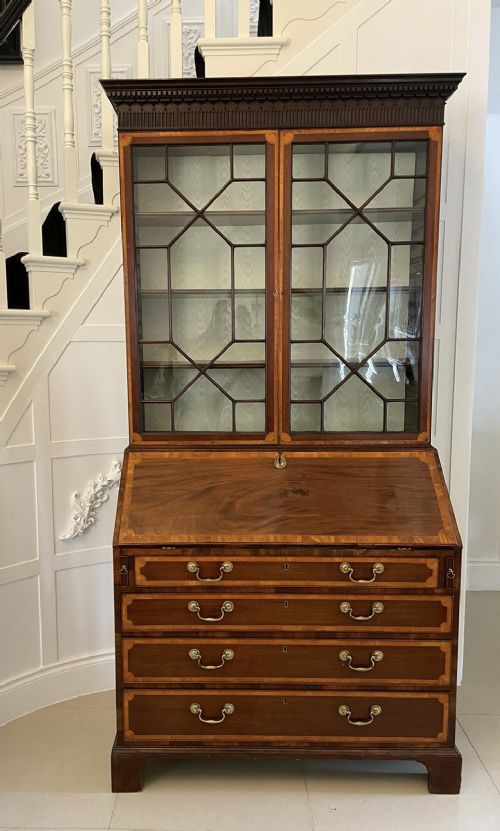
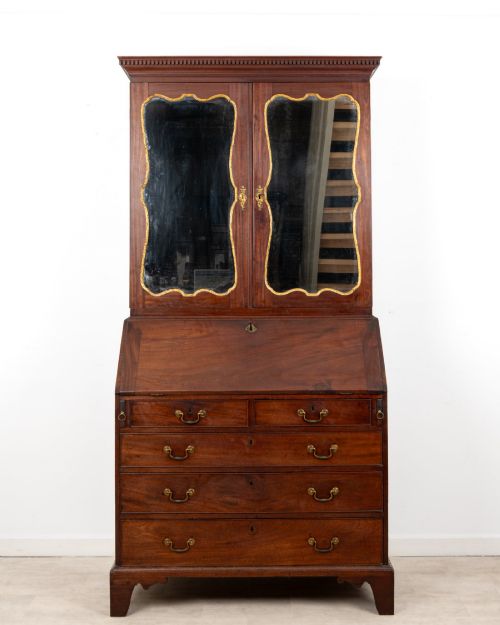
The selection ranges from compact writing desks to tall bureau bookcases featuring upper display cabinets with glass doors. Buyers most frequently encounter standard freestanding desks alongside larger cabinet variants originating from the eighteenth and nineteenth centuries.
Materials and construction
Craftsmen utilised solid timber and figured veneers, often selecting flame mahogany to create distinctive grain patterns across the sloping fall fronts and drawer facades. Secondary timbers such as oak appear in drawer linings.
Detailing includes contrasting fruitwood and satinwood inlay, complemented by cast brass handles and escutcheons on the primary storage compartments and bracket feet.
Listings span periods from the mid-18th century through to the Edwardian era, utilising mahogany, flame mahogany, satinwood and oak.
Assessing the pieces
Quality separates through the depth of figure in the wood and the complexity of the internal arrangement of pigeonholes and small drawers. Pieces featuring sophisticated satinwood inlay or well-executed bracket feet stand apart.
Proportion and scale dictate the desirability of a piece, particularly in diminutive or tall slim variations where structural balance is critical.
Gillows
The Mahogany Slant Bureau Glossary
- Fall front
- The sloping hinged flap that opens downward to form the writing surface of the bureau.
- Bracket feet
- Simple architectural feet supporting the base of the cabinet, typical of Georgian furniture.
- Bureau bookcase
- A tall two-part furniture form combining a sloping writing desk below with a glazed shelving unit above.
- Davenport
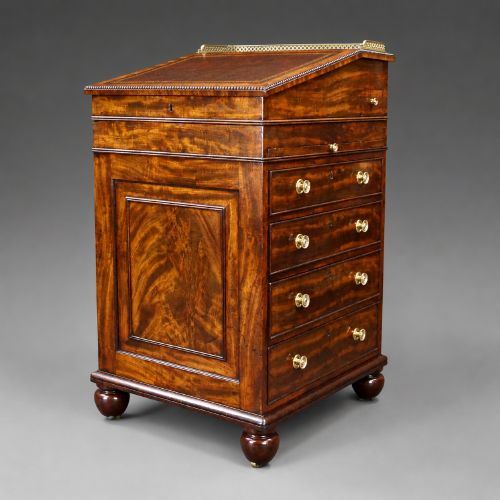
- A compact form of writing desk featuring a sloped top and drawers opening to the side.
- Escutcheon
- A protective brass plate surrounding a keyhole on a drawer or fall front.
Mahogany Slant Bureau: Frequently Asked Questions
How do I use a bureau daily?
Lower the sloping fall-front lid to reveal the fitted interior, providing a stable surface for writing or placing a laptop. Close the lid to conceal papers and maintain a tidy room.
Internal pigeonholes and small drawers organise stationery and letters safely out of sight when not in use.
Where does a bureau fit best?
These pieces suit studies, living rooms or bedrooms where floor space allows for a freestanding desk. The vertical orientation of bookcase variants maximises storage without occupying extra footprint.
Position the furniture away from direct heat sources to protect the mahogany timber and polish finish.
How do I date a mahogany bureau?
Examine the hardware, bracket feet and secondary timbers to identify period characteristics. Georgian examples from the eighteenth century typically feature hand-cut dovetails and distinct cabinet proportions.
Later Victorian and Edwardian pieces show machine-sawn elements and different handle styles reflecting nineteenth and early twentieth-century manufacturing.
What is a bureau bookcase?
A bureau bookcase combines a writing desk base with an upper glass-fronted cabinet designed for displaying books or collections. This tall two-part construction provides maximum vertical storage.
The lower section retains the characteristic sloping fall front and internal drawers of a standard desk.