
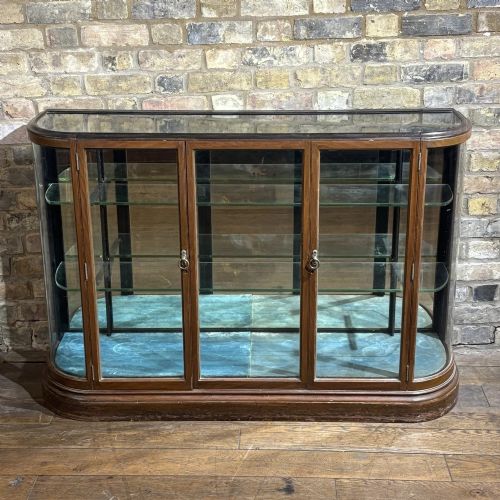


Mahogany Shop Vitrine
A mahogany shop vitrine brings commercial heritage indoors, offering glazed display space designed to showcase prized objects.
Mahogany Shop Vitrine
When searching for a mahogany shop vitrine, collectors look for commercial display furniture originating from late Victorian, Edwardian, and early twentieth-century retail environments. These pieces range from countertop display cases and bijouterie tables to large freestanding cabinets built to present goods to customers.
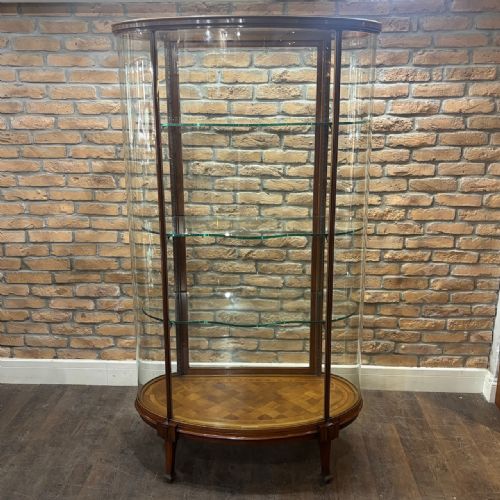
The most common examples on this page date from the Edwardian period and the 1920s, often reflecting commercial purposes such as jewellers, confectioners, or apothecary displays. Forms vary from simple rectangular table-top models to bow fronted cabinets, pentagonal counters, and tall freestanding structures.
Originating primarily from English commercial workshops and prominent shopfitters, these display cases combine practical utility with formal presentation. Their timber frames and glazed panels originally served to protect merchandise while maintaining maximum visibility in retail premises.
How they were made
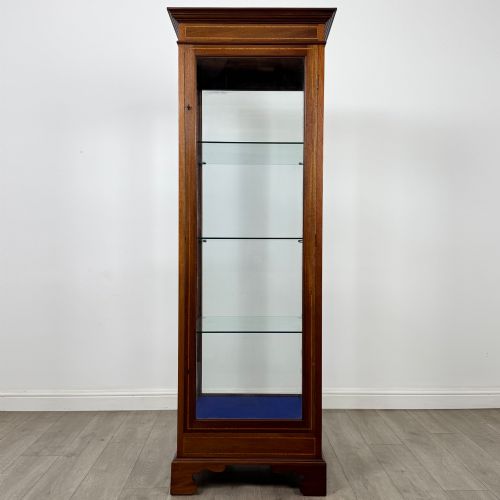
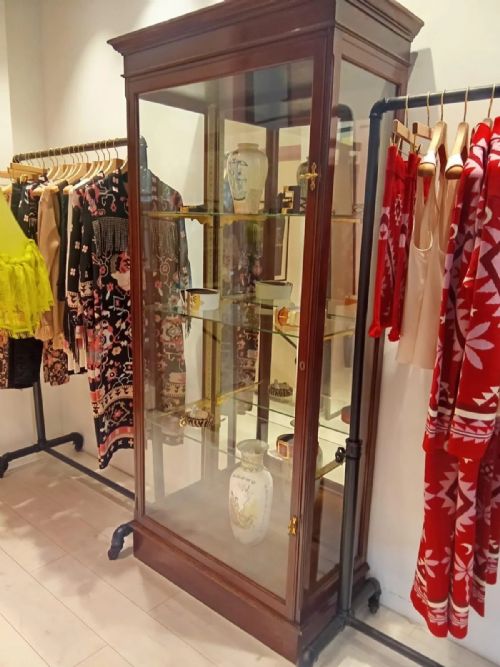
Makers constructed these commercial vitrines using solid and veneered mahogany frames designed to support large expanses of plate glass. Brass hardware, including hinges, locks, and corner brackets, provided structural reinforcement and functional closure for doors and access panels.
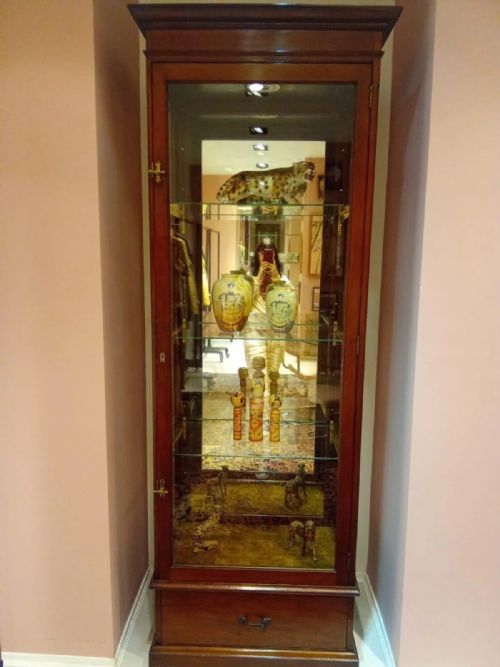
Interiors frequently incorporated mirror glass backs to enhance light reflection, alongside adjustable glass shelves supported by metal brackets. Bases and display decks were commonly lined with velvet, felt, or fabric to cushion delicate stock, while exterior enrichment sometimes included ormolu mounts or sign-written branding.
Object types recorded across these commercial furnishings include freestanding display cabinets, countertop cases, pentagonal counters, and bijouterie tables.
What varies in quality
The distinction between standard commercial joinery and high-grade shopfitting lies in the refinement of the timber framework and the sophistication of the glass housing. Superior examples feature complex shapes such as bow ends or pentagonal geometry, requiring advanced woodworking skill to maintain rigidity around curved glass panes.
Makers supplying high-end jewellers and outfitters employed heavier cast brass components, mirror glass backs, and intricate detailing like ormolu mounts. The presence of maker signatures from notable shopfitting firms also elevates the status of a piece, separating utilitarian storage from bespoke commercial presentation.
F Sage And Co·John Stow Ltd Of Bradford
The Mahogany Shop Vitrine Glossary
- Vitrine
- A glass-fronted cabinet or case designed for displaying fine objects or merchandise. These structures rely on timber frames to hold transparent panels on multiple sides.
- Bijouterie table
- A shallow glass-topped display table specifically designed for small valuable items, jewellery, or curiosities. They often feature hinged lids for easy access.
- Shopfitter
- A specialist firm or artisan responsible for the interior fitting, cabinetry, and display architecture of retail premises. Companies like these constructed bespoke counters and vitrines for Edwardian stores.
- Bow front
- A convex curved cabinet front that projects outward in a smooth arc. This form improves viewing angles for merchandise inside the display case.
Mahogany Shop Vitrine: Frequently Asked Questions
What is a shop vitrine used for?
Originally designed for retail environments, these glass-fronted cabinets served to protect merchandise while offering customers a clear view of goods. Today, collectors utilise them in domestic settings to display ceramics, silver, books, and small collections.
The enclosed glass design keeps dust away from delicate items while allowing light to enter from multiple angles. Freestanding and countertop models adapt easily to different rooms depending on available floor or surface space.
How do I date an Edwardian display case?
Dating relies on examining construction methods, timber selection, hardware styles, and any accompanying maker plaques. Edwardian and early twentieth-century pieces often display machine-sawn timber elements alongside hand-finished brass fittings and adjustable shelving mechanisms.
Commercial pieces sometimes bear original painted branding or maker stamps associated with known shopfitters operating during the late Victorian and interwar periods. Comparing these details with documented commercial furniture helps narrow down the era of manufacture.
Are the shelves adjustable?
Many Edwardian and twentieth-century display cabinets feature adjustable glass shelving supported by metal brackets within the timber frame. This adaptability allowed shopkeepers to modify interior spacing according to the height of the goods on sale.
When evaluating a cabinet, the presence of original adjustable track systems or support clips indicates a higher standard of commercial utility. Fixed wooden shelving is less common in dedicated vitrines designed for maximum light penetration.
How do I care for mahogany and glass?
Maintaining these pieces involves regular dusting of the mahogany frame with a soft, dry cloth and avoiding harsh chemical cleaning products on polished timber surfaces. Glass panels and mirrors require standard non-ammonia glass cleaner applied to a cloth rather than sprayed directly near the wood.
Keeping the furniture away from direct sunlight and extreme temperature fluctuations prevents the mahogany from warping and protects historical fabric or felt interior linings from fading.