

Mahogany Sheet Music Cabinet
A mahogany sheet music cabinet holds scores and folios in fitted drawers, bringing compact period storage to a room.
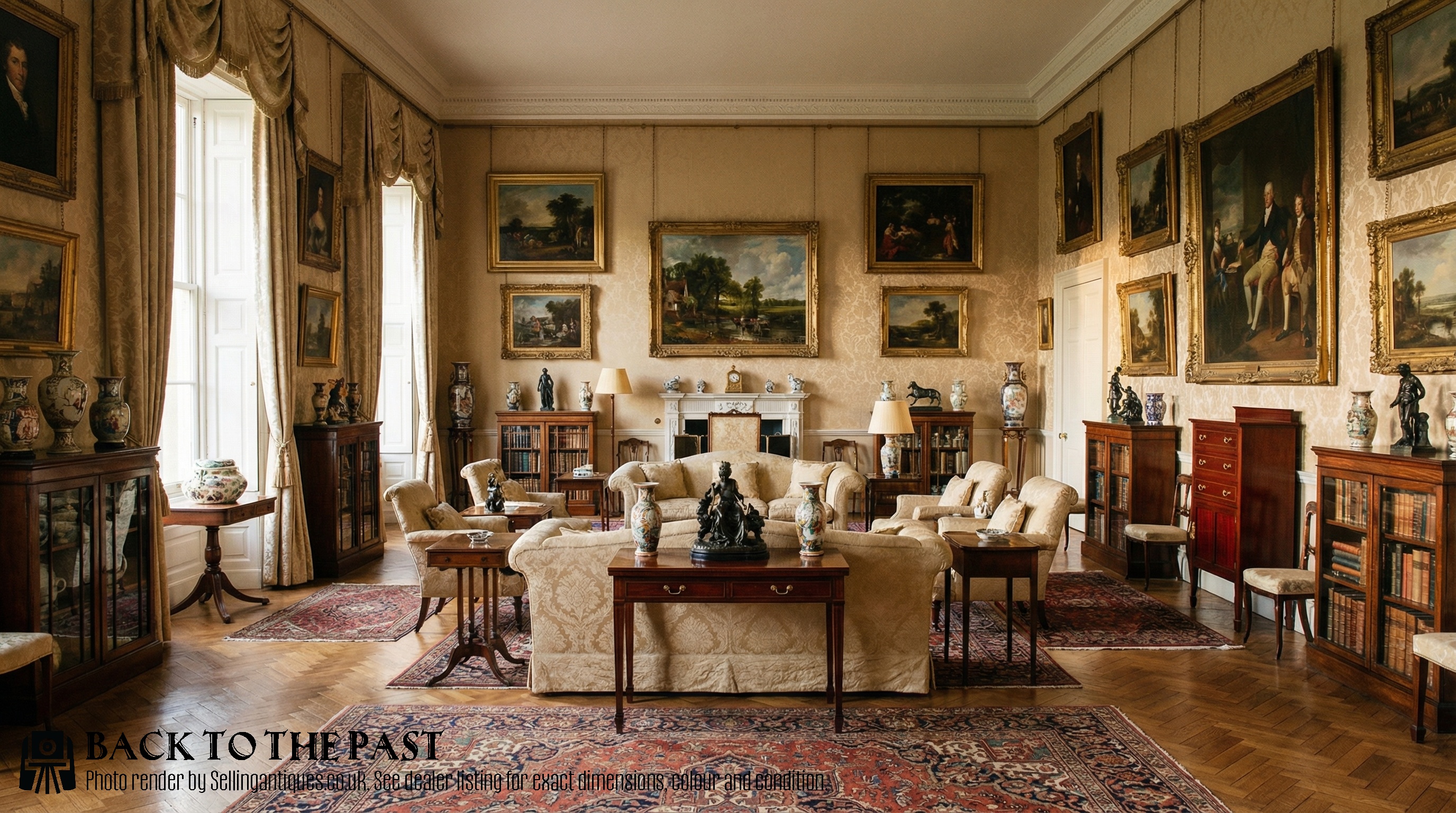
Mahogany Sheet Music Cabinet
A mahogany sheet music cabinet is a specialised storage piece designed to keep bound scores, unbound folios, and manuscripts flat and organised. These items belong principally to the Victorian and Edwardian eras, spanning the late nineteenth and early twentieth centuries, alongside occasional Georgian and Regency antecedents.
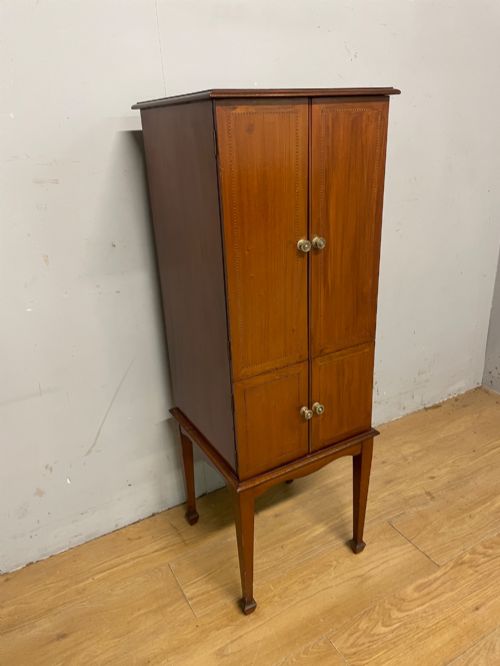
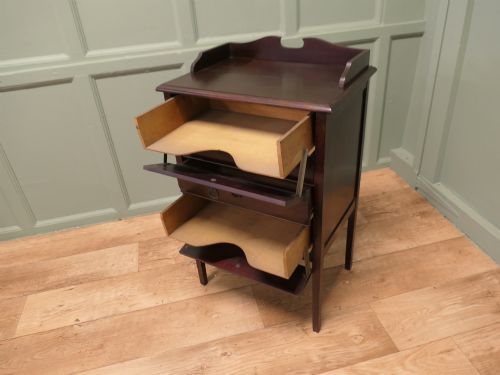
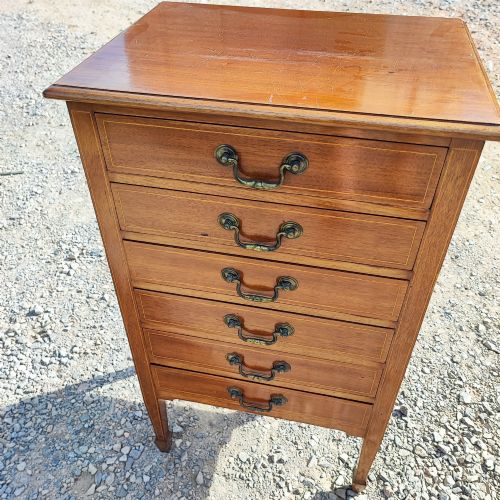
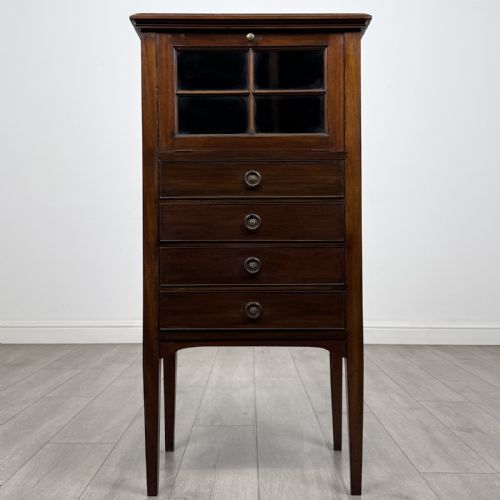
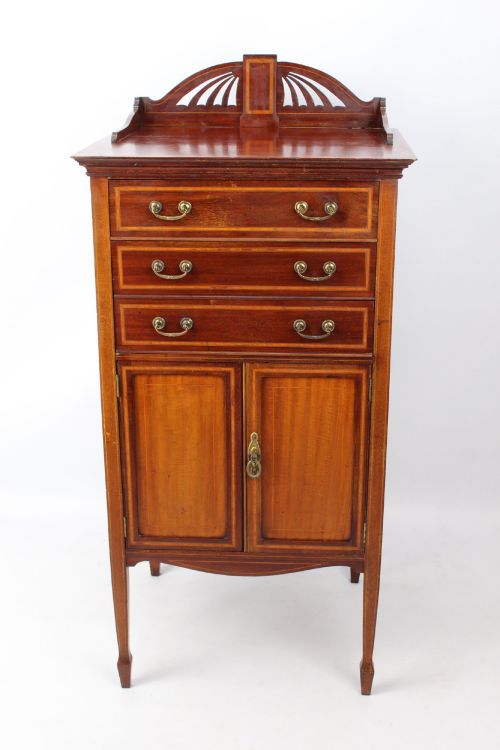
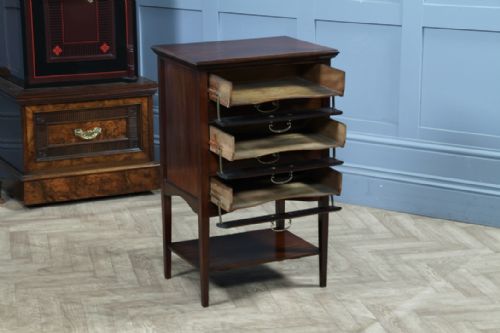
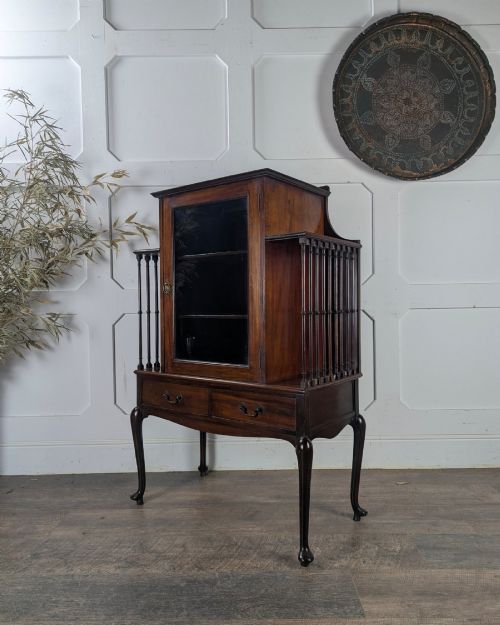
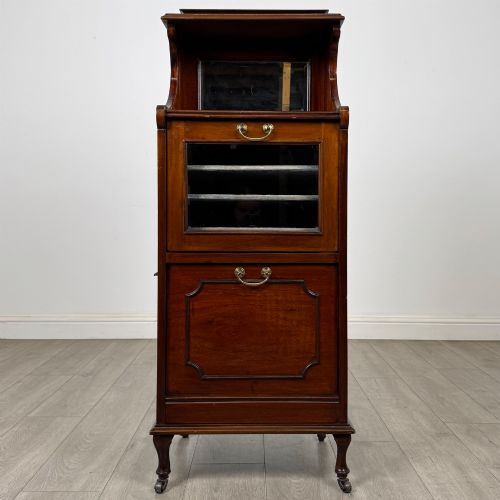
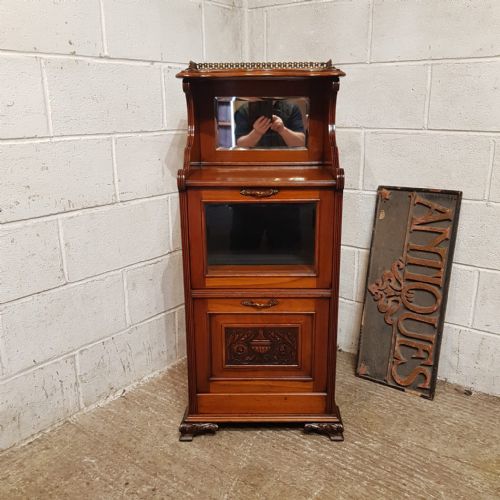
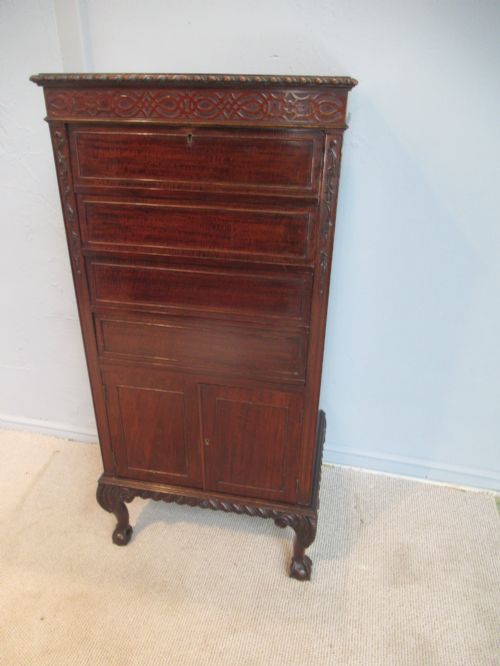
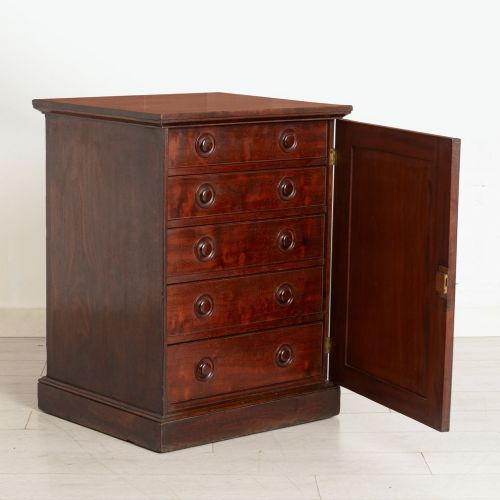
The version most commonly encountered on this page is the Edwardian upright cabinet, frequently constructed with satinwood inlay and fitted with four, five, or six drop-front drawers. These pieces share floor space with related forms such as canterburys, magazine racks, and piano stools.
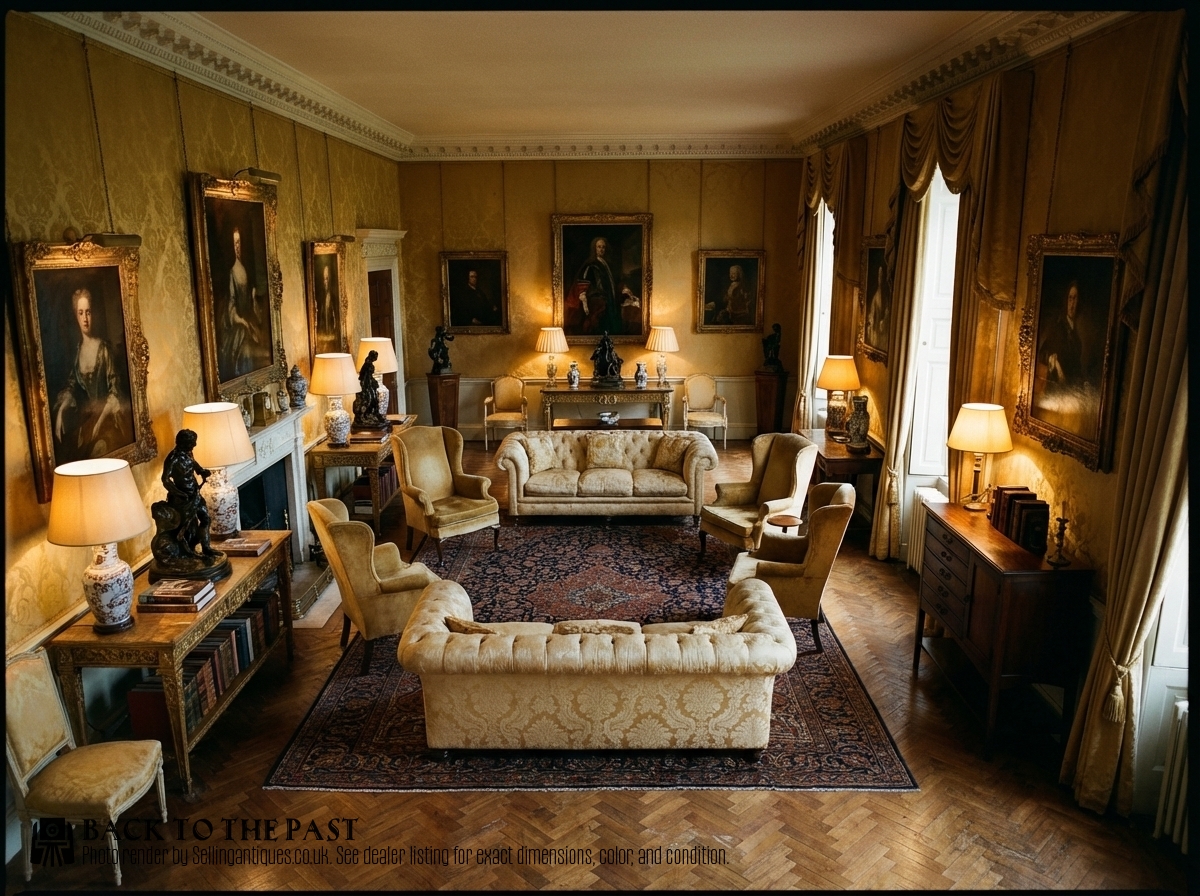
Cabinetmakers constructed these pieces to stand beside a piano or in a parlour, maintaining orderly collections of music within domestic interiors. Their proportions remain narrow and tall, designed to occupy minimal floor space while accommodating large quantities of paper sheets.
Materials and Construction
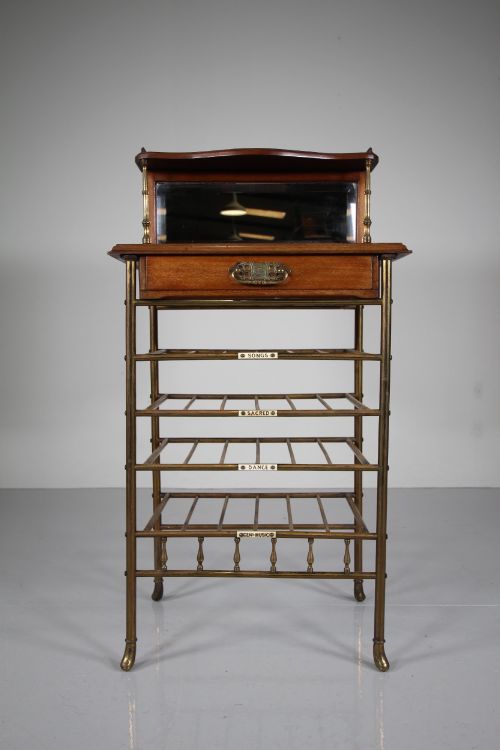
Cabinetmakers built these pieces using solid mahogany and mahogany veneers over secondary timbers, frequently applying contrasting stringing in boxwood and satinwood. Brass hardware, including drop handles and hinges, provides functional contrast to the dark timber.
Drop-front drawer mechanics dominate the construction, allowing the front of each drawer to tilt downward so users can access sheet music without bending fragile paper. Marquetry, wood inlay, and tambour fronts appear across various examples to ornament the exterior surfaces.
Mahogany Sheet Music Cabinet Retail Price Guide 2026
Typical asking prices for mahogany sheet music cabinet among the pieces listed under this phrase on Sellingantiques today, from the lower quarter to the upper quarter. They describe what is for sale here now, not the wider market.
Listings feature Edwardian, Victorian, and Georgian periods, utilising mahogany alongside brass, glass, satinwood, boxwood, and rosewood.
Craftsmanship and Detail
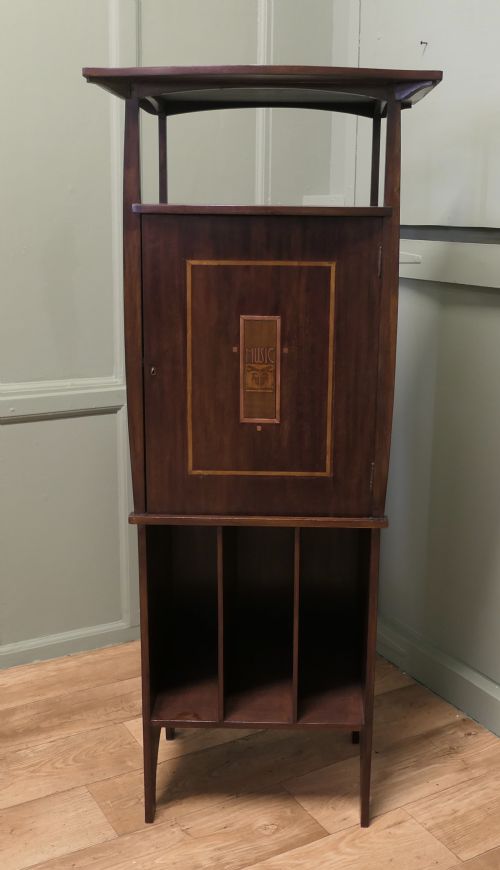
Quality separates along the precision of the cabinetwork and the intricacy of the decorative elements, such as fine satinwood inlay and marquetry panels. Well-executed drawer mechanisms operate smoothly, whereas simpler pieces rely on basic sliding drawers or open compartments.
The choice of secondary woods and the finesse of the brass fittings distinguish workshop-made pieces from mass-produced examples. Cabinets bearing maker attributions or distinct stylistic influences like Arts and Crafts or Art Nouveau demonstrate higher design ambition.
GM Elwood for JS Henry·Denby and Spinks·Keeble London·Jas Shoolbred
The Mahogany Sheet Music Cabinet Glossary
- Canterbury
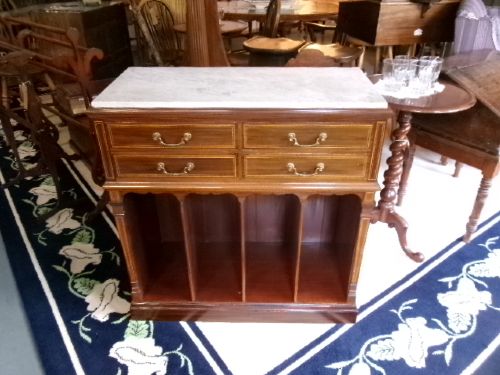
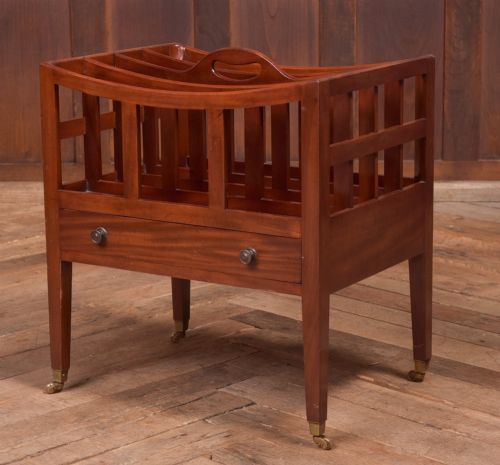
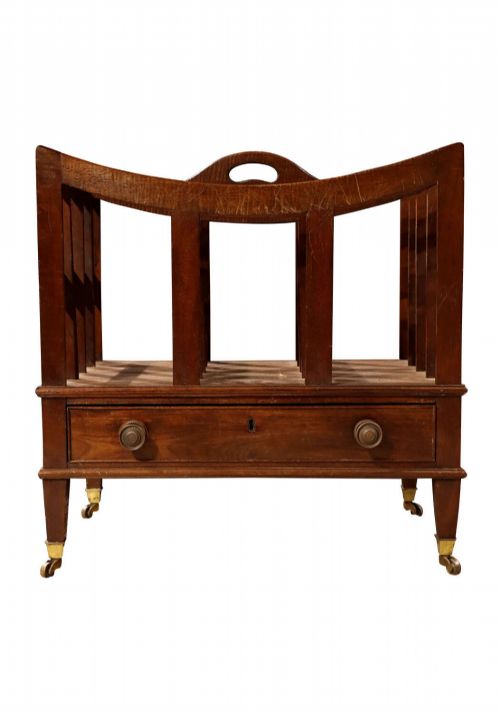
- A low stand with partitioned sections for holding sheet music, magazines, or folios. This form often includes a single lower drawer and legs fitted with castors.
- Drop-front
- A drawer design where the front panel banks downward when opened to reveal the interior contents. This mechanism prevents damage to paper sheets during retrieval.
- Marquetry
- Decorative veneer work forming pictorial or geometric patterns using various coloured woods. Craftsmen applied this technique to top panels and drawer fronts.
- Stringing
- Thin lines of contrasting wood inlay used to outline drawer edges and panels. Satinwood and boxwood provide pale tones against dark mahogany.
Mahogany Sheet Music Cabinet: Frequently Asked Questions
How do I date a cabinet?
Dating relies on stylistic clues, timber choice, and construction methods. Edwardian pieces often display satinwood inlay and lighter mahogany tones.
Late Victorian examples tend to be heavier in build, while Georgian canterburys show simpler, architectural lines without extensive marquetry.
Where were these placed originally?
These cabinets stood beside upright or grand pianos in Victorian and Edwardian drawing rooms. They kept manuscript books and sheet music close at hand during musical evenings.
Their narrow footprints allowed them to fit into tight corners of domestic parlours.
Can these hold vinyl records?
The interior drawer dimensions of many cabinets suit twelve-inch LP vinyl records alongside traditional sheet music. Standard music drawers provide adequate depth and width for modern media.
Buyers frequently repurpose these pieces for contemporary music collections.