
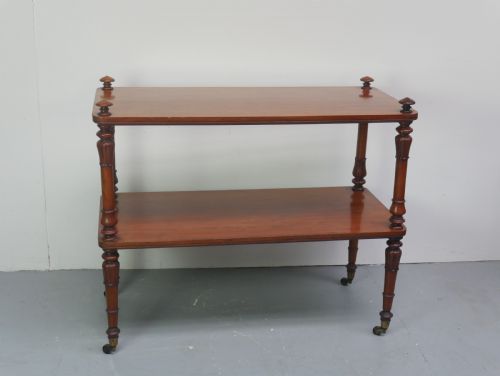

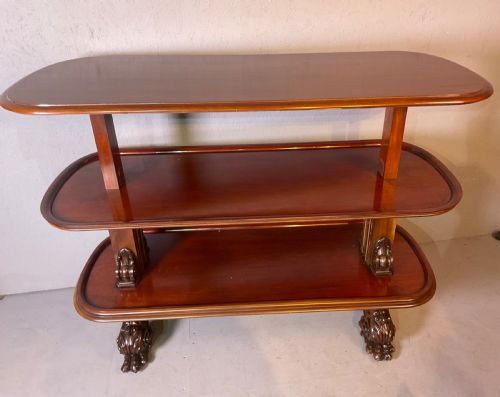
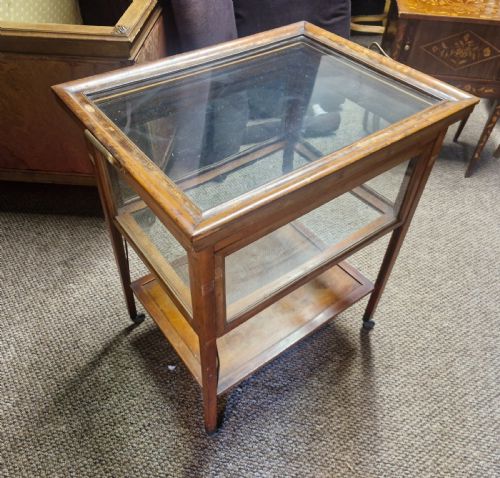


Mahogany Serving Trolley
These mahogany serving trolley examples offer sturdy practicality and rich timber grain for anyone entertaining at home.
What a mahogany serving trolley is
A mahogany serving trolley provides a mobile surface for food, drinks and books, combining utility with rich timber grain. Buyers searching for this phrase encounter various configurations designed for dining rooms and sitting rooms.
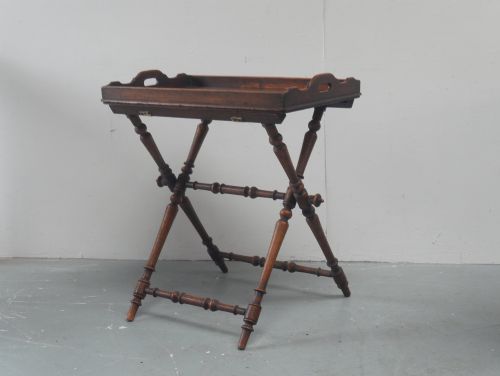
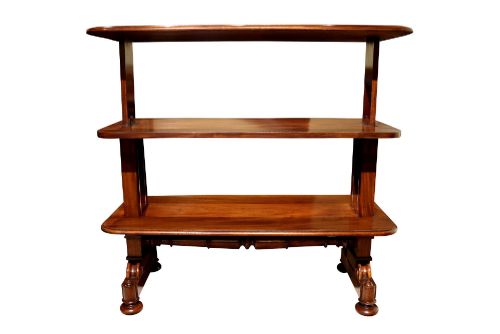
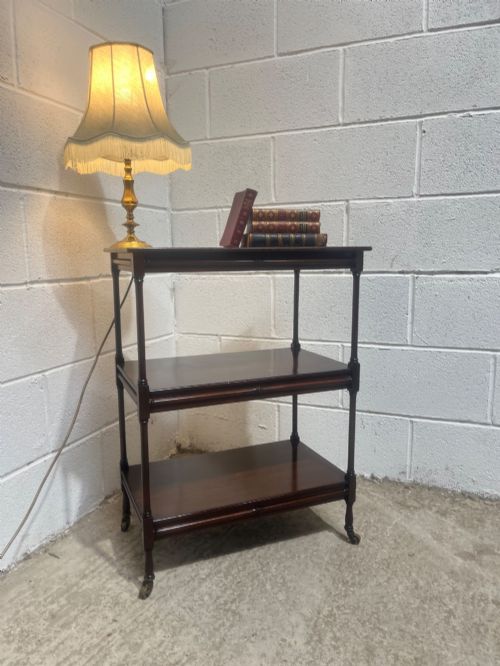
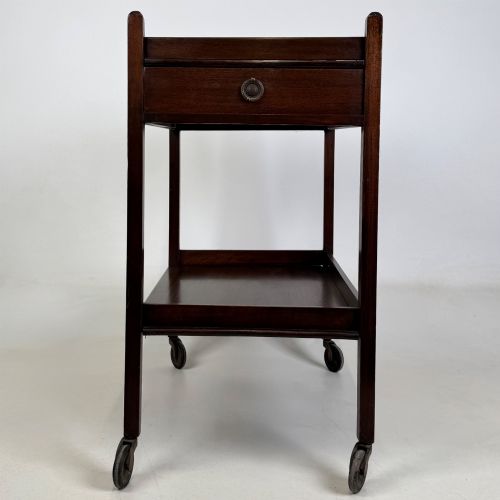
The most common versions on this page span the nineteenth century and the early twentieth century, taking forms such as tea trolleys, dumb waiters, and multi-tier buffets. Pieces range from simple two-tier designs to elaborate three-tier structures fitted with castors.
Stylistic influences include Victorian, Edwardian, and Georgian or Regency revival periods. Many examples incorporate clever folding mechanisms or multi-purpose surfaces like baize-lined card tables.
How they were made
Makers utilised solid mahogany and flame mahogany veneers to build these pieces, often selecting timber with deep red-brown tones and striking figuring. The construction relies on traditional joinery methods suited to furniture intended for movement and heavy daily use.
Hardware details typically include brass fixtures and original castors that allow the trolleys to glide across carpets and wooden floors alike. Some examples integrate secondary materials such as cast iron and ceramic components to support their multi-tier shelving.
Retail Price Guide 2026
Typical UK retail prices for mahogany serving trolley, calculated from the Sellingantiques database of over a million retail prices indexed since 2003. This retail price guide relies exclusively on Sellingantiques data; no external sources or auction records are used, so the figures do not describe the wider market.
The archive includes three-tier models, dumb waiters, and variations equipped with baize-lined card table tops.
What varies in quality
Quality in a mahogany serving trolley rests on the choice of timber and the depth of the finish, with flame veneers and well-figured solid wood sitting at the upper end of the scale. The crispness of turning on the upright supports and the integration of original brass castors further distinguish finer examples from standard production.
Design complexity also plays a role, as seen in pieces that feature three distinct tiers, intelligent folding mechanisms, or multi-use surfaces like baize-lined card tables. Simpler two-tier utilitarian models represent a different tier of craftsmanship compared to richly carved Victorian and Edwardian showpieces.
The Mahogany Serving Trolley Glossary
- Mahogany
- A durable tropical hardwood known for its reddish-brown colour and fine grain. It serves as the primary material for the frames and surfaces of these trolleys.
- Dumb waiter
- A tiered piece of freestanding furniture used for holding food and tableware during meals. Victorian and nineteenth-century examples often feature rotating or graduated shelves.
- Castor
- A small wheel mounted on a swivel assembly at the base of the legs. Original brass castors allow the trolley to move smoothly across a room.
- Flame mahogany
- A veneer cut from the point where branches join the main trunk, producing a distinctive rippled flame pattern. This figuring marks out more decorative furniture.
- Tier
- A single horizontal shelf or level within a multi-level structure. Trolleys frequently incorporate two or three tiers to maximise surface space.
Frequently Asked Questions
What is a mahogany serving trolley used for?
These pieces were originally designed to transport food, drinks, and tableware between the kitchen and the dining room without requiring extra staff. Victorian households relied on them during formal meals and afternoon tea.
Today, they function well as mobile drinks bars, side tables, or book shelves in living spaces. Their multiple tiers provide practical surface area while adding period character to a room.
How do I date a mahogany serving trolley?
Dating relies on examining the timber, the style of the turned supports, and hardware such as castors and handles. Victorian and Edwardian pieces often display heavier proportions and rich mahogany tones.
Later Edwardian and early twentieth-century examples sometimes incorporate lighter Regency revival styling or specialised functions like baize-lined card tables. Comparing construction methods against known periods helps narrow down the decade of manufacture.
Are these trolleys sturdy enough for daily use?
Nineteenth and early twentieth-century trolleys were built from dense hardwoods like mahogany and reinforced with solid joinery. They are designed to bear the weight of heavy dishes, bottles, and books.
When fitted with their original castors, they remain stable and mobile. Regular use requires simply checking that the joints and shelf supports remain firm.