
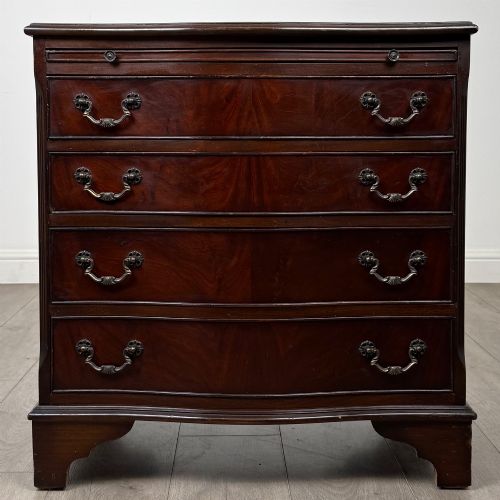
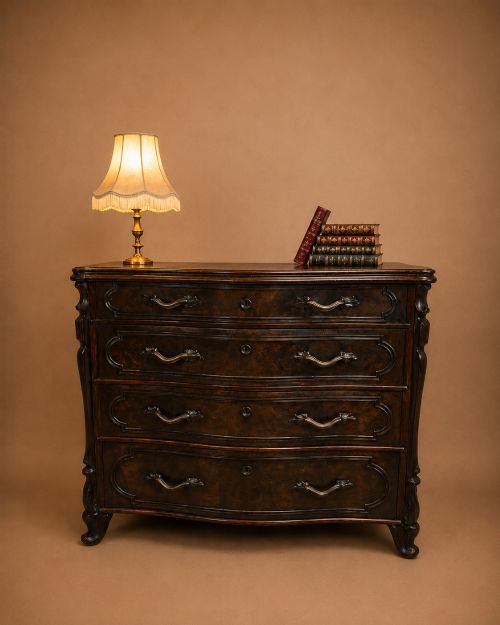
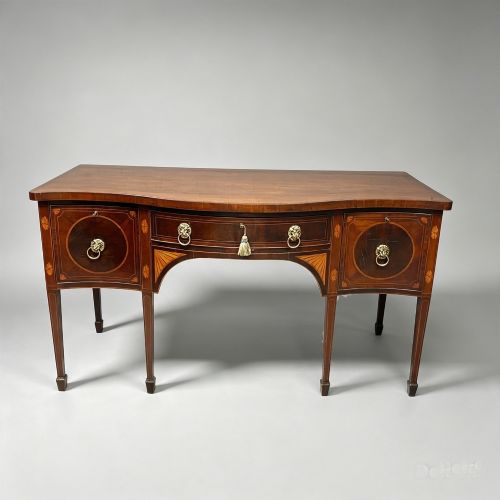
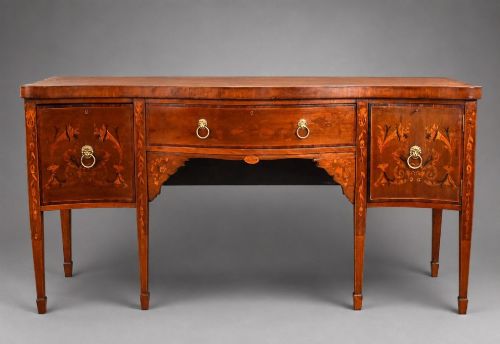
Mahogany Serpentine Front
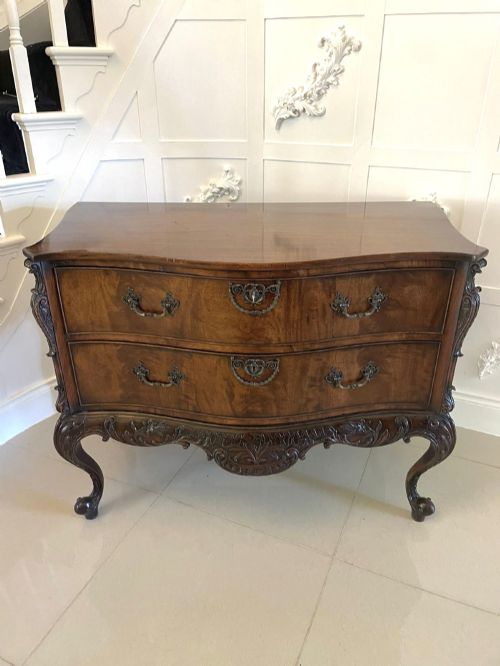
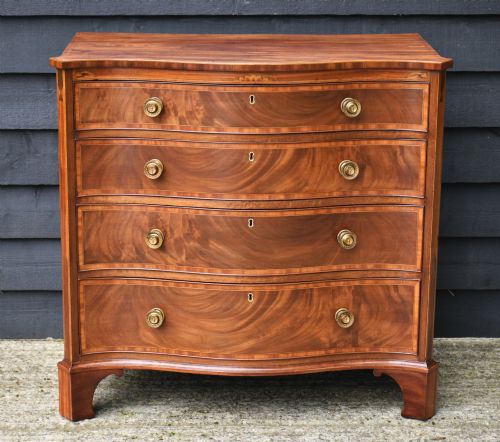
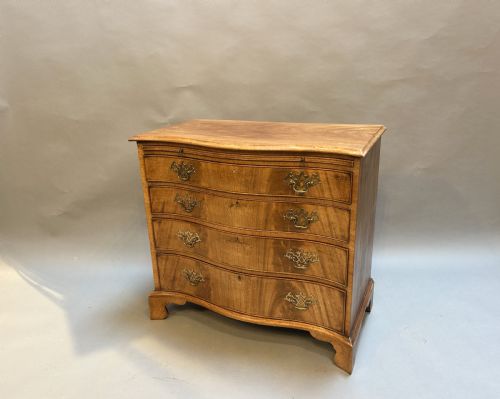
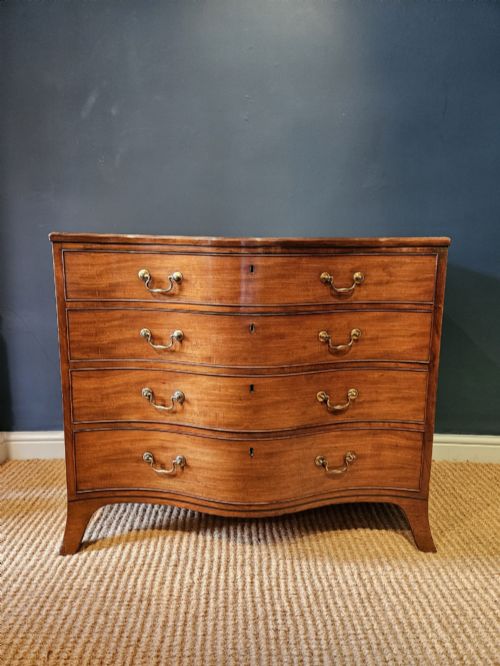
A mahogany serpentine front piece brings a distinct undulating curve and warmth to a room through centuries-old cabinetmaking.
Mahogany Serpentine Front
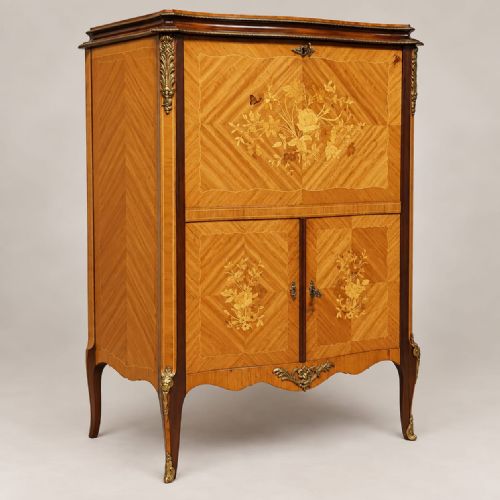
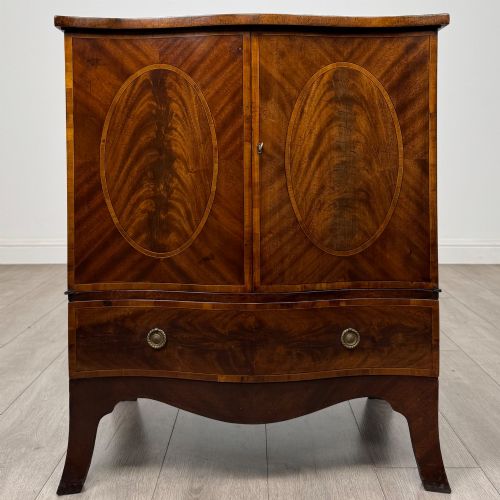
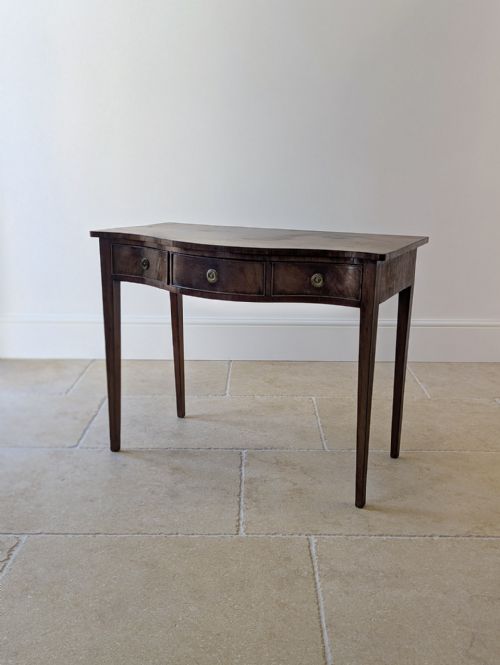
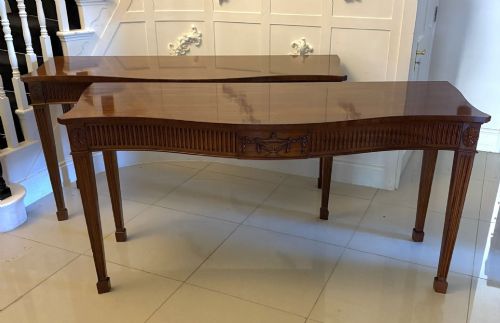
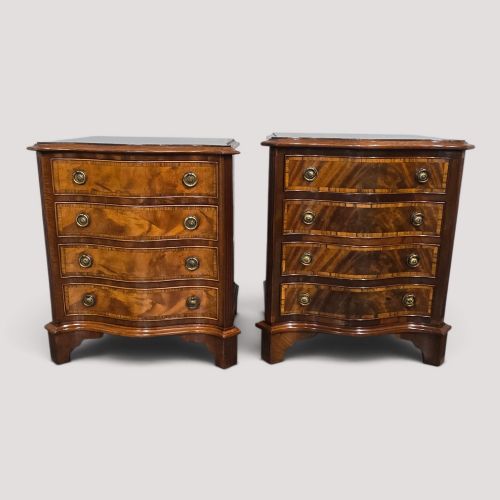
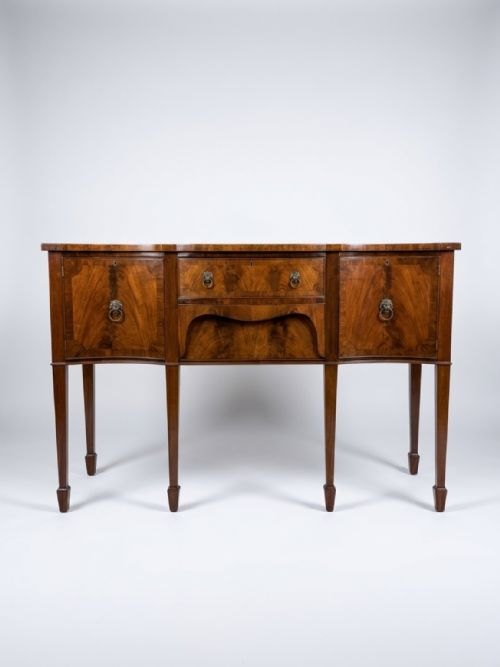
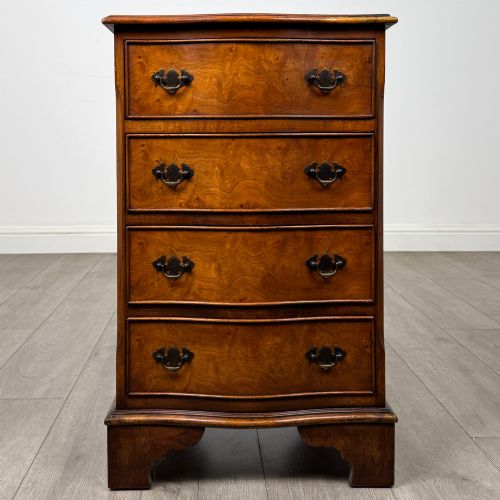
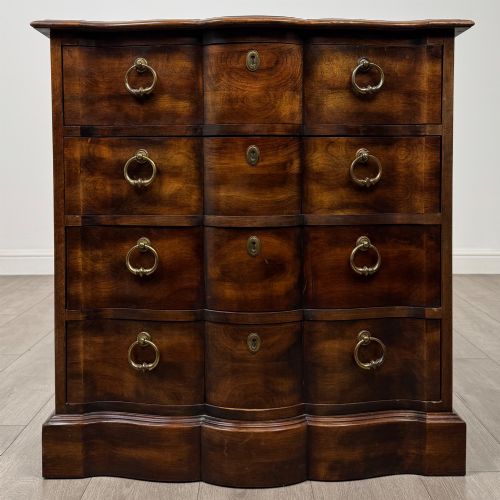
A mahogany serpentine front search brings up furniture defined by a gently curving convex-concave-convex outline. The most common form on this page is the chest of drawers, alongside sideboards, card tables, and occasional desks originating from the Georgian, Victorian, and Edwardian periods.
Georgian examples from the eighteenth century sit alongside later Edwardian and revival interpretations. These pieces range from substantial sideboards and chests on chests down to small bedside cabinets and dressing mirrors.
The design relies on the rhythmic sweep of the drawer fronts or cabinet doors to catch the light. Makers utilised this complex shape across both formal dining rooms and private chambers.
Materials and Technique
Makers constructed the carcase primarily from solid timber and wood veneer, selecting dense mahogany for its stability and deep colour. They often added satinwood inlay, marquetry, and brass hardware to accentuate the curved lines.
Achieving the serpentine shape required precise woodworking, as timber must be carefully cut and shaped to maintain the undulating profile without warping. Craftsmen applied fine veneers over secondary woods to create figured surfaces on the drawer fronts.
Listings span from the 18th century Georgian period through the Victorian era to Edwardian and 1920s revivals.
Craftsmanship and Proportion
Quality shows in the fluidity of the curve and the grain selection across the front. Finer pieces display book-matched veneers or crisp carving that follows the serpentine contour naturally.
Proportion and the preservation of original patination separate standard examples from exceptional ones. The alignment of the drawers within their curved surrounds demonstrates the maker's skill.
The Mahogany Serpentine Front Glossary
- Serpentine
- A furniture front shaped with a central convex curve flanked by two concave curves. This contour requires advanced woodworking to execute successfully.
- Patina
- The surface sheen and deep colour developed by mahogany over years of handling and polishing. It marks the age and history of the wood.
- Satinwood
- A pale, hard timber utilised for contrasting inlay and stringing on dark mahogany furniture. It creates bright decorative borders.
- Marquetry
- The art of applying pieces of veneer to a structure to form decorative patterns. Craftsmen used various woods to create floral or geometric designs.
- Commode
- A low cabinet or chest of drawers, often applied to French or high-status English pieces from the eighteenth century onwards.
Mahogany Serpentine Front: Frequently Asked Questions
What is a serpentine front?
A serpentine front is a cabinet or chest design featuring an undulating edge that curves outward in the middle and inward at the sides. This profile creates a dynamic play of light and shadow across the furniture.
Cabinetmakers adopted this shape during the eighteenth century to add movement and elegance to formal case furniture. It remains a hallmark of skilled woodworking from the Georgian era onwards.
How do I date a mahogany piece?
Dating relies on examining the construction methods, timber selection, and hardware style. Eighteenth-century pieces often show hand-cut dovetails and native secondary woods beneath the mahogany surfaces.
Later Edwardian and revival pieces display machine-made consistency and different internal framing techniques. Comparing the carcass construction to known period examples helps clarify the age.
Where should I place a serpentine sideboard?
A serpentine sideboard suits a dining room or a spacious hallway where its curved profile can be viewed without obstruction. The undulating front provides a natural focal point against a flat wall.
Because these pieces vary considerably in width and depth, measure the floor space carefully to allow clearance for drawers or cabinet doors to open.
How do I care for mahogany?
Mahogany benefits from regular dusting with a soft, dry cloth and occasional application of traditional beeswax to nourish the finish. Avoid placing the furniture in direct sunlight or near heat sources to prevent the wood from drying out.
Keeping the room at a stable humidity level protects the underlying veneers and prevents the joints from shifting over time.