

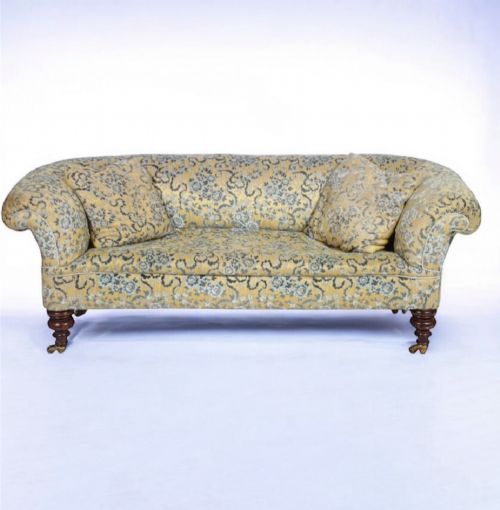

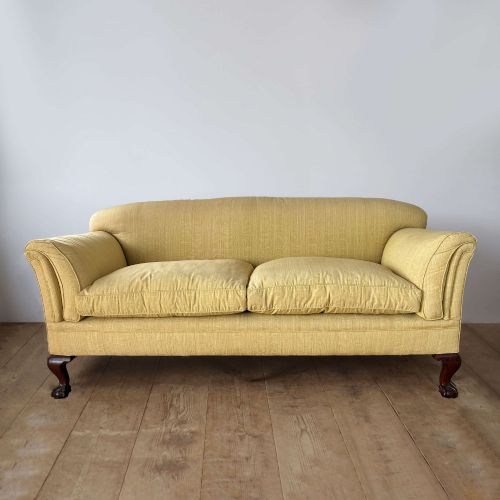
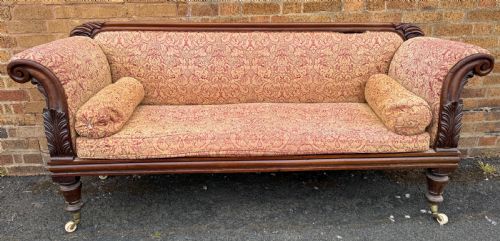


Mahogany Scroll Arm Couch
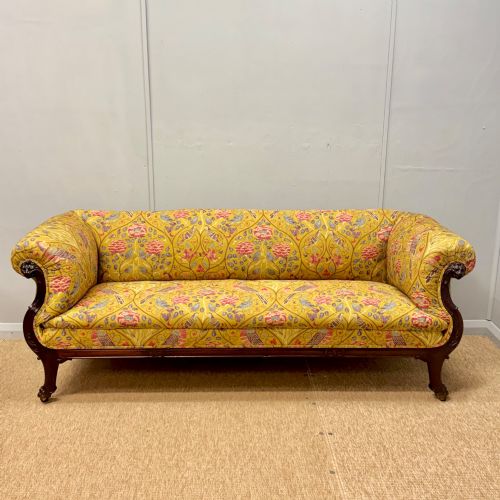
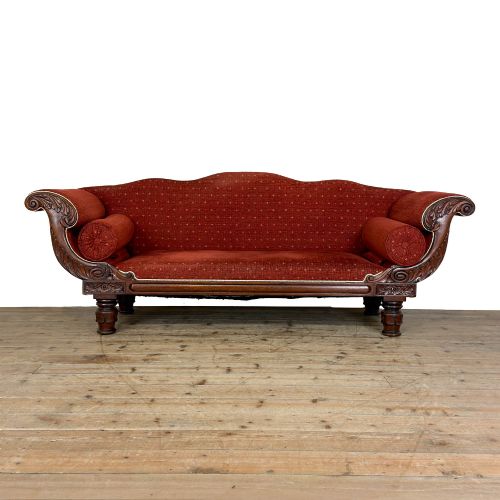
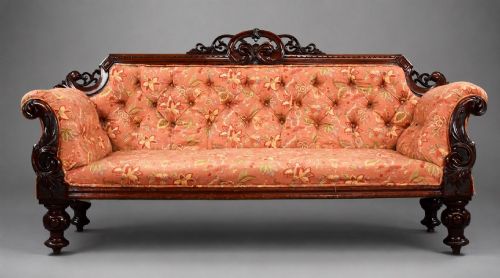
A mahogany scroll arm couch offers deep timber framing and sweeping ends designed for reclining during the nineteenth century.
Mahogany Scroll Arm Couch
A mahogany scroll arm couch brings together heavy timber frames and upholstered lounging surfaces typical of nineteenth-century seating. Buyers encounter pieces spanning the Regency, William IV, and Victorian periods, alongside specific regional interpretations.
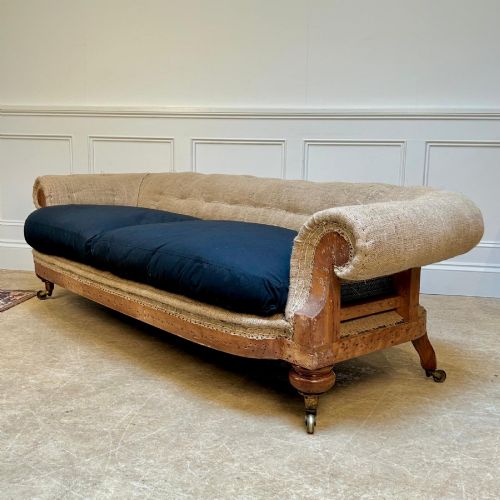
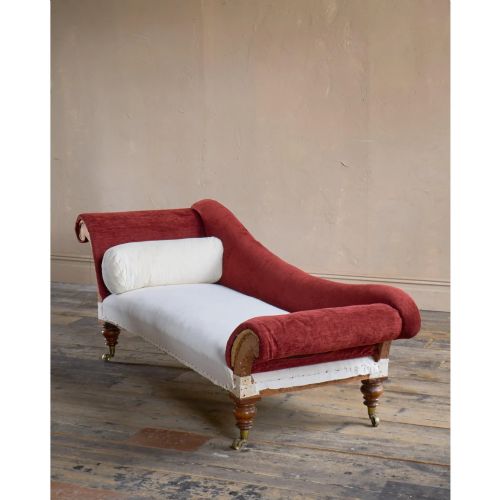
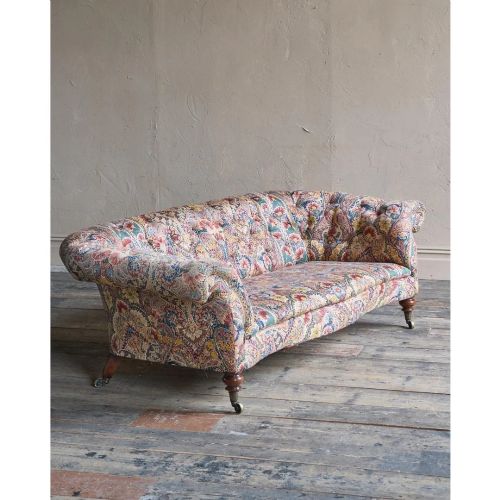
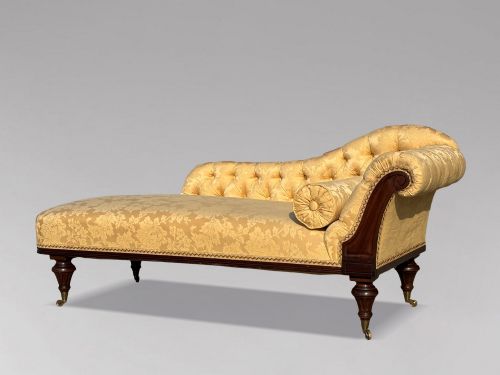
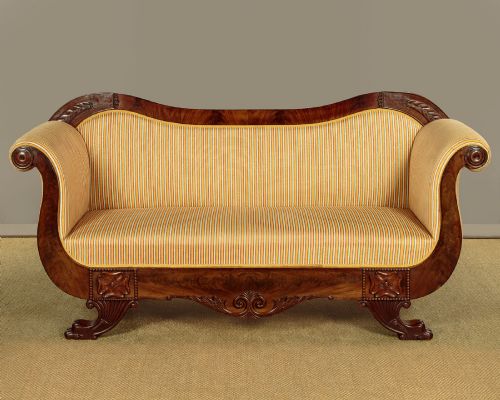
The primary forms on this page include scroll-end sofas, double-ended settees, and chaise longues. These designs feature distinct timber show frames alongside upholstered scroll arms meant for comfortable reclining.
Origins stretch from English country houses to Irish workshops, capturing stylistic shifts from Regency neoclassical lines to heavier Early Victorian carved proportions. Timber framing dominates the construction across every listed era.
Materials and construction methods
Makers shaped dense mahogany into structural show frames, turning and carving the timber to form prominent scroll arms and decorative supports. Brass details occasionally accent the feet, while traditional webbing and hessian provide the internal foundation for the seats.
Upholstery fabrics range from velvet, damask, and leather to quilted William Morris textiles. Craftsmen secured these textiles over traditional stuffing materials to complete the cushioned rolling contours of each couch.
Mahogany Scroll Arm Couch Retail Price Guide 2026
Typical asking prices for mahogany scroll arm couch among the pieces listed under this phrase on Sellingantiques today, from the lower quarter to the upper quarter. They describe what is for sale here now, not the wider market.
The furniture spans the Regency, William IV, and Victorian periods, including country house pieces and Irish variations.
Evaluating the craftsmanship
The calibre of a mahogany scroll arm couch rests on the crispness of its timber carving and the boldness of its scale. Heavier architectural proportions and well-defined scroll ends distinguish ambitious workshop output from standard production.
Frame integrity and the retention of original timber show frames dictate the standing of individual pieces. Subtleties in proportion, such as symmetrical double-ended scrolls or balanced lyre shapes, separate superior examples from simpler forms.
Miles and Edwards·Howard and Sons·Holland and Sons·Gillows
The Mahogany Scroll Arm Couch Glossary
- Scroll end
- A sweeping, curved wooden or upholstered arm resembling a scroll, characteristic of nineteenth-century couches and daybeds. This feature defines the profile of Regency and William IV seating.
- Chaise longue
- An elongated chair or couch designed for reclining, combining a seat with a single raised backrest or scroll arm. These forms appear frequently in nineteenth-century drawing rooms.
- Show frame
- The exposed wooden structural skeleton of an upholstered seat, usually carved from mahogany or walnut. It displays the maker's skill around the arms and rails.
- Double-ended sofa
- A settee featuring symmetrical scroll arms at both ends, allowing a user to recline comfortably in either direction. Such forms often date from the William IV period.
- William IV
- A British design period spanning the 1830s characterised by heavy, bold mahogany proportions and confident classical carvings. Pieces from this era display substantial timber frames.
Mahogany Scroll Arm Couch: Frequently Asked Questions
What is a mahogany scroll arm couch?
A mahogany scroll arm couch is a nineteenth-century seating form featuring a solid timber frame and prominent, curving upholstered arms designed for reclining.
These pieces encompass scroll-end sofas, settees, and chaise longues originating from Regency and Victorian workshops.
How do I date a scroll arm couch?
Dating relies on observing the timber grain, carving styles, and structural proportions across the frame. Regency pieces often show lighter classical lines, while William IV and early Victorian examples display heavier scale and bolder foliage carvings.
Upholstery fabrics and internal webbing methods also offer clues, though many pieces have been recovered in later textiles.
Where were these couches placed originally?
These seating forms occupied principal drawing rooms, parlours, and country house reception spaces where residents relaxed or entertained guests. Their finished backs and show frames allowed them to sit away from walls in large rooms.
Chaise longues frequently stood in private chambers or dressing rooms for daytime resting.
How should I care for the timber and upholstery?
Preserve the mahogany frame by avoiding direct sunlight and maintaining steady indoor humidity to protect the polished wood surfaces. Dust carved details gently with a dry cloth.
Treat the upholstery according to its specific textile type, whether leather, velvet, or damask, using appropriate specialist cleaning methods.