
Mahogany Revolving Table
When you search for a mahogany revolving table, you are looking at rotating book stands, drum tables, and dumb waiters designed for practical access.
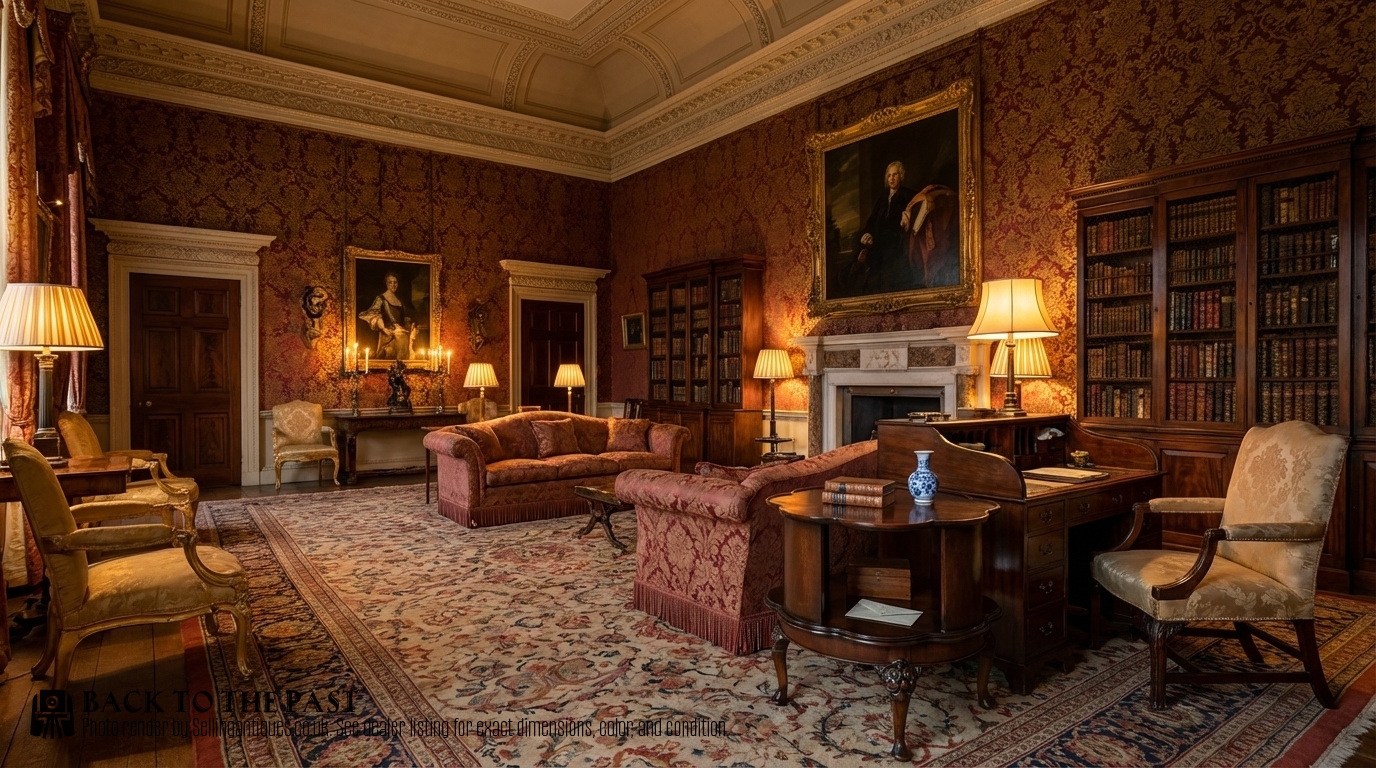
Mahogany Revolving Table
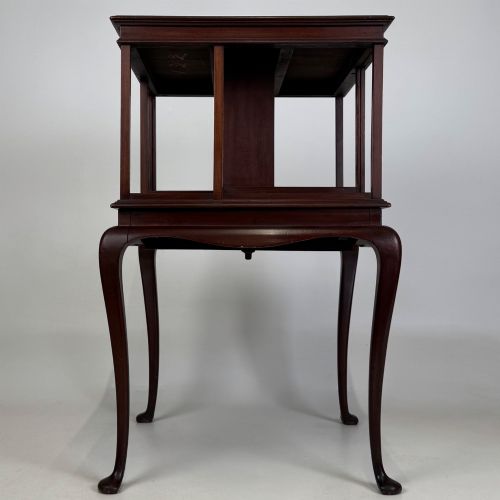
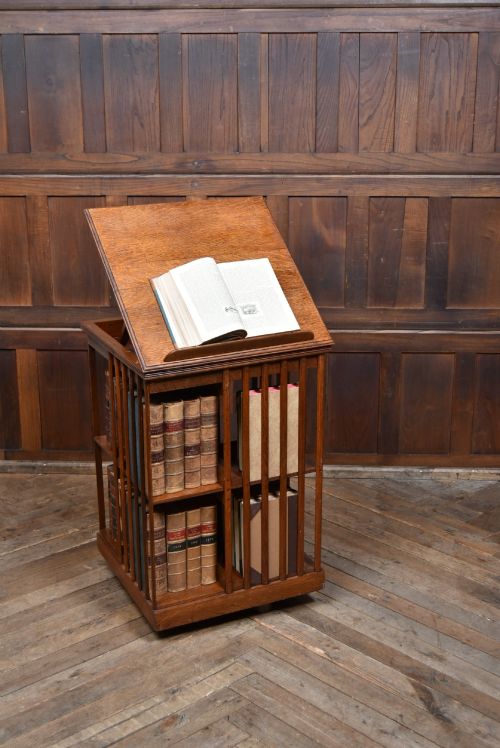
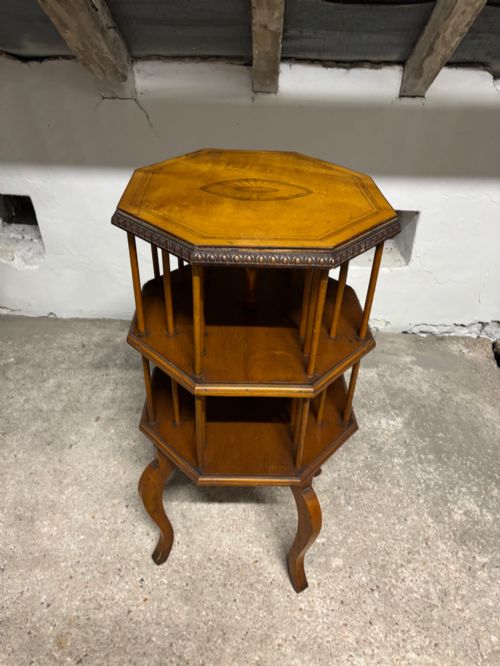
A mahogany revolving table encompasses several functional furniture forms designed to rotate on a central axis, including floor-standing and table-top revolving bookcases, library drum tables, and tiered dumb waiters. These pieces originate from periods spanning the Georgian, Regency, Victorian, and Edwardian eras, reflecting changes in domestic and library organisation.
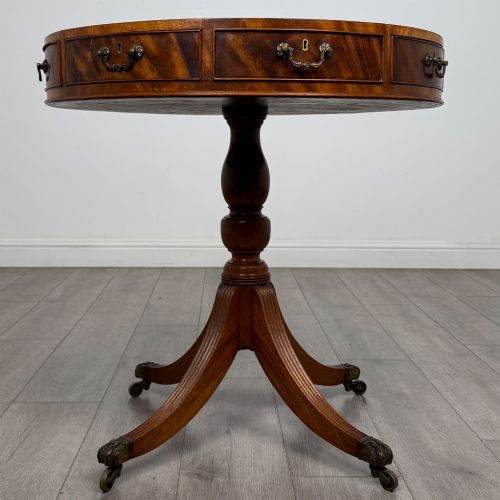
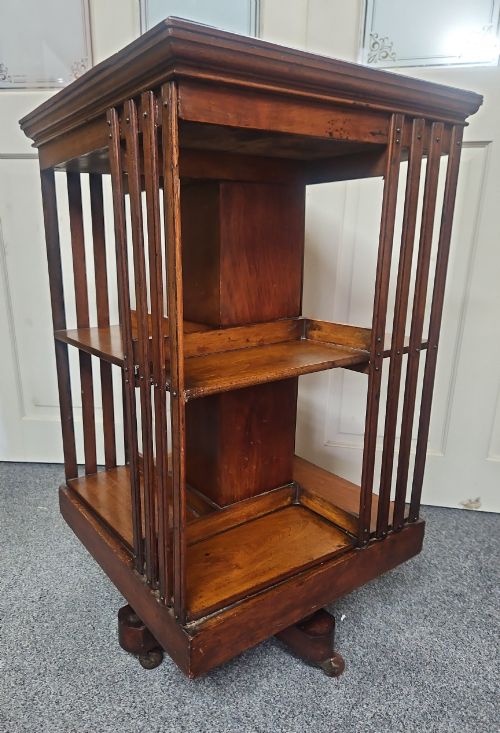
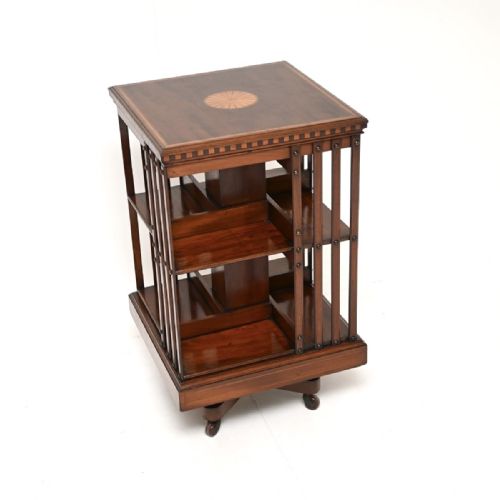
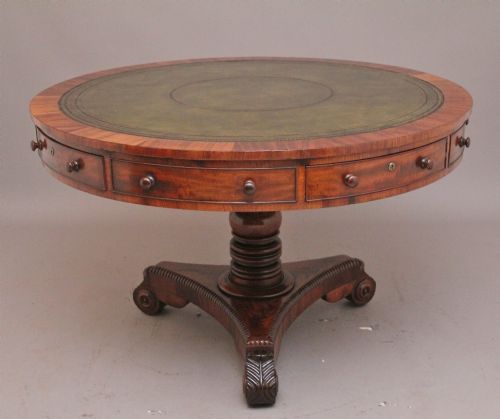
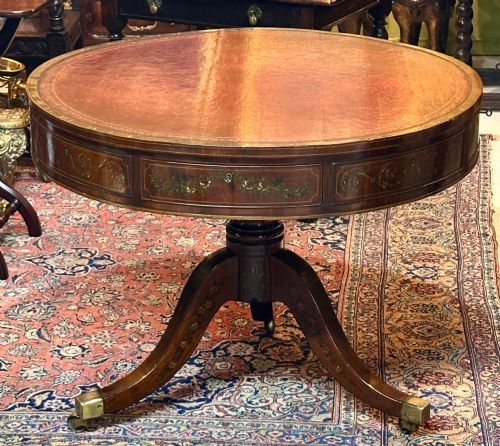
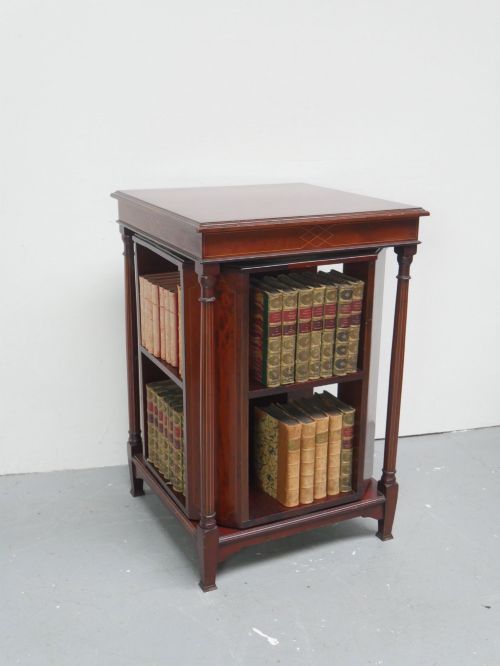
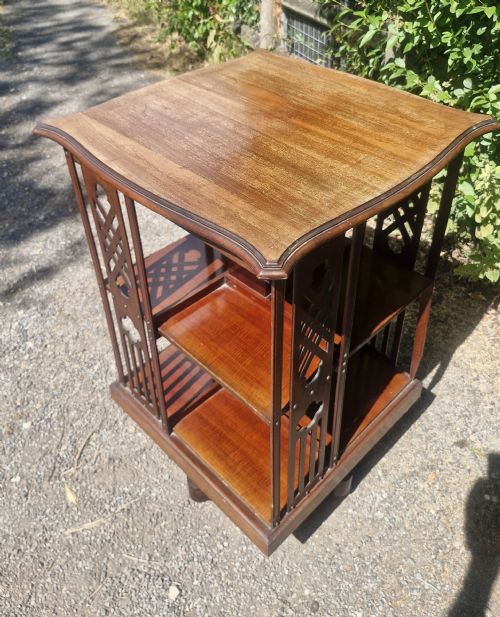
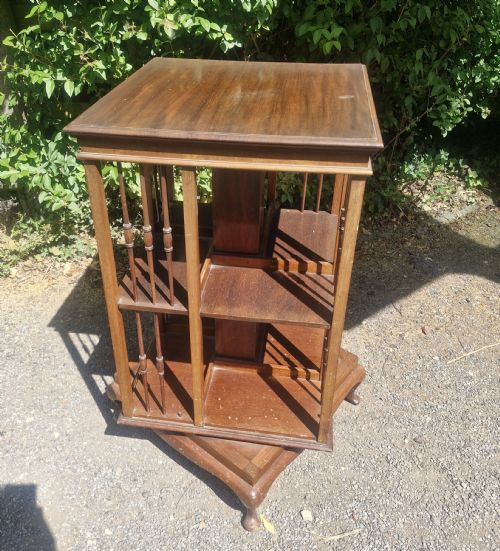
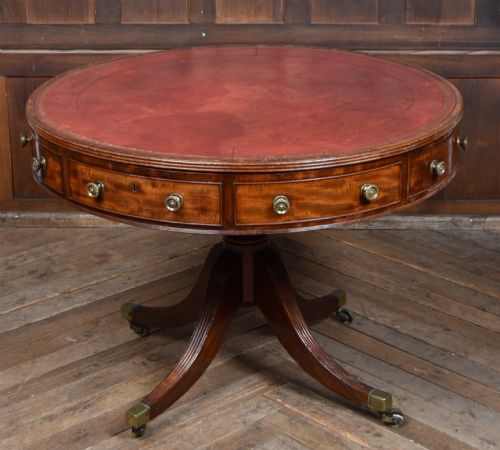
The version most commonly encountered on this page is the Edwardian revolving bookcase, typically constructed with slatted partitions to hold octavo volumes within easy reach. Alongside these, buyers frequently meet Regency and Georgian drum tables featuring circular tops above pivoting mechanisms or concealed drawers.

How they were made
Cabinet makers utilised dense solid mahogany and rich flame mahogany veneers laid over secondary timbers, often accentuating surfaces with satinwood inlay, ebony stringing, or crossbanding. Structural integrity relied on turned central columns, substantial tripod or four-splayed pedestal bases, and internal pivoting metal or wooden spider mechanisms.
Movable components incorporated brass castors, leather inset writing surfaces for drum tables, and complex multi-tiered revolving frameworks for dumb waiters and book stands. Joinery methods such as dovetailing appeared in the construction of frieze drawers on library tables.
Early rotating stands allowed diners to spin the afternoon tea or wine towards themselves without stretching across the mahogany.
What varies in quality
Quality in a revolving table rests upon the smoothness of the internal rotating mechanism and the stability of the central pivot under weight. Superior examples maintain a balanced motion without wobbling on their tripod or pedestal bases.
The grade of timber selection and the precision of decorative inlays also define the hierarchy. Finely figured flame mahogany veneer, crisp boxwood and satinwood stringing, and original brass hardware distinguish workshop pieces from later mass-produced alternatives.
Maple And Co·Shapland And Petter
The Mahogany Revolving Table Glossary
- Drum Table
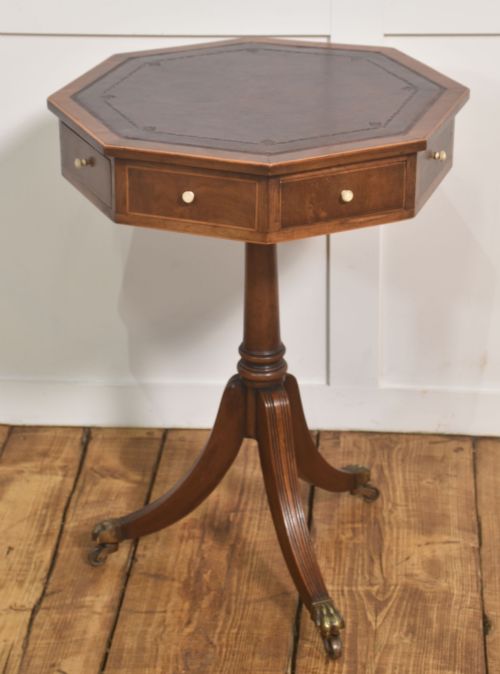
- A circular library table with a deep frieze containing alternating drawers and dummy drawers, supported by a central pillar and tripod base. These often feature inset leather writing surfaces.
- Dumb Waiter
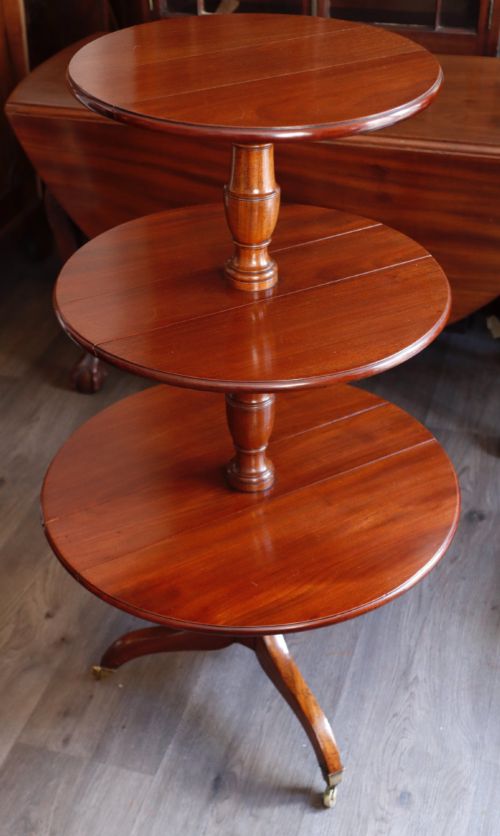
- A tiered serving table with rotating or fixed circular shelves on a central column, used for meals or displaying items without servants present.
- Bird Cage
- A timber framework beneath a table top that allows the surface to tilt or revolve independently of the pedestal shaft.
- Crossbanding
- A decorative border technique where veneer strips are laid perpendicularly to the grain of the central panel, frequently seen on Regency and Edwardian furniture.
- Sabre Legs
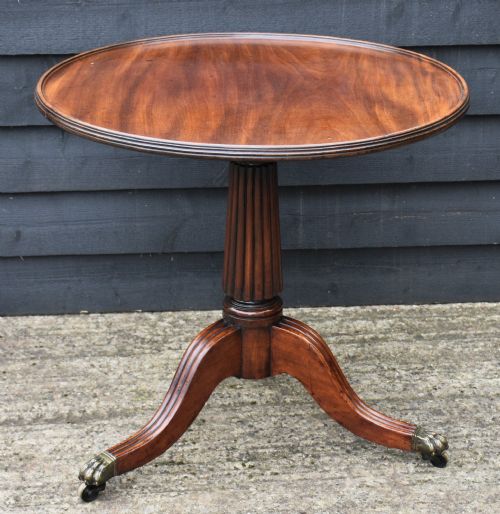
- Outcurving concave legs that taper towards the floor, typical of Regency furniture design and often terminating in brass claw castors.
Mahogany Revolving Table: Frequently Asked Questions
What is a revolving drum table?
A revolving drum table is a circular library table designed with a deep top that often houses drawers around the perimeter. The entire assembly typically sits on a central pillar, allowing the user to access different sides easily.
These pieces were historically used in studies and libraries for sorting papers or keeping reference books close at hand.
How do revolving bookcases work?
Revolving bookcases utilise a concealed internal pivot mechanism, often featuring ball bearings or wooden rollers, that lets the entire tiered structure spin freely. This design enabled readers to store numerous volumes within a small footprint.
They appear in both floor-standing heights and smaller table-top formats intended for desks or side tables.
Where were dumb waiters used?
Dumb waiters served as multi-tiered serving stands in dining rooms and drawing rooms to hold dishes, tea accessories, or books. The revolving tiers allowed diners to help themselves without requiring attendants in the room.
Victorian and Georgian examples often feature two or three graduated circular trays on a tripod base.
How do I care for mahogany furniture?
Mahogany furniture benefits from regular dusting with a soft, dry cloth and occasional applications of beeswax to nourish the timber and preserve the polished finish. Avoiding direct sunlight and sustained heat sources prevents the wood from fading or splitting.
Leather surfaces on drum tables require separate, specialist conditioning to keep the hide supple and free from cracking.