



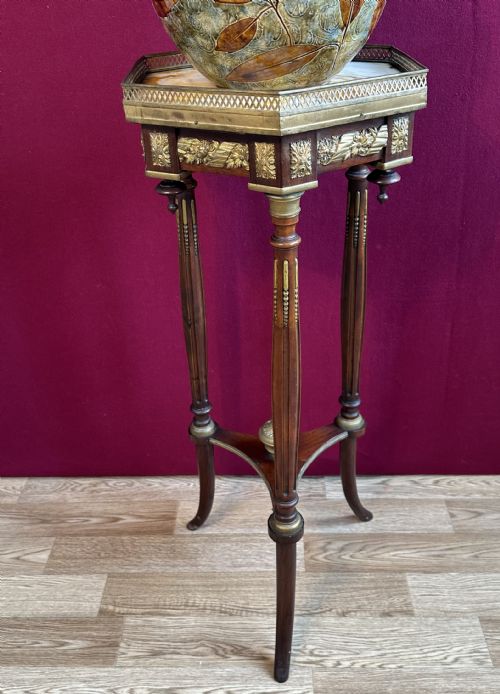


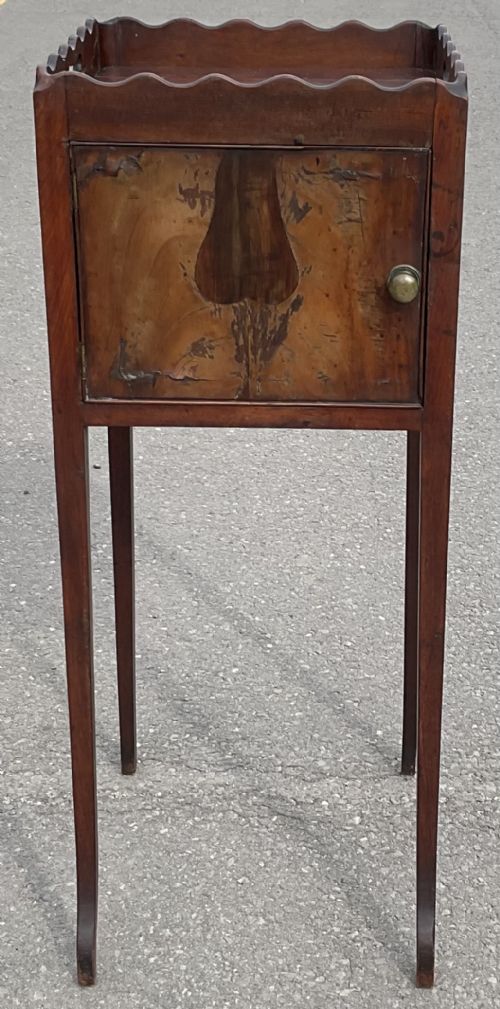

Mahogany Pot Stand
A mahogany pot stand brings the warmth of dense timber and quiet historical utility into a modern room.
Mahogany Pot Stand
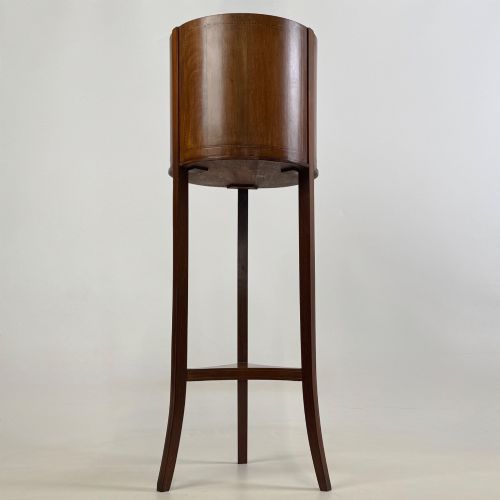
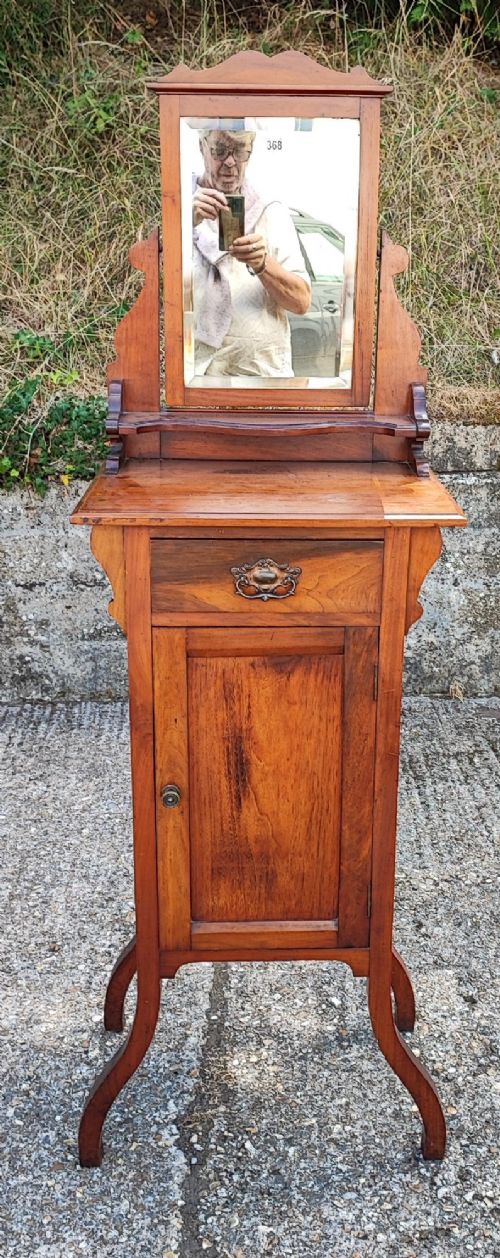
When searching for a mahogany pot stand, buyers encounter a utilitarian form that evolved through the Georgian, Victorian and Edwardian periods to serve multiple domestic functions. These pieces range from enclosed bedside cupboards and nightstands to open plant holders and jardinière tables.
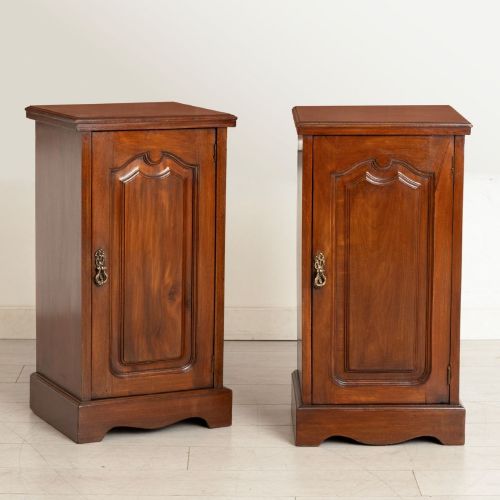
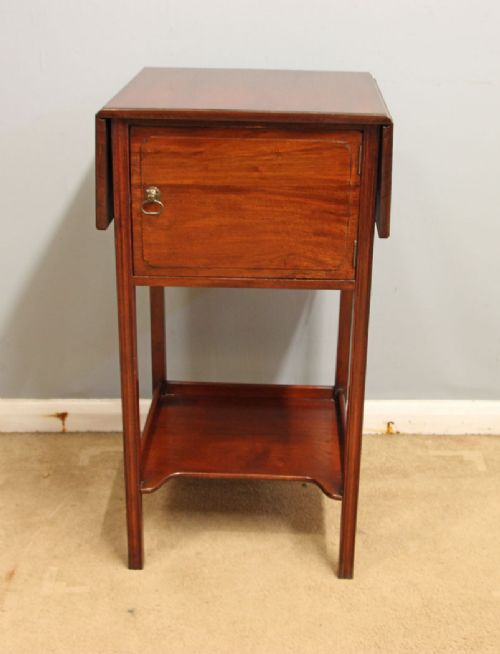
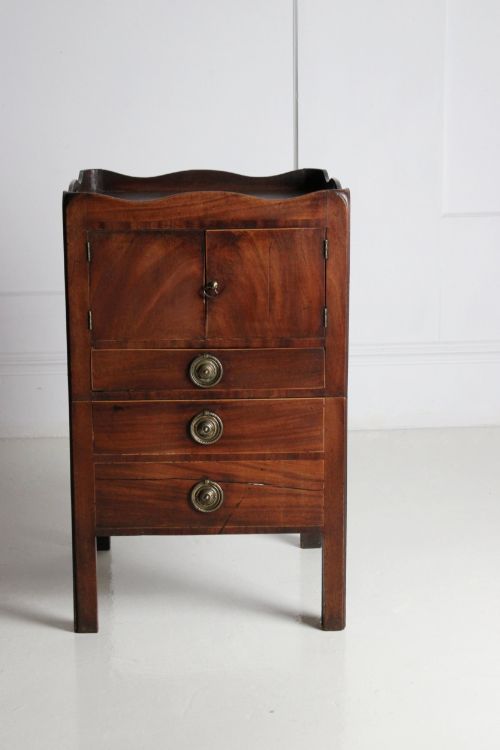
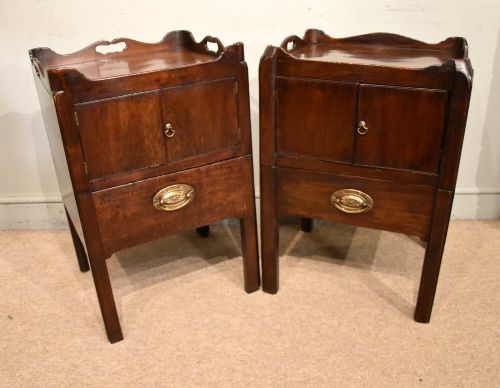
The version most commonly met on this page is the enclosed bedside cabinet or pot cupboard from the Georgian and Victorian eras. These items often feature a small square or rectangular top above a cabinet door, designed originally to house a chamber pot or serve as a night table.
How they were made
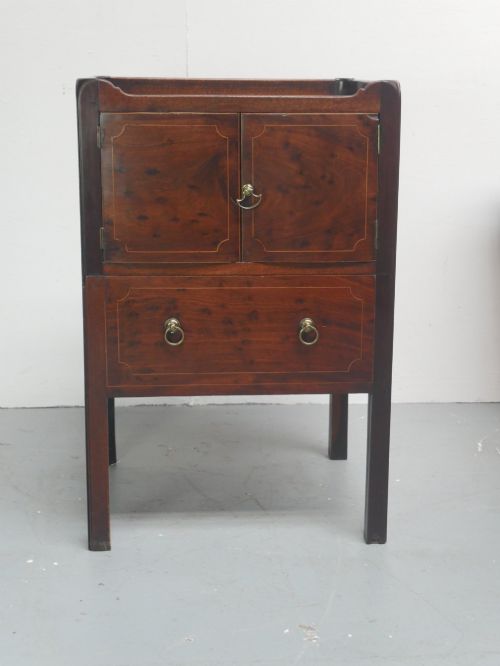
Cabinet makers utilised solid mahogany and figured veneers over secondary timbers, often selecting flame mahogany for visual depth on doors and drawer fronts. Construction relied on traditional joinery techniques such as dovetailed drawer boxes and mortise and tenon frames.
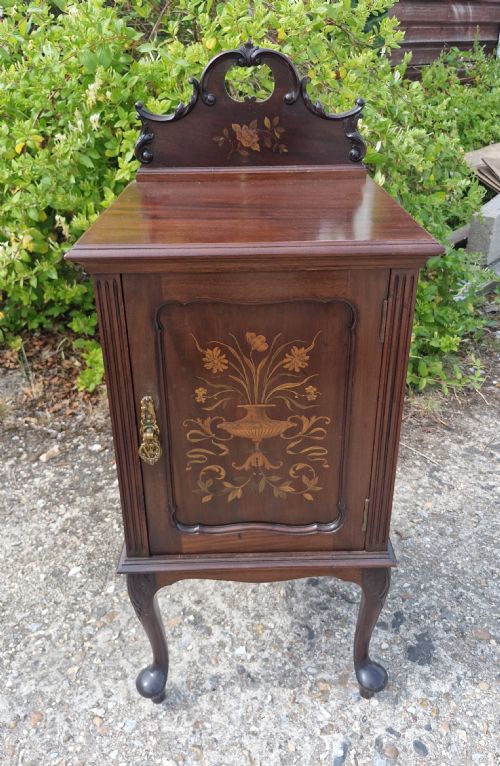
Surface ornament frequently incorporates boxwood or marquetry inlay, whilst certain French and later Victorian examples integrate inset marble tops and brass mounts. Brass binding appears on specific cylindrical bucket forms, adding structural reinforcement and decorative contrast to the dark timber.
Materials appearing across the selection include solid mahogany, figured veneers, white marble, boxwood inlay and brass hardware.
What varies in quality
The standard of a piece rests upon the selection of the mahogany timber and the crispness of any cabinetmaker details, such as hand-cut dovetails or fine boxwood stringing. Well-executed proportion and balanced grain patterns distinguish finer examples from standard utilitarian workshop output.
Originality of components, including hardware like brass handles and hinges, elevates a piece, as does the survival of fitted internal shelves or tambour doors that operate smoothly. Later alterations or replaced timber elements alter the integrity of the object.
Howard and Sons·Gillows Lancaster
The Mahogany Pot Stand Glossary
- Pot cupboard
- A small enclosed bedside cabinet originally designed to conceal a chamber pot behind a single door. This form dates predominantly from the Georgian and Victorian periods.
- Tambour
- A flexible sliding shutter formed from thin strips of mahogany glued to a canvas backing. It runs in tracks to close the front of a nightstand or cabinet.
- Jardinière
- An ornamental stand or container meant for holding plants or flowers. These pieces often feature taller proportions and sometimes include metal liners.
- Flame mahogany
- A veneer cut from the point where a branch joins the main trunk, producing a distinctive flickering flame pattern. Cabinet makers used this to create decorative panels on doors.
- Nightstand
- A small bedside table or cabinet developed to hold nighttime necessities. Georgian and Victorian iterations frequently incorporate enclosed cupboards or open shelf spaces.
Mahogany Pot Stand: Frequently Asked Questions
What was a pot stand used for?
These items served primarily in bedrooms as discreet enclosures for chamber pots or as bedside tables for nighttime essentials. They kept domestic necessities hidden away beneath fitted wooden tops.
Over time, many of these small cabinets transitioned into general lamp tables or side stands. Their compact footprints made them versatile additions to various rooms in the house.
How do I date a mahogany pot stand?
Dating relies on observing structural characteristics, timber selection and decorative styles associated with specific periods. Georgian examples often display cleaner lines and simpler bracket feet, while Victorian versions may feature heavier proportions, flame mahogany veneers or applied mouldings.
Edwardian pieces frequently show lighter inlay work or influences from revival styles. Examining the secondary woods inside drawers can also offer clues regarding the date of manufacture.
Are marble top stands fragile?
The inset marble slabs found on certain Victorian and Edwardian stands are heavy stone, yet they remain vulnerable to cracking if subjected to sharp impacts or uneven pressure. They were originally chosen for their water-resistant qualities near washbasins or plants.
Living with a marble top requires simple care, such as using coasters for liquids and avoiding heavy knocks to the edges. The stone lifts out of many frames for easier moving.