


Mahogany Pole Screen
A mahogany pole screen is a slender fireside shield designed to deflect the fierce heat of an open hearth.
Mahogany Pole Screen
A mahogany pole screen combines a tall vertical shaft with a sliding panel used to protect the face from roaring flames. These pieces emerge chiefly from the Georgian, Regency, and Victorian periods, taking the form of tripod stands or heavy weighted bases carrying adjustable screens.
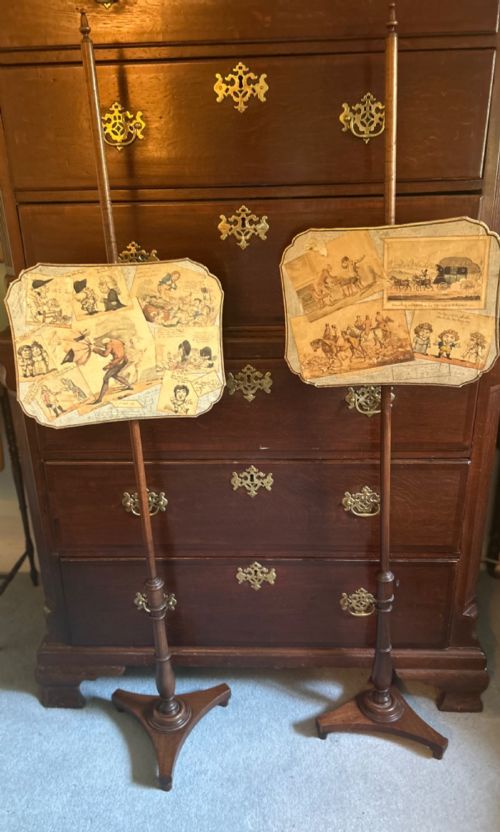
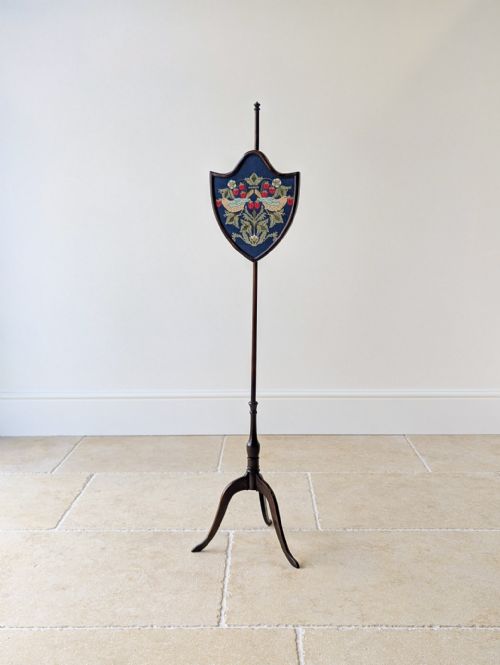
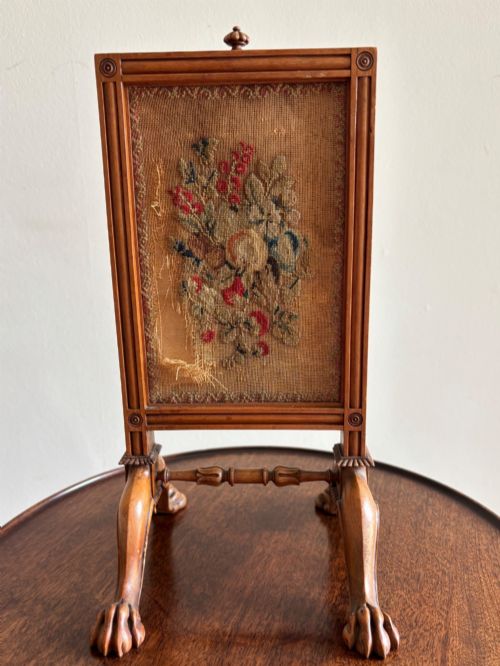
Most examples encountered here pair rich mahogany woodwork with textile inserts, ranging from simple needlepoint tapestries to satirical prints and embroidered samplers. Single items appear alongside matched pairs, while certain specimens show later conversions into floor lamps.
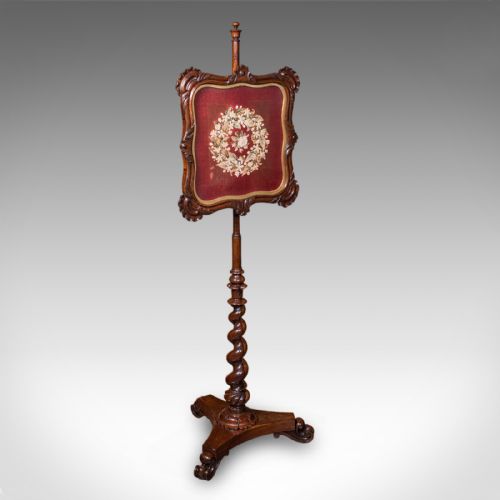
The upright column supports a mechanism that allows the screen panel to slide up and down, catering to the comfort of those seated nearby. Collectors find variations in the shape of the shield, which can be rectangular, circular, or carved into ornate leaf motifs.
Materials and construction
Cabinetmakers constructed the main supports from dense mahogany, occasionally utilising alternative tropical timbers like rosewood or goncalo alves for distinctive grain patterns. Turned and carved shafts rise from sturdy tripod legs, demonstrating precise joinery designed to balance the weight of the sliding screen above.
Brass fittings and sliding collars regulate the height of the panel, operating alongside wooden grooves and counterweights. The screens themselves display intricate needlework, wool embroidery, silk, or glass panels stretched securely over wooden frames.
Mahogany Pole Screen Retail Price Guide 2026
Typical asking prices for mahogany pole screen among the pieces listed under this phrase on Sellingantiques today, from the lower quarter to the upper quarter. They describe what is for sale here now, not the wider market.
Judging the craftsmanship
Quality rests heavily on the crispness of the timber carving along the tripod base and the stability of the sliding mechanism. Pieces featuring finely executed needlework panels or original satirical prints command greater attention from discerning collectors.
Proportion and wood figure dictate the overall harmony of the stand, separating standard utility pieces from exceptional examples created by skilled cabinetmakers.
The Mahogany Pole Screen Glossary
- Needlepoint
- A type of canvas work embroidery used extensively on historical fire panels. It provides both decorative colour and insulating properties.
- Tripod base
- A three-legged support structure commonly found on these stands to ensure stability on uneven floors. The legs often terminate in scroll or pad feet.
- Regency
- A design period spanning the early nineteenth century defined by classical restraint and rich mahogany timbers. Pieces from this era often show bold architectural turnings.
Mahogany Pole Screen: Frequently Asked Questions
What is a pole screen used for?
These screens served to protect the delicate complexions of ladies from the intense heat of coal or wood fires in grand drawing rooms.
Sitting close to the hearth made such protection necessary before central heating regulated indoor temperatures.
How do you adjust the panel height?
A brass collar or internal mechanism allows the central panel to slide smoothly up and down the wooden pole.
Users set the shield at the exact height required to cast a shadow over their face while seated.
Are these pieces stable on carpets?
The tripod base provides a wide footprint designed to keep the tall column balanced during adjustment.
Care should be taken on thick carpets, as the slender legs require a level surface to prevent tipping.
How do I identify a Regency screen?
Regency examples display distinct classical influences, often utilising dark mahogany and crisp brass mounts.
The woodwork tends to feature simpler, bolder lines compared to the ornate carvings of the later Victorian period.