
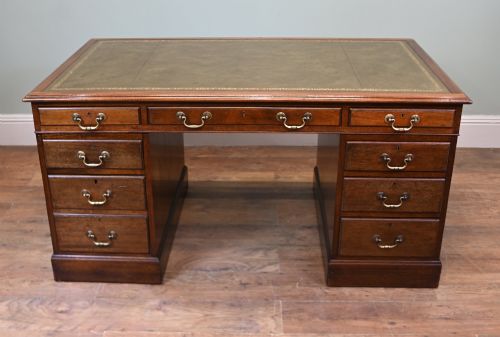
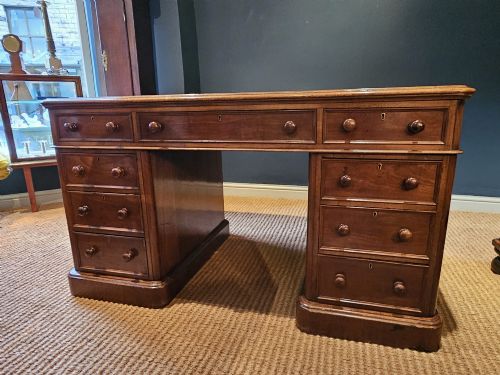
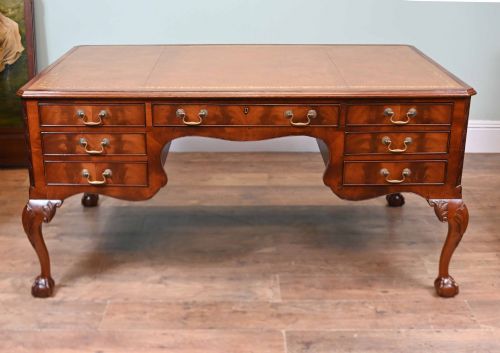
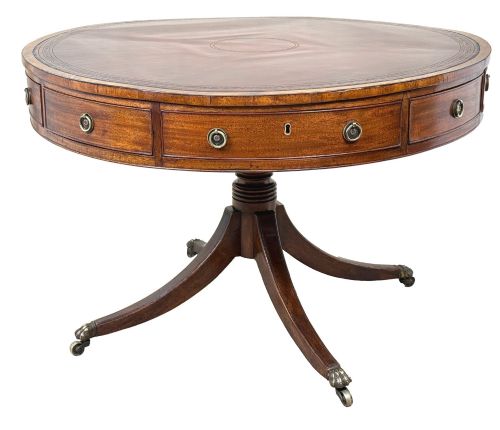
Mahogany Pedestal Writing Desk
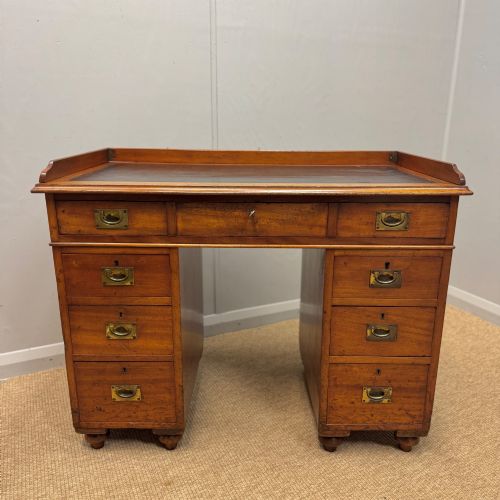
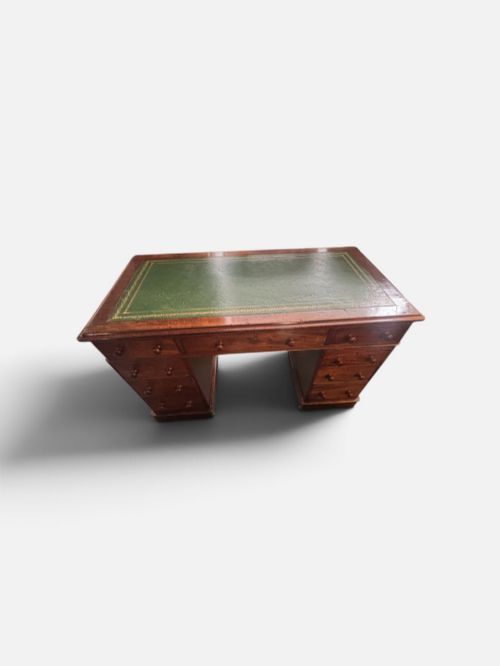
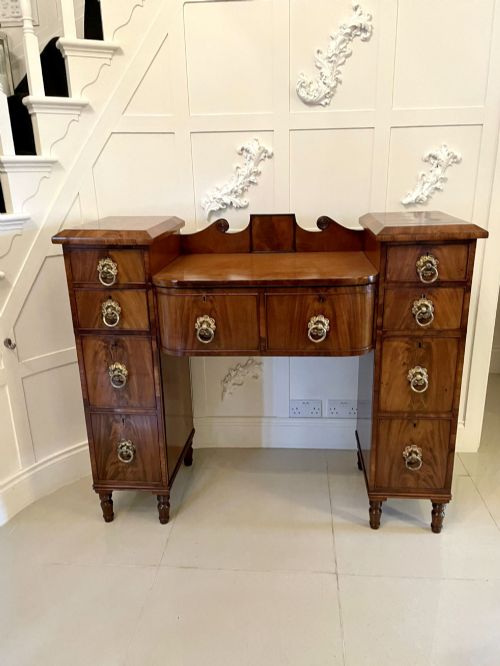
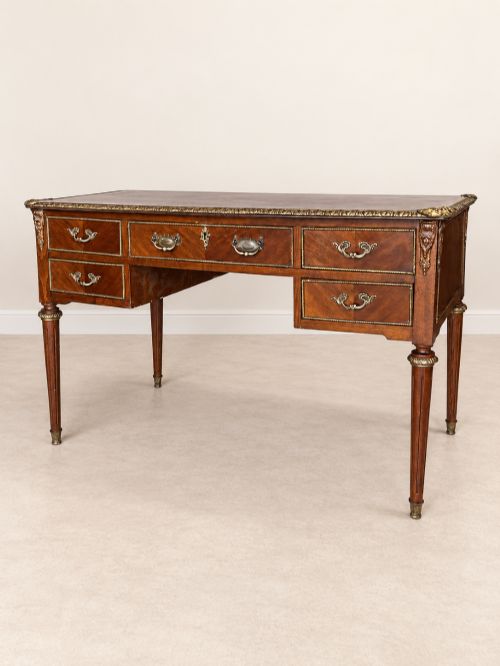
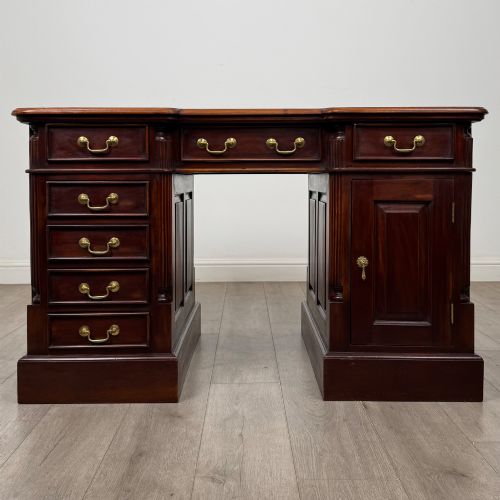
A mahogany pedestal writing desk brings grounded presence and functional organisation to a study, standing on twin banks of drawers.
Mahogany Pedestal Writing Desk
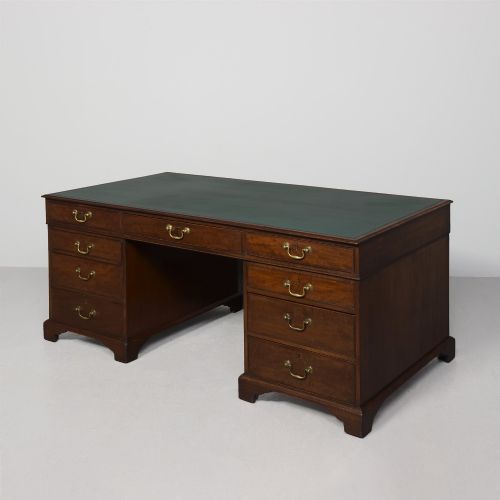
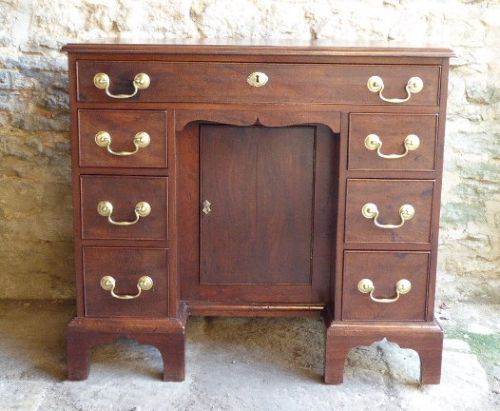
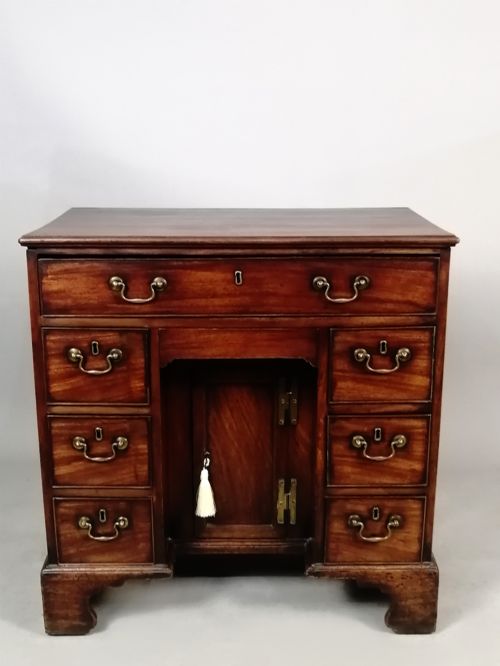
A mahogany pedestal writing desk provides a substantial writing surface supported by two vertical banks of drawers, forming a practical station for correspondence and records. When you search for a mahogany pedestal writing desk, you encounter forms ranging from compact kneehole layouts to large partners pieces designed for two sides of use. The examples seen here span multiple eras, with Victorian and Edwardian interpretations forming the most frequent encounters alongside earlier Georgian predecessors.
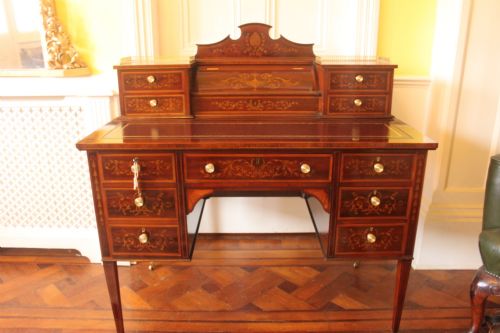
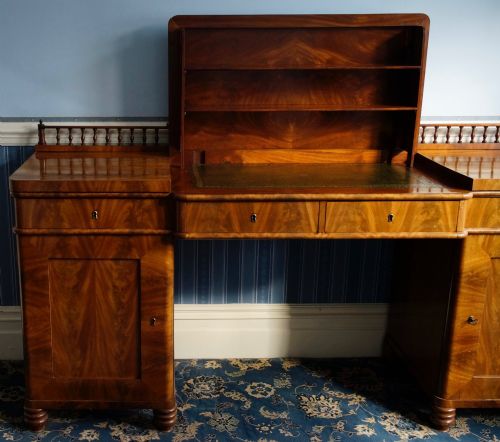
These pieces typically comprise a top section fitted with drawers above two separate pedestals, sometimes joined by a modesty panel or left open at the kneehole. Variations include cylinder fronts, roll tops, and kidney-shaped writing surfaces tailored to specific domestic or office tasks. The materials shift from solid timbers to figured veneers, paired with inset leather writing surfaces and brass hardware.
How They Were Made
Cabinet makers built these desks using solid mahogany and flame mahogany veneers applied to secondary woods, bringing out deep red-brown grain patterns. Surfaces often received inset panels of tooled leather, while drawers were constructed with hand-cut dovetail joints and fitted with brass handles or pulls.
Structural reinforcement came from internal blocking and plinth bases, occasionally supplemented by brass casters concealed beneath the pedestals. Inlaid examples integrated satinwood stringing and marquetry motifs into the mahogany ground.
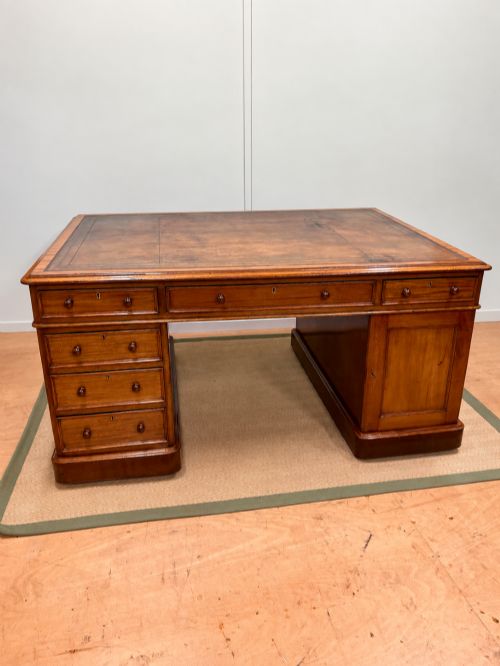
Listings include freestanding designs finished on all sides for central room placement.
What Varies in Quality
The degree of figuration in the mahogany veneer dictates much of the visual weight, with flame and figured grains commanding greater presence than plain timber. Finishes range from thick modern applications to thin, hand-rubbed polishes that preserve the natural depth of the wood.
Joinery execution in the drawer construction and the retention of original hardware, locks, and keys separate standard utilitarian office furniture from workshop-attributed library pieces. The integration of secondary woods and the precision of inlaid satinwood stringing further distinguish individual examples.
Trollope & Sons·Edwards & Roberts·Hobbs & Co.·Charles Andrea Nosotti·JAS Shoolbred
The Mahogany Pedestal Writing Desk Glossary
- Pedestal
- A structural vertical column or cabinet base supporting one side of the desk top. Most twin-pedestal variants house three drawers in each bank.
- Partners Desk
- A large double-sided desk designed for two people to work opposite one another. These frequently feature drawers and cupboards on both faces.
- Kneehole
- The central recessed space between the two pedestals where the user sits. Some versions include a small hidden drawer above this opening.
- Flame Mahogany
- A veneer cut from the fork of the mahogany tree where the branch meets the trunk. This produces a distinctive flickering wave pattern across the surface.
- Tooled Leather
- A writing surface inset into the desk top decorated with gold-tooled borders. These panels are often coloured in green, olive, or brown shades.
Mahogany Pedestal Writing Desk: Frequently Asked Questions
How do I care for the leather top?
Clean the inset leather gently with a slightly damp cloth and nourish it periodically with neutral leather wax.
Avoid placing hot cups or excessive moisture directly onto the writing surface to prevent staining the hide.
Can these desks be taken apart?
Many twin-pedestal desks are constructed in three primary sections comprising the two pedestals and the top. This modular build aids in transporting heavy timber furniture through narrow doorways.
Lifting the top free from the pedestals reveals simple wooden locating pins or screws.
What is a partners desk?
A partners desk is an expanded version of the standard pedestal desk featuring matching drawers and workspaces on both sides. They originated to allow business associates or lawyers to work face-to-face.
These pieces typically require a central placement in a room rather than backing against a wall.
How do I identify a Victorian desk?
Victorian examples often display heavier proportions, darker reddish-brown mahogany, and deep drawer configurations fitted with original brass or wooden knob handles.
Interior fittings frequently include pigeonholes and stationery drawers alongside stamped locks from period makers.