
Mahogany Open Library Shelves
Mahogany open library shelves provide accessible storage for working collections, combining sturdy timber construction with straightforward display.
Mahogany Open Library Shelves
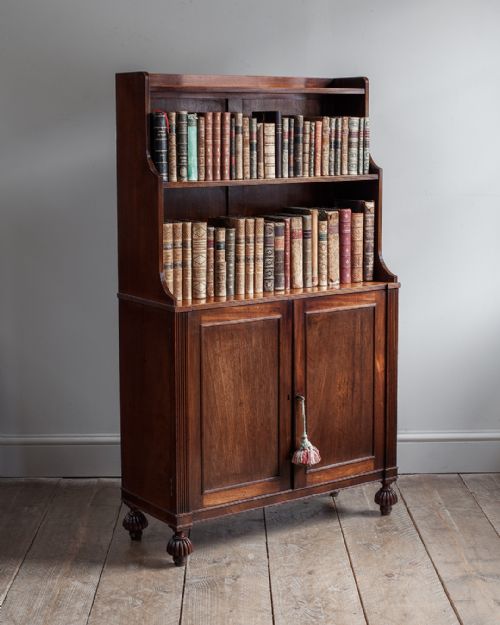
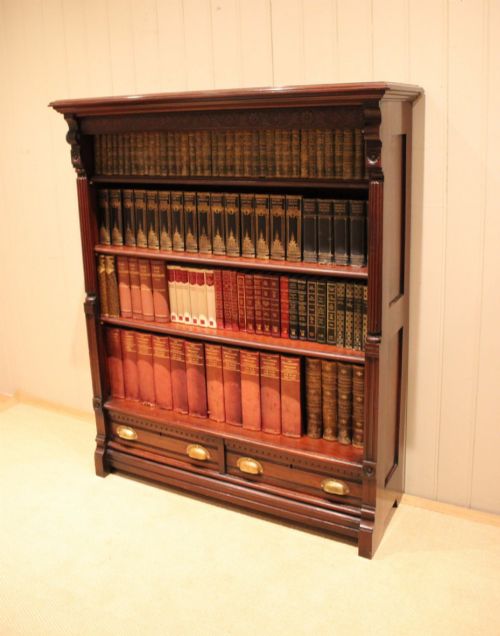
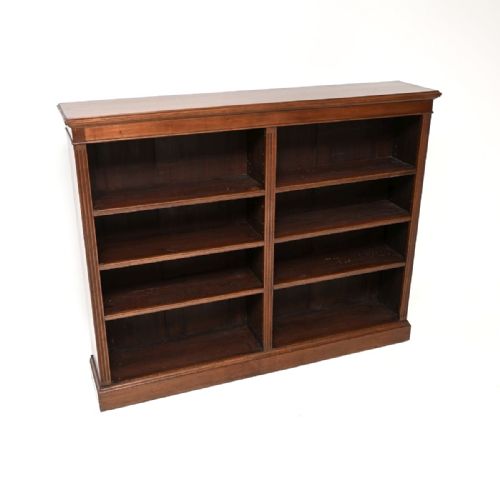
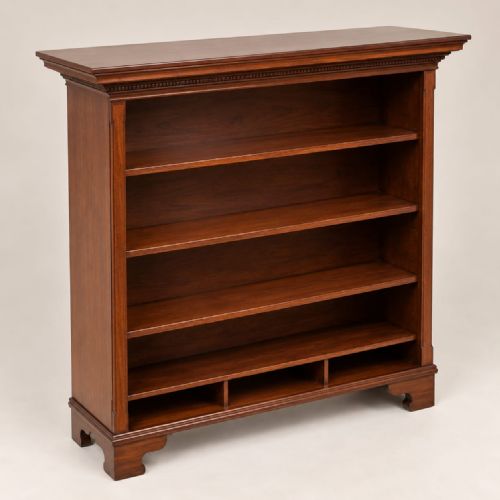
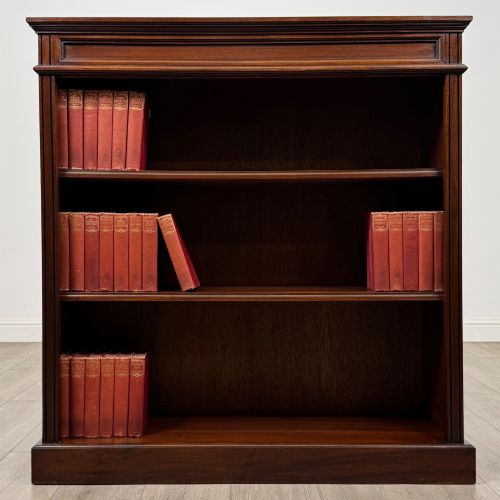
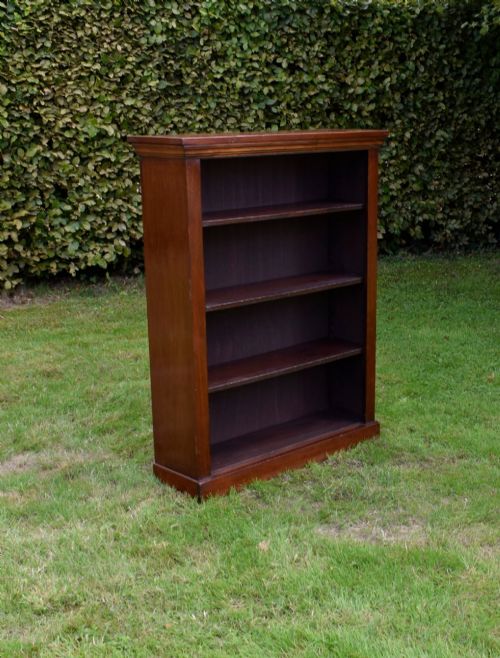
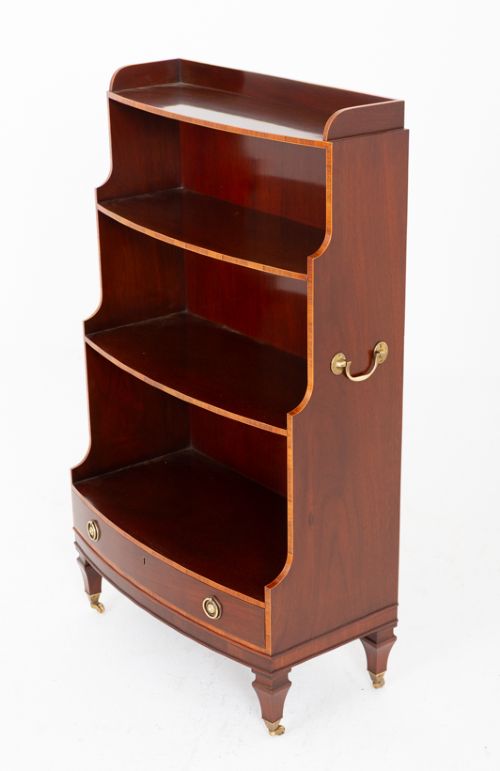
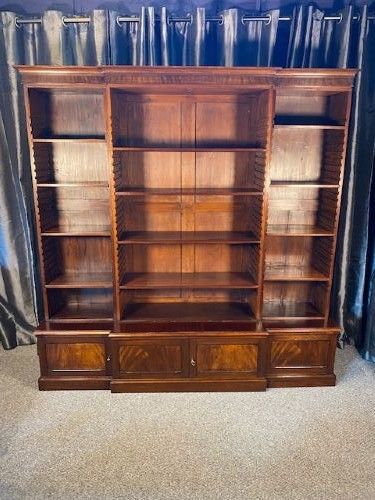
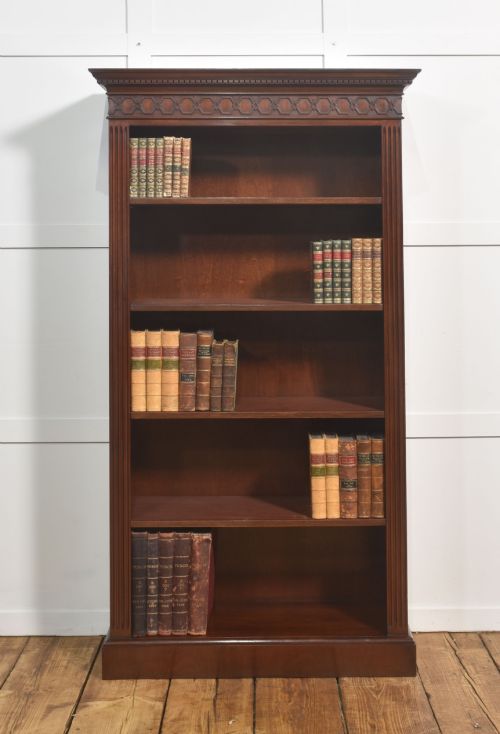
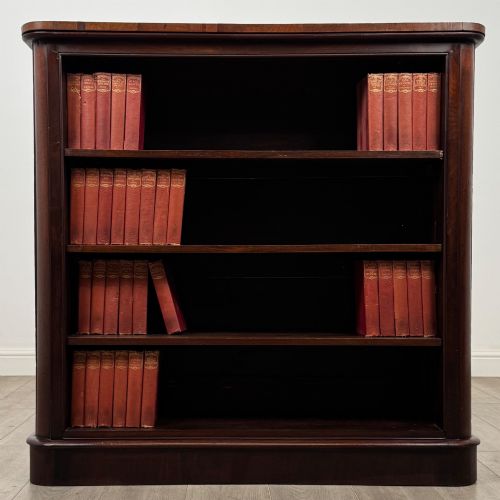
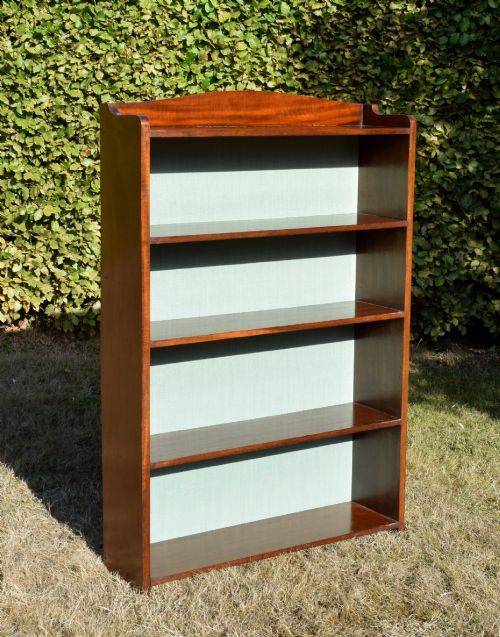
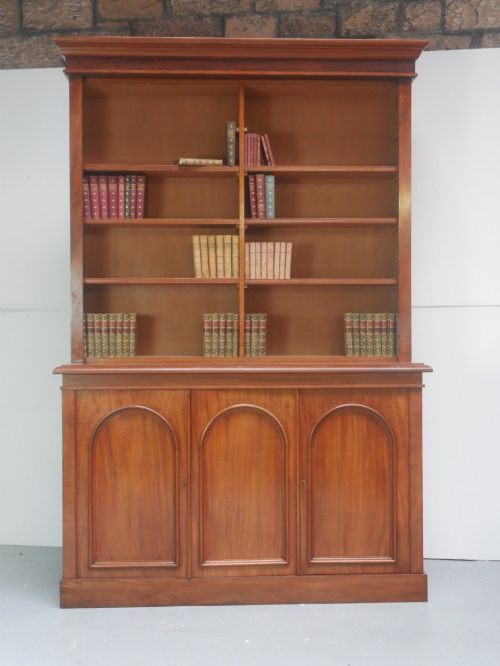
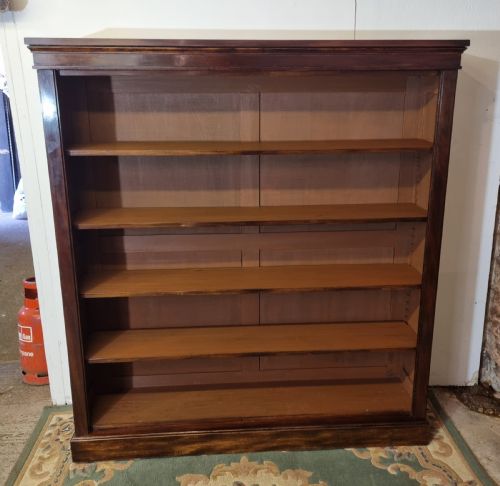
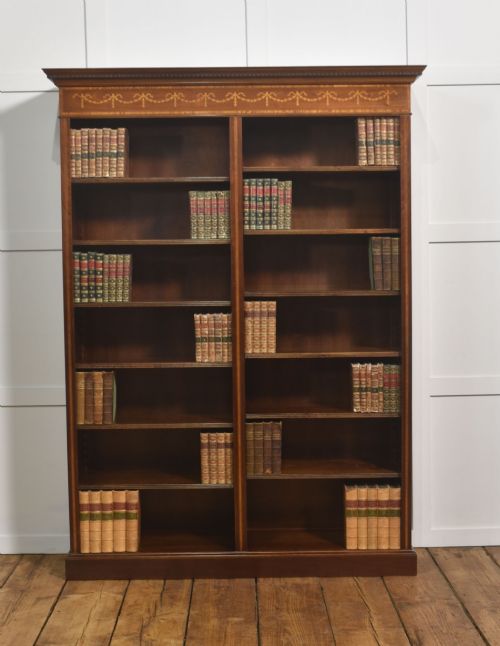
Mahogany open library shelves appear in various forms, most commonly as straightforward open bookcases, breakfront library bookcases, and multi-tiered waterfall bookcases. Buyers seeking mahogany open library shelves typically encounter pieces originating from the Georgian, Regency, Victorian, and Edwardian periods.
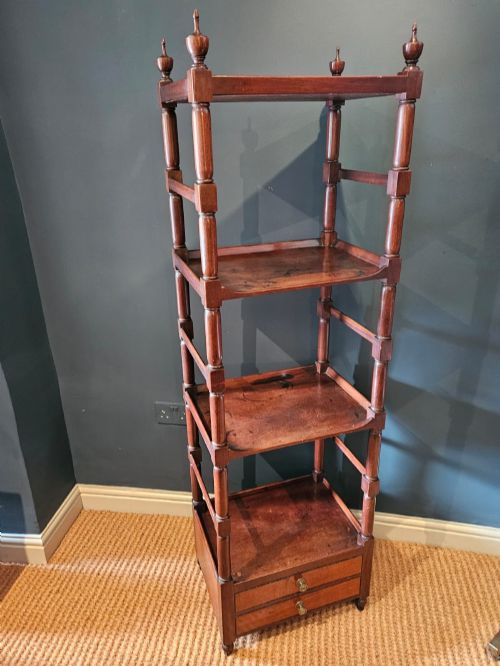
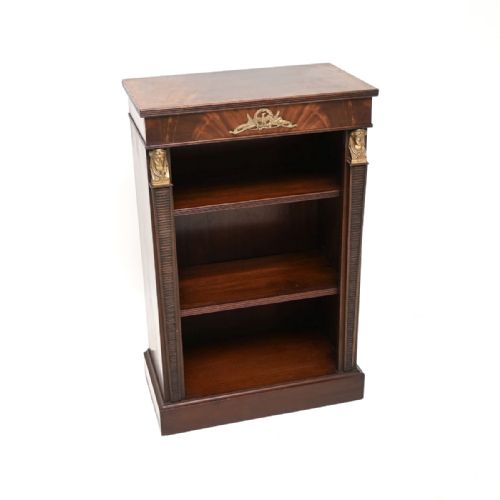
The selection ranges from tall, large-scale breakfront library cabinets to neat Edwardian open bookshelves and multi-tier what-not bookcases. Many examples incorporate adjustable shelving to accommodate books of varying heights, while others feature decorative elements such as brass castors or inlaid satinwood.
What varies in quality
Quality in these library shelves rests upon the selection of timber and the precision of the cabinetwork, particularly in breakfront and inlaid examples. Superior pieces display carefully matched flame mahogany veneers and refined secondary details such as fine stringing and intact brass mechanisms for adjustable shelving.
The overall proportion and architectural balance separate standard workshop output from exceptional examples produced by notable cabinetmakers. Construction methods, such as the thickness of the mahogany boards and the soundness of the internal framing, dictate the longevity of the structure.
Materials recorded across the archive include solid mahogany, flame mahogany veneer, satinwood, brass, ormolu, and leather.
Waring and Gillows·Lamb of Manchester
The Mahogany Open Library Shelves Glossary
- Breakfront
- A cabinet design where the central section projects forward from the flanking wings. This architectural arrangement creates depth and visual interest on large library pieces.
- Waterfall bookcase
- A set of open shelves where each tier steps back progressively from bottom to top. This form typically appears in smaller proportions.
- Flame mahogany veneer
- A thin slice of timber cut from the fork of the mahogany tree to produce a flickering, flame-like grain pattern. Cabinetmakers applied this to prominent surfaces for visual impact.
- What-not
- A multi-tiered piece of freestanding furniture designed for displaying small objects or books. These structures rely on slender vertical supports.
- Satinwood
- A pale, hard wood utilised for contrasting inlay and stringing on mahogany furniture. It provides a bright decorative border against darker timbers.
Mahogany Open Library Shelves: Frequently Asked Questions
How do I adjust the shelves?
Most period library shelves utilise a system of wooden or brass ratchets and support pins. The shelf rests on these movable supports, which fit into vertical slots inside the bookcase walls.
To alter the height, lift the shelf slightly, reposition the supports into the desired slots, and lower the board back into place.
Are these shelves suitable for heavy books?
Standard mahogany library shelves handle substantial weight when the timber is thick and the supports are secure. Many period designs include adjustable wooden shelves specifically built to bear rows of heavy volumes.
Check the thickness of the individual shelf boards and the condition of the vertical supports before loading large collections.
How do I tell Victorian from Edwardian pieces?
Victorian mahogany library shelves tend to feature heavier proportions, darker finishes, and deep cornices. They often incorporate functional elements like leather-edged shelves and robust brass hardware.
Edwardian pieces generally present lighter forms, sometimes with inlaid satinwood decoration and more restrained classical detailing derived from Sheraton revival styles.
Where should I place an open bookcase?
Position open library shelves away from direct sunlight and heat sources to protect the mahogany timber and any veneer work from drying out. Adequate wall space is necessary to accommodate breakfront or large Victorian library cabinets.
Ensure the floor is level so that tall, heavy bookcases remain stable against the wall.