
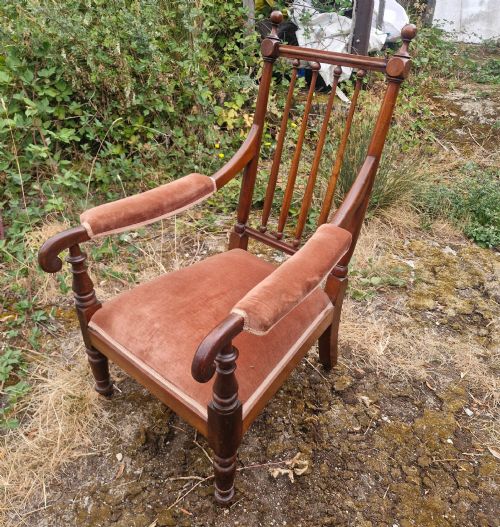
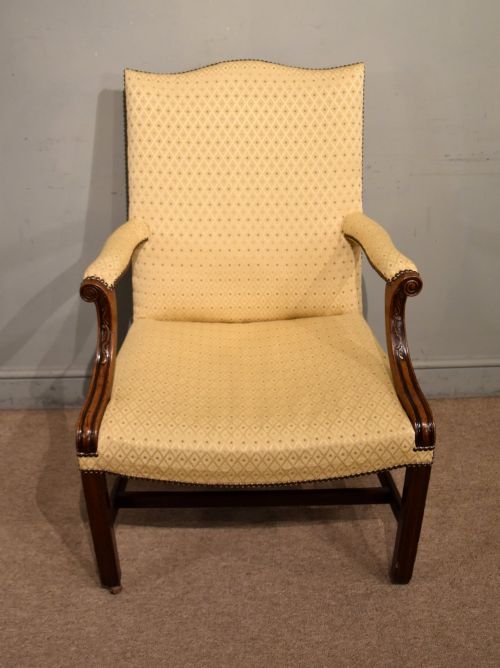
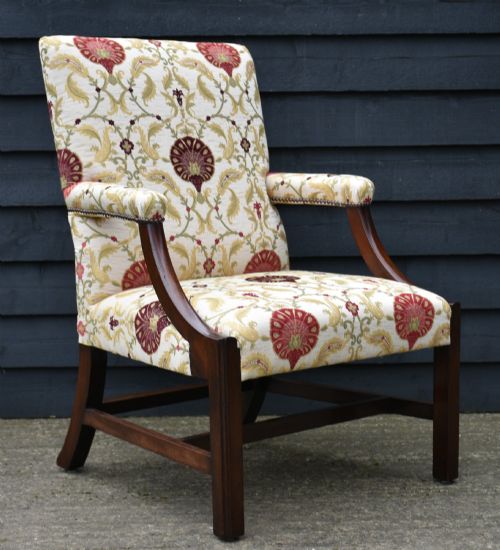
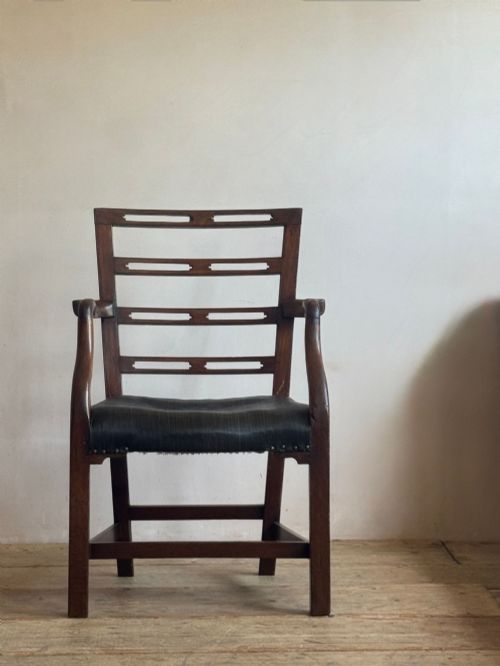

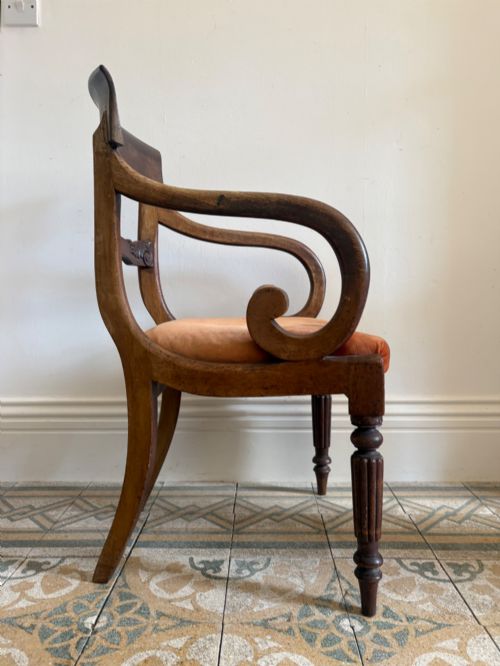
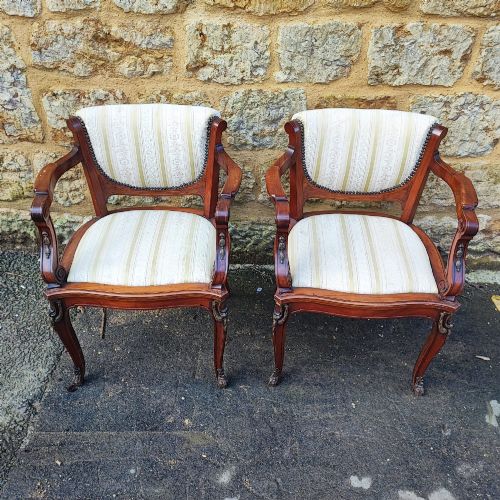
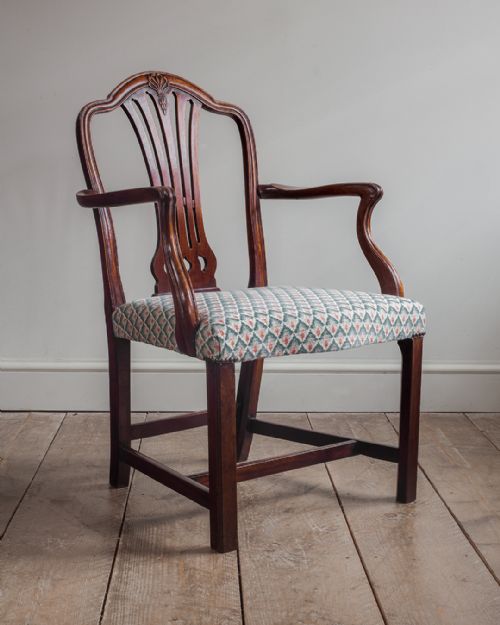
Mahogany Open Arm Chair
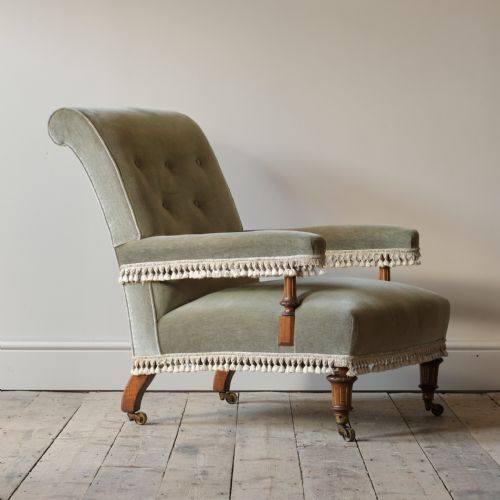
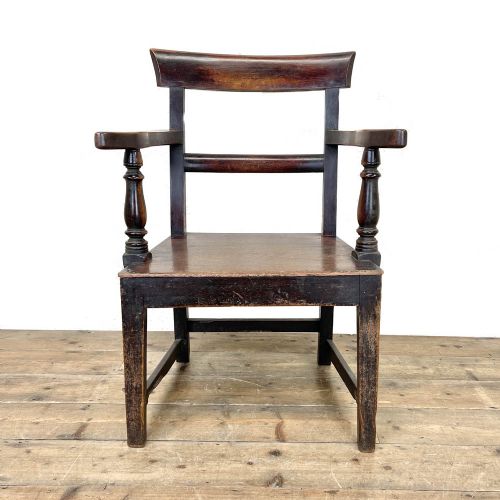
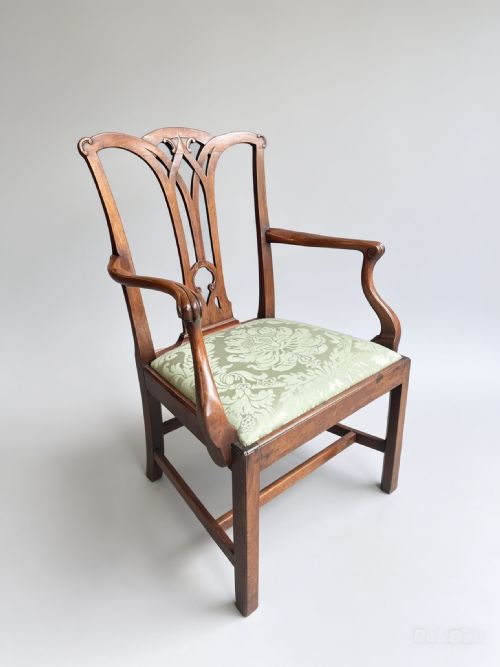
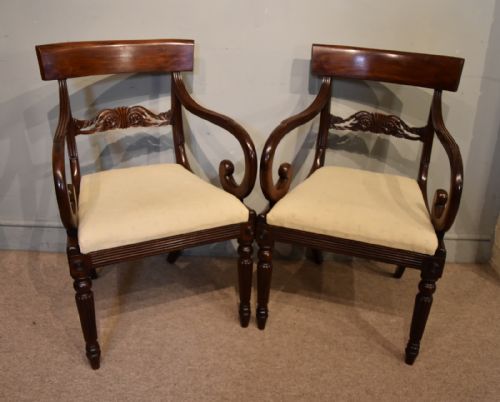
A mahogany open arm chair offers sturdy timber frames and comfortable upholstered seating rooted in centuries of refined British cabinet making.
Mahogany Open Arm Chair
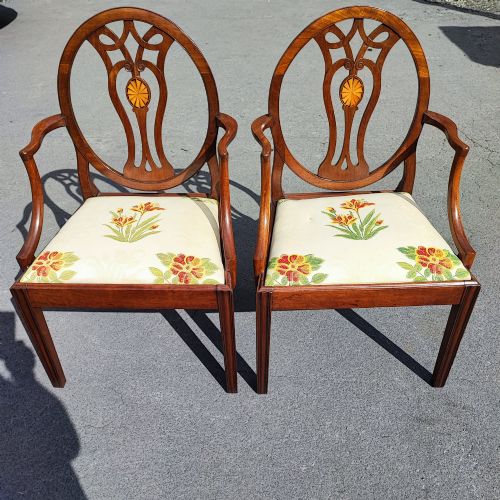
A mahogany open arm chair brings structural timber and exposed framing together for drawing rooms, libraries and studies. The phrase covers everything from formal 18th century library seats to later revival pieces made in the Victorian and Edwardian eras.
Most examples found on this page date from the Georgian period through to the early 20th century, encompassing styles from Chippendale and Sheraton to simpler country house interpretations. These chairs combine generous proportions with open wooden arms designed to accommodate period dress and comfortable seating.
Makers and workshops across Britain produced these armchairs for formal reception rooms, often pairing single pieces or matching pairs with larger dining sets or salon suites. The form ranges from deep-seated library armchairs to lighter elbow chairs and ladder-back variants.
How They Were Made
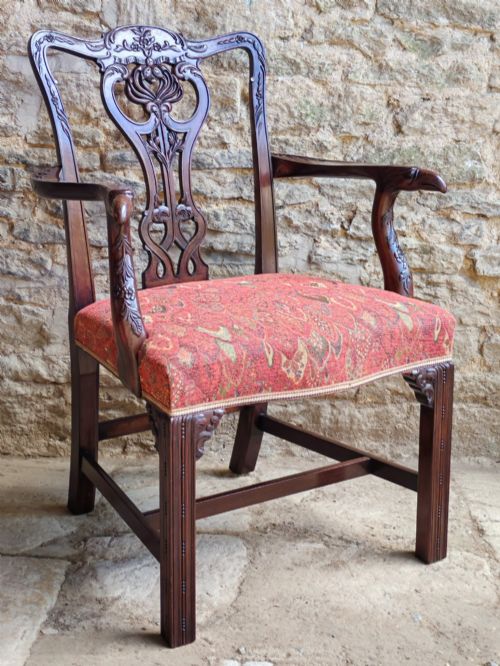
Cabinet makers relied on dense tropical mahogany for the structural frames, utilising its grain strength to carve cabriole legs, reeded supports and intricate splats. Secondary timbers were often employed for internal framing, while brass castors and decorative studs finished the feet and upholstery borders.
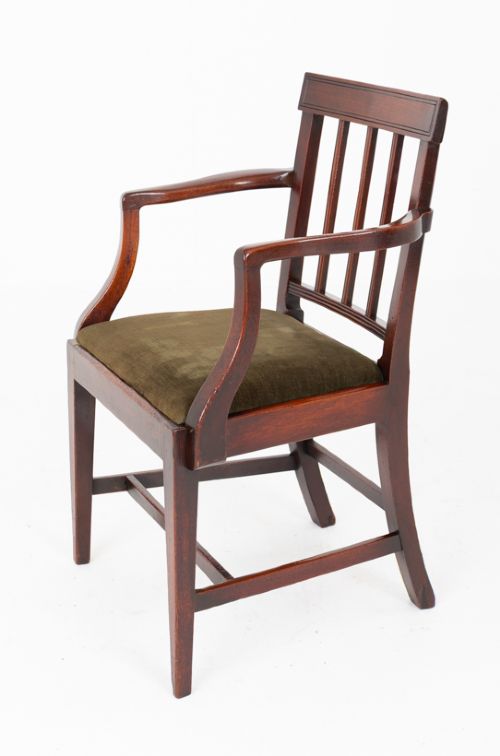
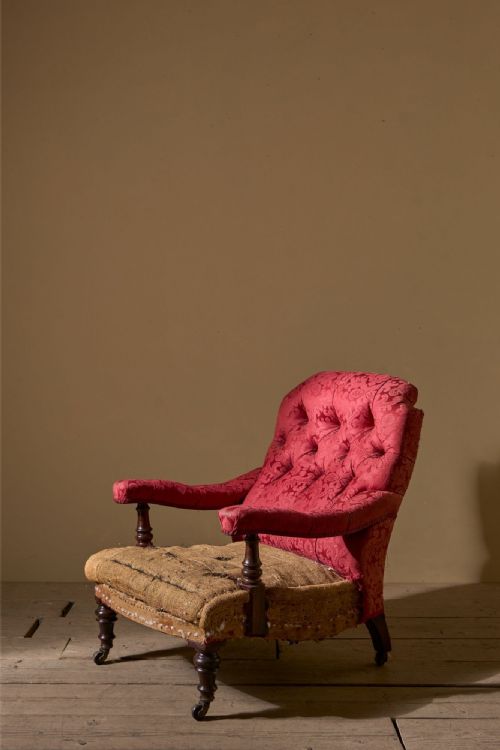
Upholstery techniques evolved from drop-in rush and webbing seats to fully sprung, stuffed pads covered in leather, velvet, damask or Hessian. Drop-in velvet seats and button-backed woolwork were secured directly into the wooden framework during construction.
Upholstery materials recorded on these chairs include leather, velvet, Hessian, satinwood and various decorative fabrics.
What Varies in Quality
Quality rests in the crispness of the timber carving and the architectural integrity of the frame joints. Superior pieces exhibit hand-cut fretwork, well-proportioned arm supports, and dense, patinated mahogany that shows deep natural figuring without excessive staining.
The sophistication of the upholstery platform and the original integrity of the show wood dictate the upper tier of the market. Chairs retaining undisturbed frame construction and traditional stuffing methods outrank later assembled pieces or those with compromised joinery.
Howard and Sons·Gillows·Giles Grendey
The Mahogany Open Arm Chair Glossary
- Carver chair
- An armchair designed with open wooden arms, traditionally placed at the head of a dining table or used as a desk seat.
- Gainsborough armchair
- A wide, upholstered armchair with open padded arms and short cabriole or square legs, popular during the Georgian period for library use.
- Show frame
- The exposed wooden structural skeleton of an armchair that frames the upholstered back and seat.
- Splatt
- The central vertical slat of wood running from the seat up to the top rail within an open chair back.
- Drop-in seat
- A removable wooden frame upholstered separately and dropped into a rebated recess within the chair seat rails.
Mahogany Open Arm Chair: Frequently Asked Questions
How do I identify a Georgian armchair?
Georgian armchairs typically display characteristic timber patination, hand-carved details such as ball and claw feet, and robust joinery executed in solid mahogany. Styles from this era often follow Chippendale, Hepplewhite or Sheraton design conventions.
The proportions are usually generous, accommodating drop-in seats or leather upholstery secured with brass decorative tacks.
Where were these chairs used historically?
These armchairs served multiple purposes in grand homes, appearing around dining tables, beside library bookcases, and within formal withdrawing rooms. Library chairs often featured wider proportions and leather upholstery for extended reading.
Smaller elbow chairs and salon pieces were easily moved around reception rooms to accommodate guests during social gatherings.
How should I care for antique mahogany furniture?
Maintain antique mahogany by keeping timber away from direct heat sources and strong sunlight, which can dry out the wood and fade the finish. Regular dusting with a soft, dry cloth preserves the natural polish without building up chemical residue.
Avoid using modern liquid polishes containing silicone, as they can penetrate porous historic finishes and alter the surface sheen permanently.