



Mahogany Office Chest
Mahogany office chest pieces are substantial timber storage units built for professional use, offering deep drawers and practical surfaces that anchor a workspace.
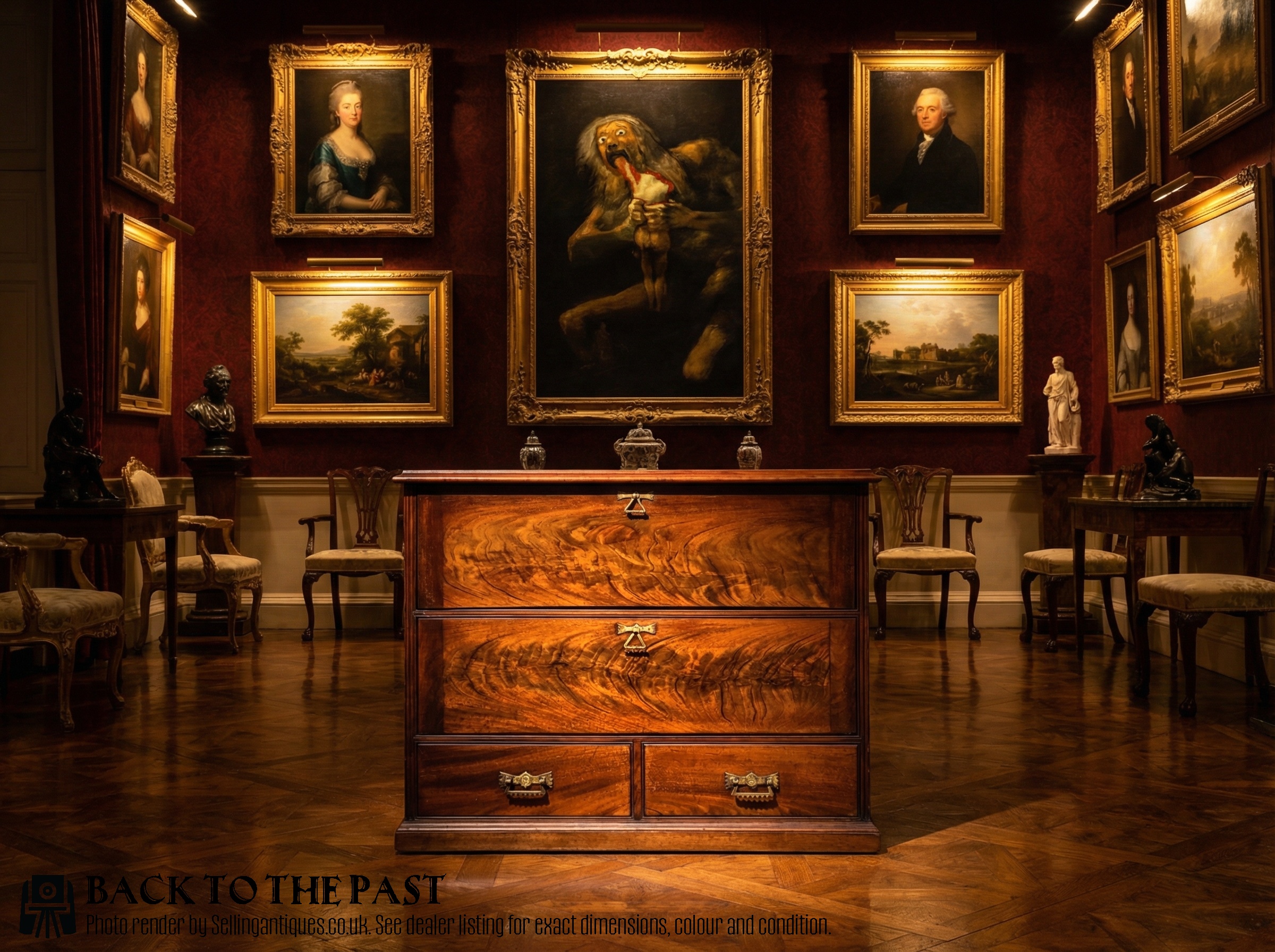
Mahogany Office Chest
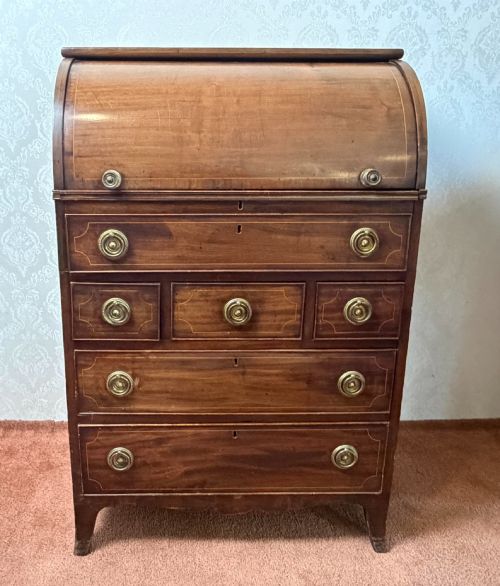
When you search for a mahogany office chest, you are looking at practical furniture designed for administrative tasks, storage and correspondence. These pieces span several centuries, drawing on Georgian, Victorian and Edwardian periods.
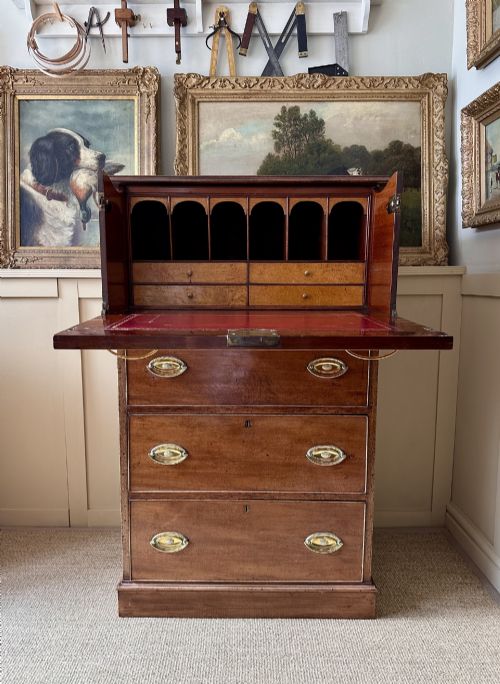
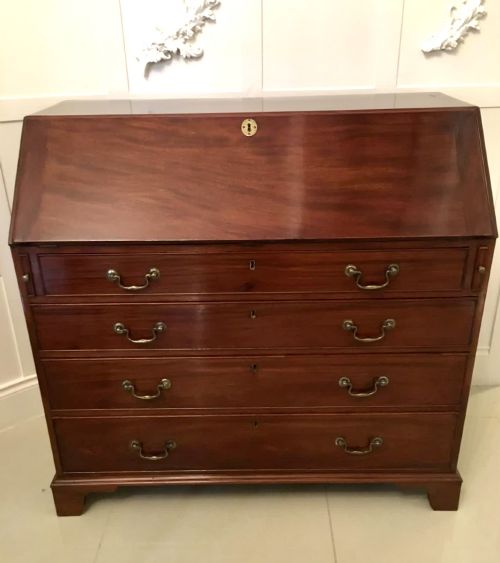
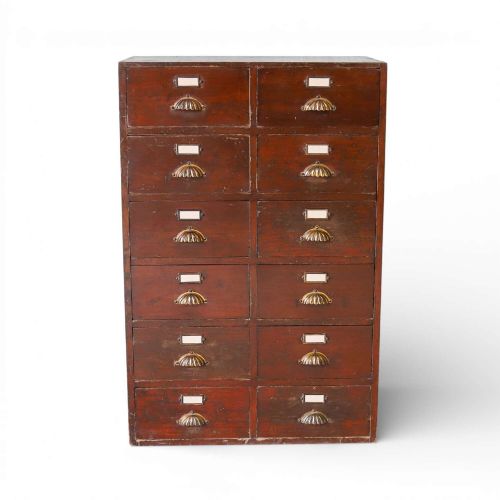
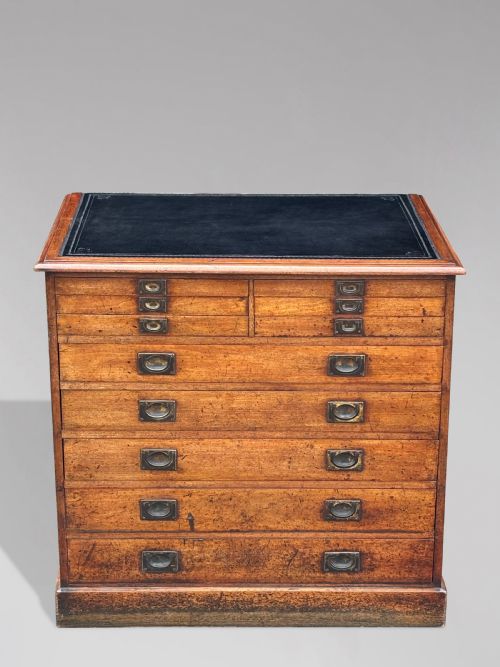
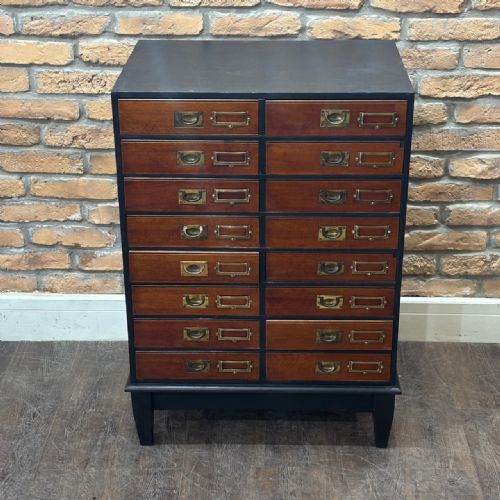
The selection includes filing cabinets, multi-drawer banks, campaign chests with brass fittings and writing bureaux with fitted compartments. The most frequent examples on this page are utilitarian banks of drawers and filing units from the nineteenth and early twentieth centuries.
Origins range from English workshops to French makers and Anglo-Indian colonial environments, showing diverse functional adaptations. Desks, kneehole tables and library cupboards also appear under this heading, each built to hold papers and office ledgers.
Materials and construction
Makers utilised solid timber and veneers, frequently selecting flame mahogany for its striking grain patterns alongside secondary woods like walnut and teak. Surfaces were often fitted with durable leather inserts for writing and metal hardware.
Brass featured heavily as structural corners, binding, hinges and shell pulls, particularly on campaign pieces designed for travel. Iron and painted wood components also appeared in specialised filing and workshop environments.
Some multi-drawer filing units retain original handwritten paper labels tucked neatly behind polished brass window holders.
Markers of construction quality
Quality rests in the precision of the joinery and the selection of timber figures, where matched flame mahogany and intact original veneers elevate a piece. Superior examples retain their operational integrity, allowing drawers and tambour fronts to glide smoothly without modern intervention.
Hardware and internal fittings tell the story of a piece's original grade, distinguishing utilitarian workshop furniture from fine library or campaign pieces. Original brass label holders, working locks with keys and intact leather surfaces separate ordinary storage from distinguished examples.
Edwards & Roberts
The Mahogany Office Chest Glossary
- Tambour
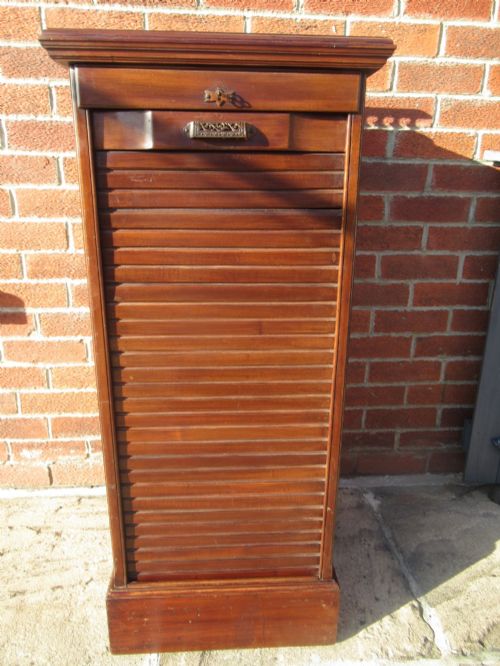
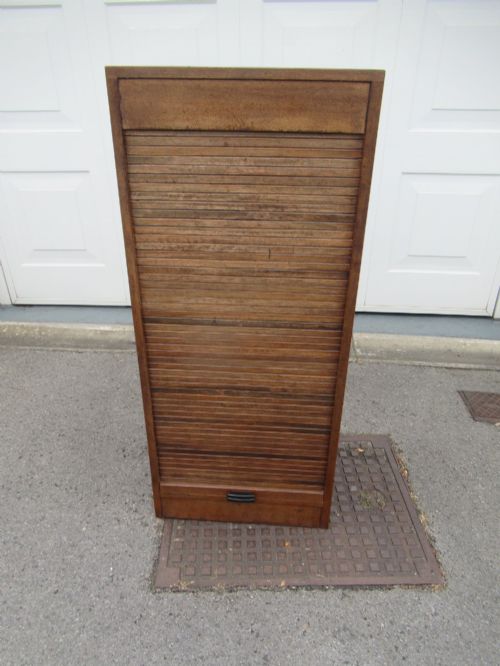
- A flexible sliding shutter formed of narrow vertical strips of wood glued to canvas, allowing smooth access to desk interiors and file cabinets. It provides a neat closure for compact office furniture.
- Campaign chest
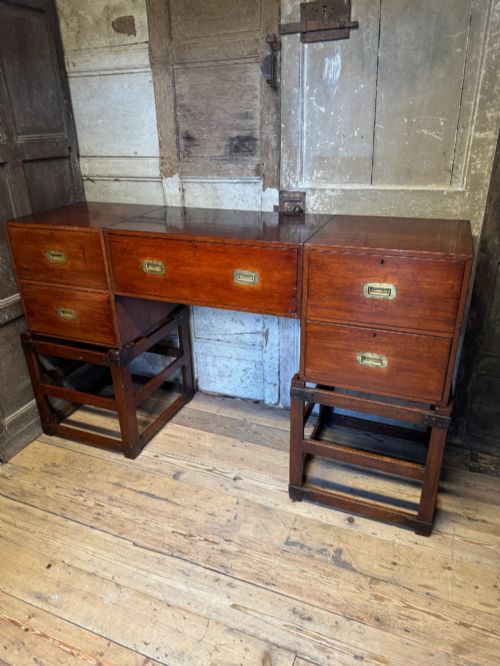
- A portable storage unit made in two or more sections, fitted with flush brass handles and corner brackets for military transport. These pieces were built for officers on the move.
- Cartonnier
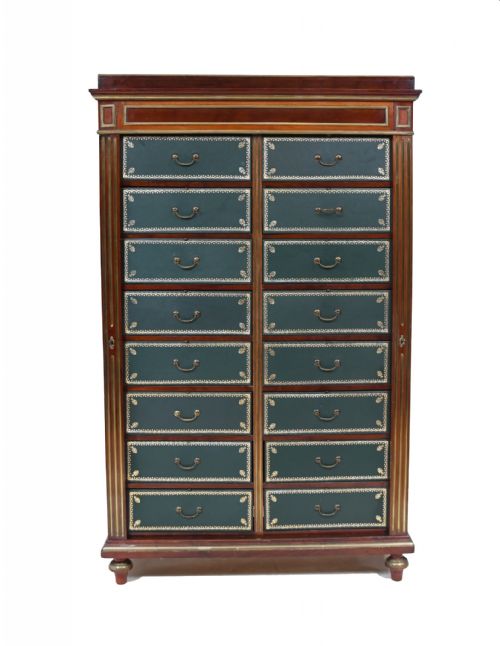
- A specialised piece of French furniture comprising a stack of pigeonholes or shallow drawers designed to hold loose papers and documents. They are often topped with leather and gilt detailing.
- Kneehole desk
- A compact writing table featuring a central recess for the user's legs, flanked by pedestals of smaller drawers. This form became popular during the Georgian period.
- Wellington secretaire
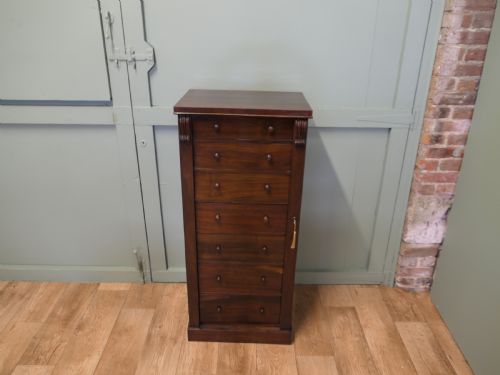
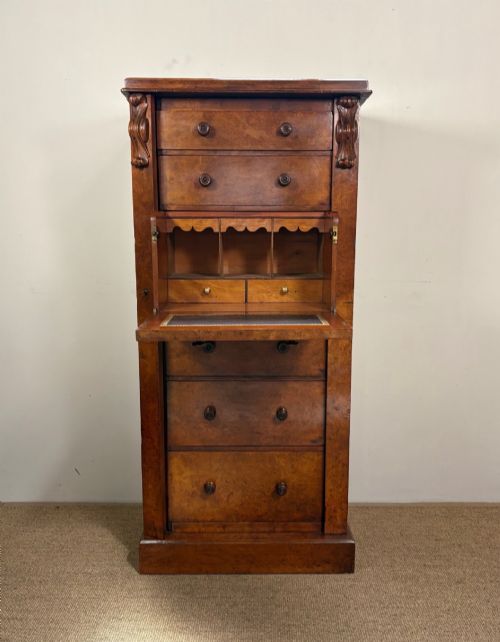
- A tall chest of drawers featuring a hinged locking side pilaster that secures all the internal drawers simultaneously. It provides high-capacity vertical storage.
Mahogany Office Chest: Frequently Asked Questions
What is a tambour front on a chest?
A tambour front consists of narrow wooden slats attached to a flexible backing fabric, allowing the door to slide smoothly around a curved track. This mechanism conceals interior compartments or filing sections without swinging outward into the room.
This clever design saved space in crowded nineteenth-century offices and studies. It remains a hallmark of clever spatial engineering in period cabinetry.
What are cartonnier drawers used for?
Cartonnier drawers and stacks were designed specifically to hold unbound papers, files and administrative documents in French and European offices. They kept loose paperwork organised before standard filing cabinets existed.
Often incorporated into larger library desks or tall chests, they provide shallow storage compartments. Their exteriors were frequently embellished with decorative leather panels.
How do I identify a Georgian piece?
Georgian pieces display clean architectural proportions, hand-cut dovetail joints and restrained decorative elements like bracket feet or simple cockbeaded drawer edges. The mahogany used in this era often has a rich, deep reddish-brown patina developed over centuries.
Makers of this period relied on traditional timber construction without modern metal runners or particle board. Examining the drawer linings reveals hand-planed surfaces indicative of eighteenth-century workshop practices.
Can I use an antique filing cabinet daily?
Period multi-drawer banks and filing cabinets are built from solid timbers and sturdy drawer constructions suited for active daily use. Their interior dimensions accommodate modern paperwork with proper organisation.
Ensure the drawer runners and pulls operate smoothly to prevent unnecessary wear on the vintage wood. Regular gentle waxing maintains the protective finish against constant handling.