

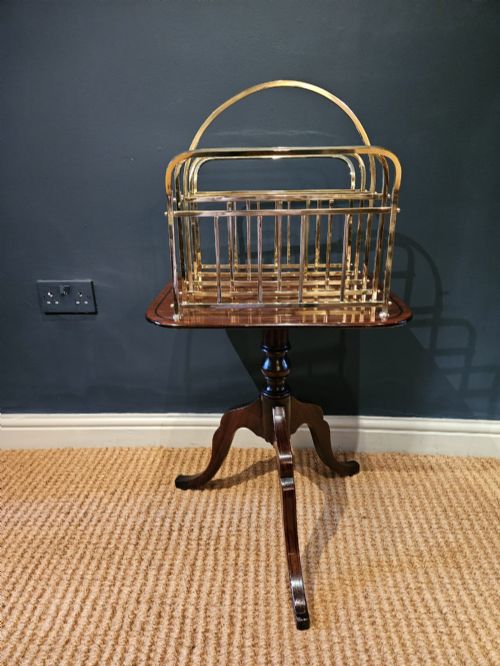
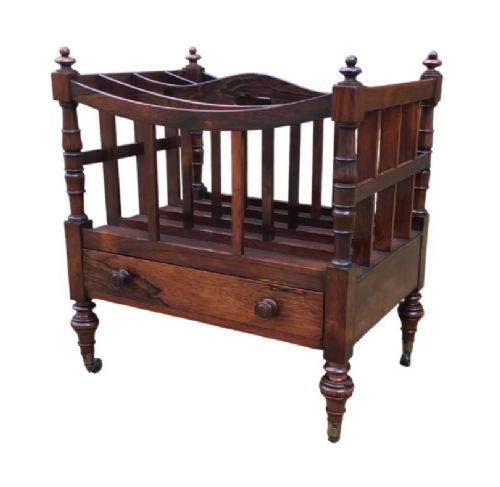
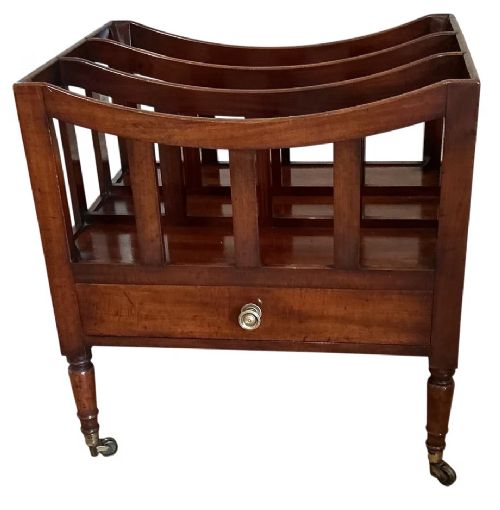
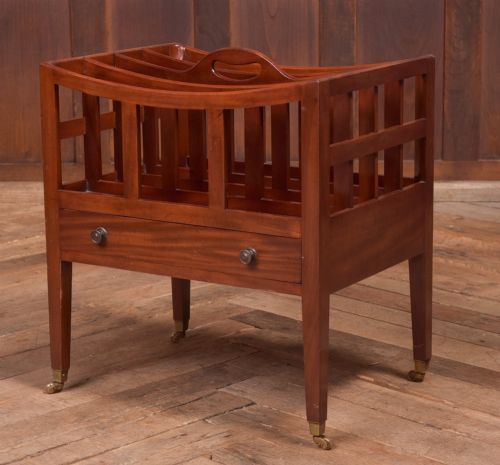

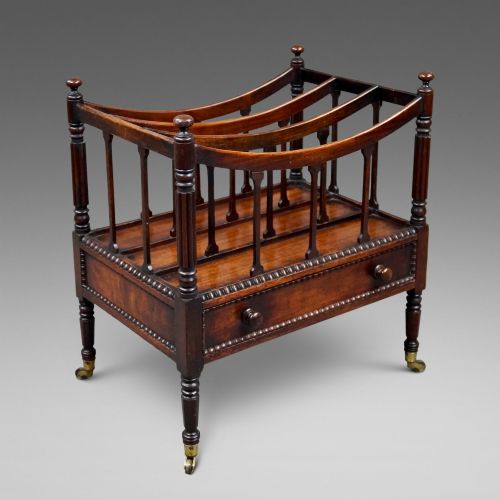


Mahogany Newspaper Rack
A mahogany newspaper rack offers a practical solution for holding papers and folios, bringing period timber and divided compartments into a sitting room.
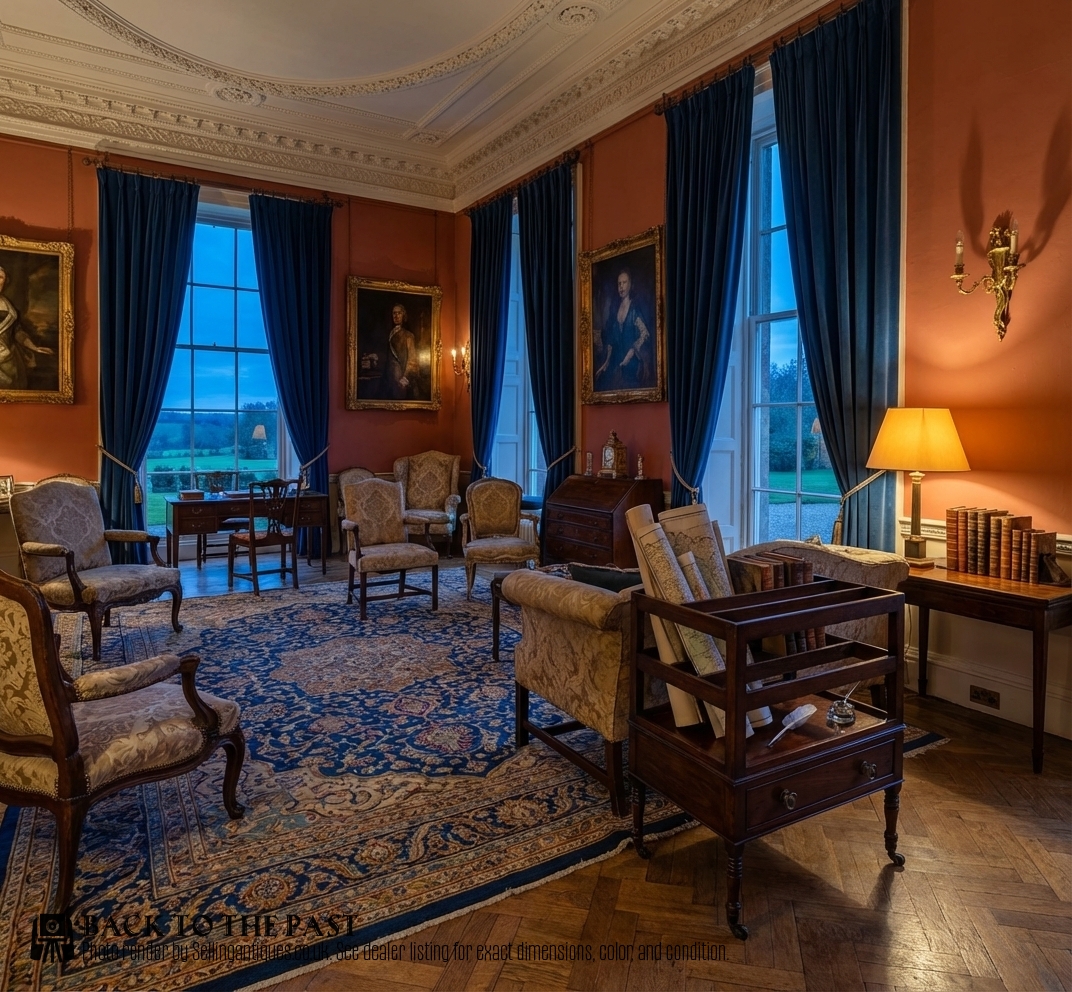
Mahogany Newspaper Rack
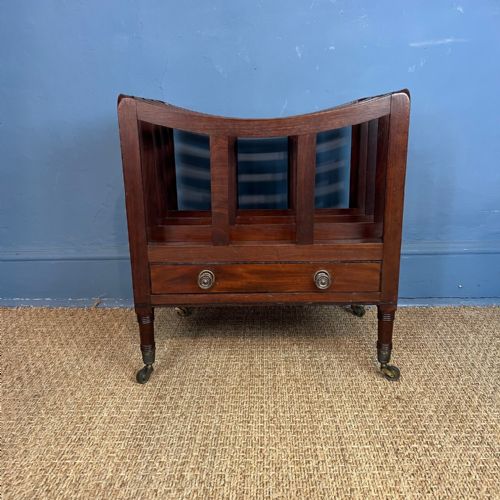
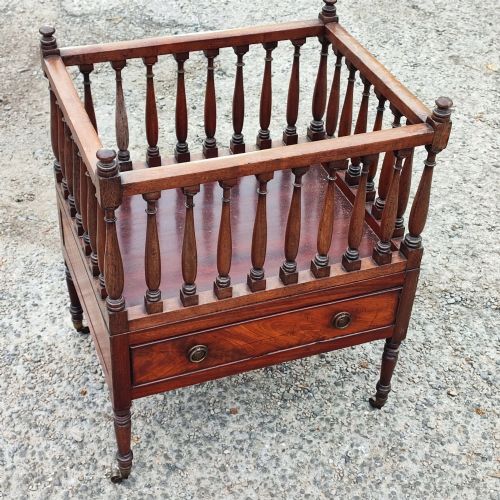
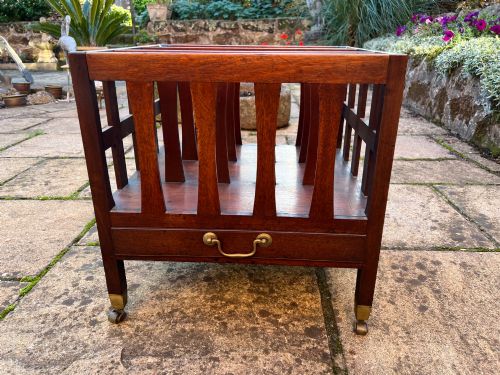
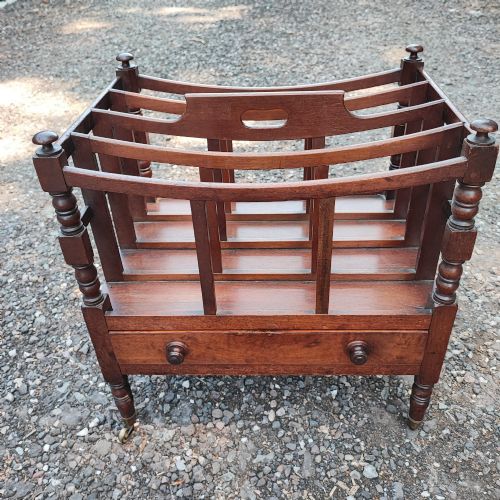
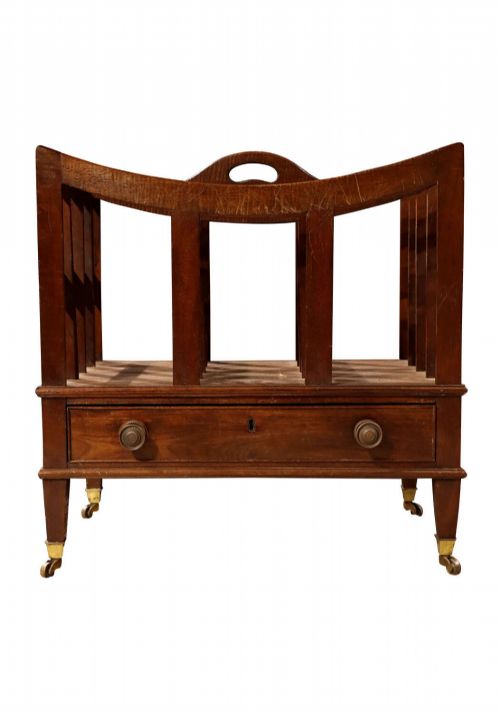
A mahogany newspaper rack most commonly appears as a Canterbury, a compartmentalised stand designed for holding periodicals, music sheets and folios. These pieces span several centuries, with examples appearing from the Georgian and Regency eras through to the Edwardian period and the early twentieth century.
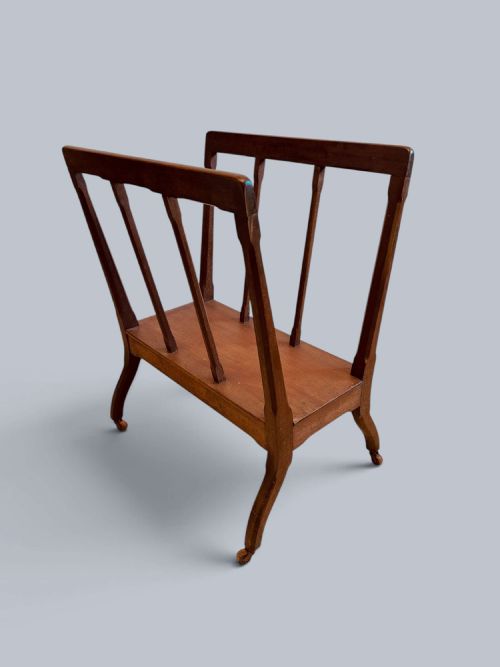
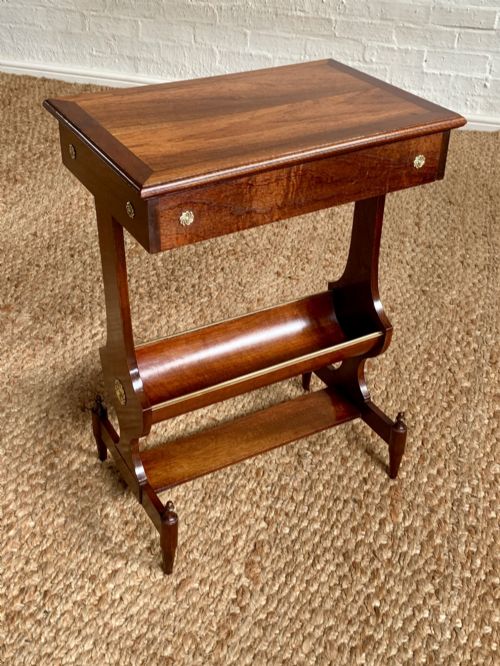
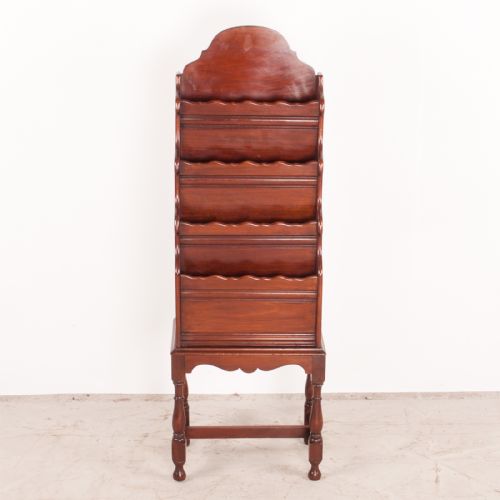
The layout typically involves three or four vertical divisions, sometimes combined with a low drawer at the base or mounted on turned legs with castors. Alongside traditional canterburys, buyers encounter boat-shaped bodies, revolving stands, music racks and side tables adapted for magazine storage.
Origins range from formal George III workshops to country house collections and later Edwardian furniture production. The forms remain consistent in their utility, serving as dedicated stands for daily reading material beside an armchair or desk.
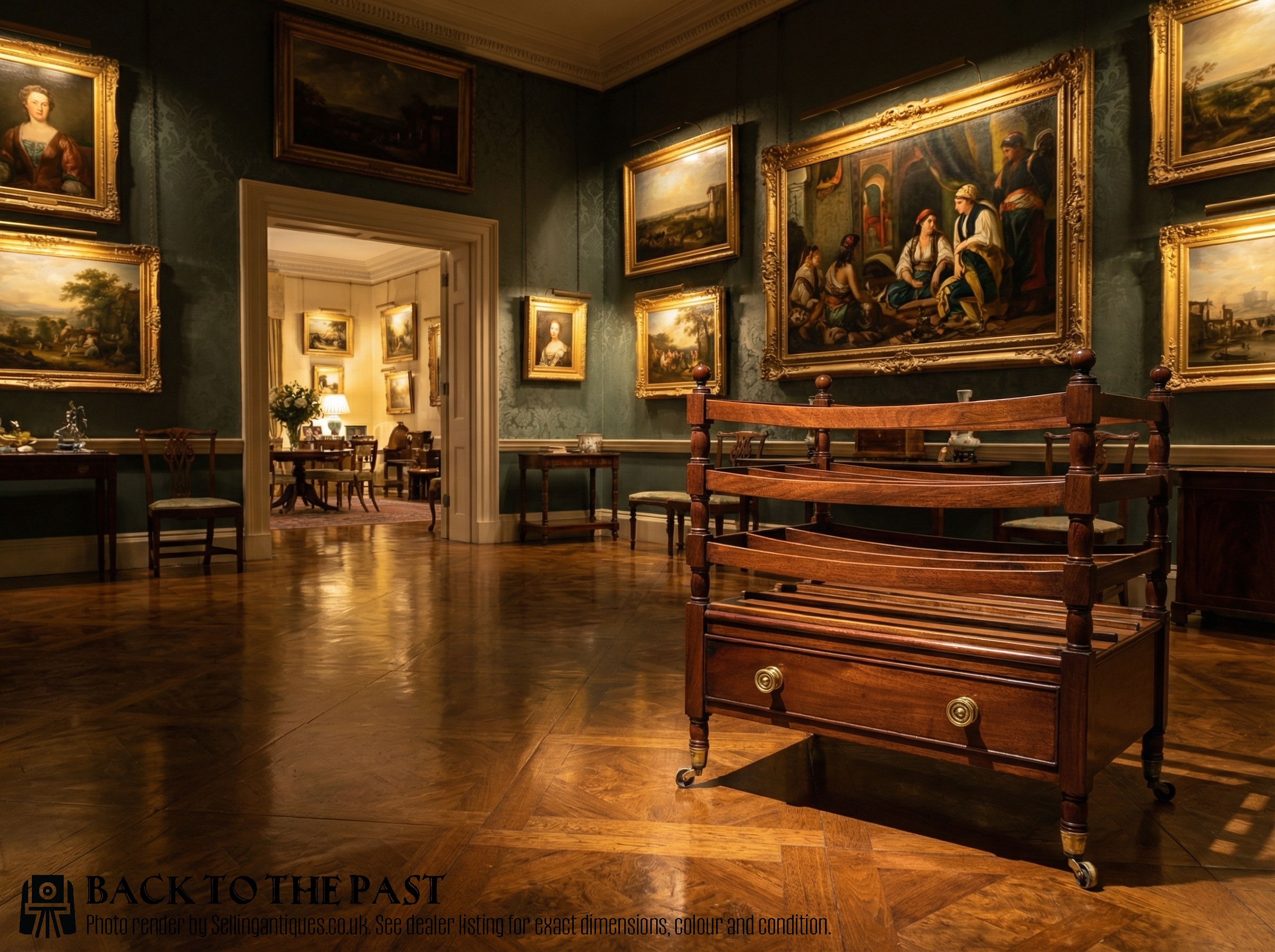
Materials and Construction
Mahogany forms the primary structure of these racks, often selected for its rich grain and stability, and is frequently paired with contrasting timbers such as rosewood, boxwood, ebony and satinwood inlay. Cabinetmakers shaped the wood into pierced scroll divisions, slatted sides and turned uprights.
Metal components play a structural and decorative role, with brass castors supporting the legs, metal wire forming compartments, and tubular brass detailing the frames of revolving stands. Joinery techniques include dovetail drawers and pegged joints that secure the slatted partitions.
Surface decoration relies on natural timber figuring, delicate banding and inlaid stringing rather than heavy carving. The finish enhances the deep red tones of the mahogany while protecting the wood from daily handling.
Mahogany Newspaper Rack Retail Price Guide 2026
Typical asking prices for mahogany newspaper rack among the pieces listed under this phrase on Sellingantiques today, from the lower quarter to the upper quarter. They describe what is for sale here now, not the wider market.
Judging Quality
Quality rests on the crispness of the carpentry and the selection of the timber, where finely figured mahogany and sharp inlay distinguish better pieces from utilitarian items. The design of the divisions, whether pierced scrolls or slender slats, reveals the maker's attention to proportion and balance.
The integrity of the structural elements determines the standing of a piece, including the stability of the legs, the smooth operation of any base drawer, and the original pairing of brass castors. Secondary timbers and internal construction reflect the standards of the workshop that produced the stand.
Howard and Sons of London·Gillows of Lancaster
The Mahogany Newspaper Rack Glossary
- Canterbury
- A low stand with divided compartments used for holding newspapers, magazines and sheet music. This form originated in the eighteenth century and remained popular through the Victorian and Edwardian eras.
- Regency
- A style period dating from the early nineteenth century characterised by classical restraint, elegant curves and boat-shaped bodies. Pieces from this era often feature turned legs and brass castors.
- Inlay
- A decorative technique where contrasting materials such as ebony, boxwood or satinwood are inserted into recesses in the mahogany surface. This creates geometric borders and linear patterns.
- Castor
- A small wheel fitted to the base of the legs to allow easy movement of the stand across a floor. These are frequently made of brass and can be original to the piece.
- Folio Stand
- A larger framework designed to hold loose papers, prints or maps upright. These share similarities with heavy newspaper racks intended for country house libraries.
Mahogany Newspaper Rack: Frequently Asked Questions
What is a Canterbury used for?
A Canterbury serves as a low, divided stand designed for holding newspapers, magazines, books and sheet music. It keeps reading materials organised and close to hand beside seating areas.
The form dates back to the Georgian period and continued to evolve through the Victorian and Edwardian eras to accommodate changing publishing formats.
How do I date a mahogany newspaper rack?
Dating relies on stylistic details, construction methods and timber choices. Regency and Georgian examples often feature boat-shaped bodies and fine inlay, while Edwardian pieces may show lighter framing or integrated sheet music cabinets.
Examining the secondary woods, fixings and wear patterns helps narrow the period of manufacture to a specific decade or era.
Are these racks sturdy enough for daily use?
These pieces were built for practical daily utility in period homes, designed to hold heavy folios and stacks of newspapers. Solid mahogany construction and pegged joints provide considerable durability.
Care should be taken when moving them, especially those on castors, to avoid straining the upright divisions or lower frame joints.
What is the difference between a canterbury and a magazine rack?
A Canterbury is a traditional compartmentalised furniture form with distinct vertical divisions, often raised on legs with castors and occasionally featuring a drawer. A magazine rack can refer to simpler twentieth-century tiered stands or metal wire designs.
Both serve the same storage purpose, but traditional canterburys place greater emphasis on cabinetmaking and decorative timber work.