


Mahogany Newspaper Holder
These mahogany newspaper holder examples are classic occasional furniture pieces used to keep papers tidy, offering practical elegance for any room.
Mahogany Newspaper Holder
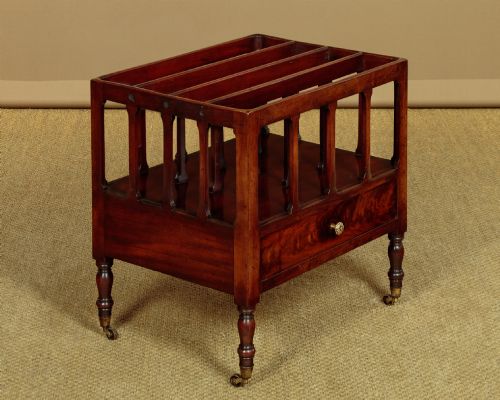
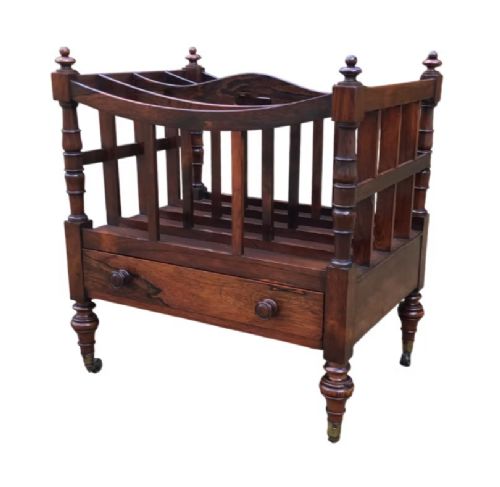
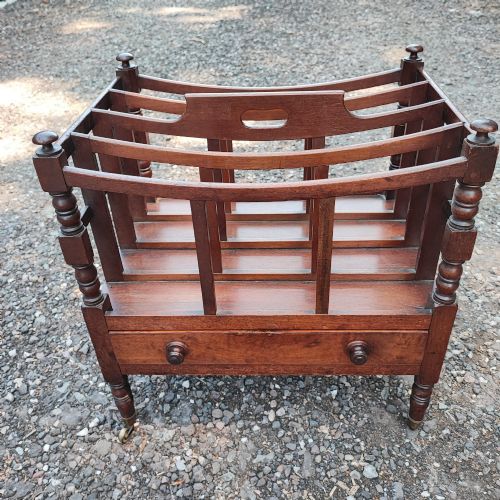
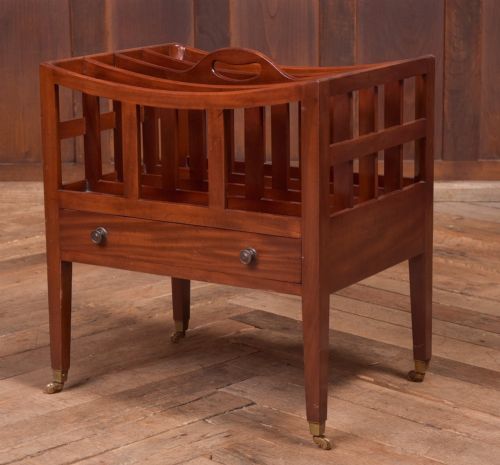
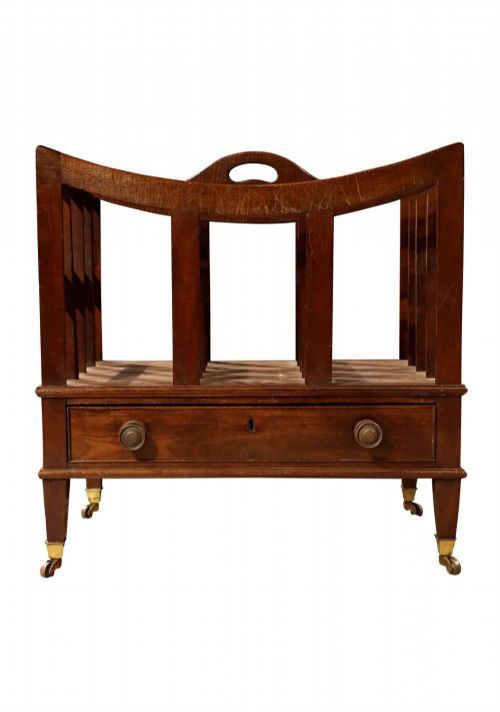
When you search for a mahogany newspaper holder, you encounter traditional furnishings designed to store periodicals, journals, and sheets of music. These items frequently appear as canterburys, magazine racks, and folio stands originating from the Georgian, Regency, and Edwardian periods.
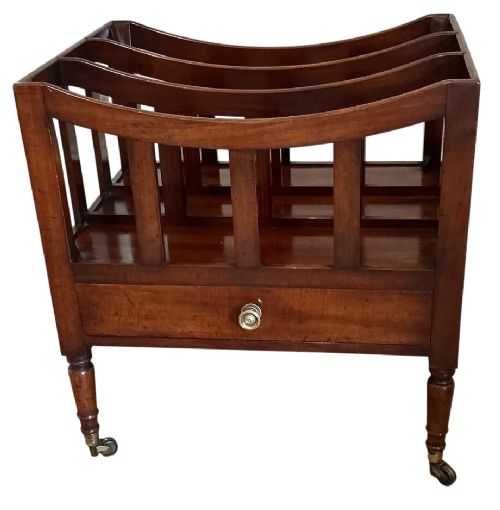
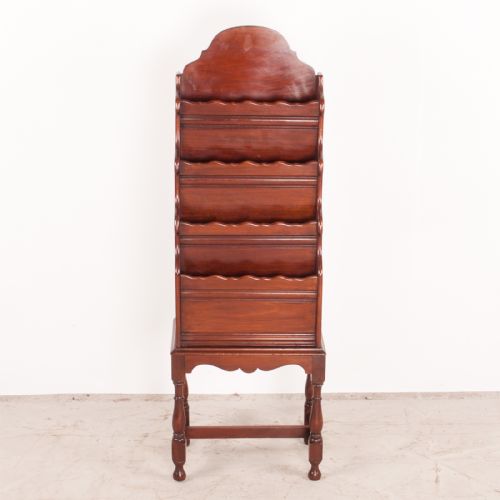
The most common form on this page is the canterbury, featuring multiple vertical divisions for sorting reading material, often mounted on castors. Pieces range from boat-shaped Regency designs to multi-tiered Edwardian cabinets incorporating lower drawers.
Origins span formal English country houses to urban parlours, reflecting changing domestic habits in handling daily news and literature. Pieces transition from nineteenth-century compartmentalised frames to later twentieth-century revolving revolving stands.
How They Were Made
Cabinet makers utilised solid mahogany and veneers to build the main frames, frequently selecting timber for its rich grain and deep colour. Secondary woods and structural supports provided stability for the compartmentalised racks.
Decorative detailing relies on contrasting materials such as boxwood, satinwood inlay, and ebony banding to define edges and panels. Metal components like brass handles, castors, and tubular framing appear on revolving stands and mobile canterburys.
Construction techniques include pierced scroll divisions, turned legs, and dovetailed drawers integrated beneath the main rack. Metal wire also structures specific lighter magazine racks from later twentieth-century production.
Some nineteenth-century readers clearly demanded mobile news access, hence the sturdy brass castors fitted to keep the daily broadsheets rolling.
What Varies in Quality
The degree of craftsmanship shows in the refinement of the turned legs, the precision of the pierced woodwork, and the subtlety of the inlay. Early Georgian and Regency examples often display hand-carved details and balanced proportions that set them apart from mass-produced later variants.
Howard and Sons of London·Gillows of Lancaster
The Mahogany Newspaper Holder Glossary
- Regency
- An English design style spanning the late eighteenth and early nineteenth centuries. It draws heavily on classical Greco-Roman motifs.
- Inlay
- A decorative technique where contrasting materials like boxwood or satinwood are inserted into recesses within the primary mahogany surface. This creates crisp geometric or floral patterns.
- Folio Stand
- A large upright rack designed for storing loose papers, prints, or large books. These pieces often feature adjustable hinges or stable trestle bases.
- Castor
- A small wheel fitted to the base of legs to allow easy movement across the floor. They are commonly cast in brass on nineteenth-century furniture.
Mahogany Newspaper Holder: Frequently Asked Questions
What is a mahogany newspaper holder used for?
These stands serve to organise daily newspapers, periodicals, and sheet music within domestic living spaces.
They keep reading material upright and accessible beside seating areas.
How do I identify a Regency period piece?
Regency items often display characteristic boat-shaped frames, elegant turned legs, and classical proportions dating from the early nineteenth century.
Design elements lean towards restrained elegance rather than heavy Victorian ornamentation.
Are these stands mobile?
Many traditional canterburys feature small brass castors attached beneath the legs for easy repositioning.
Heavier cabinet versions or stationary floor racks remain fixed in place.
What is the difference between a canterbury and a magazine rack?
A canterbury traditionally incorporates multiple vertical wooden divisions designed for music and papers, often with an integrated drawer.
A magazine rack can describe lighter open frames or revolving stands from later periods.