

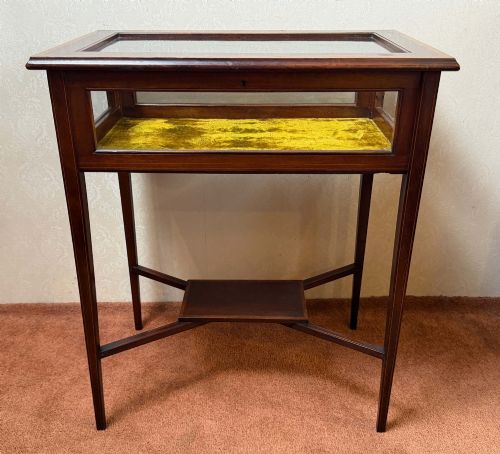
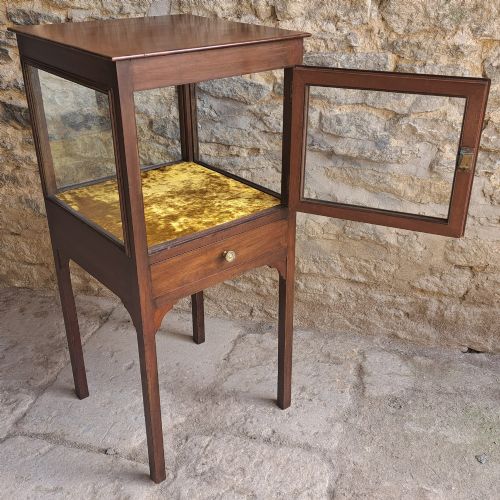


Mahogany Museum Display Case
Mahogany museum display case pieces are timber and glass enclosures built to hold treasures, offering the serious collector a timeless way to protect and exhibit artefacts.
Mahogany Museum Display Case
When you search for mahogany museum display case, you are looking at substantial timber and glass structures designed to showcase objects safely. The versions you are most likely to meet on this page span from the eighteenth century through the Edwardian era to the nineteen-thirties.
The selection here encompasses several distinct forms including table top display cabinets, vitrines, and large shop counters. These pieces originate from domestic and commercial settings, reflecting both Georgian elegance and twentieth-century retail utility.
Makers such as F. Sage and Co. and E. Pollard and Co. Ltd. provide commercial examples alongside unnamed domestic pieces. The styles range from Adam and Louis XVI revivals to straightforward Victorian and Edwardian joinery.
Materials and construction
These cases rely primarily on solid and veneered mahogany frames combined with large panes of clear glass to maximise visibility. Brass fittings, including hinges, locks, and handles, provide secure closure and structural reinforcement.
Interiors are frequently lined with velvet, felt, or other fine fabrics to cushion delicate items and provide a contrasting background. Ormolu mounts appear on revival pieces, adding decorative brass ornamentation to the timber framework.
Mahogany Museum Display Case Retail Price Guide 2026
Typical asking prices for mahogany museum display case among the pieces listed under this phrase on Sellingantiques today, from the lower quarter to the upper quarter. They describe what is for sale here now, not the wider market.
Listings feature mahogany display furniture spanning the eighteenth, nineteenth, and early twentieth centuries, incorporating glass, brass, and velvet.
Quality and proportion
The distinction between ordinary and exceptional pieces lies in the crispness of the mahogany mouldings and the clarity of the glass. Superior cabinets exhibit balanced proportions and tight joinery that withstands centuries of use without sagging.
Commercial cases by established shopfitters display specialised engineering in their sliding doors and heavy brass hardware. The integration of fabric linings and ormolu details marks the difference between standard utility and high-end commission work.
F. Sage and Co.·E. Pollard and Co. Ltd.
The Mahogany Museum Display Case Glossary
- Vitrine
- A glass display cabinet used specifically for showing porcelain, curiosities, or small artefacts. These often feature glazed sides and doors for all-round visibility.
- Ormolu
- Gilded bronze or brass applied as ornamental mounts on furniture. It gained popularity during revival periods mimicking French eighteenth-century designs.
- Adam Style
- An eighteenth-century neoclassical design movement characterised by graceful symmetry and classical motifs. Pieces in this style often incorporate delicate carved details.
- Show Case
- A commercial or domestic enclosure with glazed panels designed to protect merchandise or collections. These range from table top units to large floor-standing counters.
Mahogany Museum Display Case: Frequently Asked Questions
What were mahogany display cases used for?
These pieces served both domestic collectors and commercial shopkeepers to exhibit valuable items securely. They protected delicate objects from dust while allowing customers or guests an unobstructed view.
Over time, their roles shifted from active retail counters and home vitrines to preservation units for private collections. Today they continue to fulfil this dual purpose of protection and presentation.
How do I date a mahogany display case?
Dating relies on observing the construction methods, timber patination, and stylistic cues present in the woodwork. Georgian and eighteenth-century examples often show hand-cut dovetails and lighter framing.
Later Victorian and Edwardian pieces frequently incorporate heavier plate glass and standardised brass hardware. Maker plaques, when present, provide a precise commercial timeline for twentieth-century shop fittings.
How do I care for the interior fabric?
Original velvet, felt, or fabric linings require gentle maintenance using low-suction vacuum attachments to remove dust. Avoiding direct sunlight prevents the textile colours from fading over the decades.
If relining is necessary, select period-appropriate fabrics that respect the original aesthetic of the cabinet. Consult a professional restorer before attempting any adhesive removal on antique timber.
Where should I place a large display case?
Position these substantial pieces away from direct heat sources and drastic humidity changes to protect the mahogany timber. Stable environmental conditions prevent the wood from warping and the glass seals from failing.
Ensure the floor can support the combined weight of the heavy timber, glass panels, and your displayed collection. Allow adequate clearance around doors and drawers for comfortable daily access.