


Mahogany Mirrored Chiffonier
A mahogany mirrored chiffonier brings together rich timber and fitted glass to anchor a room with polished nineteenth-century presence.
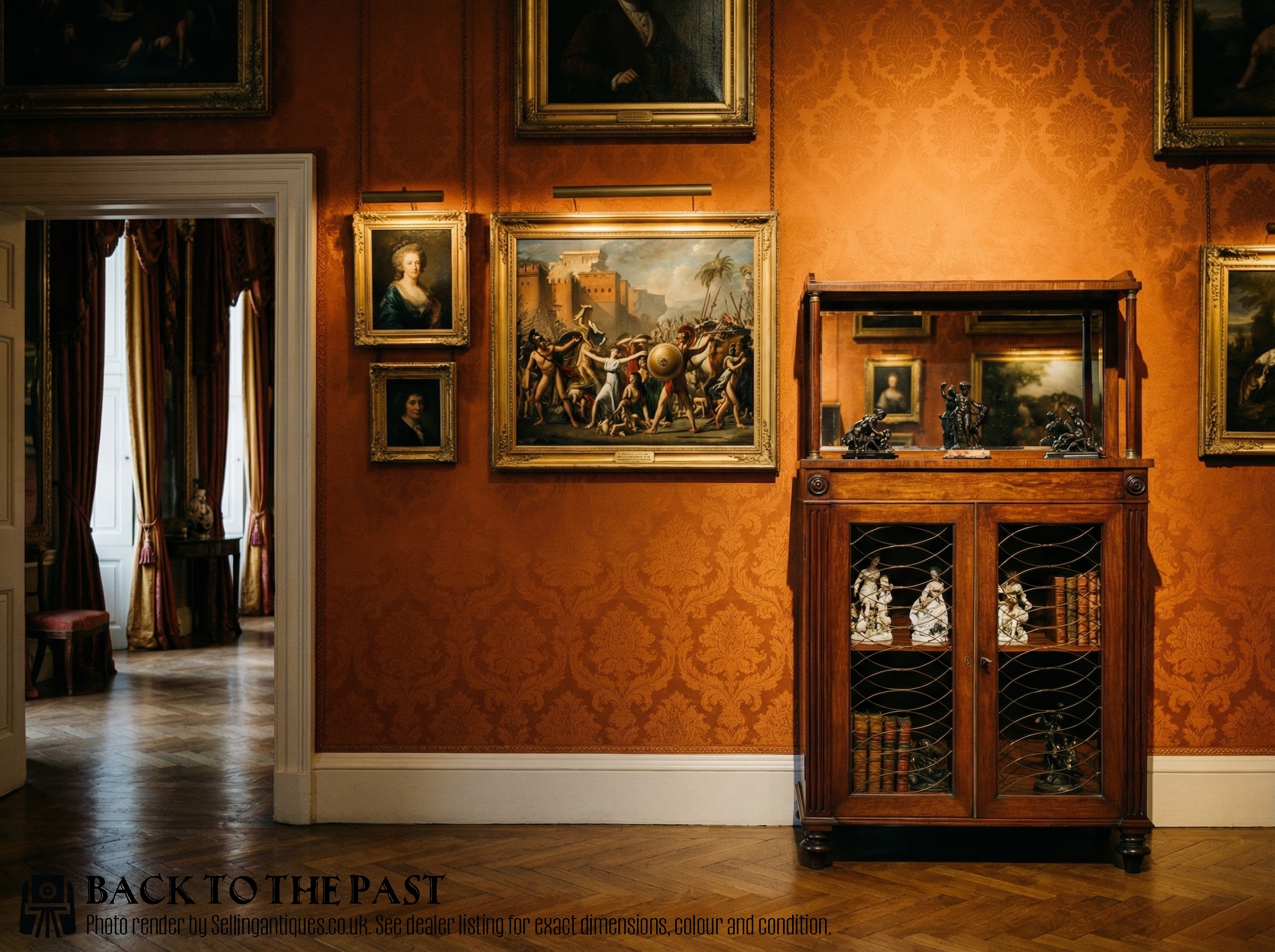
Mahogany Mirrored Chiffonier
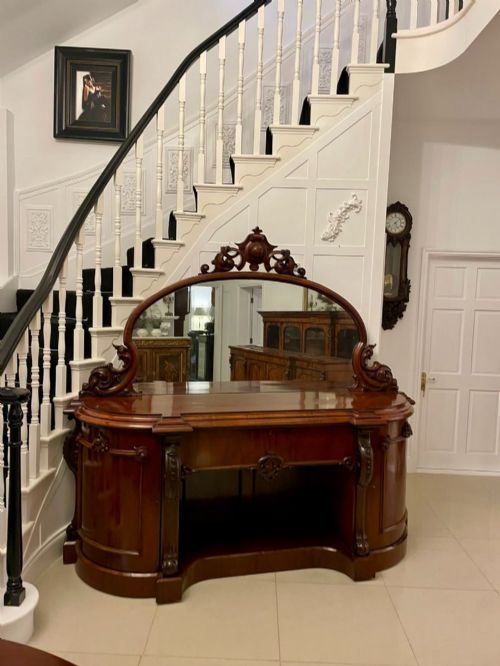
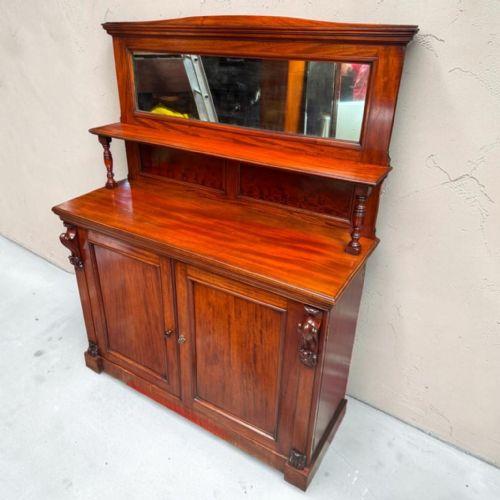
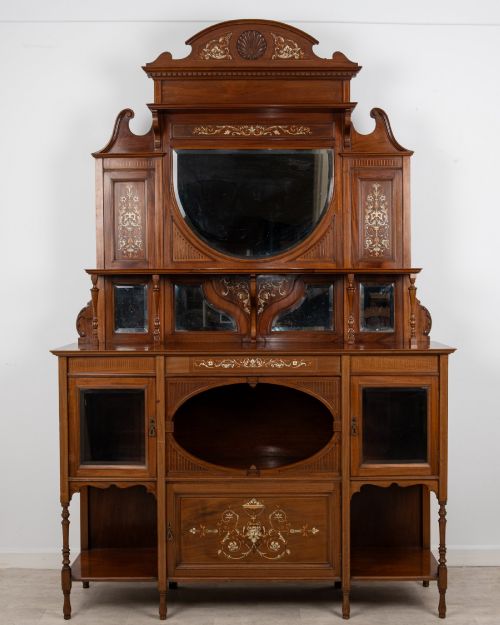
A mahogany mirrored chiffonier combines a lower enclosed timber base for storage with an upper mirrored superstructure designed to reflect light across a room. These pieces emerge chiefly from Victorian, Edwardian, and Regency periods, spanning years from eighteen-fifty to nineteen-ten.
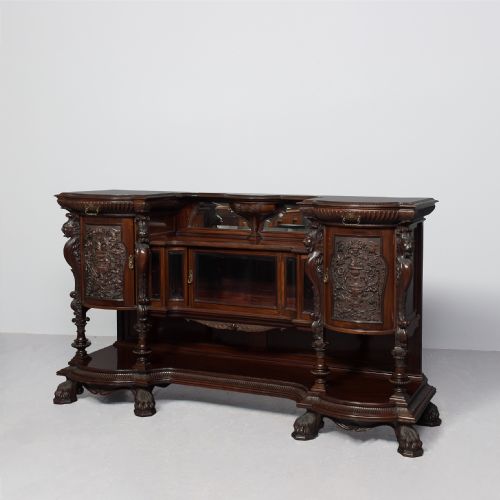
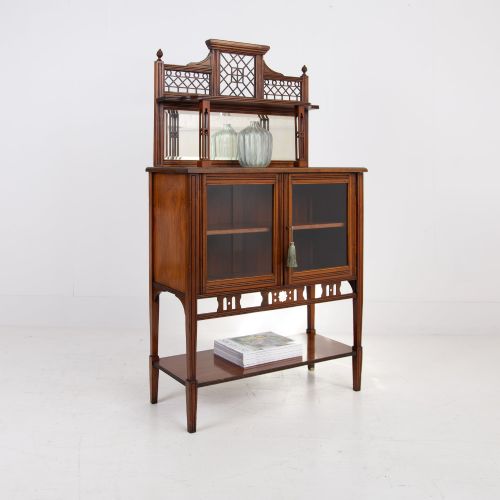
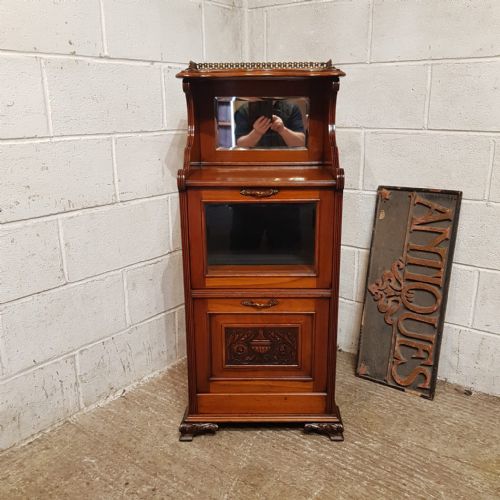
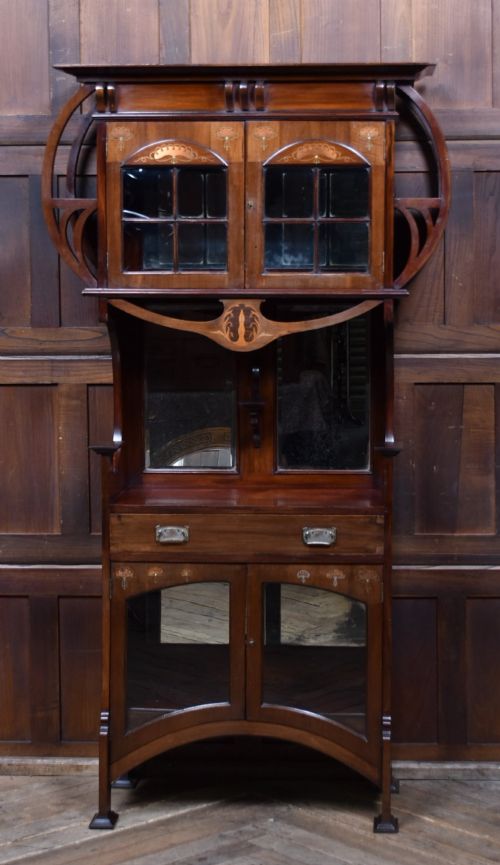
Makers shaped these items into sideboards, display cabinets, and narrow side cabinets alongside traditional chiffonier forms. The listings show considerable variety in these silhouettes, from simple nineteenth-century pedestal designs to elaborate breakfronts.
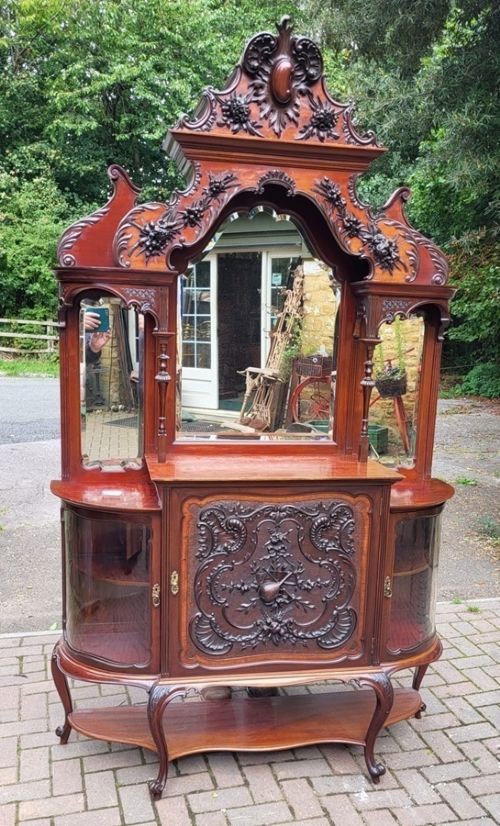
The most common examples on this page date from the Victorian era and the late nineteenth century, frequently incorporating carved details, inlaid woodwork, and fitted mirror glass. Walnut and rosewood accents occasionally accompany the primary mahogany construction.
How they were made
Carpenters constructed the primary frames using solid mahogany and flame mahogany veneers, often selecting figured timber for the main visible surfaces. Satinwood and general wood inlay provide contrasting decorative borders around doors and panels.
Some nineteenth-century makers hid shallow jewellery drawers behind the upper mirror cornices.
What varies in quality
The sophistication of the timber selection dictates much of the visual merit, with highly figured flame mahogany and crisp marquetry inlay sitting above plain, unadorned surfaces. Carved ornamentation ranges from simple linear mouldings to deep, ambitious figural and botanical relief work.
Structural complexity also defines the tier of a piece, separating straightforward pedestal sideboards from breakfront chiffoniers with integrated mirror-backed superstructures. Cabinetmakers who incorporated detailed brass fittings and balanced proportions produced works that endure with sharper definition.
Gillows·Maple and Co
The Mahogany Mirrored Chiffonier Glossary
- Chiffonier
- A low cabinet or sideboard, typically featuring cupboards below and a shelf or mirror structure above.
- Breakfront
- A piece of furniture whose central section projects forward from the flanking outer sections.
- Marquetry
- Decorative inlay work using various tinted woods to create pictorial or geometric patterns on the surface.
- Flame mahogany
- Timber veneer exhibiting a distinctive flickering, flame-like grain pattern prized for its decorative appearance.
- Aesthetic Movement
- A late nineteenth-century design style emphasising visual beauty and artistic craftsmanship over heavy historic revivalism.
Mahogany Mirrored Chiffonier: Frequently Asked Questions
What is a mahogany mirrored chiffonier?
A mahogany mirrored chiffonier is a nineteenth-century storage cabinet featuring a timber base and an attached upper mirror frame.
Cabinetmakers built these pieces to serve both practical storage and decorative display functions within the principal rooms of a home.
How do I date a chiffonier?
Dating relies on examining the timber grain, construction techniques, and prevailing stylistic influences such as Victorian carving or Edwardian inlay.
Earlier pieces from the Regency period tend to show simpler classical lines, while later Victorian and Edwardian examples lean toward decorative marquetry and mirrored superstructures.
Where should I place one?
These cabinets suit dining rooms, living spaces, or wide hallways where the lower cupboards provide concealed storage.
The upper mirror also functions effectively to bounce natural daylight into darker corners of an interior.
How do I care for the wood?
Maintenance involves dusting the mahogany surfaces with a soft, dry cloth and avoiding direct exposure to strong sunlight.
Applying traditional wax polish occasionally helps nourish the timber grain without building up a heavy, dull residue.