
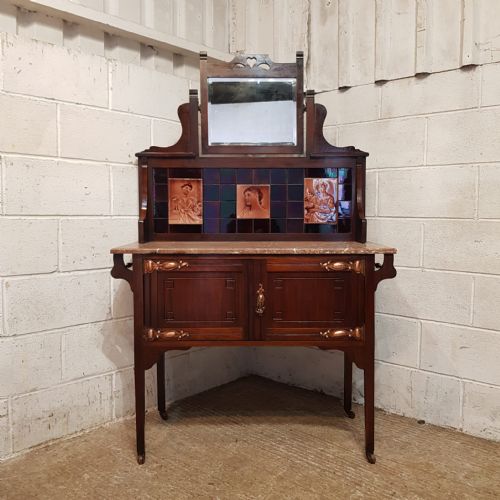


Mahogany Marble Top Vanity
A mahogany marble top vanity brings together solid timber and cool stone for a practical piece that serves bedroom and dressing room alike.
Mahogany Marble Top Vanity
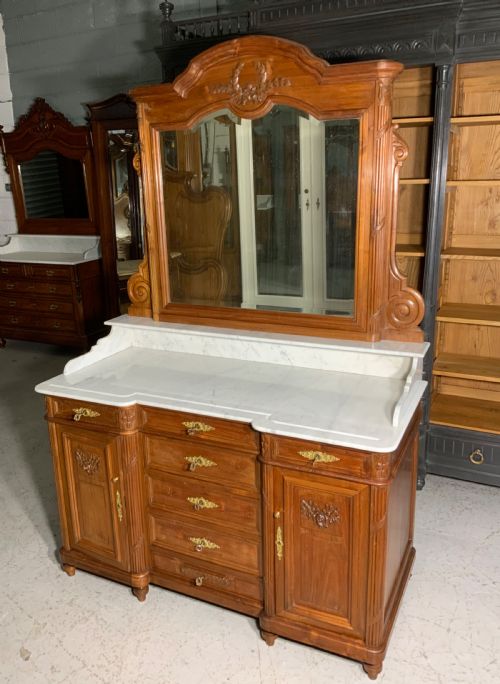
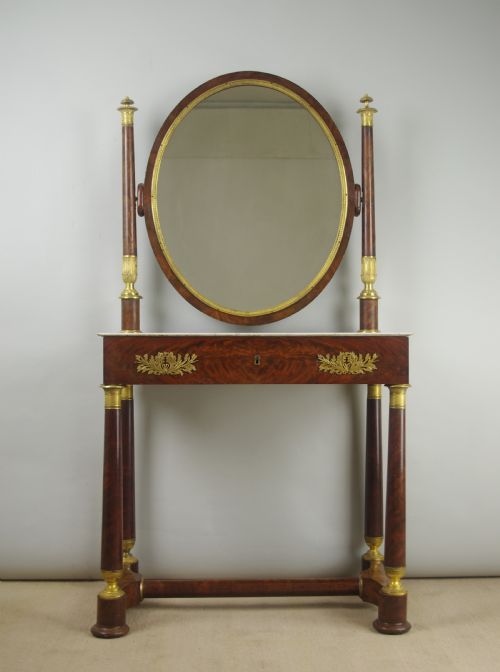
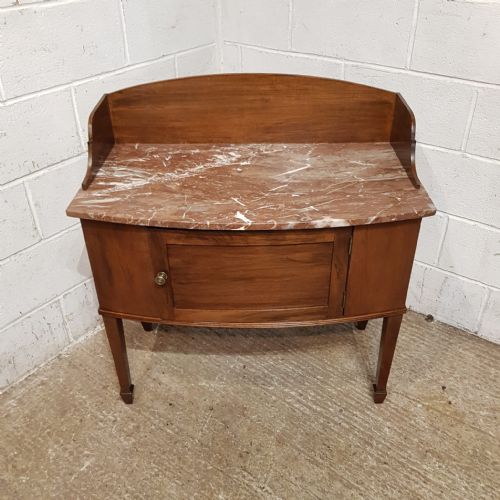
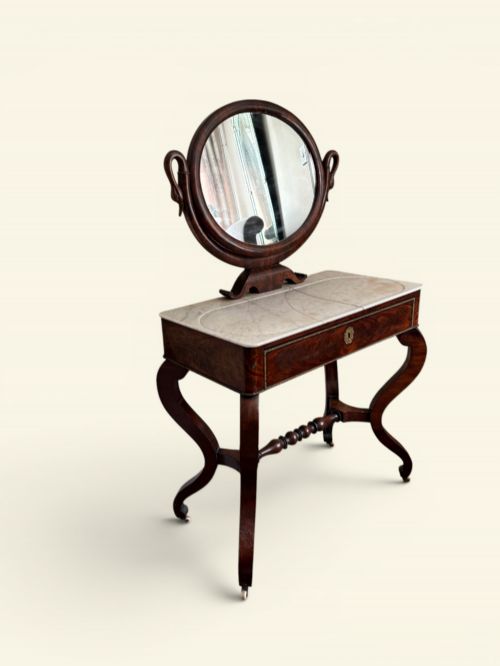
A mahogany marble top vanity typically appears across this selection as a washstand, dressing table, or toilet mirror originating from the Victorian, Edwardian, and nineteenth-century periods. These items combine the rich reddish-brown tones of mahogany timber with fitted marble surfaces designed to handle daily grooming and washing routines. Buyers encounter various regional interpretations, including French revival forms and straightforward British designs.
Washstands and dressing tables form the core of the available selection, often incorporating mirrors, small drawers, and decorative mounts. Pieces span several decades from the eighteenth century up to nineteen-ten, showing shifts in domestic furniture design from heavy Victorian proportions to lighter Edwardian frameworks. The integration of stone tops provided a durable, water-resistant surface that remains the defining characteristic for this category.
How they were made
Cabinet makers constructed the primary framework using solid mahogany and mahogany veneers, occasionally adding satinwood inlay or brass and ormolu mounts for decoration. The timber was selected for its deep grain and stability, then polished to a smooth finish that contrasted sharply with the pale or veined stone inserted into the top.
Stone slabs, including rouge marble, were cut and polished to fit precisely into the wooden chassis of washstands and dressing tables. Metal elements such as brass handles, copper details, and cast ormolu mounts were secured to drawers and frames, while glass featured prominently in swinging mirrors and dressing chests.
Listings feature mahogany, marble, glass, brass, ceramic, ormolu, satinwood, and copper across Victorian, Edwardian, and eighteenth-century periods.
What varies in quality
The refinement of the timber work and the complexity of decorative mounts largely determine the standing of an individual piece. Finer examples display meticulous joinery, balanced proportions, and careful selection of mahogany veneers, whereas simpler iterations rely on straightforward functional construction.
The quality of the marble insert and associated hardware also dictates the overall standard. Thick, well-figured stone and crisply cast brass or ormolu mounts elevate a piece above standard utility items produced in volume during the nineteenth and early twentieth centuries.
The Mahogany Marble Top Vanity Glossary
- Mahogany
- A durable tropical hardwood prized for its reddish-brown colour and fine grain. Cabinet makers utilised this timber extensively throughout the nineteenth century.
- Ormolu
- Gilt bronze ornamentation applied to furniture frames and mounts. This technique was particularly popular in French Empire and Rococo revival pieces.
- Washstand
- A piece of furniture designed for personal washing, typically fitted with a stone top to resist water damage. Many examples include splashbacks and lower shelves.
- Satinwood
- A pale, lustrous timber used for contrasting inlay and banding on mahogany furniture. It creates distinct geometric or floral patterns.
- Bonheur du jour
- A light lady's writing desk featuring a small cabinet or set of drawers on the upper surface. These delicate items appear in nineteenth-century French variants.
Mahogany Marble Top Vanity: Frequently Asked Questions
How do I clean a marble top?
Use a damp cloth with mild, non-acidic soap to wipe the stone surface clean.
Avoid harsh chemical cleaners that can etch or dull the polished finish over time.
Can I use this as a modern basin?
Historic washstands were built for jug and basin sets rather than modern plumbing.
Installing contemporary pipes requires professional adaptation of the internal wooden framing and stone top.
Are the mirrors original?
Many swing mirrors and dressing chests retain their original glass, which may show slight ageing or foxing.
Replacement glass is sometimes fitted if the historic mirror deteriorated beyond preservation.