


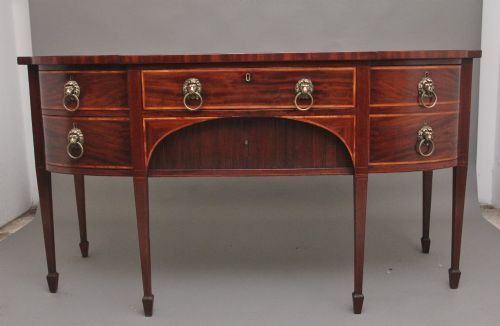
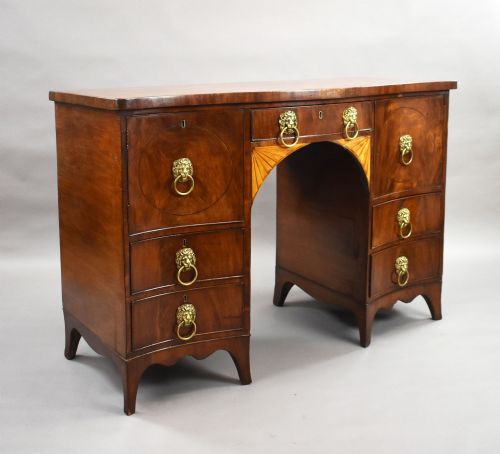

Mahogany Lion Mask Handles
Mahogany lion mask handles anchor grand serving pieces and chests from the Georgian and Regency eras.
Mahogany Lion Mask Handles
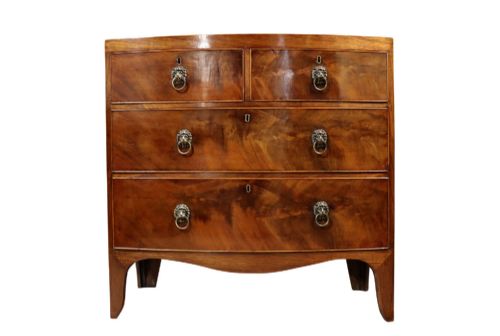
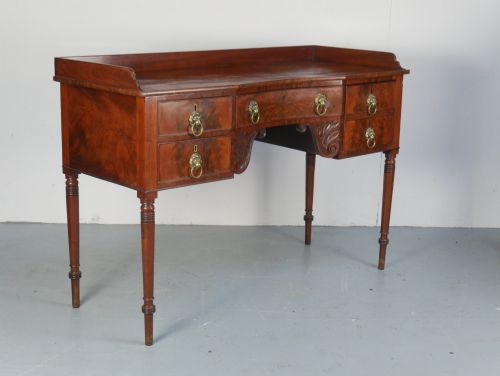
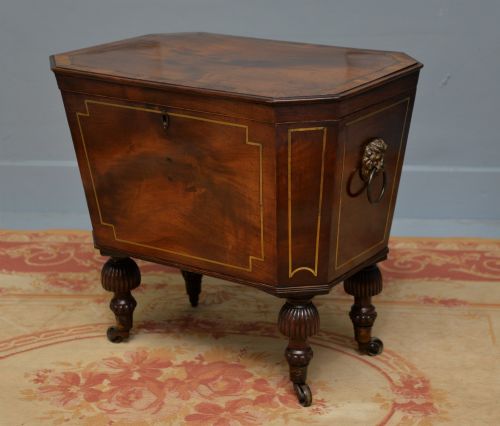
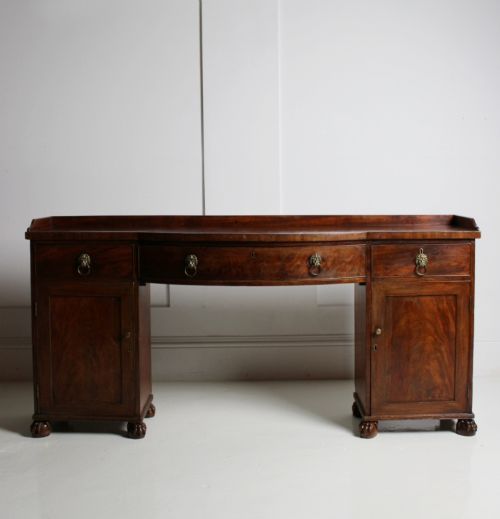
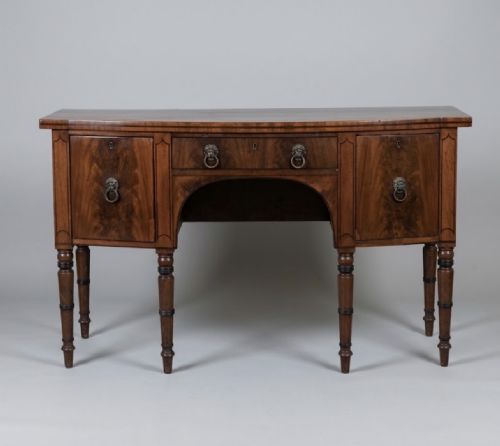
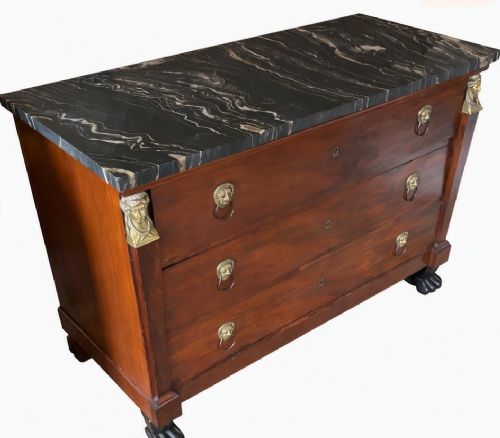
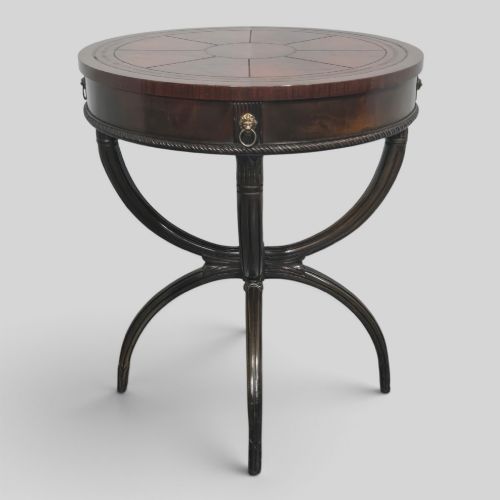
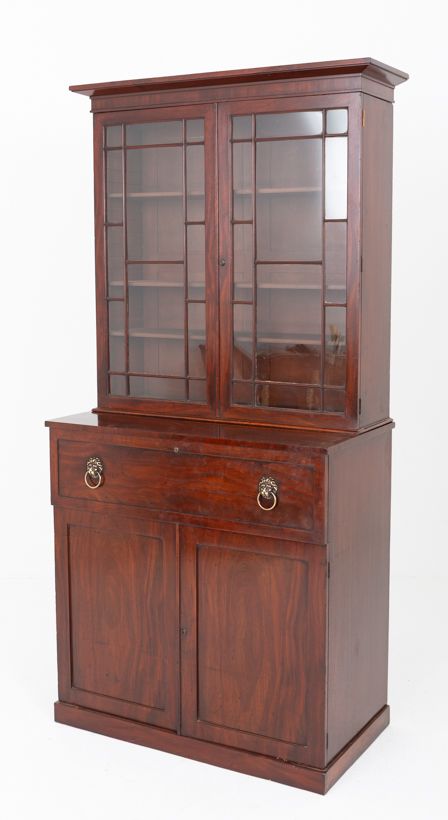
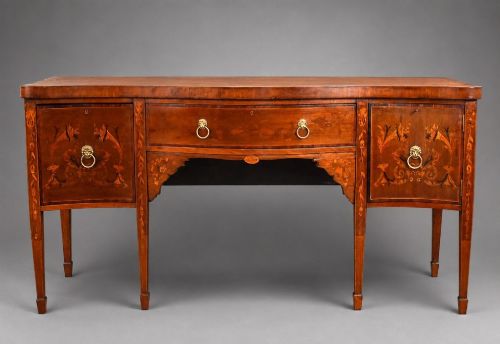
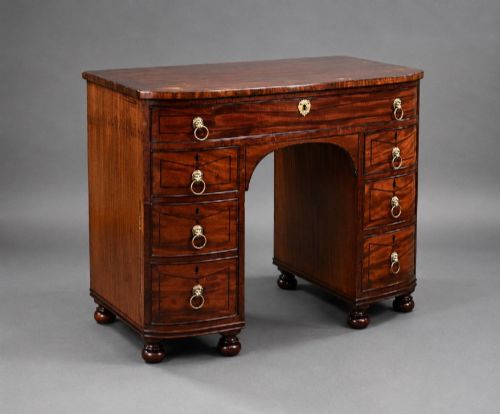
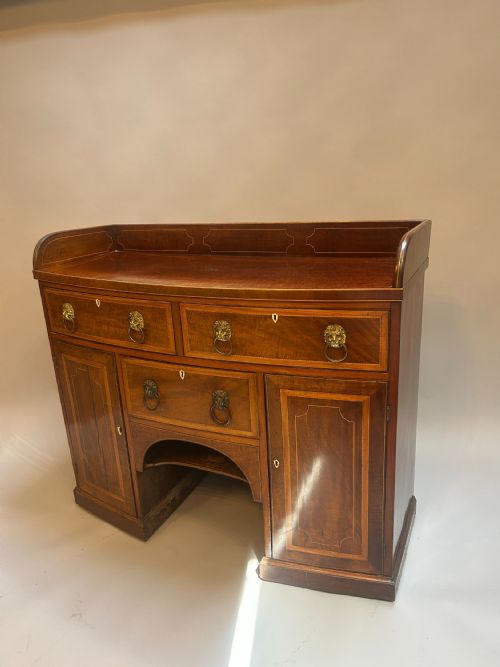
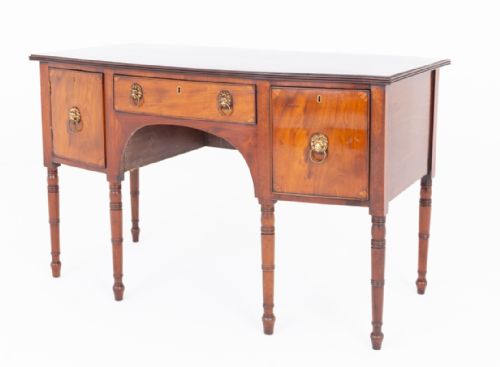
These elements typically appear on large case furniture such as sideboards, cellarettes, and chests of drawers from the Georgian, Regency, and William IV periods. They serve as functional pulls and drop rings, cast in brass or bronze to contrast against deep timber.
The pieces carrying these mounts span several decades of design, including neoclassical and Egyptian revival aesthetics. You will most frequently encounter them attached to heavy sideboards and wine coolers where robust hardware is required to move substantial drawers.
Makers integrated these fierce neoclassical motifs to signal status and classical learning in formal dining rooms and libraries. Their presence usually indicates a piece of higher ambition from a regional or metropolitan workshop.
Materials and construction
Cabinet makers utilised dense timber such as flame mahogany, occasionally relieved with boxwood or satinwood inlay, to build the heavy carcass foundations. Brass mounts were cast and chased before being secured directly through the drawer fronts.
Mounts often incorporated heavy rings held in the jaws of a cast brass or ormolu lion, combining sculptural presence with functional utility. The structural joinery relies on traditional dovetailing while the exterior surfaces display carefully selected grain figures.
Mahogany Lion Mask Handles Retail Price Guide 2026
Typical asking prices for mahogany lion mask handles among the pieces listed under this phrase on Sellingantiques today, from the lower quarter to the upper quarter. They describe what is for sale here now, not the wider market.
Materials span solid mahogany, satinwood, ebony, and cast brass alongside fine boxwood inlay.
Evaluating standard and execution
Integration with the surrounding cabinet work matters greatly, as secondary woods like oak and pine should match the period of the exterior shell. Furthermore, the timber selection on drawer facades demonstrates whether the maker chose standard stock or premium flame veneers.
Gillington of Dublin·H Mower & Stephenson
The Mahogany Lion Mask Handles Glossary
- Cellarette
- A large subterranean-style or freestanding container used for chilling wine bottles, often fitted with internal lead linings and mounted with heavy carrying rings.
- Sarcophagus
- A monumental chest form shaped with a stepped or sloping lid, heavily associated with Regency dining room furniture and robust brass mounts.
- Breakfront
- A cabinet or sideboard whose central section projects forward from the flanking outer sections, creating a dynamic architectural elevation.
- Pembroke table
- A small drop-leaf occasional table featuring hinged flaps on opposing sides, supported by folding brackets or swing legs.
Mahogany Lion Mask Handles: Frequently Asked Questions
What pieces feature lion mask handles?
These mounts appear primarily on formal dining room furniture such as sideboards, cellarettes, wine coolers, and large chests of drawers. They provide the necessary grip for pulling heavy drawers filled with silver or linen.
Such hardware is seldom found on delicate bedroom pieces, as the fierce neoclassical aesthetic was reserved for public reception rooms where display and status mattered.
How do I date these items?
Dating relies on the carcass construction, secondary timbers, and stylistic markers like brass inlay or boxwood stringing. Regency and Georgian pieces generally show hand-cut dovetails and deep timber patination.
Later Edwardian revivals copy these proportions but often feature machine-sawn elements and lighter, more uniform mahogany stock lacking earlier depth.
Were the brass mounts always original?
Hardware was frequently replaced or updated during the nineteenth century as tastes shifted or old fixtures broke under heavy use. Original mounts leave specific shadow marks and screw patterns on the timber grain.
Examining the interior of the drawer reveals whether the current fixing holes align with earlier installations or if modern screws have been introduced.
How should I care for the timber?
Mahogany requires stable room humidity to prevent the thick solid tops and drawer fronts from splitting along the grain. Regular dusting with a dry cloth keeps the surface clean without stripping the historic wax finish.
Avoid placing these heavy case pieces near direct heat sources or in bright sunlight, which can bleach rich amber tones into pale yellow.