


Mahogany Ladder Back Chair
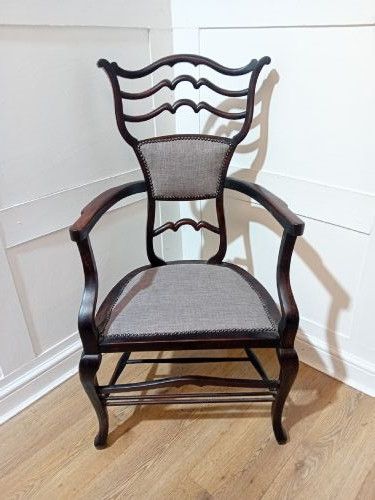
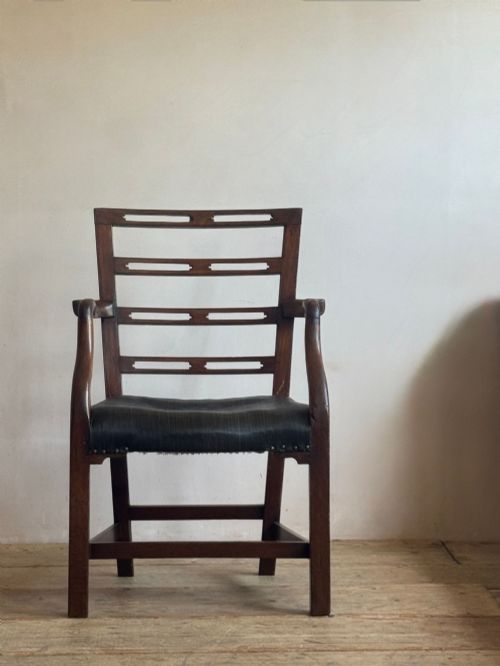
A mahogany ladder back chair brings clean architectural lines and practical durability to a room, offering classic seating that ranges from single dining seats to expansive sets.
Mahogany Ladder Back Chair
When searching for a mahogany ladder back chair, buyers encounter pieces spanning from the 18th century through the Georgian, Victorian, and Edwardian eras up to the 1930s. The forms vary from single dining chairs and carvers to armchairs, rocking chairs, settees, and desk chairs.
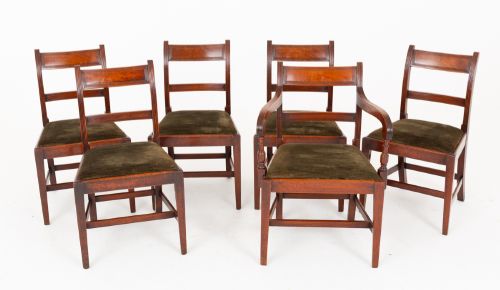
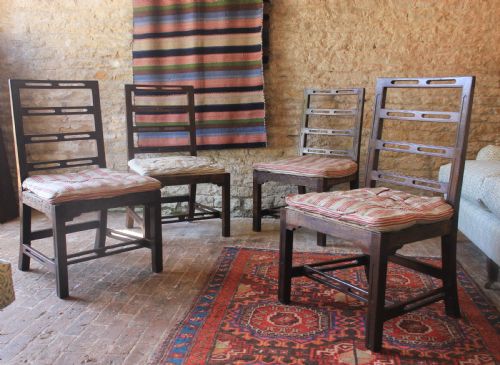
Sets of four, six, eight, or twelve dining chairs appear frequently alongside pairs and individual armchairs. The design relies on horizontal wooden slats across the backrest, rooted in periods like George III, Regency, and Chippendale or Hepplewhite revivals.
How they were made
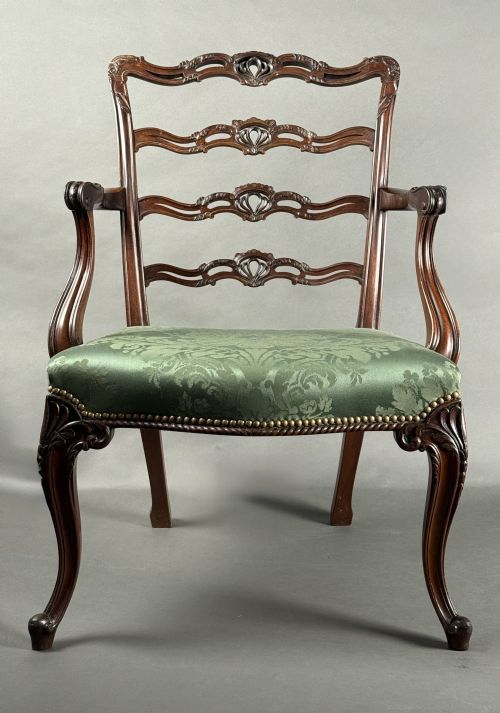
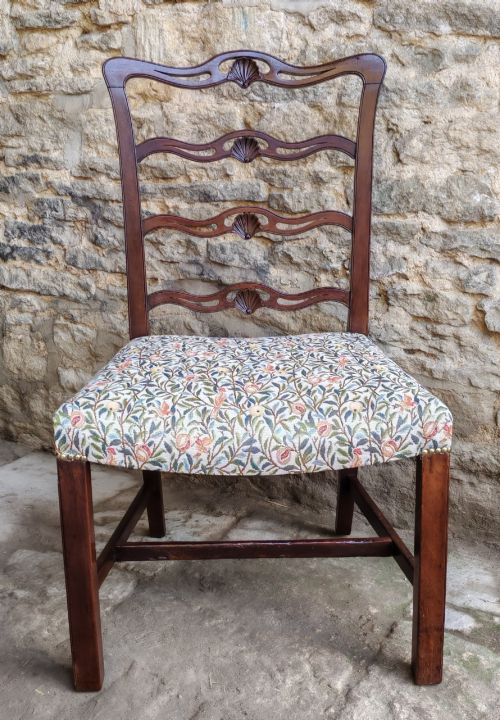
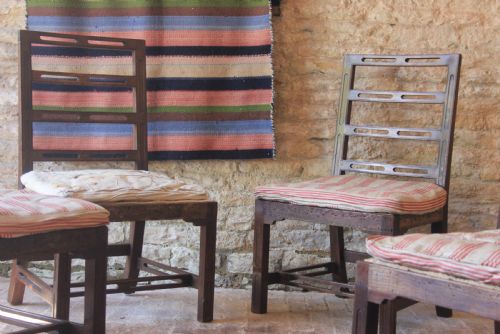
The primary material is solid mahogany, sometimes paired with secondary woods and finished with drop-in or upholstered seats in leather, fabric, velvet, tapestry, or oak. Details like upholstery studs and carved pierced slats demonstrate the joinery and decorative techniques employed by makers across different centuries.
Construction methods evolved from provincial 18th-century workshops to 19th-century revival periods, maintaining sturdy frames designed for daily domestic use.
Materials recorded across these chairs include solid mahogany, leather, fabric, velvet, tapestry, brass, and oak upholstery studs.
What varies in quality
Quality rests on the crispness of the carving on the ladder rails and the selection of the mahogany timber itself. Better examples show refined proportions, careful shaping of the horizontal slats, and solid frame construction that survives centuries of sitting.
The integrity of the seat support and the fidelity of revival styles to their Georgian origins also distinguish standard pieces from superior examples.
William Hamilton of Edinburgh
The Mahogany Ladder Back Chair Glossary
- Ladder back
- A chair back featuring a series of horizontal wooden rails or slats between the vertical stiles. This form provides robust structural support and clean visual rhythm.
- Carver
- An armchair, often designed en suite with a set of single dining chairs to sit at the head of a table. These typically feature open arms.
- Drop-in seat
- A removable seat frame upholstered separately and dropped into a rebate in the chair rails. This construction method allows for easy reupholstering.
- Stile
- The upright vertical side post of a chair back. It forms the main structural support for the backrest and rear legs.
Mahogany Ladder Back Chair: Frequently Asked Questions
How do I identify a Georgian ladder back chair?
Look for dense, dark mahogany timber with hand-carved details on the horizontal slats and sturdy stretchers joining the legs. These pieces often feature drop-in seats and reflect the cabinet-making standards of the 18th century.
Proportions tend to be elegant yet robust, avoiding the heavier ornamentation found in later Victorian revivals. Examining the underside reveals period joinery methods rather than modern fixings.
Were these chairs originally used for dining?
Many were made specifically as sets of dining chairs for formal households, accompanied by matching carver armchairs for the heads of the table. Single chairs were produced in quantities ranging from pairs up to sets of twelve.
Other variations served different domestic functions, such as desk chairs, fireside rocking chairs, or hall armchairs, adapting the slatted back design for various rooms.
How do I care for antique mahogany seating?
Keep the wood away from direct heat sources and strong sunlight to prevent the mahogany finish from drying out or fading. Regular dusting with a soft cloth maintains the surface sheen without building up heavy wax residues.
Upholstered seat pads benefit from gentle vacuuming and professional cleaning when needed to preserve fabrics, leather, or tapestries.
What is the difference between Georgian and revival styles?
Original 18th-century pieces display the hand-tooling and specific timber ageing characteristic of the Georgian period. Revival pieces, built during the Victorian or Edwardian eras, often copy Chippendale or Hepplewhite designs using 19th-century workshop techniques.
Comparing the sharpness of the carved slats and the colour of the mahogany helps distinguish the original era from later reinterpretations.