

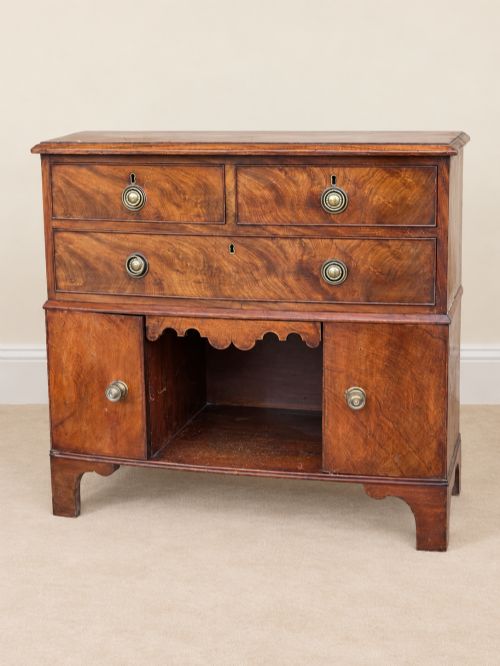
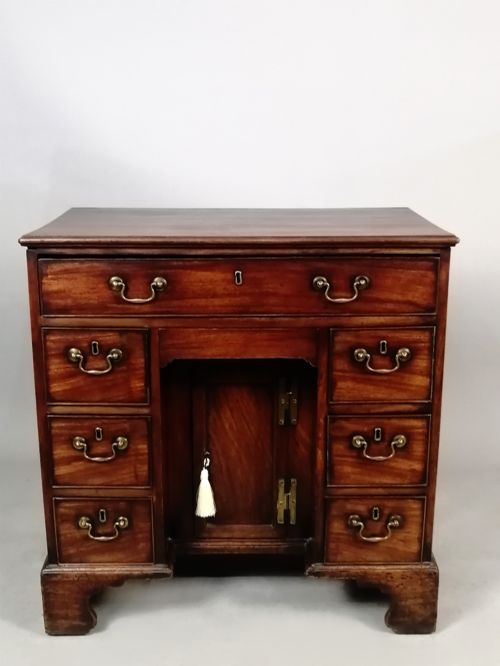
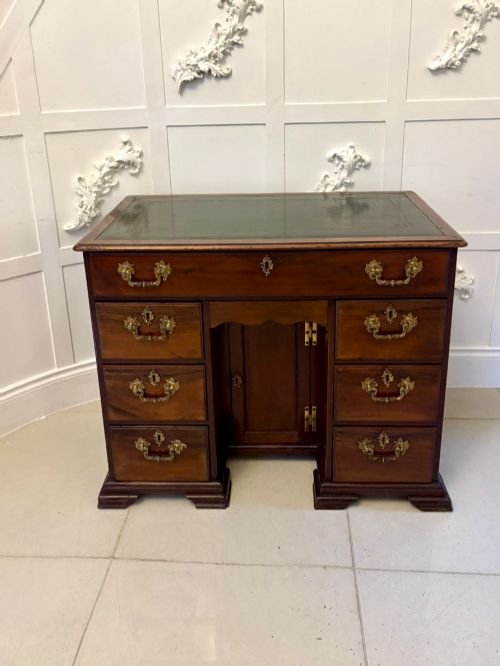
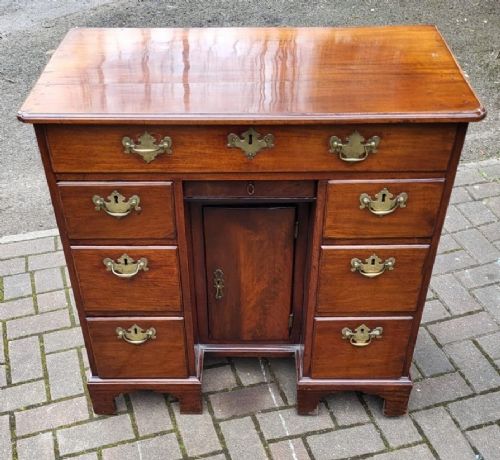
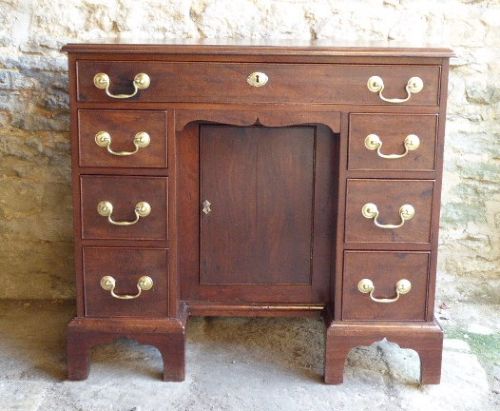
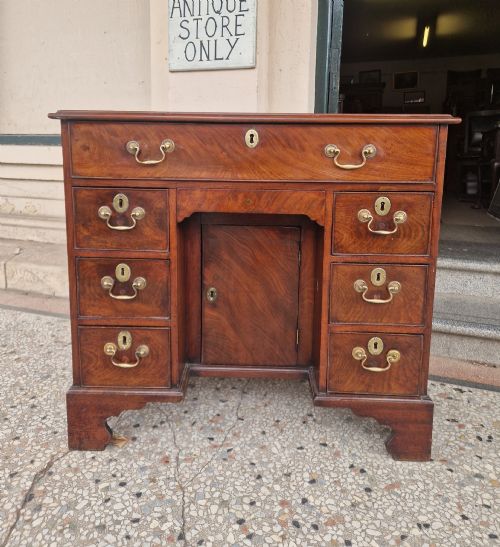
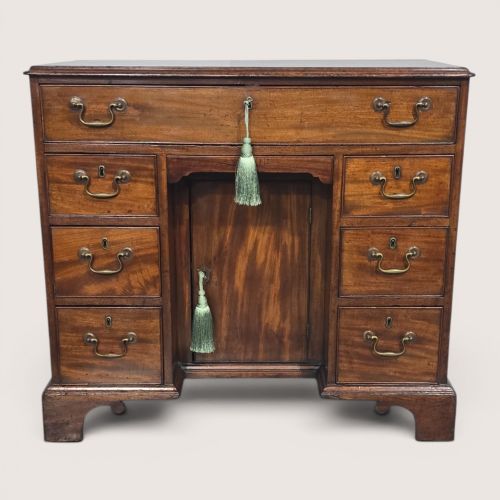
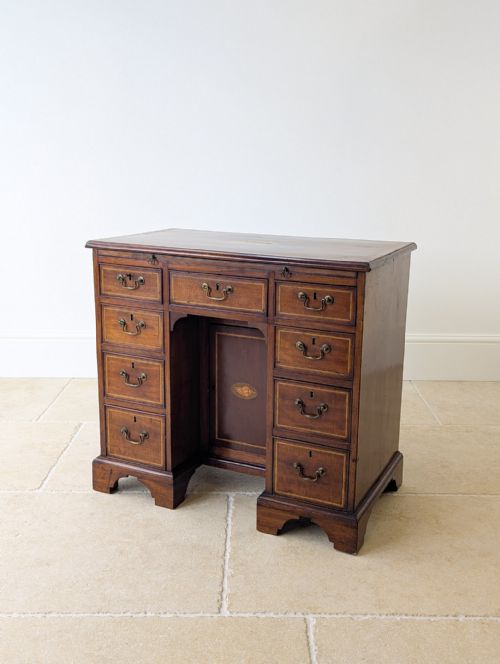

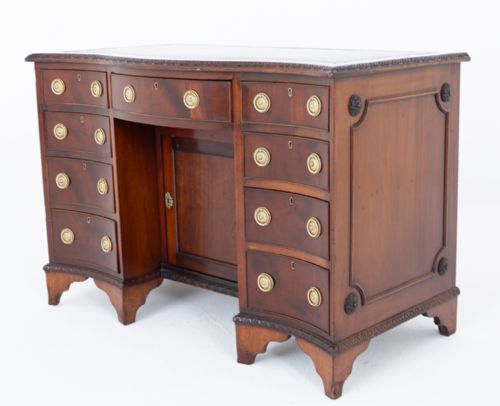

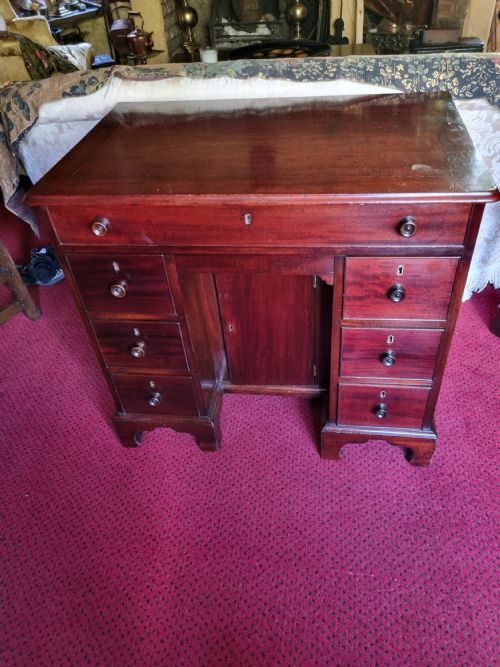

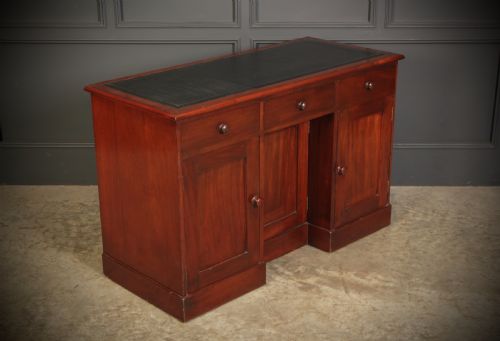


Mahogany Kneehole Cupboard Desk
A mahogany kneehole cupboard desk is a compact writing piece combining central recessed drawers with flanking banks of cupboards or drawers.
Mahogany Kneehole Cupboard Desk
When you search for a mahogany kneehole cupboard desk, you encounter formal writing furniture designed primarily during the Georgian and Victorian periods. These pieces offer a central recessed knee space flanked by pedestals containing drawers or enclosed cupboards.
The versions most frequently met on this page date from the eighteenth century, particularly the Georgian and George III eras, alongside later Victorian and Edwardian interpretations. They often double as dressing tables or small office writing tables depending on their internal fittings.
Materials and Construction
Cabinet makers utilised solid mahogany and flame mahogany timbers, sometimes incorporating Cuban mahogany or red walnut, mounted over secondary woods like oak. Surfaces frequently display marquetry inlay or fine grain patterns matched across the drawer fronts and pedestals.
Hardware consists of brass handles and escutcheons fitted to dovetailed drawers. Structural stability relies on traditional joinery methods, occasionally featuring carved pillars or serpentine fronts executed by period artisans.
Mahogany Kneehole Cupboard Desk Retail Price Guide 2026
Typical asking prices for mahogany kneehole cupboard desk among the pieces listed under this phrase on Sellingantiques today, from the lower quarter to the upper quarter. They describe what is for sale here now, not the wider market.
Several kneehole desks cleverly conceal hidden central compartments behind faux drawer fronts, offering clandestine storage for secret correspondence.
Markers of Quality
The standard of a mahogany kneehole cupboard desk depends upon the selection of timber figures, such as curl or flame mahogany veneers, matched symmetrically across the primary surfaces. Finer examples display crisp carving on pillars and mouldings rather than softened or worn details.
Internal construction also separates superior pieces, evidenced by well-executed dovetailing on drawer linings and original brass hardware. The presence of fitted compartments or integrated dressing table arrangements further elevates the distinction of an individual item.
Johnstone and Jeanes
The Mahogany Kneehole Cupboard Desk Glossary
- Kneehole
- A recessed space beneath the central part of a desk designed to accommodate the sitter's legs. This arrangement permits the placement of drawers or a cupboard directly above the opening.
- Pedestal desk
- A form of furniture consisting of a flat top supported by two independent pedestals containing drawers or cupboards. These often enclose a central kneehole space.
- Flame mahogany
- A veneer figure characterised by undulating, flame-like patterns derived from branch junctions or specific cuts of timber. Cabinet makers prized this wood for primary display surfaces.
- Serpentine
- A curved line of furniture fronts featuring a convex centre flanked by concave sides. This shape requires advanced woodworking skill to execute properly.
- Dovetail
- A joint formed by interlocking wedge-shaped fingers used primarily in drawer construction. It provides exceptional tensile strength without relying solely on metal fasteners.
Mahogany Kneehole Cupboard Desk: Frequently Asked Questions
What is a kneehole desk?
A kneehole desk is a compact writing table featuring a central recessed space for the user, flanked by two pedestals of drawers or cupboards. This layout provides storage while maintaining a formal footprint suitable for smaller rooms.
Historically, these pieces served multiple domestic functions including writing, correspondence, and grooming when fitted with mirrors or internal compartments.
How do I date a mahogany kneehole desk?
Dating relies on observing construction methods, timber choices, and stylistic traits associated with specific periods such as Georgian or Victorian eras. Secondary woods, drawer dovetailing techniques, and brass hardware styles offer reliable clues to the decade of manufacture.
Earlier eighteenth-century pieces often display cleaner proportions and dense Cuban mahogany, whereas Victorian examples may incorporate heavier carved pillars or faded finishes.
Were these desks used for writing or dressing?
Many examples served a dual purpose as both writing desks and dressing tables, depending on the internal layout of the top drawer. Fitted compartments often included mirrors, small boxes, and spaces for writing materials or cosmetics.
Contemporary room usage adapts easily to either function, making them versatile additions to studies, bedrooms, or living spaces.
How do I care for antique mahogany surfaces?
Maintaining antique mahogany involves keeping the wood away from direct sunlight and maintaining stable room humidity to prevent timber movement. Regular dusting with a dry, soft cloth preserves the natural sheen of the polish.
Avoid silicone-based sprays and harsh chemical cleaners, opting instead for traditional wax applications when the finish requires nourishment.