


Mahogany Kitchen Table
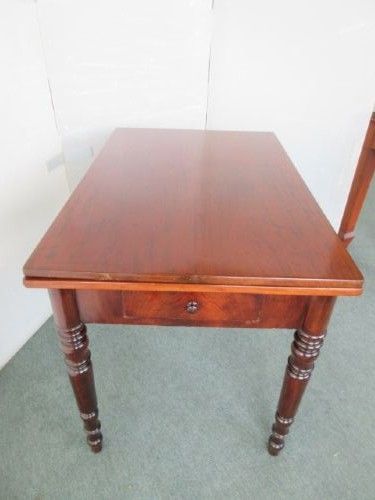
A mahogany kitchen table brings solid Victorian and Edwardian utility together with the rich grain of a classic timber.
Mahogany Kitchen Table
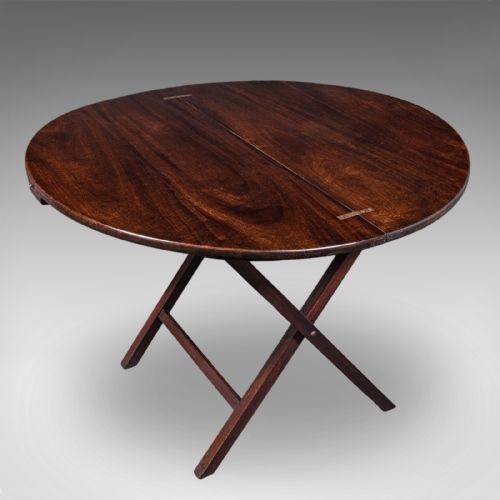
A mahogany kitchen table offers a sturdy workspace and family dining surface rooted in the Victorian and Edwardian eras. Buyers looking for this phrase encounter robust extendable formats, drop-leaf designs and practical folding tables.
The most common versions on this page date from the nineteenth and early twentieth centuries, particularly the Victorian period. These pieces often combine a rich mahogany top with pine or secondary timbers.
Makers designed these items for heavy daily service in country houses and town residences alike. Their enduring appeal lies in this combination of domestic utility and handsome timber.
Materials and construction methods
Makers built these tables primarily using mahogany for visible surfaces, complemented by pine for structural framing and drawer internal parts. Brass fittings appear frequently on extending mechanisms and castors.
Techniques such as the wind-out extending screw and draw-leaf actions allowed tables to expand smoothly for larger gatherings. Solid timber tops were joined to handle the demands of daily kitchen work.
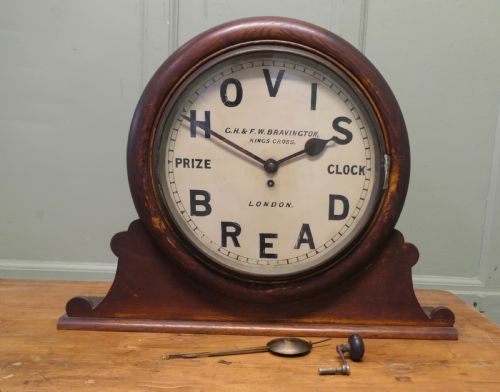
One remarkably honest Victorian kitchen table arrived accompanied by a vintage prize clock.
Distinctions in craftsmanship and form
The finest examples display superior timber selection with deep, consistent figuring across the table surface. Clever mechanical ingenuity, such as smooth wind-out extension systems bearing maker stamps, separates exceptional pieces from simpler variants.
Proportion and structural integrity dictate the standing of a piece, with well-balanced legs and tight joinery indicating superior workshop origin. Simpler farmhouse or folding tables rely on honest, robust construction rather than ornate detail.
G.H.& F.W. Bravington London·Joseph Fitter
The Mahogany Kitchen Table Glossary
- Draw leaf
- A table fitted with pull-out leaves stored beneath the main top, allowing the surface area to increase quickly. This mechanism appeared frequently in Edwardian and late Victorian designs.
- Wind-out table
- An extending dining table operated by a metal crank handle that turns an internal screw mechanism. This device parted the table halves evenly to insert additional leaves.
- Drop leaf
- A table with hinged flaps on either side that fold down when not in use. It saved valuable floor space in busy kitchens and dining rooms.
- Refectory table
- A long, narrow dining table traditionally used for communal meals. Examples in this category utilise sturdy timber frames suited to heavy domestic tasks.
Mahogany Kitchen Table: Frequently Asked Questions
How do I operate a wind-out extending table?
You insert the winding handle into the socket beneath the rim and turn it clockwise to draw the table halves apart. This motion creates the gap needed to drop in the matching middle leaves.
Once the leaves are seated securely, you reverse the handle direction to lock the frame tightly together. This ensures the surface remains stable during meals.
Are these tables suitable for daily family meals?
These tables were originally built for hard use in domestic kitchens and dining rooms. Their solid construction handles daily wear comfortably.
Using mats for hot dishes and coasters for liquids helps protect the polished mahogany surface from heat rings and moisture marks. Regular gentle cleaning keeps the timber in robust health.
How do I date a Victorian kitchen table?
Dating relies on examining the timber preparation marks, leg styles, and the sophistication of any extending mechanisms. Earlier Victorian pieces often show hand-planed secondary woods beneath.
Hardware such as brass castors and screw threads also provide clear clues. Makers gradually adopted more complex cast iron and brass gear by the late nineteenth century.
What is the difference between a dining and a kitchen table?
Kitchen tables often prioritise practical work surfaces and simpler framing, sometimes incorporating pine alongside mahogany. They were meant for food preparation as well as eating.
Dining tables usually feature more formal stylistic elements such as Queen Anne revival motifs or polished gallery rails. However, many surviving pieces served comfortably in both capacities.