







Classic Mahogany Dining Table
A classic mahogany dining table anchors a room with timber grain, stable joinery and centuries of domestic dining tradition.
Classic Mahogany Dining Table
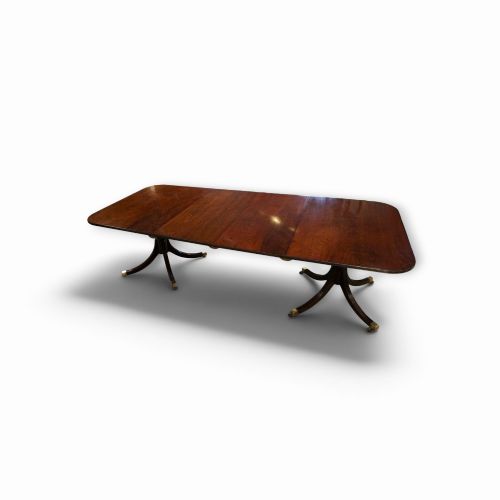
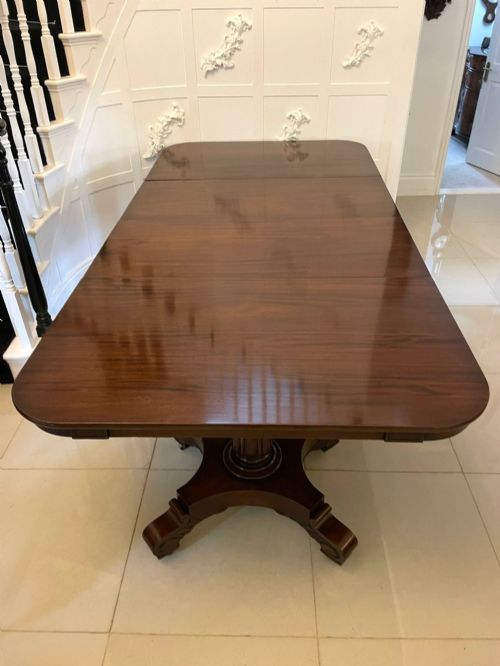
A classic mahogany dining table encompasses extended pedestal formats, twin and triple pillar arrangements, drop-leaf surfaces and folding designs built for dining rooms.
The pieces listed on this page range across 18th Century, Georgian, Regency, Victorian and Edwardian periods, alongside revival styles from the 1920s.
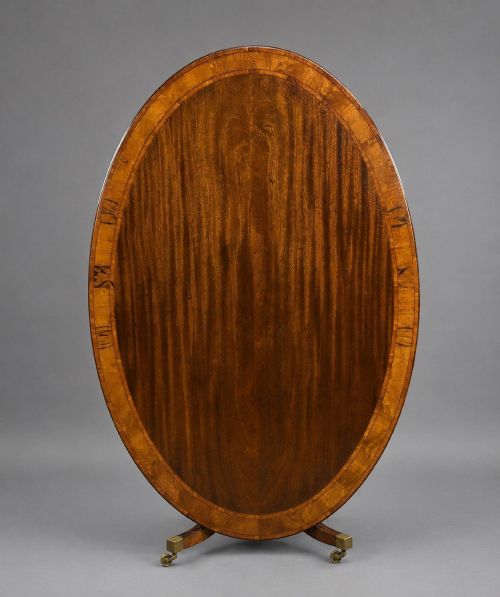
While multi-pillar tables dominate the larger formats, smaller Pembroke and centre tables also appear within the broader scope of mahogany dining furniture.
Materials and construction
Makers utilised solid mahogany and figured mahogany veneers for top surfaces, supported by structural secondary timbers and heavy pedestal bases.
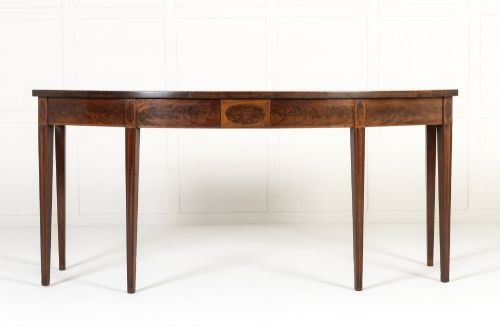
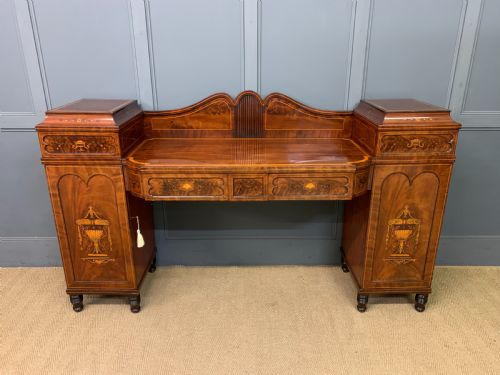
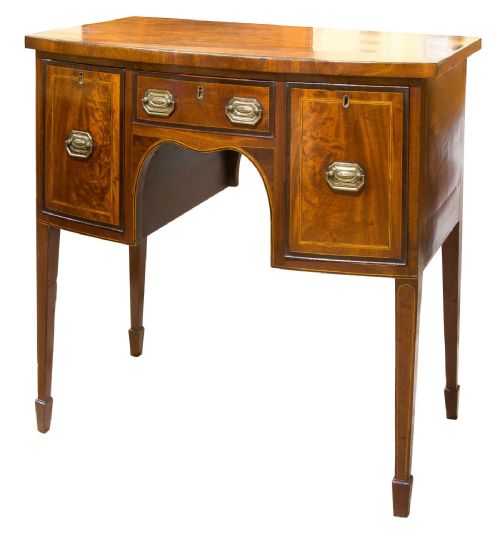
Inlay work incorporated contrasting brass, satinwood and boxwood details to line borders, edges and friezes.
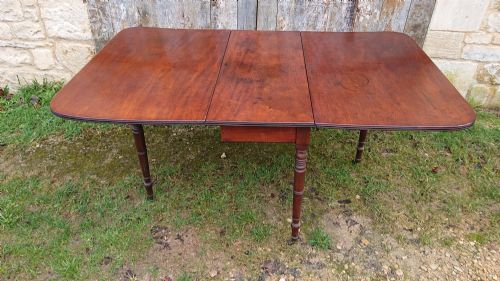
Tables employed folding leaves, drop-leaf hinges and extending mechanisms to adjust surface lengths for seating capacity.
Classic Mahogany Dining Table Retail Price Guide 2026
Typical asking prices for classic mahogany dining table among the pieces listed under this phrase on Sellingantiques today, from the lower quarter to the upper quarter. They describe what is for sale here now, not the wider market.
Some larger tables stretch to accommodate up to eighteen diners across three solid timber pillars.
Assessing construction standards
Quality rests in the selection of figured mahogany timber, the depth of the grain pattern and the precision of the satinwood or boxwood inlay.
Pedestal carving, brass detailing and the rigidity of extending pillar actions differentiate standard production from exceptional examples.
The Classic Mahogany Dining Table Glossary
- Mahogany
- A durable tropical hardwood prized for its rich reddish-brown colour and stable grain. It serves as the primary material for these dining tables and sideboards.
- Pedestal
- A heavy central column supporting a table top, often dividing into multiple pillars on larger extending dining tables. They frequently terminate in brass castors.
- Inlay
- A decorative technique inserting contrasting woods like satinwood and boxwood, or brass lines, into recesses in the mahogany surface. This defines borders and geometric panels.
- Drop-leaf
- A table configuration featuring hinged flaps that fold down to save space when not in use. Brackets support the leaves when raised for dining.
- D-End
- A table end shaped in the semi-circular form of the letter D. These sections often combine with centre leaves to create long extending dining tables.
Classic Mahogany Dining Table: Frequently Asked Questions
How do I date a mahogany table?
Dating relies on examining the timber preparation, joinery methods, hardware and leg styles. Periods span from 18th Century George III eras through Regency and Victorian eras to later Edwardian revivals.
Changes in stretcher use, brass castor designs and veneer thickness offer further clues to the decade of manufacture.
Are pedestal tables stable when extended?
Multi-pillar pedestal tables distribute weight across heavy central columns rather than corner legs. This engineering provides solid support even when extra leaves are added.
Properly aligned pillar mechanisms maintain balance across the entire span of the extended surface.
How do I care for mahogany surfaces?
Maintain the timber by keeping tables away from direct heat sources and sudden humidity shifts. Regular dusting and occasional wax polish preserve the natural lustre of the grain.
Avoid abrasive cleaners and use felt mats beneath hot dishes to protect the polished finish.
What is a Pembroke table?
A Pembroke table is a small occasional or dining table featuring two hinged drop leaves on opposing sides. It often includes a single drawer and slender legs.
These compact tables offer flexible surface space for smaller dining areas or studies.