




Mahogany Hat Stand
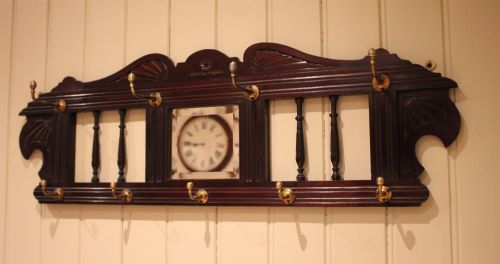
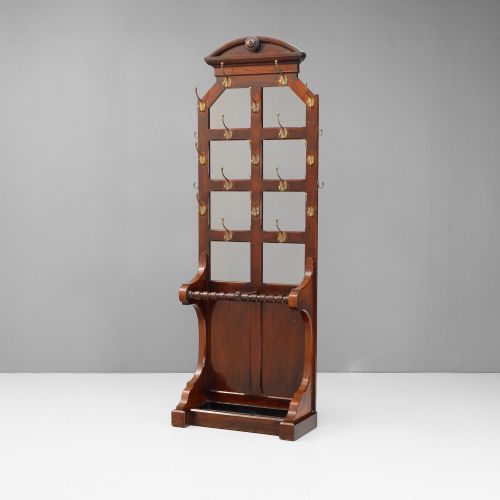
A mahogany hat stand commands the entrance hall with practical grace, offering a dedicated place for hats, coats, and walking accessories.
Mahogany Hat Stand
When you search for a mahogany hat stand, you encounter a variety of sturdy furniture pieces designed for the entrance hall, cloakroom, or reception area. These items range from tall freestanding hall trees to wall-mounted coat racks and specialised stands.
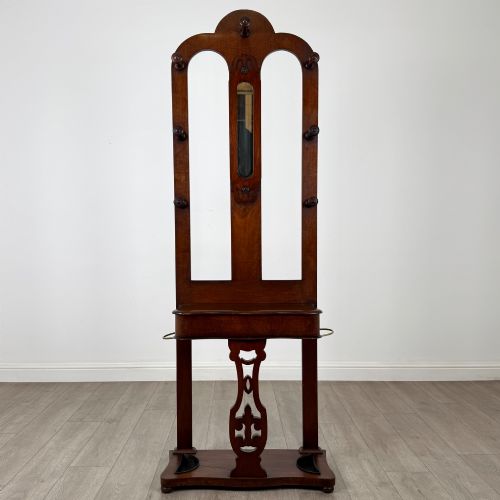
The pieces appearing on this page span the Victorian and Edwardian eras, alongside earlier Georgian, Regency, and William IV examples. You will frequently find larger Victorian hall stands equipped with mirrors, marble shelves, and umbrella holders.
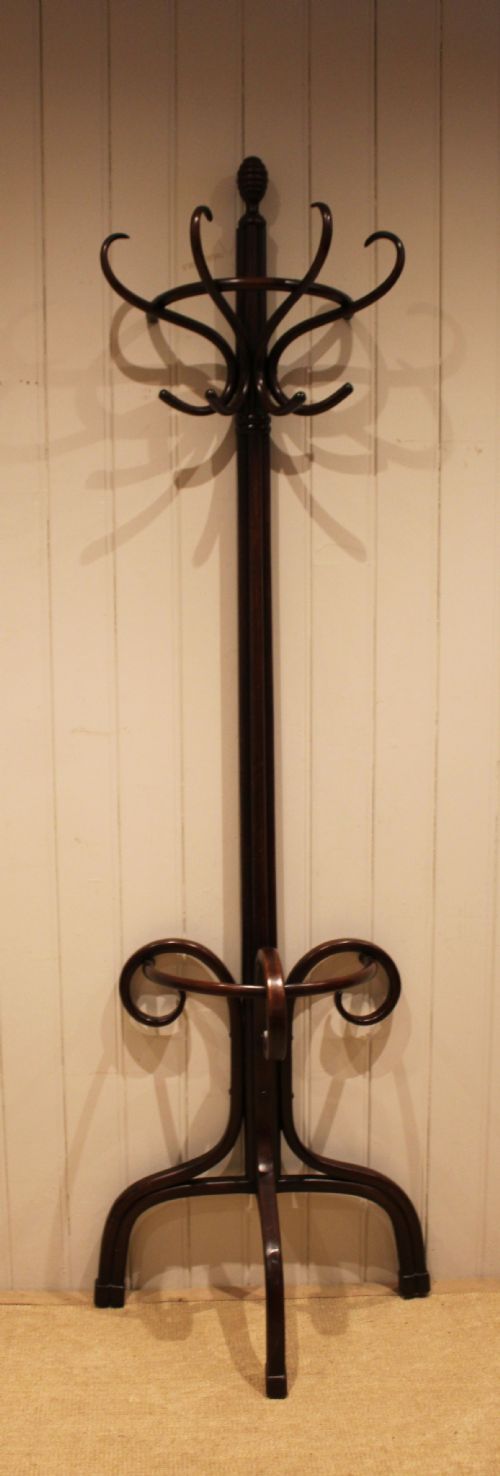
Freestanding poles, tripod stands, and revolving designs also appear, providing compact solutions for hanging hats and coats in period interiors. Alongside these, related forms like multiple-tier whatnots and wig stands demonstrate the diverse uses of mahogany in domestic spaces.
Materials and Technique
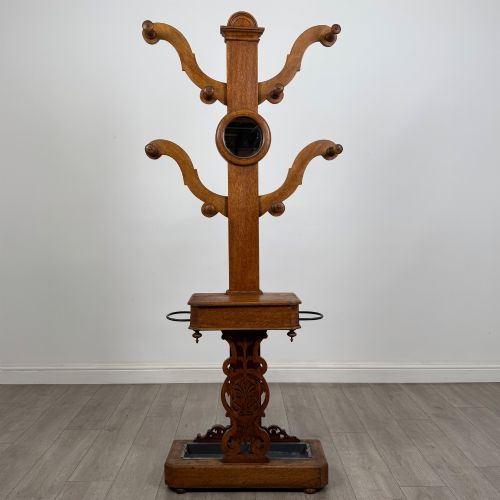
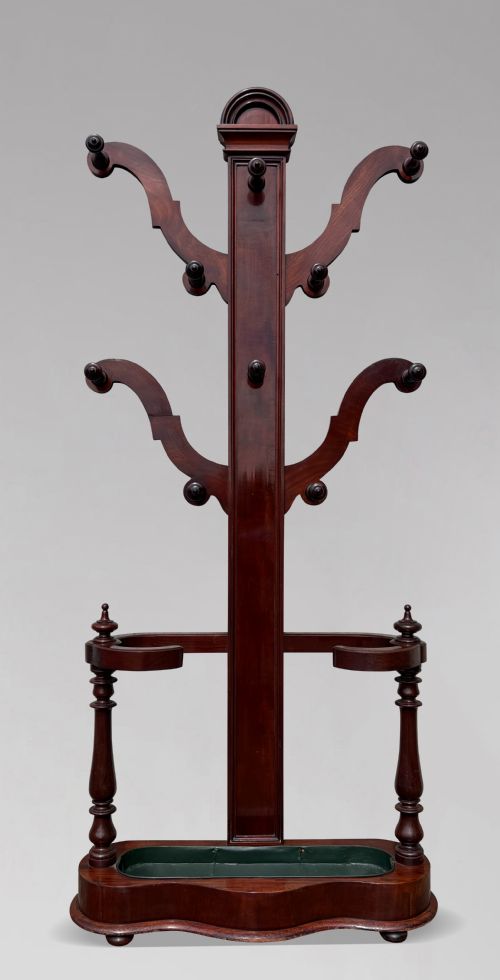
Cabinetmakers utilised rich mahogany timber for the primary structure, often combining turned poles, carved columns, and curved branches to form the coat hooks. This dense wood provided the necessary stability to support heavy garments without tipping.
Brass hooks and fittings frequently secure the hats and coats, while bevelled glass mirrors and white marble inserts add functional elegance to the larger hall stands. Cast iron components occasionally appear in the base sections to provide additional weight and umbrella storage.
Construction techniques include deep bevelling on mirror plates, carved detailing on Victorian uprights, and bentwood methods seen in later Viennese and Edwardian pieces. These varied manufacturing approaches reflect shifting stylistic preferences from the Georgian period through to the early twentieth century.
Listings feature mahogany, brass, glass, and marble across Victorian, Edwardian, and Georgian periods.
Evaluating Construction and Detail
The distinction between standard utility items and finer examples rests on the crispness of the mahogany carving and the cleverness of the structural joinery. Superior pieces display substantial proportions, selected timber grains, and harmonious integration of auxiliary materials like marble and brass.
Functionality and proportion also determine the standing of a piece within the range, particularly in how securely the hat hooks and mirror frames are attached to the main upright. Examples featuring integrated umbrella wells, drip pans, and revolving top sections demonstrate advanced joinery designed for daily domestic use.
Ellen E Houghton of Minton
The Mahogany Hat Stand Glossary
- Hall Stand
- A large piece of hallway furniture combining coat hooks, a hat shelf, a mirror, and umbrella storage. These items anchor the entranceway of period homes.
- Whatnot
- A set of open shelves supported by slender pillars, used for displaying ornaments or holding books. Several variations appear alongside traditional coat stands in mahogany.
- Bentwood
- Wood softened by steam and bent into curved shapes, commonly utilised in lightweight hat and coat racks. This technique gained popularity in the late nineteenth and early twentieth centuries.
- Etagere
- A piece of furniture consisting of a set of open shelves for displaying small objects. These decorative stands share materials and construction methods with hall furniture.
- Wig Stand
- A small specialised stand from the Georgian period designed to hold powdered wigs. These compact pieces represent the earliest iterations of hat storage in the record.
Mahogany Hat Stand: Frequently Asked Questions
What is a hall tree?
A hall tree is a tall freestanding piece of furniture designed for the entrance hall to hold hats, coats, and walking sticks.
They often incorporate mirrors, marble surfaces, and umbrella trays into a single substantial wooden structure.
How were mahogany hat stands used?
These stands provided visitors and family members with a convenient spot to deposit outerwear upon entering the home.
The upper hooks held hats and coats, while lower sections frequently accommodated umbrellas, walking sticks, and gloves.
How do I distinguish Victorian from Edwardian stands?
Victorian stands typically feature darker, heavier mahogany with deep carving, turned columns, and substantial mirror frames.
Edwardian versions often appear lighter in construction, occasionally incorporating Arts and Crafts styling or revolving top sections.
Are revolving coat stands stable?
Revolving hat and coat stands rely on a sturdy central pole and a well-balanced base to remain upright under the weight of garments.
The rotating top allowed users to access different hooks without moving the entire piece of furniture.