




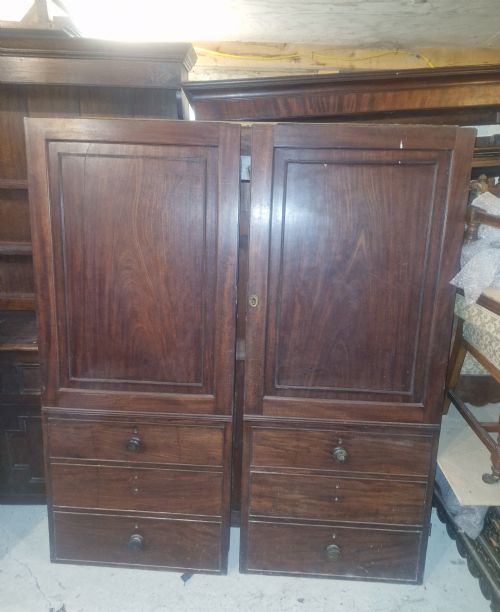


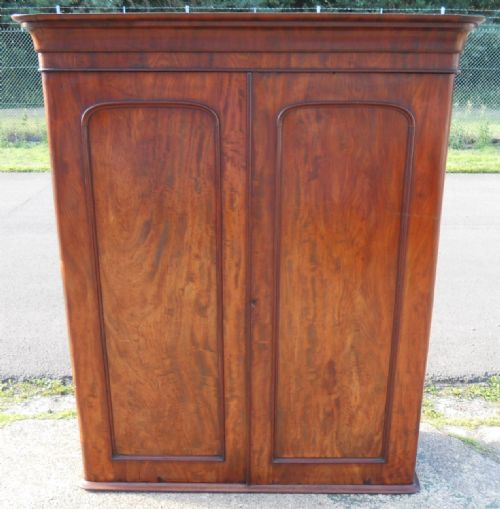
Mahogany Hanging Wardrobe
Mahogany hanging wardrobe pieces are substantial timber storage furniture built to hold garments upright, offering both architectural presence and rich grain figure.
Mahogany Hanging Wardrobe
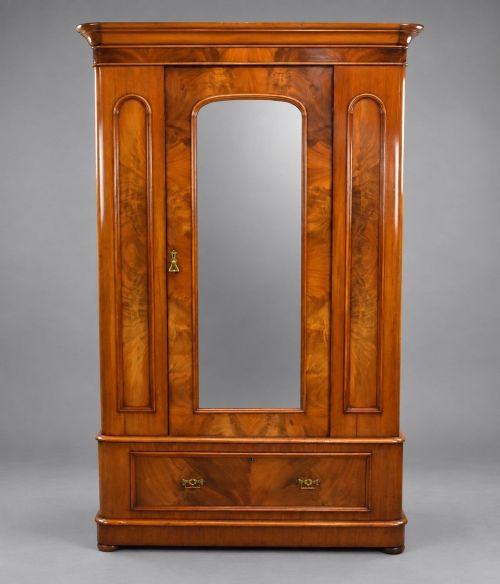
A mahogany hanging wardrobe provides dedicated vertical space for garments, moving away from folded linen storage towards modern clothing care. These pieces span Georgian, Regency, and Victorian eras, alongside Edwardian examples and regional Channel Island workshops.
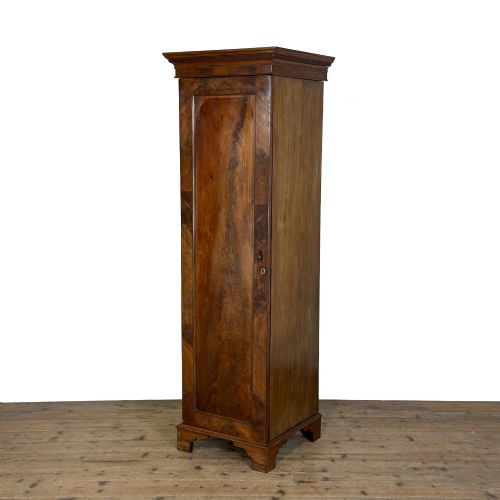
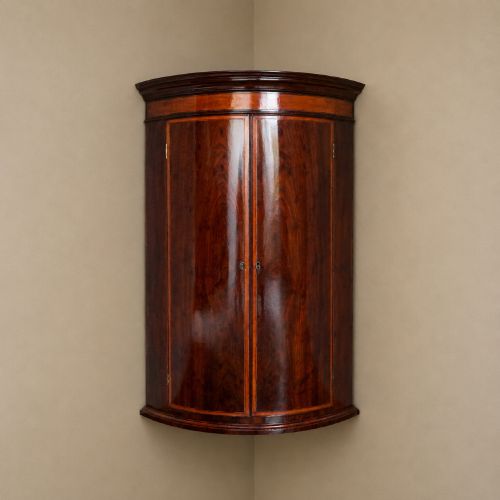
The version most commonly met on this page is the two-door or single-door mahogany hanging wardrobe, often incorporating flame veneer, boxwood stringing, or lower drawer sections. Tall single-door and compactum configurations also appear alongside related corner cupboards sharing the same timber vocabulary.
What varies in quality
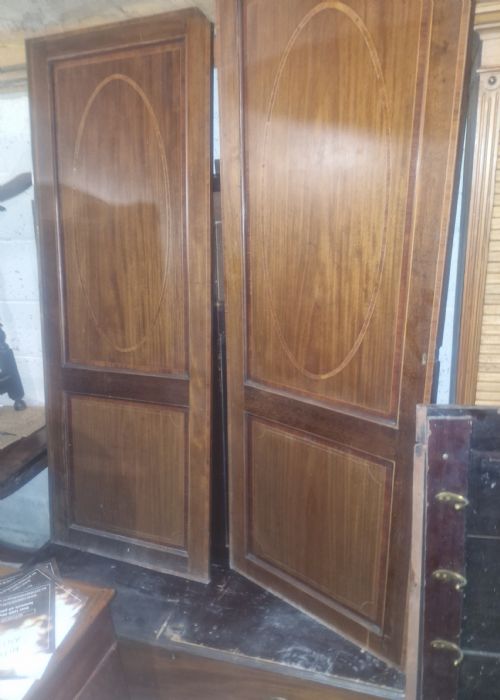
Quality rests principally in the selection and bookmatching of the mahogany veneer, where rich figuring and symmetrical grain patterns elevate a piece far above plain timber builds. The crispness of inlaid boxwood stringing and the proportion of cornice mouldings further distinguish superior cabinet work.
Structural integrity and original hardware define the upper tier, noting whether brass campaign fittings, locks, and hinges remain intact and functioning. The depth of internal hanging space and the seamless operation of large panel doors reveal the skill invested by the original maker.
Several tall Victorian examples are known colloquially as sentry box wardrobes because their narrow single doors resemble solitary guard posts.
Gillows of Lancaster·Maples and Co
The Mahogany Hanging Wardrobe Glossary
- Flame mahogany
- A veneer cut from timber where the branch meets the trunk, producing a distinctive flickering flame pattern. It was favoured on high-end cabinet doors.
- Compactum
- A multi-section wardrobe combining hanging space, drawers, and sometimes linen slides within a single large piece. These often feature mirror doors.
- Linen press
- A piece with upper sliding trays for folded textiles and lower drawers or hanging sections. Many examples transition into hanging wardrobes over time.
- Boxwood stringing
- Thin inlaid lines of pale boxwood set into dark mahogany surfaces. It provides sharp linear contrast around door panels and drawer fronts.
- Channel Islands
- A regional British style of furniture making exhibiting distinct vernacular details. These pieces often show robust proportions and traditional local construction.
Mahogany Hanging Wardrobe: Frequently Asked Questions
How do I date a mahogany wardrobe?
Dating relies on stylistic clues such as cornice design, bracket feet versus plinth bases, and the presence of inlay. Georgian pieces often display architectural pediments and cockbeaded drawer edges, whilst Victorian examples trend towards heavier proportions and arched panel doors.
Secondary woods and construction marks inside the cabinet offer further chronological evidence. Hand-cut dovetails and pegged joints generally point to earlier Georgian or Regency origins, whereas later Victorian and Edwardian pieces utilise machine-sawn elements.
Will modern coat hangers fit inside?
Historic hanging depths can be shallower than modern wardrobes because older garments were tailored differently or folded over pegs. Many period pieces utilise front-to-back hanging hooks rather than side-to-side rails.
Buyers should check the internal depth dimensions before planning everyday use. Some pieces accommodate angled rails or smaller modern hangers quite comfortably without altering the interior.
How do I care for flame mahogany?
Flame mahogany veneer requires stable indoor humidity and protection from direct sunlight to prevent the rich reddish-brown tones from fading. Regular dusting with a dry lint-free cloth keeps the surface clean without needing heavy polishes.
Occasional application of traditional beeswax nourishes the timber and enhances the grain figure. Avoid silicone-based sprays that can penetrate old finishes and attract dust.
Are these wardrobes easy to dismantle?
Many large wardrobes from the Georgian and Victorian periods were built to be taken apart for transport up staircases and through doorways. They typically dismantle into a cornice, base, side panels, and heavy doors.
Assembly requires careful alignment of knockdown bolts, tongue-and-groove joints, or peg systems hidden within the interior. Professional delivery and installation is often recommended for multi-door compactum models.