



Mahogany Graduated Chest
A mahogany graduated chest is a traditional storage piece designed with stacked drawers that decrease in depth toward the top, offering both visual balance and practical sorting.
Mahogany Graduated Chest
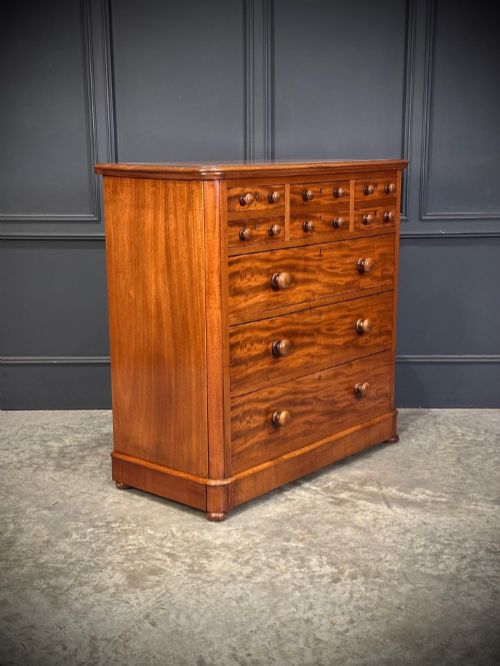
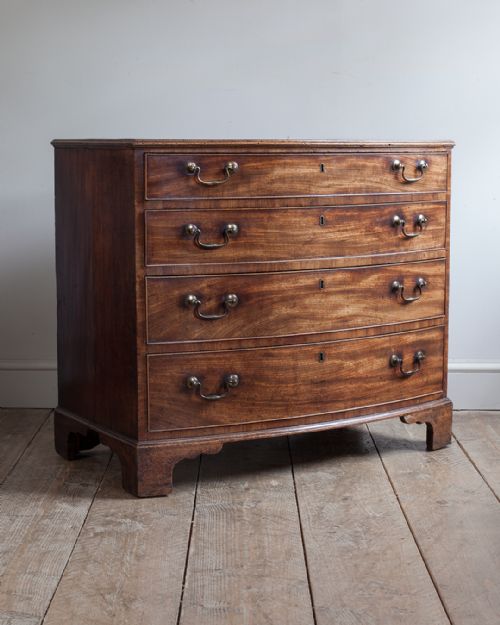
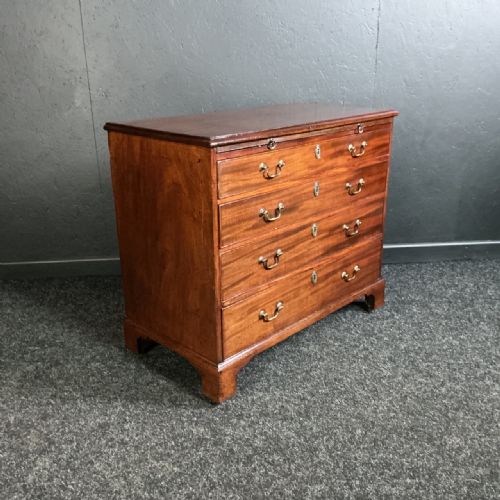
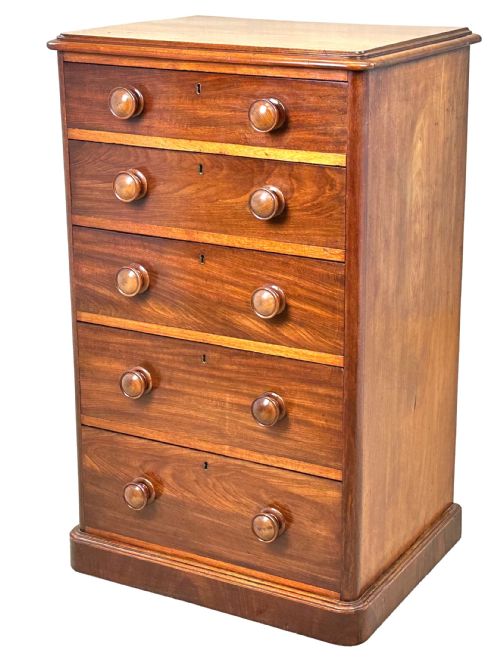
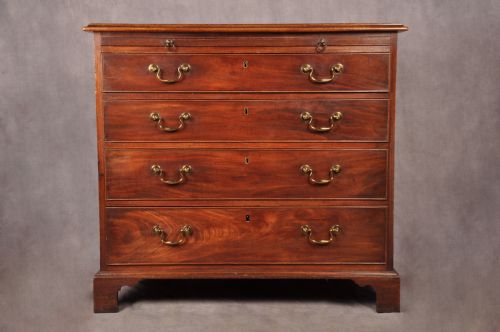
A mahogany graduated chest organises clothing and household items within stacked drawers of diminishing depth, creating a balanced silhouette that draws the eye upward. These pieces appear across eighteenth-century, Regency, and nineteenth-century periods, spanning Georgian and Victorian styles.
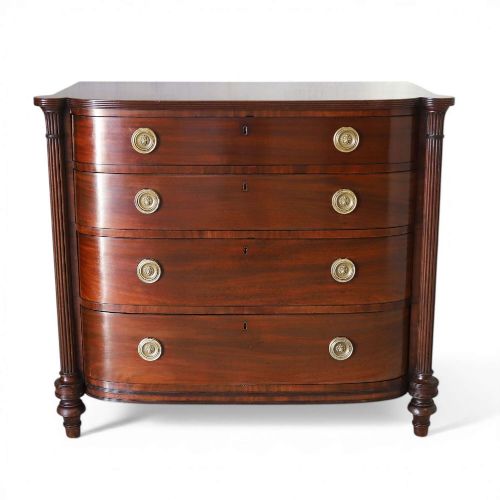
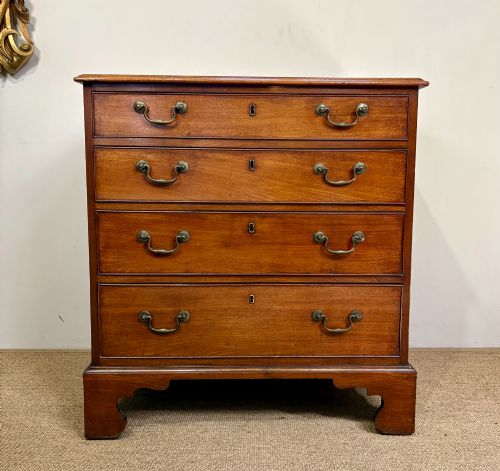
The version most commonly met on this page is the George III or general Georgian chest, often featuring straight or bow fronts with four long drawers. Scottish Regency and dressing chest variations also emerge, alongside compact examples built in small proportions.
Makers utilised native and imported timbers to construct these carcasses, incorporating pine and oak for secondary woods inside the drawer linings and backs. The structural arrangement relies on drawers that step down in height from bottom to top.
Materials and construction
Cabinet makers built these carcasses primarily from solid and veneered mahogany, frequently selecting flame mahogany and figured timbers for the primary drawer fronts. Secondary woods such as oak and pine provide structural stability for drawer linings and internal framing.
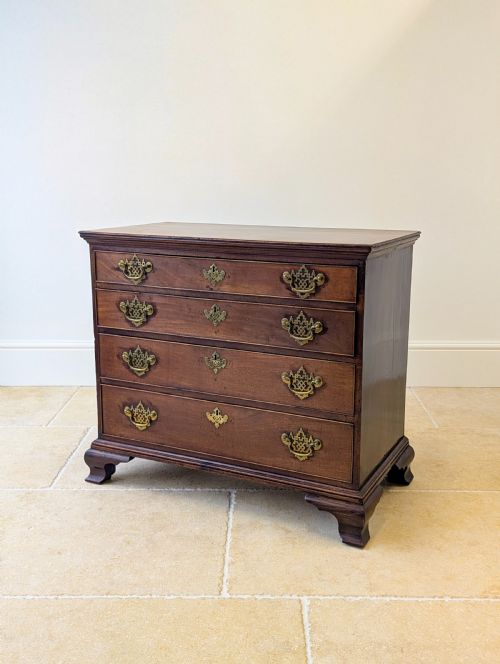
Brass hardware, including swing handles and escutcheons, fastens to the drawer faces, complementing the dark grain of the polished timber. Joinery techniques connect the drawer sides and carcase corners to withstand daily use over centuries.
Materials recorded across the inventory include solid mahogany, flame mahogany, oak, pine, and brass hardware.
Markers of quality
The distinction between tiers rests upon the choice of timber figure, such as the liveliness of flame mahogany veneer on the drawer fronts compared to plain stock. Grain matching across the stacked drawer faces reveals the cabinet maker's intent and skill.
Proportions also dictate the grade of a piece, with smaller dimensions and serpentine or bow fronts commanding attention for their difficult execution. The crispness of edge mouldings and the retention of original brass hardware further separate standard examples from finer works.
The Mahogany Graduated Chest Glossary
- Graduated drawers
- Drawers that decrease in depth progressively from the bottom to the top of the chest. This arrangement provides a pleasing visual proportion and places smaller items in the shallower top drawers.
- Bow front
- A convex curved front facade that softens the rectangular profile of the chest. This curved shape requires specialised joinery to bend or shape the timber and veneers.
- Serpentine front
- A facade shaped with an outward central curve flanked by inward curves, or vice versa. This complex profile demands advanced woodworking skill.
- Flame mahogany
- A veneer cut from timber where the grain creates a pattern resembling flickering flames. Cabinet makers prized this figure for principal display surfaces like drawer fronts.
- Dressing chest
- A lower chest equipped with a writing slide or top arrangement designed for personal grooming. These pieces combine storage drawers with surface utility.
Mahogany Graduated Chest: Frequently Asked Questions
What is a graduated chest?
A graduated chest is a set of drawers where each drawer from top to bottom increases in depth. This design distributes weight logically and creates a balanced facade.
Historically, this layout helped owners sort garments by size or weight, keeping heavier items at the bottom.
How do I date a mahogany chest?
Dating relies on observing construction methods, timber choices, and hardware styles associated with periods like the Georgian or Victorian eras. Secondary woods inside the drawers also offer clues to the origin date.
Leg styles, bracket feet, and moulding profiles changed across the eighteenth and nineteenth centuries, helping narrow down the decade of creation.
What is flame mahogany?
Flame mahogany is a decorative wood veneer showing a distinctive pattern that resembles flickering flames. It comes from specific cuts of timber where the grain branches out.
Cabinet makers reserved this striking veneer for the most prominent surfaces, such as drawer fronts on formal chests.
Where were these chests used?
These pieces served primarily in bedrooms and dressing rooms for storing garments, linens, and personal accessories. Their structured drawer layout kept everyday items organised.
Today, they function equally well in hallways, living rooms, and bedrooms as focal storage points.