
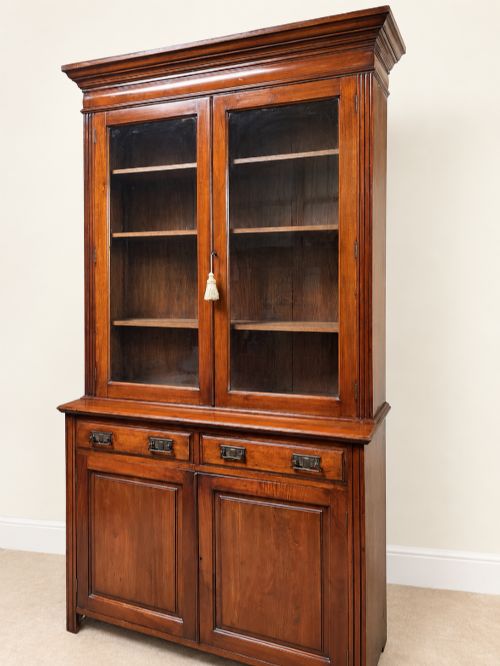
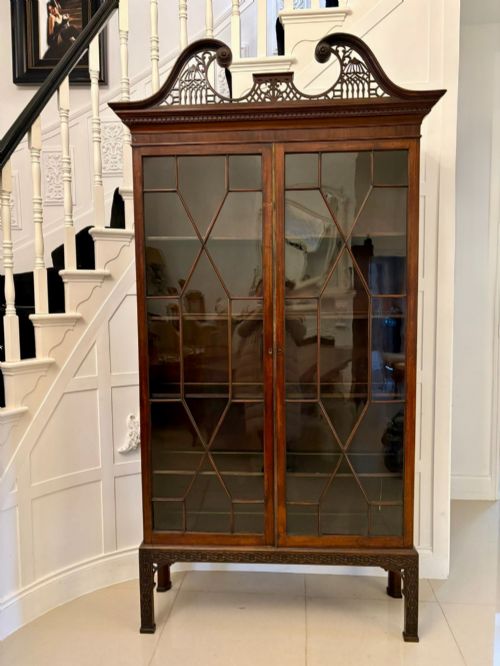
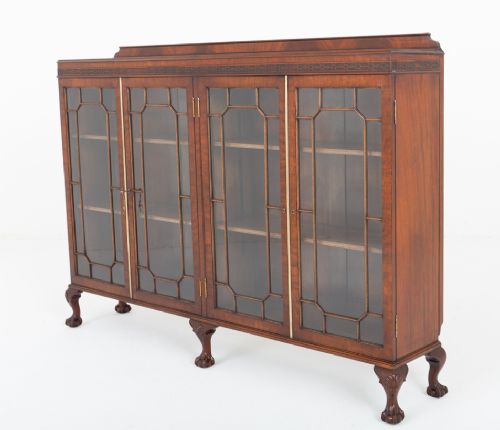
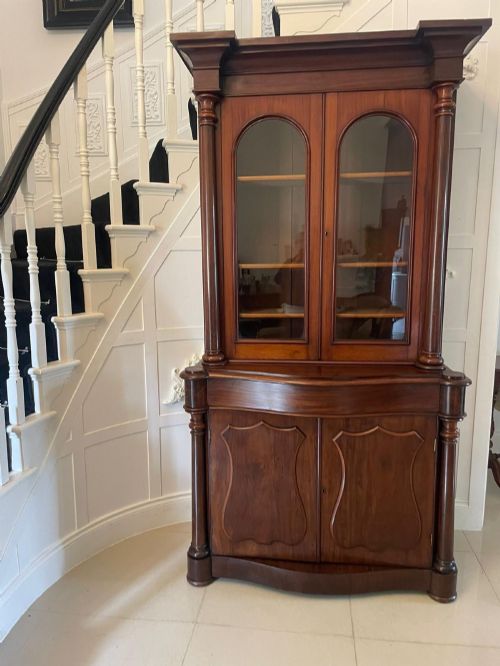
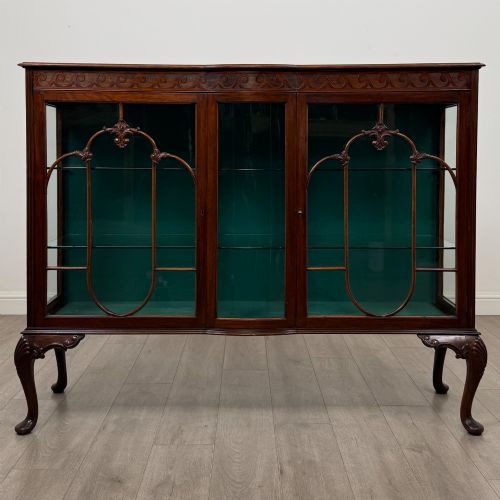
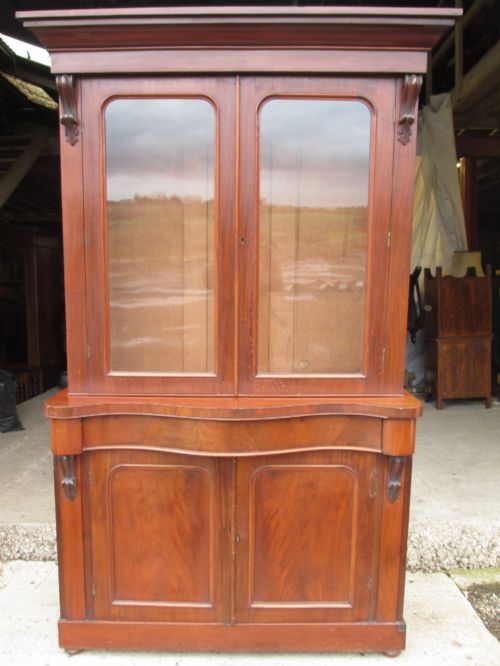
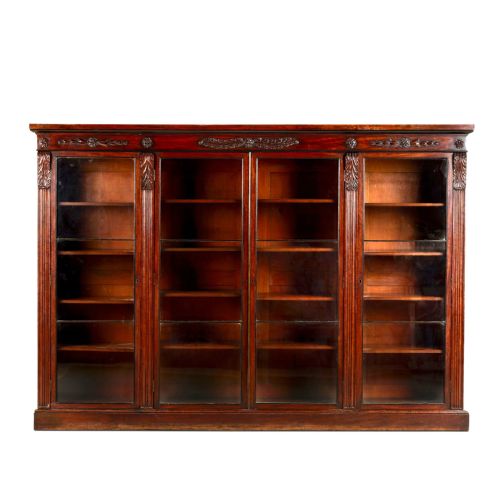
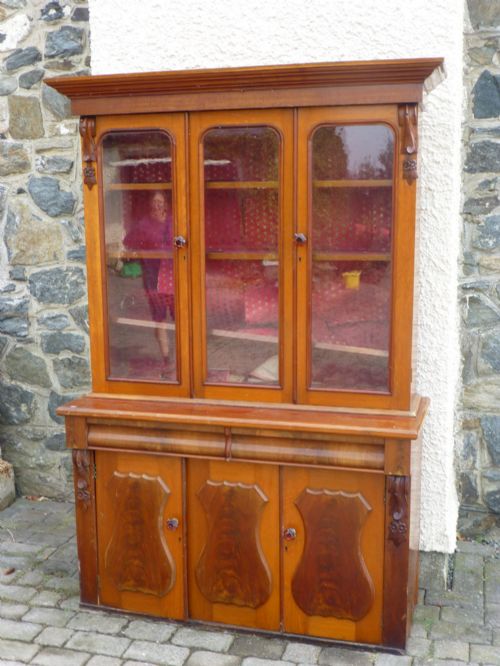
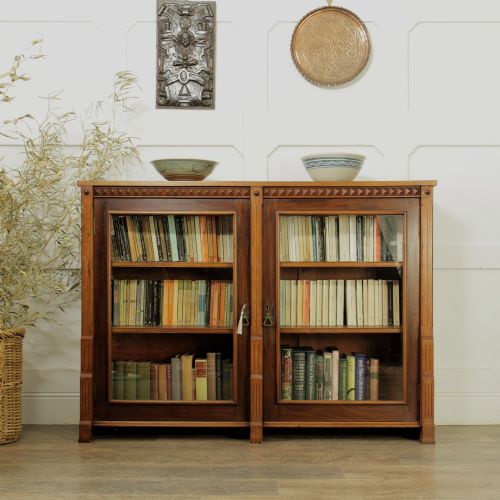
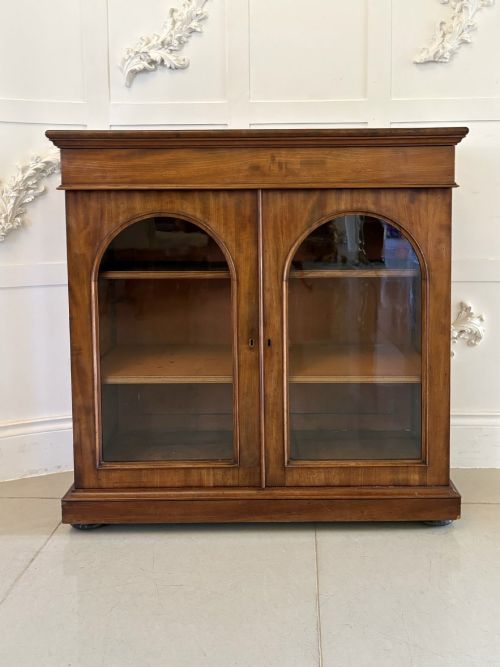
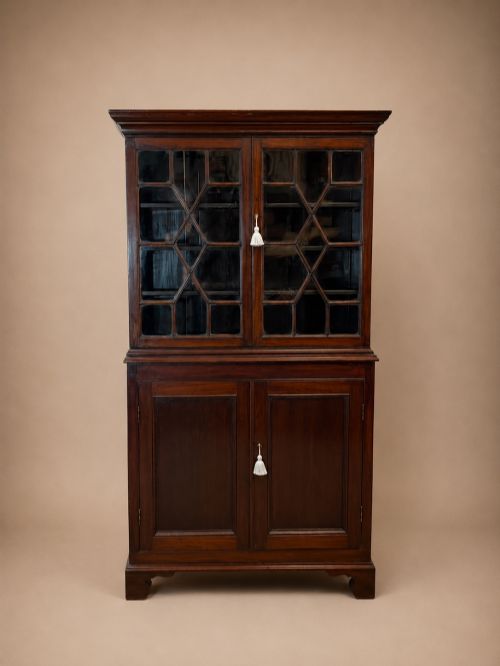
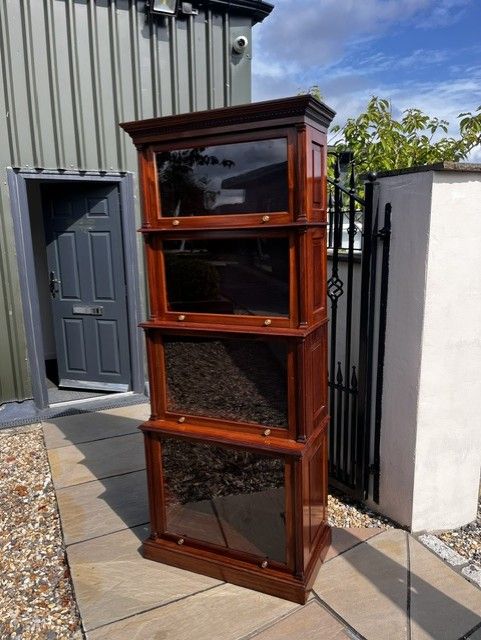
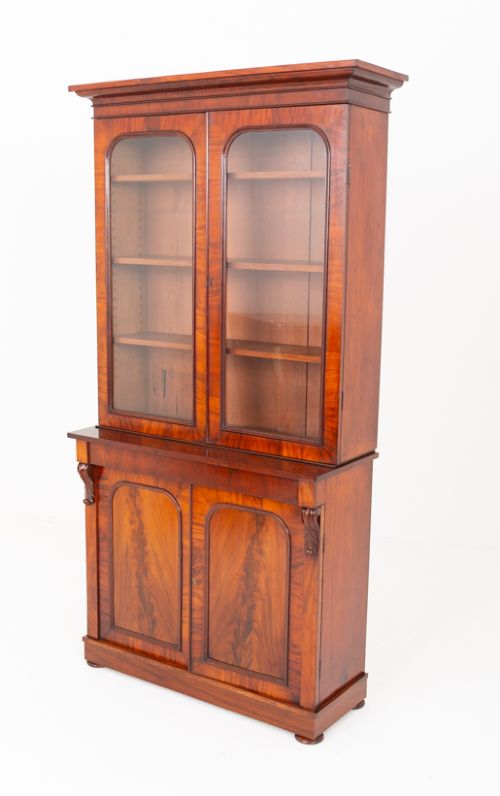
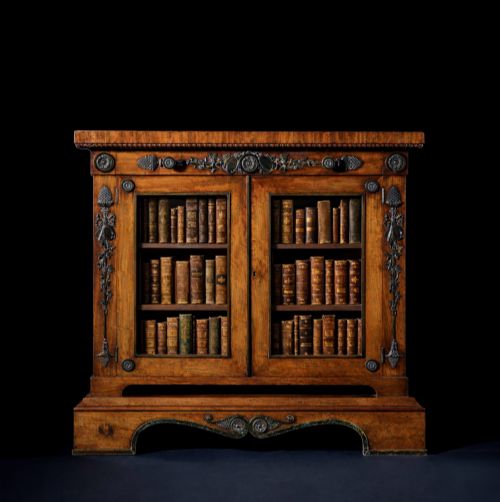
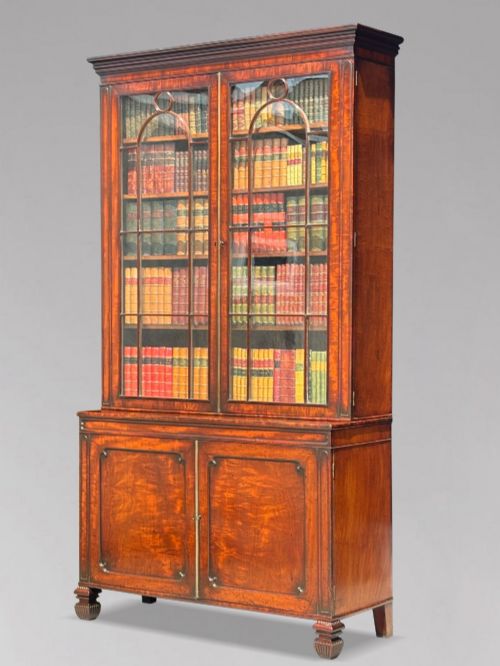
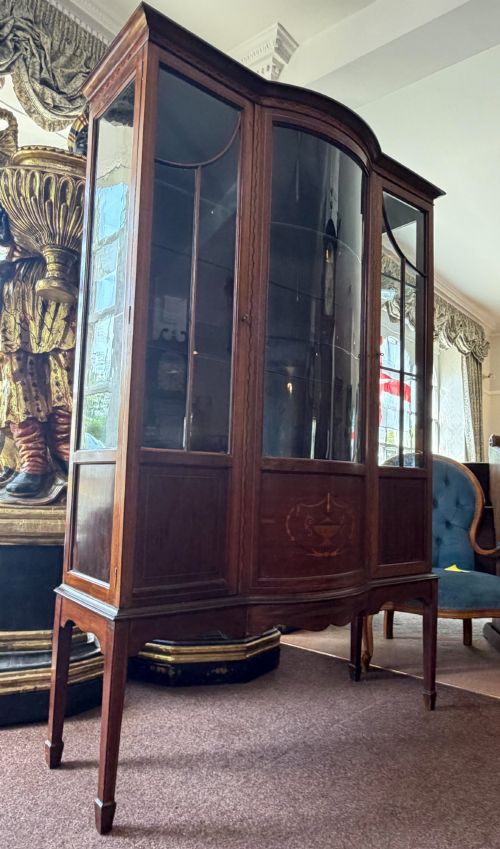
Mahogany Glass Door Cabinet
A mahogany glass door cabinet brings practical storage and clear display together in rooms that need both.
Mahogany Glass Door Cabinet
A mahogany glass door cabinet serves to hold books, collections or tableware while keeping dust out and contents visible through transparent panes. Buyers searching for a mahogany glass door cabinet encounter forms ranging from tall library bookcases to compact corner units and low side cabinets.
The pieces on this page span the Victorian and Edwardian eras, alongside Regency and 20th-century examples. Bookcases and display cabinets dominate the selection, built in configurations with single, double or multiple glazed doors.
Originating largely from British workshops and revival movements like Sheraton and Chippendale, these pieces combine timber construction with fitted shelving. They function equally well in studies, drawing rooms and dining spaces.
What varies in quality
The choice of mahogany grain and the precision of the timber matching across the doors set finer examples apart from standard production. Artisans demonstrated skill through the delicacy of astragal bars and the crispness of carved details.
Interior elements such as adjustable wooden or glass shelving and original brass fittings indicate a higher standard of original manufacture.
One exceptional thirty-two drawer collector cabinet was built specifically for tiny specimens, proving that grand mahogany furniture can hide a multitude of minute compartments.
Wylie and Lochhead·Brady of Edmonton
The Mahogany Glass Door Cabinet Glossary
- Astragal
- A moulding that profiles a wooden glazing bar holding individual glass panes within a door frame. These bars divide the window into smaller geometric sections.
- Satinwood inlay
- Contrasting light-toned wood inserted into recessed channels within the darker mahogany surface. This technique creates decorative borders and floral motifs.
- Vitrine
- A glass-fronted display cabinet designed specifically for showing porcelain, silver or curiosities. The sides often incorporate glass panels to maximise light ingress.
- Barrister bookcase
- A stacking sectional bookcase featuring up-and-over glass doors that lift and slide into the cabinet recess. This design allows modular expansion.
Mahogany Glass Door Cabinet: Frequently Asked Questions
How do I clean the glass safely?
Use a lint-free cloth and a mild vinegar solution sprayed onto the cloth rather than directly onto the glass. This prevents moisture from seeping into the wooden astragals.
Avoid harsh chemical ammonia cleaners that can damage aged timber finishes and degrade the surrounding mahogany polish over time.
Can I adjust the internal shelves?
Many Victorian and Edwardian cabinets feature traditional wooden rack-and-pinion strips or brass shelf studs that allow height adjustment. This enables the storage of various book sizes or tall display items.
Later stacking or modular versions utilise fixed partitions, so checking the internal configuration remains important for specific display needs.
How do I identify a Regency period piece?
Regency cabinets often display classical architectural influences, incorporating bronze mounts, brass wire grilles, and bold mahogany grain patterns. The proportions tend to follow strict symmetry inspired by ancient Roman and Greek designs.
Cabinet hardware from this era typically includes brass lion-mask rings or neoclassical drop handles matching the austere elegance of the period.
Where should I place my cabinet?
Position the piece away from direct sunlight and strong heat sources to prevent the mahogany timber from drying out and warping. Stable ambient humidity protects both the wood and the original glass panes.
Ensure the floor surface is level so the doors hang true and latch correctly within their frames without binding.