

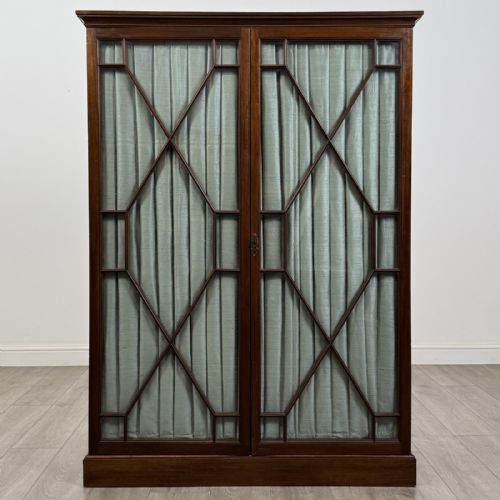
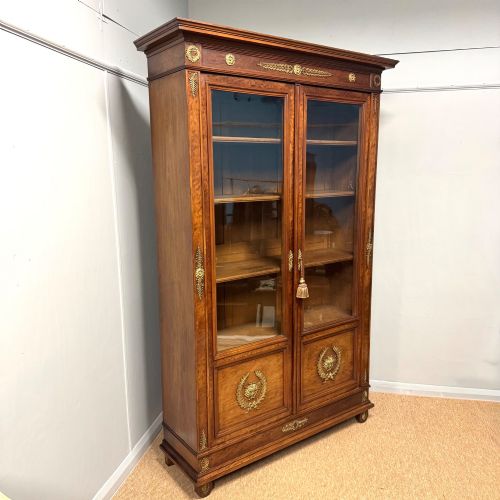
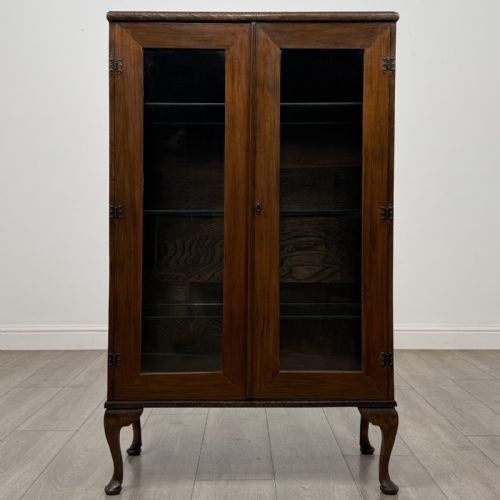
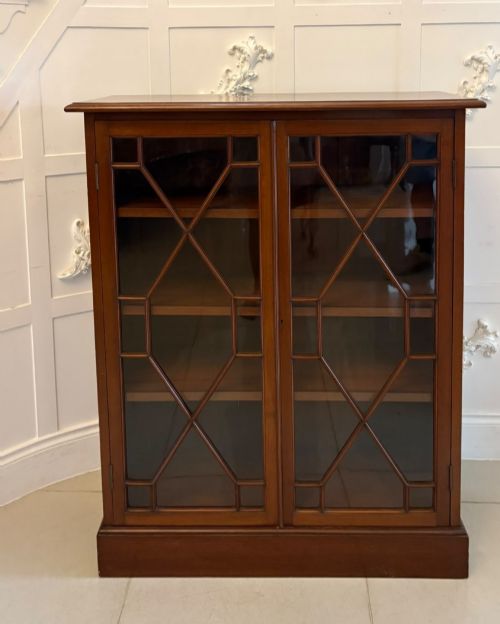
Mahogany Glass Door Bookcase
A mahogany glass door bookcase brings warmth and order to a room, housing volumes behind glazed timber framing.
Mahogany Glass Door Bookcase
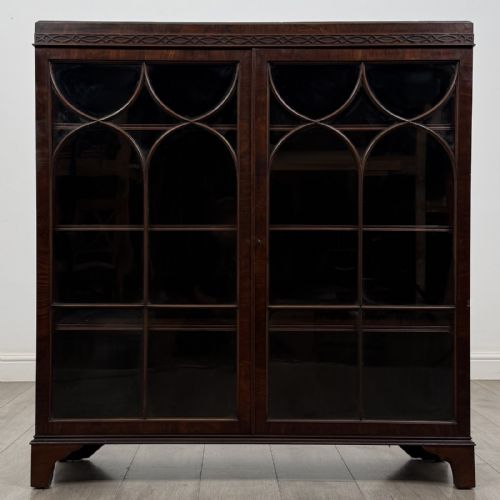
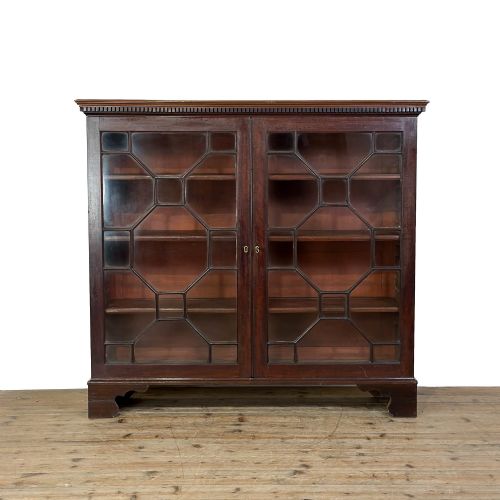
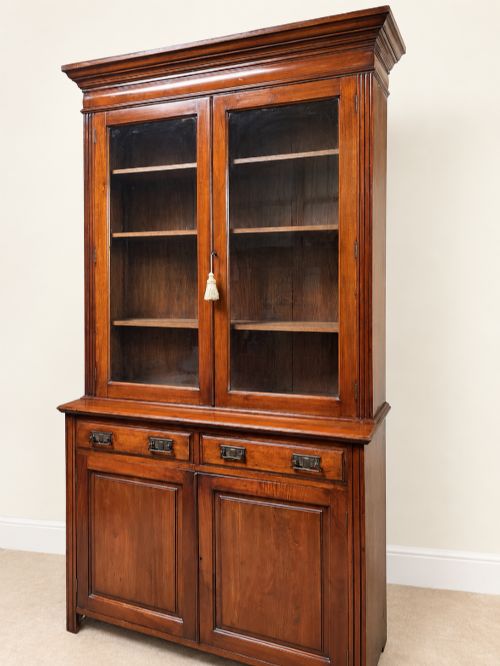
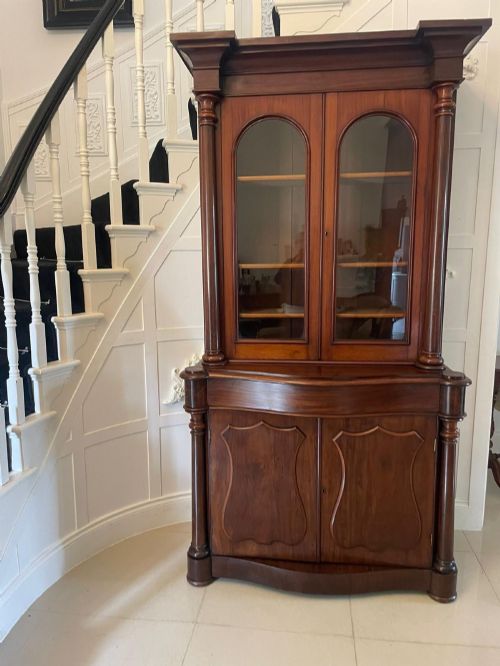
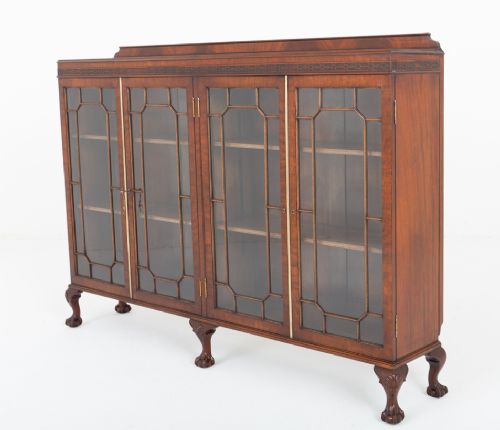
When you search for a mahogany glass door bookcase, you encounter tall library cabinets, slim display units, and side cabinets built primarily across the Victorian, Edwardian, and Regency periods.
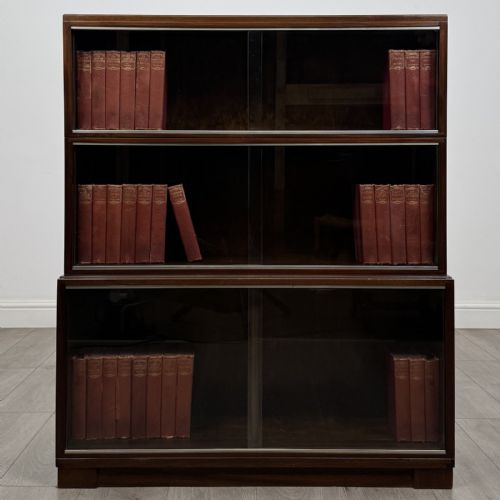
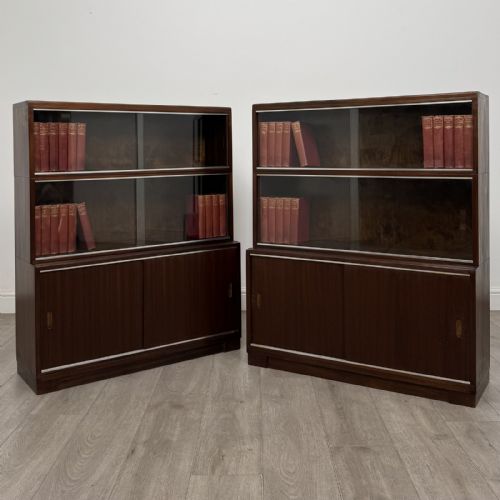
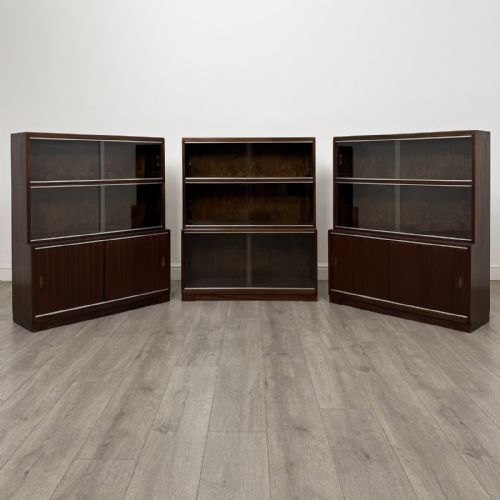
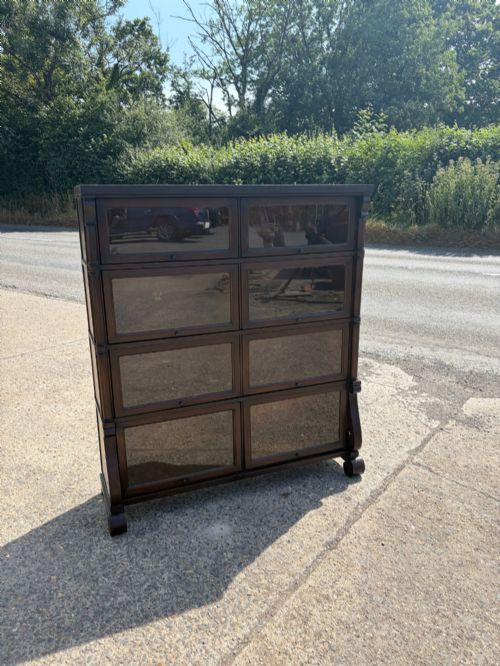
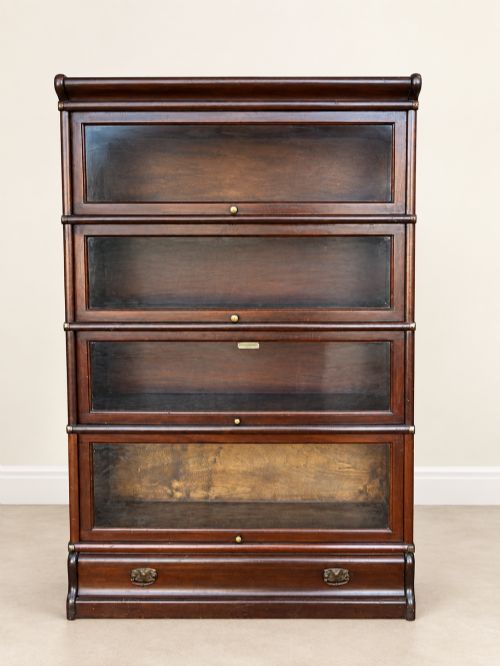
The most frequent pieces on this page are Victorian and Edwardian examples, spanning dual-door library bookcases with glazed tops to inlaid display cabinets and stacking barristers' versions.
Makers such as Wylie and Lochhead occasionally emerge among these listings, offering taller three-door formats with precise architectural glazed framing.
Gradations of execution
Quality rests upon the selection of timber figures, where richly figured mahogany grain elevates a piece beyond plain stock.
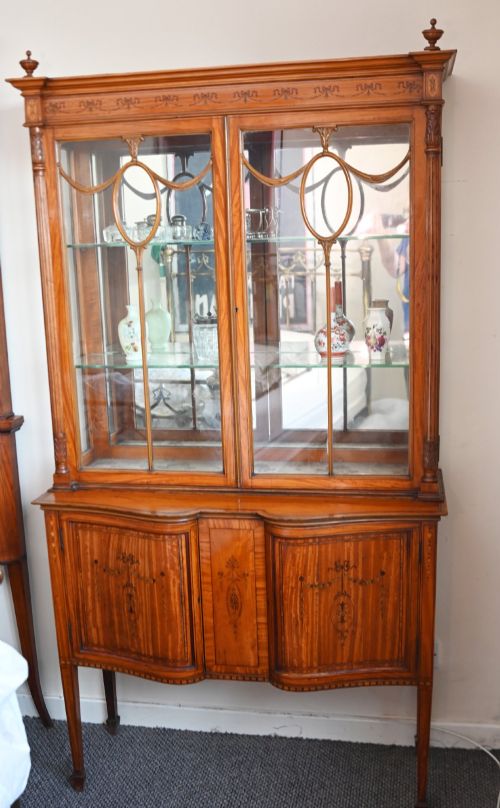
The precision of the glazing bars and the delicacy of any satinwood inlay distinguish standard production from finer cabinet work.
Proportion and scale dictate the presence of a piece, separating straightforward utilitarian storage from architectural library furniture.
Mahogany Glass Door Bookcase Retail Price Guide 2026
Typical asking prices for mahogany glass door bookcase among the pieces listed under this phrase on Sellingantiques today, from the lower quarter to the upper quarter. They describe what is for sale here now, not the wider market.
Bookcases occasionally retain traces of old library paper labels tucked behind timber cornices.
Wylie and Lochhead
The Mahogany Glass Door Bookcase Glossary
- Astragal glazed
- Glass doors divided into smaller panes by narrow wooden bars called astragals. This technique creates a grid pattern typical of Georgian and Victorian bookcase doors.
- Barristers bookcase
- A stacking bookcase featuring glass-fronted tiers that lift and slide inward on a mechanical linkage. These modular units gained popularity in the early twentieth century.
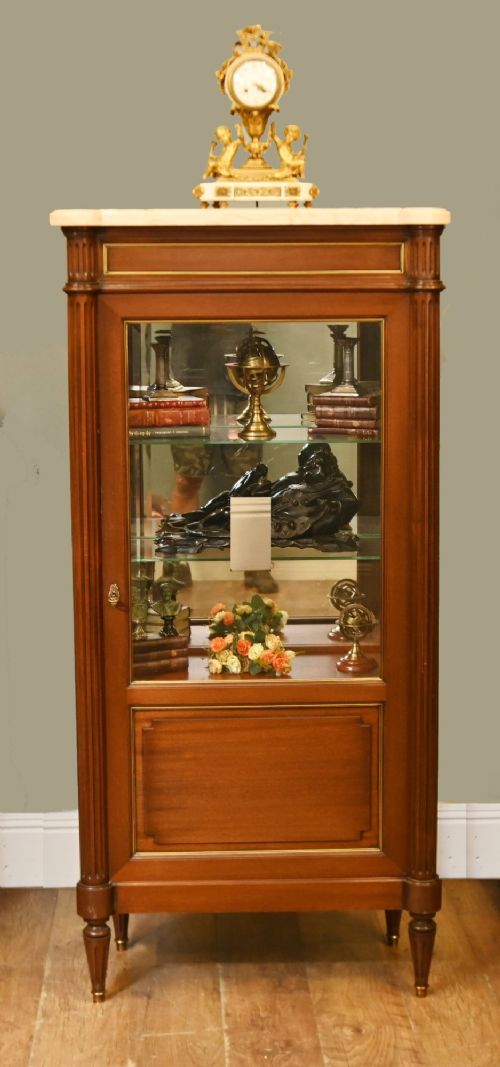
- Vitrine
- A glass-sided display cabinet designed for showing porcelain or ornaments rather than holding heavy books. French Empire and Louis XVI styles often adopt this form.
- Satinwood inlay
- Contrasting blonde wood veneers inserted into recessed channels within the darker mahogany surface. Edwardian makers utilised this method for floral or geometric motifs.
- Side cabinet
- A lower storage unit combining cupboard doors or drawers with glazed display space above or beside the surface. These pieces often feature bow fronts.
Mahogany Glass Door Bookcase: Frequently Asked Questions
How do I clean the glass?
Use a lint-free cloth and a mild glass cleaner applied directly to the cloth rather than the timber frame. Avoid letting moisture sit against the mahogany or the delicate inlay.
Take care around old glazing putty or delicate astragal bars, as historical glass can be thin and fragile.
Can shelves be adjusted?
Many Victorian and Edwardian library pieces feature fixed or peg-supported shelving systems that allow basic height alterations. Stacking versions have fixed tier heights determined by their modular frames.
Check the interior supports before arranging heavier volumes to ensure the timber pegs or metal pins remain secure.
How do I date a piece?
Examine the timber grain, drawer construction, and glazing style to establish the period. Regency and Georgian examples show classical proportions and heavier architectural cornices.
Edwardian and later pieces frequently introduce satinwood inlay or lighter proportions, while Victorian versions often rely on deep figured mahogany and bold astragal glazing.
Where should I place it?
Position your cabinet away from direct sunlight and heat sources to prevent the mahogany from fading or the timber joints from drying out. Stable indoor humidity preserves both the wood and the glass framing.
Allow sufficient clearance for doors to swing fully open, particularly on wider two-door or three-door formats.