

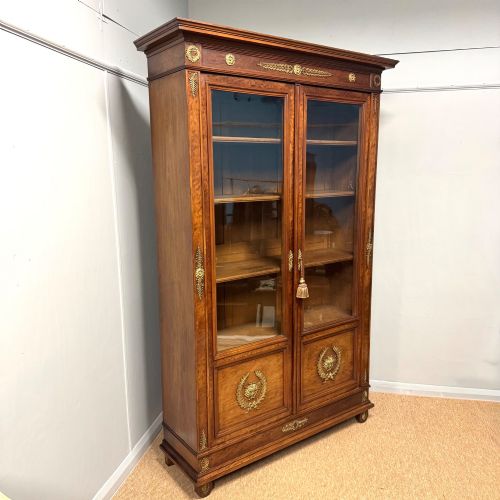
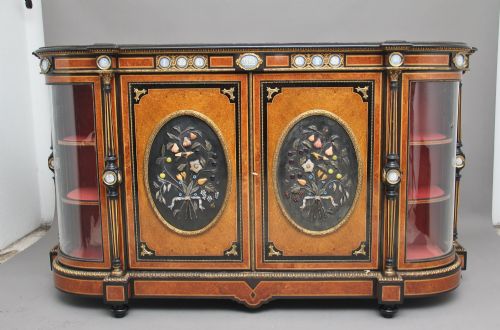
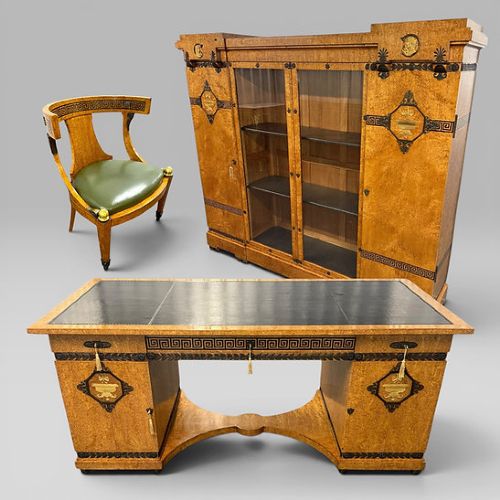

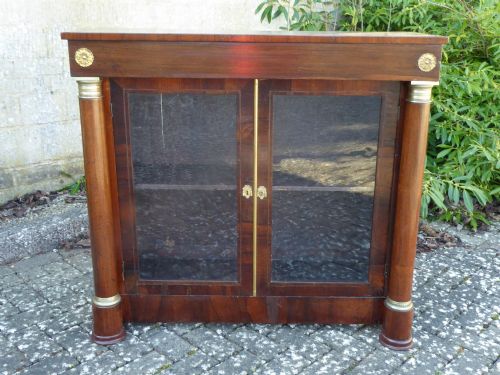
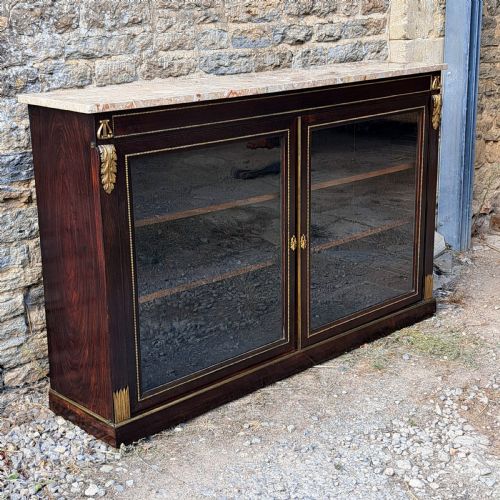
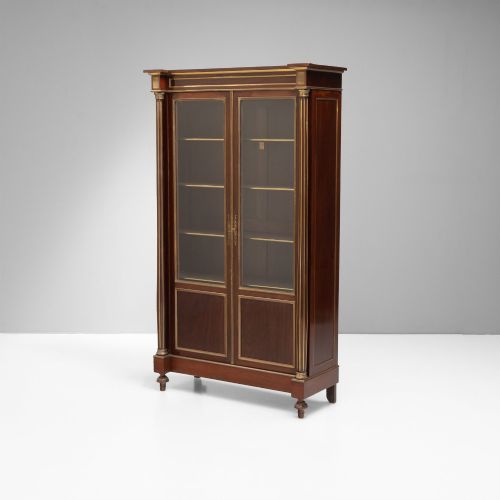
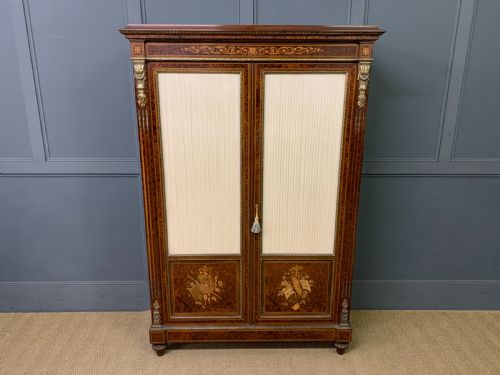


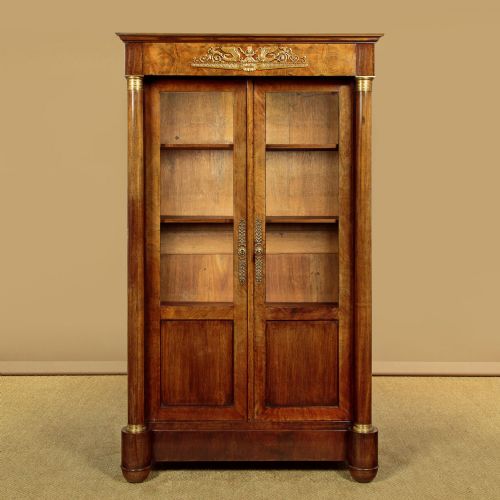


Empire Glazed Display Cabinet
An empire glazed display cabinet offers grand architectural presence and clear glass presentation, bringing formal nineteenth-century display into a modern room.
Empire Glazed Display Cabinet
An empire glazed display cabinet brings together grand nineteenth-century design and practical book or object storage. These pieces combine glazed doors with substantial timber carcasses, originating in periods such as the Georgian, Victorian, and nineteenth-century French eras.
Most examples found here draw on French Empire, Regency, Napoleon III, and Charles X styles. They appear as tall bookcases, vitrines, and cabinets, often incorporating specialised forms like cylindrical pedestals and tea cabinets.
Materials and construction
Makers built these cabinets using dense timbers including mahogany, rosewood, burr maple, and ebonised wood. Carcasses often feature contrasting veneers and rich natural grain patterns, particularly plum pudding mahogany.
Gilt metal, brass, and ormolu mounts provide structural accent and classical detail. Clear glass panels set into timber doors protect the interior while keeping contents fully visible.
Empire Glazed Display Cabinet Retail Price Guide 2026
Typical asking prices for empire glazed display cabinet among the pieces listed under this phrase on Sellingantiques today, from the lower quarter to the upper quarter. They describe what is for sale here now, not the wider market.
The listings on this site span the Georgian, Victorian, and nineteenth-century French periods, featuring mahogany, rosewood, and ormolu.
Quality and execution
Superior examples demonstrate meticulous timber selection and intricate surface decoration, such as boulle marquetry or detailed amboyna inlay. The integration of cast ormolu mounts and giltwood elements distinguishes finer cabinet work from simpler commercial production.
Proportion and scale dictate the visual impact of each piece, ranging from neat Napoleon III formats to very tall nineteenth-century French bookcases. The precision of the joinery and the clarity of the glass reflect the standard of the original workshop.
Mercier Frères
The Empire Glazed Display Cabinet Glossary
- Ormolu
- Gilded bronze mounts applied to furniture for decorative contrast. This technique was widely utilised in French Empire and nineteenth-century cabinet making.
- Boulle marquetry
- An elaborate decoration of tortoiseshell and brass inlay developed in France. It appears on select nineteenth-century bibliotheques.
- Vitrine
- A glass-fronted cabinet designed for displaying fine objects or curiosities. These pieces often feature glazed sides as well as doors.
- Bibliotheque
- A large bookcase or cabinet intended for housing libraries. Many examples include glazed doors to protect valuable bindings.
- Charles X
- A French design period spanning the early nineteenth century. Furniture from this era often highlights warm timbers like burr maple alongside ormolu.
Empire Glazed Display Cabinet: Frequently Asked Questions
How are empire glazed display cabinets best used today?
These cabinets serve well for housing book collections, ceramics, or glass in a principal reception room. The glazed doors keep dust away while displaying contents clearly.
Larger tall bookcases require adequate ceiling height and wall space to balance their substantial visual weight. Neat sized Napoleon III examples fit comfortably into smaller studies or drawing rooms.
How do French Empire and Regency styles differ?
French Empire pieces often incorporate bold ormolu mounts and classical architectural motifs derived from classical antiquity. Regency furniture shares this neoclassical inspiration through British interpretations.
Both styles favor dark cabinet woods and symmetrical proportions. Ormolu mounts on French pieces tend to be particularly prominent.
What distinguishes Napoleon III cabinets?
Napoleon III furniture spans the mid to late nineteenth century, embracing eclectic revivals of earlier French court styles. Ebonised finishes and intricate boulle marquetry are typical of this period.
These pieces range from neat ebonised bookcases to elaborate boulle bibliotheques. The workmanship emphasises surface decoration and contrasting materials.