

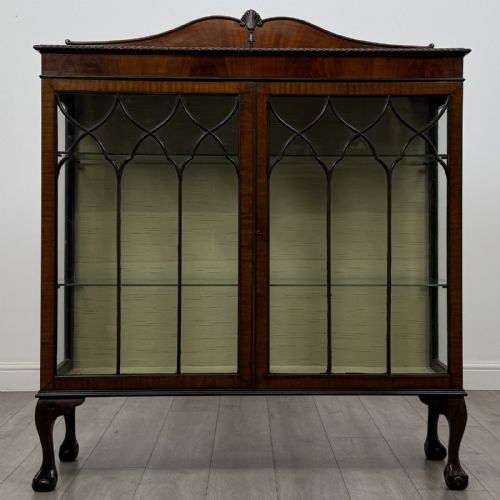
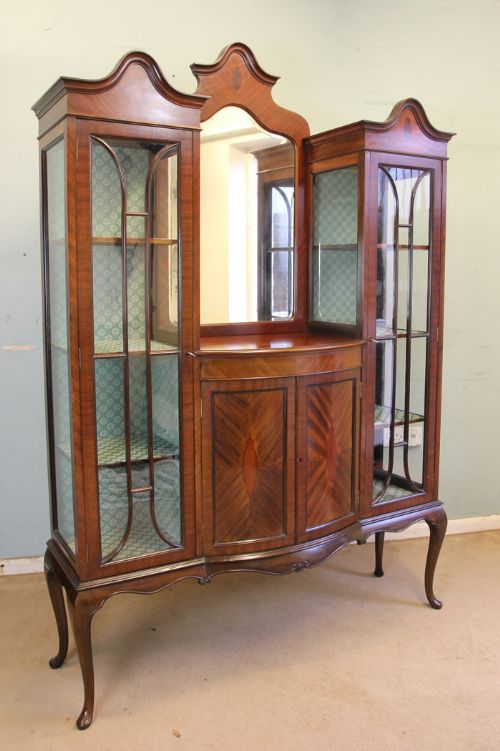
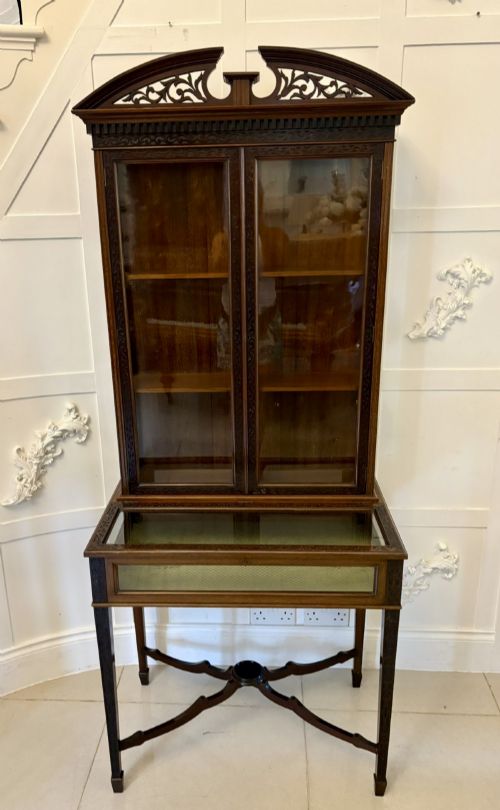
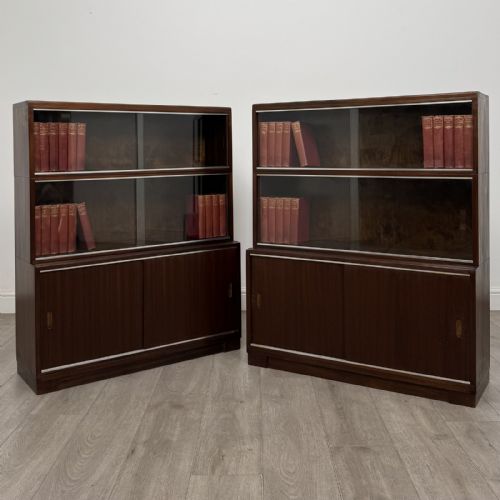
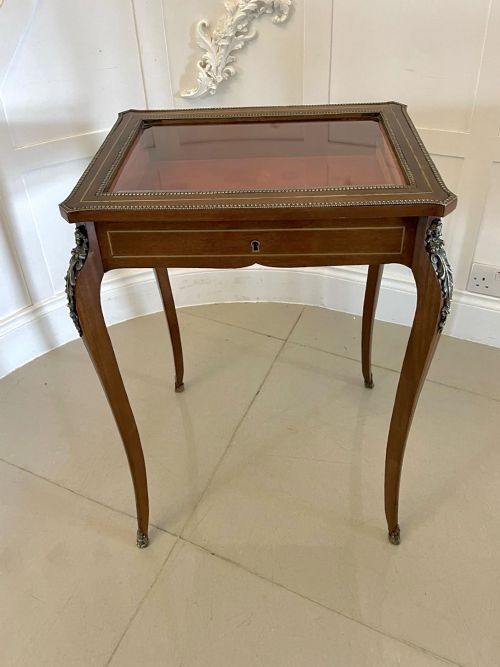
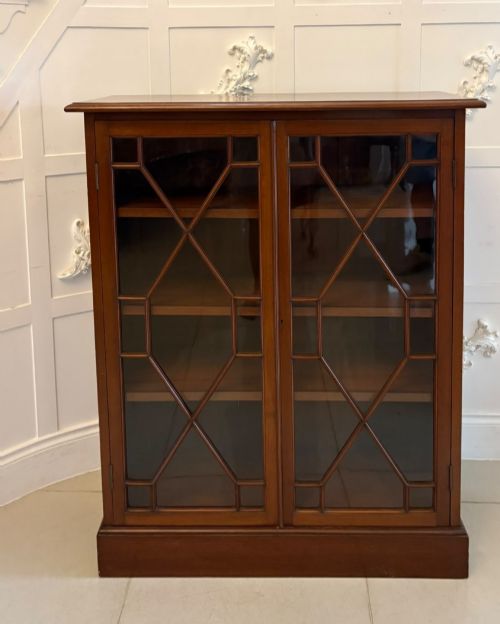
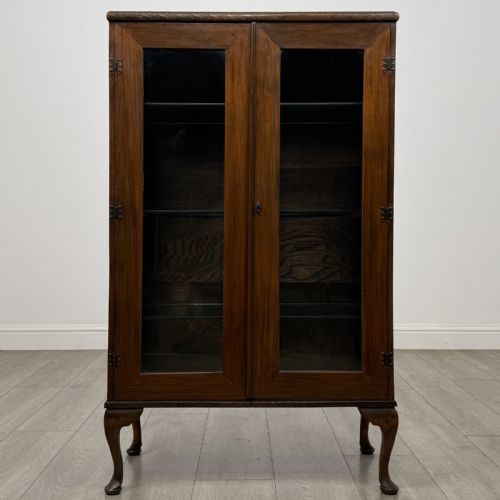
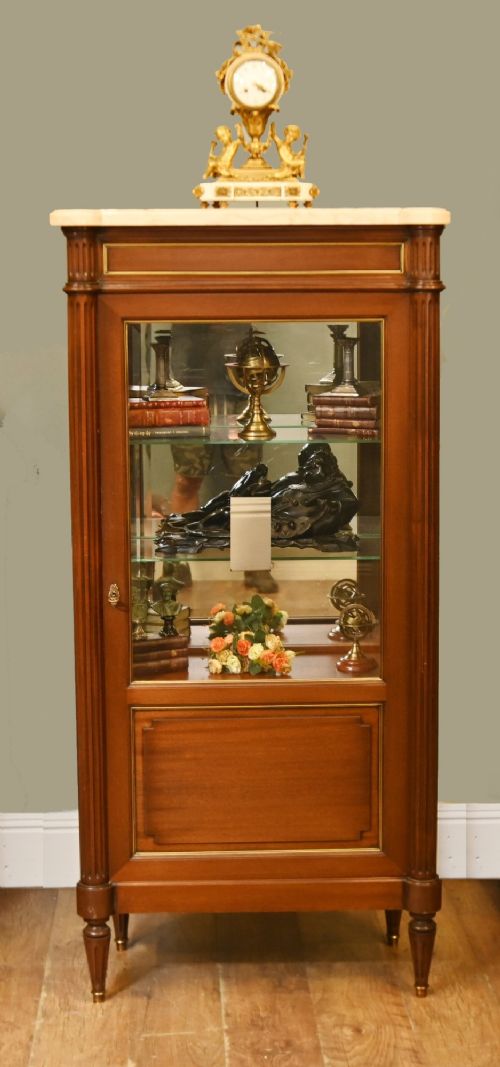
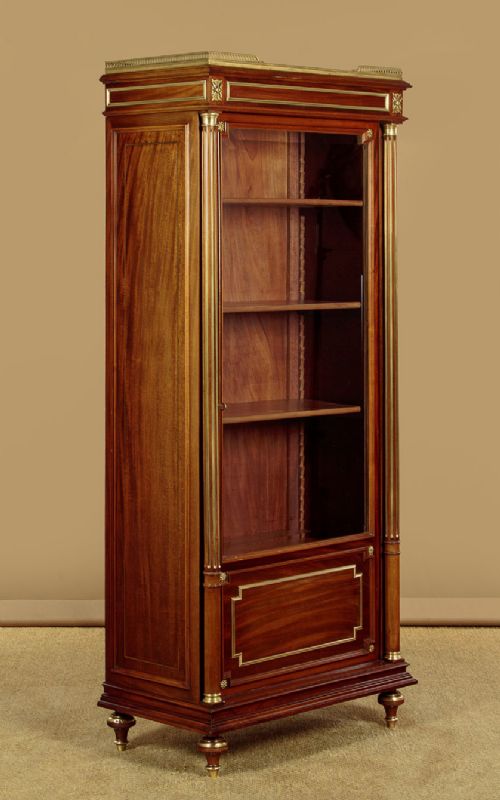

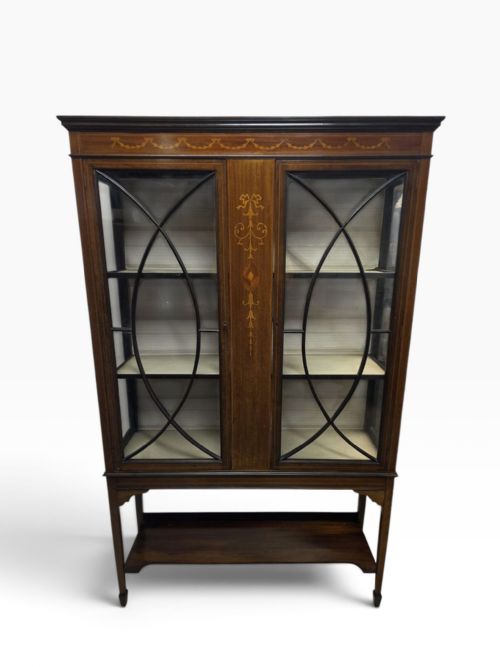
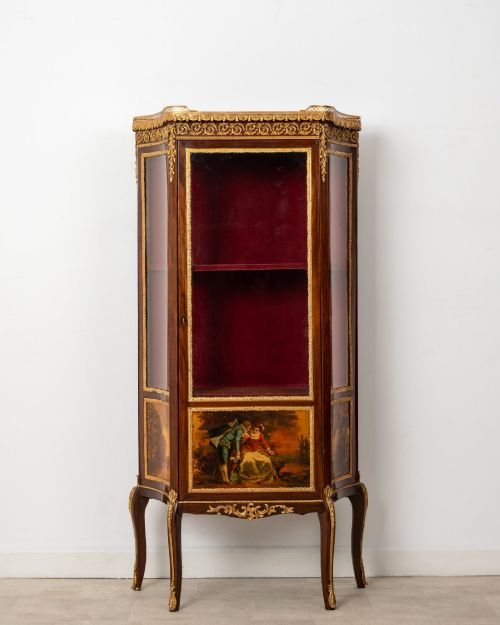
Mahogany Glass Case
A mahogany glass case holds collections safely behind timber and clear panes, bringing order and visibility to a room.
Mahogany Glass Case
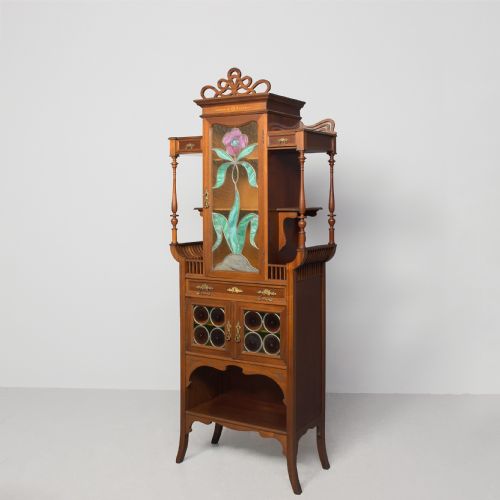
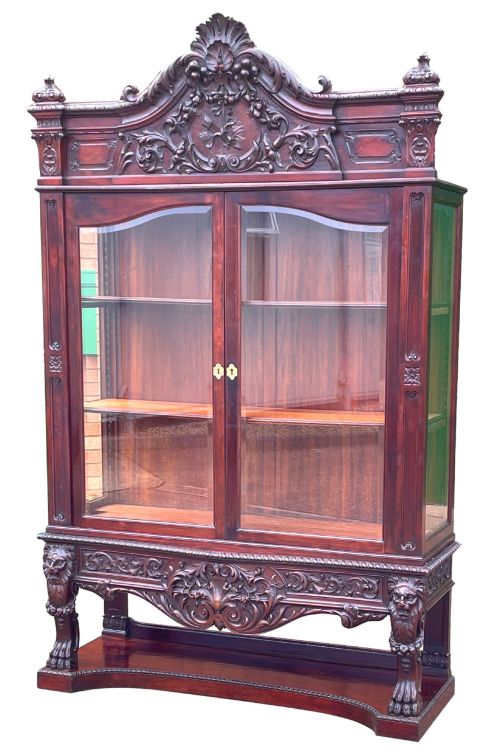
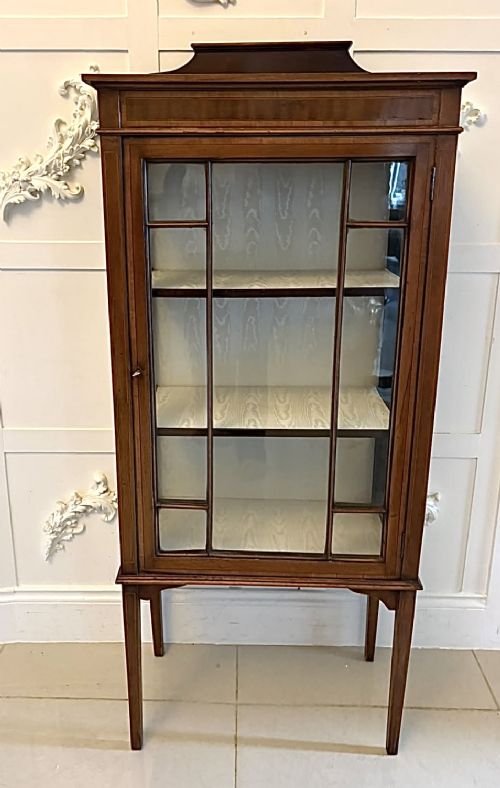
A mahogany glass case serves primarily to exhibit ceramics, books, or small valuables while protecting them from dust. When exploring a mahogany glass case, one encounters forms ranging from tall library bookcases and corner cabinets to low bijouterie tables and shop display counters.
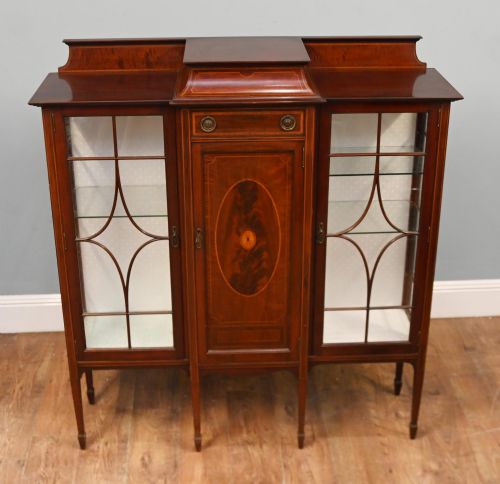
The pieces spanning this selection date predominantly from the Victorian and Edwardian eras, alongside earlier Georgian and Regency examples. Makers utilised distinct regional styles, incorporating French Revival influences and Sheraton Revival inlay alongside British vernacular forms.
Domestic display cabinets and glazed bookcases sit alongside commercial shop fittings such as mechanical dispensing units. Each variant provides transparent panels paired with timber framing to suit different interior settings.
Construction and materials
The primary structure relies on solid mahogany or mahogany veneers applied to secondary timbers, providing a stable frame for large glass panes. Cabinet makers integrated brass mounts, satinwood stringing, and marquetry details to enrich the surface appearance of the timber.
Glazing techniques include sliding glass doors, single hinged glazed panels, and curved bow-front glass held by timber or metal glazing bars. Interior shelving often consists of adjustable glass supported within fabric-lined or mirror-backed compartments.
Mahogany Glass Case Retail Price Guide 2026
Typical asking prices for mahogany glass case among the pieces listed under this phrase on Sellingantiques today, from the lower quarter to the upper quarter. They describe what is for sale here now, not the wider market.
Listings feature mahogany glass cases spanning the Victorian, Edwardian, and Georgian periods alongside commercial shop display fittings.
Assessing craftsmanship and finish
Quality rests in the precision of the timber selection, particularly where symmetrical flame mahogany veneers or intricate satinwood inlay meet the frame. Finer cabinets display carefully fitted brass hardware, hand-cut dovetails on internal drawers, and seamless glazing joints.
The structural integrity of the timber framing dictates durability, ensuring heavy glass doors and loaded shelves operate without sagging. Pieces featuring hand-carved ornamentation, such as claw feet or serpentine shaping, demonstrate superior artisan input compared to plain production models.
F. Sage and Co·Gaupp and Co·Mackenzie·Russell Norwich
The Mahogany Glass Case Glossary
- Bijouterie cabinet
- A glazed display table or cabinet specifically designed for small precious objects, jewellery, and curiosities.
- Vitrine
- A glass-fronted display cabinet used chiefly for porcelain and ornaments, often executed in continental revival styles.
- Globe Wernicke
- A modular stacking bookcase system featuring glazed lifting doors designed to protect volumes.
- Vernis Martin
- A type of simulated Japanese lacquer furniture decoration using translucent varnishes over painted panels.
- Marquetry
- Decorative veneer patterns formed by fitting together thin slices of various coloured woods.
Mahogany Glass Case: Frequently Asked Questions
How do I clean the glass?
Use a lint-free cloth and a mild glass cleaner sprayed onto the cloth rather than directly onto the cabinet. This prevents moisture from seeping into the surrounding mahogany frame or damaging antique mirror backs.
Avoid ammonia-based solutions that can degrade nineteenth-century silvering on internal mirrors or harm aged timber finishes.
Can shelves hold heavy books?
Library bookcases and glazed cabinets with wooden shelves generally support heavy volumes securely. Shop display cabinets and refined Edwardian vitrines typically utilise glass shelving intended for lighter decorative items.
Check whether the internal supports are fixed or adjustable before loading heavier collections.
Where should I place it?
Position the cabinet away from direct sunlight and strong heat sources to prevent the mahogany timber from drying out, fading, or warping. Stable indoor humidity protects both the timber structure and any delicate internal fabric linings.
Ensure the floor is level so that heavy glazed doors hang true and close without catching on the frame.
How do I date the piece?
Examine the construction methods, timber choice, and decorative motifs such as satinwood inlay or brass mounts. Victorian and Edwardian examples often feature machine-sawn elements, whereas Georgian pieces show hand-cut joinery and simpler interior fittings.
Stylistic markers like French Revival curves or Sheraton Revival stringing provide additional clues to the era of manufacture.