


Mahogany Gallery Tray
A mahogany gallery tray brings timeless utility and timber warmth to a room, offering a raised edge to secure glassware or correspondence.
Mahogany Gallery Tray
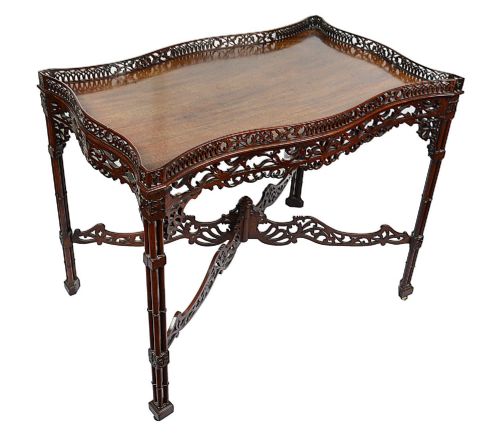
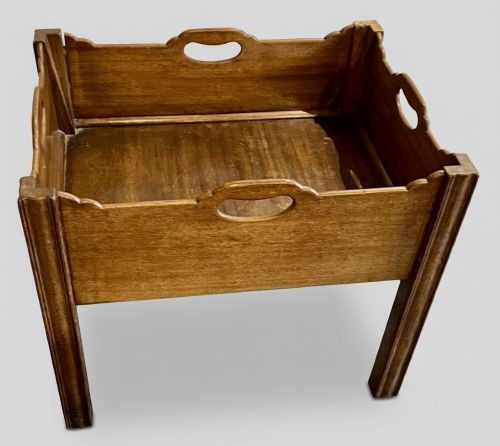
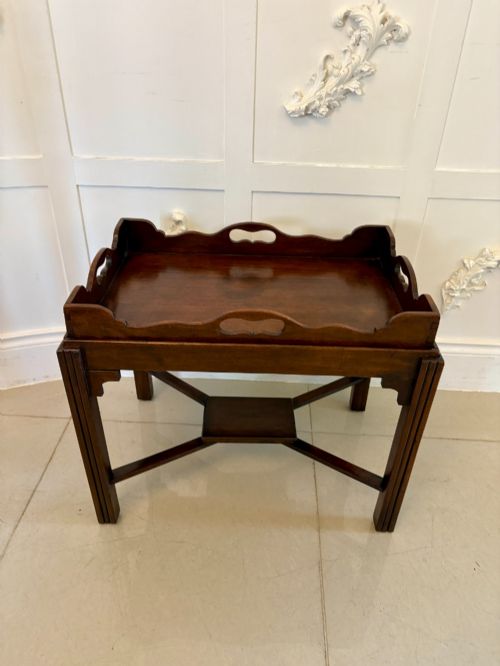
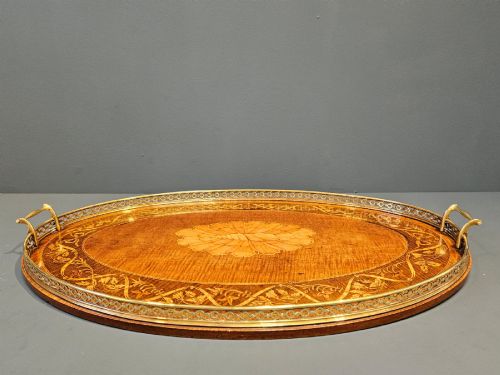
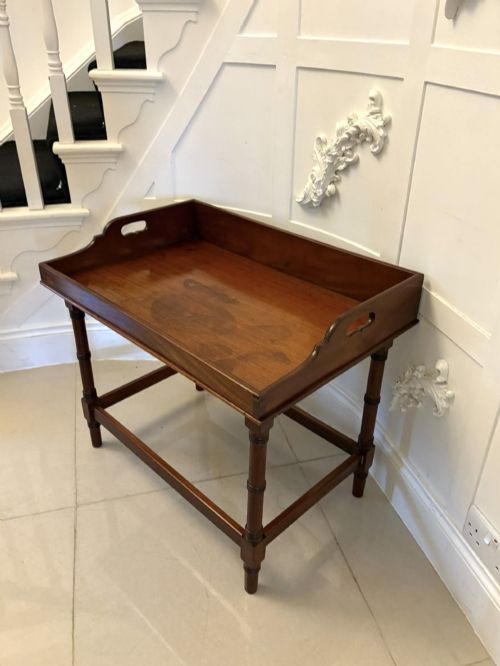
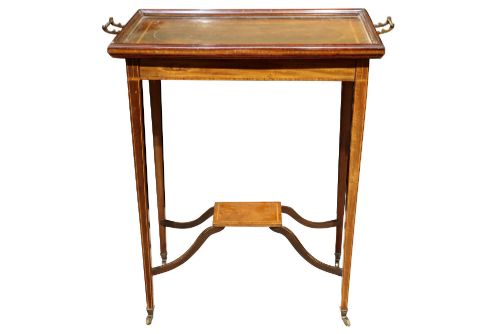
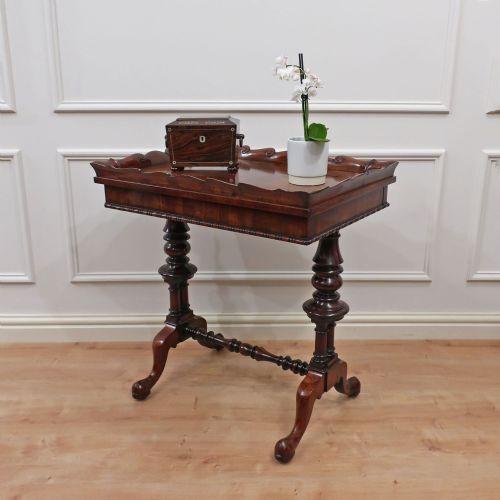
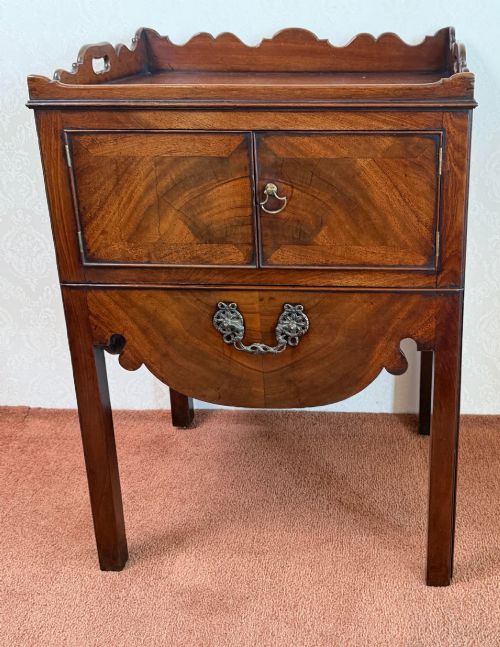
A mahogany gallery tray combines solid timber construction with a distinct raised rim designed to secure glassware, decanters or tea services during transport or display. When hunting for a mahogany gallery tray on this page, you will encounter pieces spanning the Georgian, Victorian and Edwardian eras, presented either as portable serving vessels or fixed atop dedicated stands.
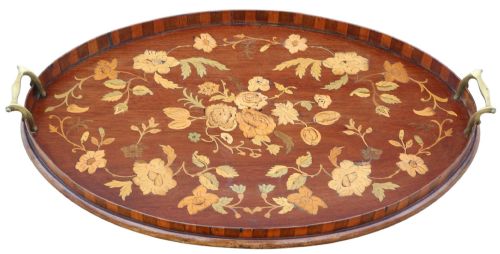
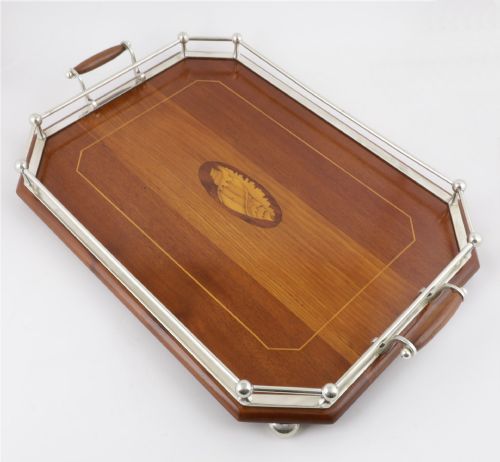
The form ranges from oval and rectangular serving boards to occasional tables and butlers trays outfitted with intricate pierced or solid wooden galleries. Many examples integrate brass handles, silver plate mounts or delicate stringing, reflecting how cabinet makers adapted the fundamental tray design for formal entertaining and domestic service.
How they were made
Makers constructed these pieces using dense mahogany timbers, often selecting figured stock for the base board and contrasting lighter woods like satinwood, boxwood or harewood for inlay work. Galleries were shaped from solid timber or bent around delicate framework, frequently secured with dovetail joints or fine brass pins.
Metal elements such as brass galleries, coopered bands or silver plate mounts were hand-fitted to the wooden frames to provide structural rigidity and decorative contrast. Finishing techniques involved hand-polishing the mahogany surface to achieve a deep lustre that highlights the natural grain.
Mahogany Gallery Tray Retail Price Guide 2026
Typical asking prices for mahogany gallery tray among the pieces listed under this phrase on Sellingantiques today, from the lower quarter to the upper quarter. They describe what is for sale here now, not the wider market.
Some trays hide secret compartments for spare teaspoons.
What varies in quality
The standard of a piece rests heavily on the crispness of the inlay work, the integrity of the timber selection and the precision of the gallery joints. Superior examples display tightly fitted banding, flawless grain matching across the base, and robust structural joinery that withstands the weight of heavy silver or glassware.
Lesser items may show crude repairs, mismatched timber patches or looseness in the gallery uprights where the wood has shrunk or taken knocks over centuries of use. The refinement of the brass mounts and the hand-finished sheen further separate everyday utilitarian items from exceptional cabinet maker output.
Gillows·Shreve and Co
The Mahogany Gallery Tray Glossary
- Inlay
- A decorative technique where pieces of contrasting timber, such as satinwood or boxwood, are inserted into recesses carved into the mahogany base to create geometric or floral patterns.
- Coopered
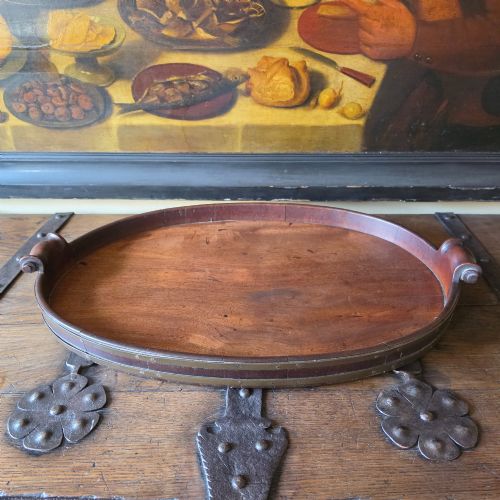
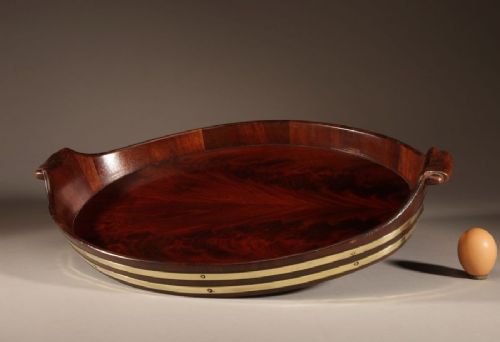
- Constructed using vertical wooden staves fitted together and bound with metal bands, much like a traditional barrel, often seen in cylindrical trays or wine coasters.
- Butler tray
- A portable serving tray featuring hinged or fixed sides, frequently paired with a folding wooden stand to function as an occasional table.
- Flame mahogany
- A highly figured veneer cut from the fork of the mahogany tree, displaying a distinctive flickering flame pattern across the surface.
Mahogany Gallery Tray: Frequently Asked Questions
How were these trays used historically?
These trays served primarily for carrying tea services, wine decanters and calling cards across formal drawing rooms and dining spaces.
Servants used them to clear tables or present refreshments to guests, often placing the tray onto a folding stand to create a temporary serving surface.
Are these trays suitable for daily use?
Antique trays constructed from dense mahogany remain remarkably sturdy and capable of holding everyday items like glassware or books.
Care should be taken with pieces featuring delicate satinwood inlay or antique silver plate to avoid moisture damage and preserve the historic finish.
How do I distinguish Georgian from Edwardian pieces?
Georgian pieces generally exhibit heavier proportions, simpler structural lines and darker, patinated Cuban mahogany without elaborate machine-cut veneers.
Edwardian revivals frequently incorporate lighter satinwood banding, delicate stringing and brighter finishes that reflect the decorative tastes of the early twentieth century.
What is the difference between a tray and a tray table?
A standard tray is a portable serving board designed to be lifted and carried by integrated handles or gallery edges.
A tray table pairs that same raised surface with a dedicated wooden stand, transforming the portable vessel into a fixed piece of occasional furniture.