
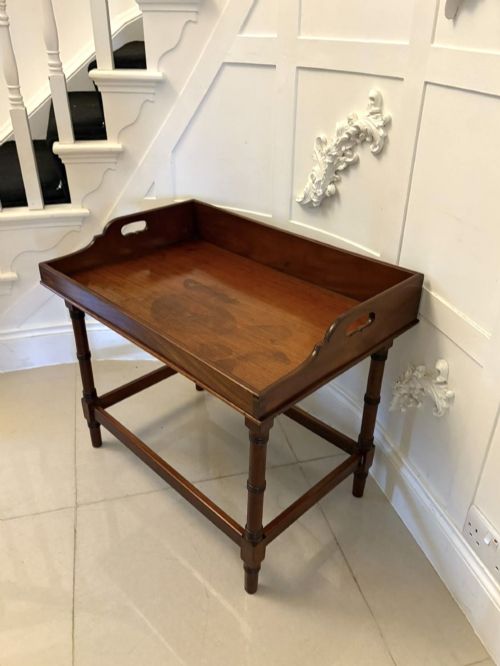

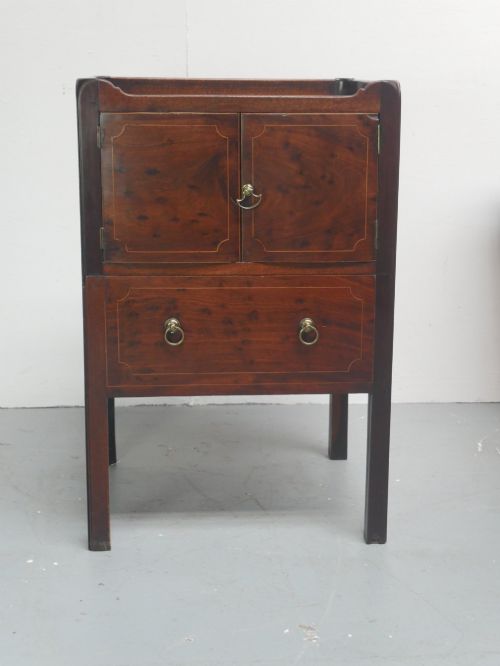
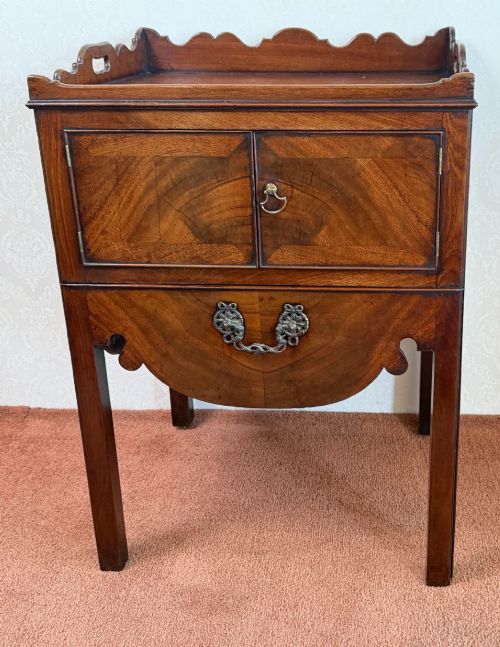
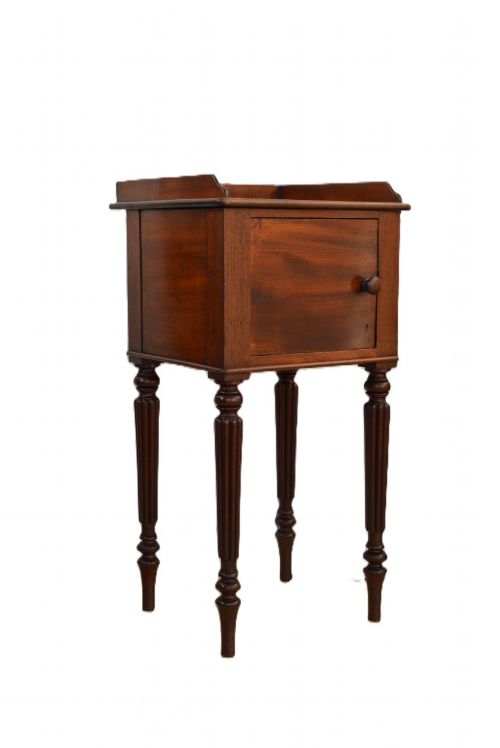

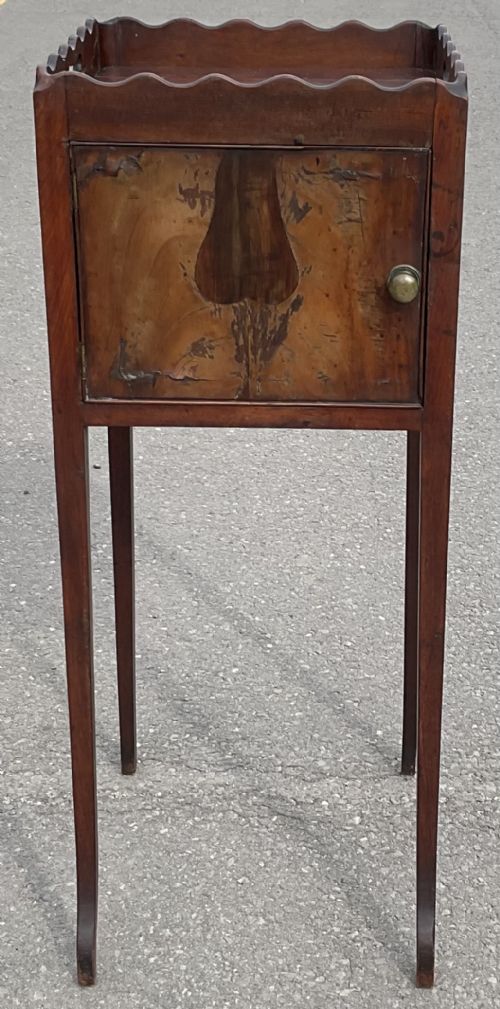


Mahogany Gallery Top Nightstand
A mahogany gallery top nightstand brings practical bedside storage together with refined timber work.
Mahogany Gallery Top Nightstand
When searching for a mahogany gallery top nightstand, buyers encounter functional bedside furniture designed to hold evening essentials securely atop raised borders. These items trace their origins from the 18th century and Georgian periods through the Victorian and Edwardian eras, appearing in forms such as tray top lamp tables, pot cupboards, and bedside commodes.
The pieces most frequently met on this page combine sturdy mahogany timbers with enclosed lower cabinets or open shelves. Examples range from simple George III designs to ornate French revival models featuring brass mounts, marble tops, or satinwood details.
Construction and materials
Cabinetmakers utilised dense mahogany as the primary timber, often selecting stock with rich grain patterns for visible surfaces. Secondary woods provided structural stability inside drawers and carcases.
Makers shaped raised gallery borders around the table tops using solid timber or joined framing to contain items. Decorative elements like boxwood inlay, ormolu mounts, and brass handles were applied to enhance the overall finish.
Current listings span the 18th century through the Edwardian period, uniting mahogany with brass, marble, and boxwood inlay.
Distinctions in craftsmanship
Superior examples display precise joinery in the drawer linings and carcase construction, ensuring the timber moves naturally over centuries without splitting. The crispness of carved details or the alignment of boxwood inlay indicates the maker's level of skill.
The quality of the mahogany timber itself, selected for depth of colour and grain movement, separates standard production from exceptional work. Original hardware and intact gallery rails preserve the integrity of the piece.
Gillows·Holland & Sons
The Mahogany Gallery Top Nightstand Glossary
- Gallery top
- A raised wooden or metal rim surrounding the upper surface of a table to prevent items from rolling off. This feature defines many bedside commodes and lamp tables.
- Pot cupboard
- A small enclosed bedside cabinet historically designed to house a chamber pot. These pieces usually feature a door above a lower compartment.
- Commode
- A low cabinet or chest with doors or drawers, often used beside a bed in period interiors. The term covers various enclosed bedside storage forms.
- Ormolu
- Gilded bronze mounts applied to furniture for decorative effect. This technique appears frequently on French Empire and revival pieces.
- Satinwood
- A pale, lustrous timber utilised for contrasting inlay and banding on mahogany furniture. Cabinetmakers employed it to create geometric borders and decorative panels.
Mahogany Gallery Top Nightstand: Frequently Asked Questions
What is a gallery top?
A gallery top incorporates a raised wooden or metal rim around the perimeter of the upper surface. This protective border keeps lamps and personal items secure.
Craftsmen integrated these rails directly into the table construction or attached them separately. They appear frequently on Georgian and 19th-century bedside tables.
How were these cabinets used?
Bedside cabinets provided private storage for night-time necessities in period bedchambers. The enclosed lower section kept items out of sight.
Top surfaces held candlesticks, pocket watches, and reading material before electric lighting became common. Some designs included pull-out slides for extra workspace.
How do I date a piece?
Dating relies on observing construction methods, timber choice, and stylistic details. Georgian pieces typically show hand-cut dovetails and simpler structural framing.
Victorian and Edwardian examples often introduce machine-sawn elements and different revival styles like Chippendale or Louis XVI. Hardware styles also shift across these decades.
Are French and English styles different?
French nightstands and commodes often incorporate Ormolu mounts, marble tops, and curved kidney bean shapes. These reflect Louis XVI and Empire design influences.
English equivalents focus on straight lines, figured mahogany grain, and subtle boxwood inlay. Both traditions served similar bedside functions with distinct aesthetic priorities.