


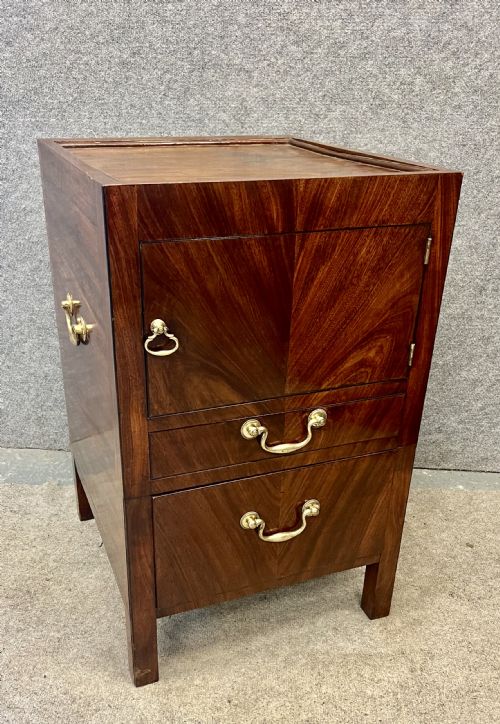

Rich Mahogany Bedside Cabinet
A rich mahogany bedside cabinet brings warmth and practical storage to a room, offering timeless timber and dependable craftsmanship.
Rich Mahogany Bedside Cabinet
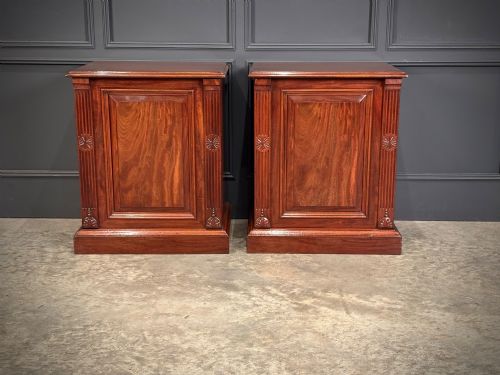
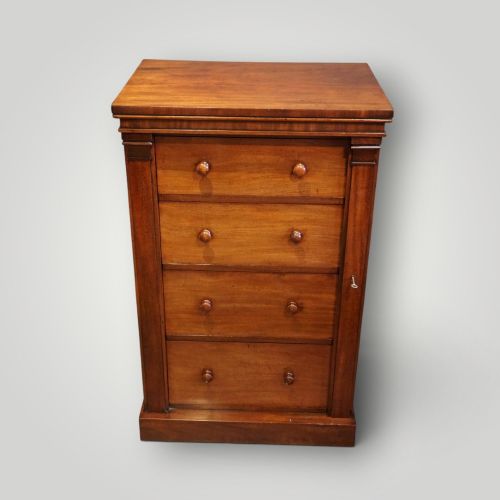
When you search for a rich mahogany bedside cabinet, you are looking at small timber storage pieces designed for the bedroom, predominantly originating from the Georgian, Victorian, and Edwardian eras. These items include compact bedside cupboards, nightstands, and small pedestal cabinets built to sit neatly beside a bed.
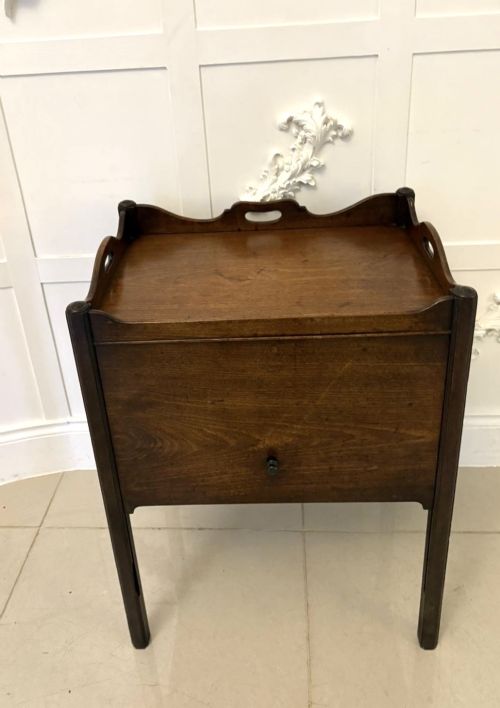
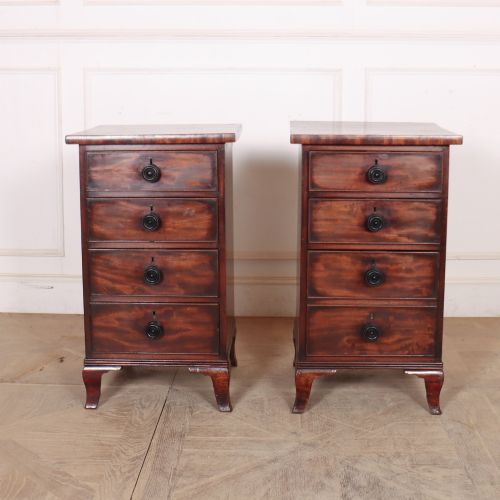
The versions you are most likely to meet on this page span the eighteenth and nineteenth centuries, taking forms such as George III bedside cupboards, Victorian pedestal units, and occasional pairs of nineteenth century tables. They utilise the deep reddish-brown tones of mahogany, sometimes enhanced with satinwood or fitted with brass hardware.
How they were made
Cabinet makers constructed these pieces using solid mahogany and mahogany veneers over secondary timbers, often applying brass handles, hinges, or gallery rails to doors and drawers. Workshops shaped the timber into rectangular and oval pedestal forms, utilising traditional joinery methods suited to domestic furniture of the period.
Surface treatments included polished finishes that highlighted the grain and colour of the mahogany. Some examples incorporated contrasting stringing or inlay in satinwood, particularly those produced during the Edwardian period.
Many nineteenth-century bedside cabinets were cleverly designed to hide chamber pots behind neatly panelled doors, keeping early morning realities strictly private.
What varies in quality
Quality in these cabinets is determined by the selection of timber and the crispness of the joinery rather than mere age. Pieces featuring well-figured mahogany timber and fine internal drawer construction stand apart from simpler utilitarian examples.
The refinement of the proportions and the originality of the brass fittings also separate standard items from superior specimens. Matched pairs command greater interest due to the difficulty of sourcing identical antique bed cabinets.
The Rich Mahogany Bedside Cabinet Glossary
- Mahogany
- A durable tropical hardwood known for its deep reddish-brown colour and fine grain. It served as the primary material for high-quality case furniture through the eighteenth and nineteenth centuries.
- Pedestal cupboard
- A single-door cabinet built on a vertical pedestal base. These enclosed units provided discreet storage for chamber pots or personal items beside the bed.
- George III
- The stylistic period spanning the reign of George III from 1760 to 1820. Furniture from this era is characterised by classical restraint and elegant proportions.
- Biedermeier
- A Central European design style from the first half of the nineteenth century. It focused on clean lines and utilitariar comfort while displaying the natural beauty of wood veneers.
Rich Mahogany Bedside Cabinet: Frequently Asked Questions
How do I date a mahogany cabinet?
Dating relies on examining the construction methods, timber choice, and prevailing style of the piece. Georgian items often display slender proportions and classical bracket feet, whereas Victorian pieces tend to be heavier and more robust.
Looking at the secondary timbers inside drawers and the type of fixings used also helps establish the period of manufacture.
Are pairs of cabinets common?
Original pairs of antique bedside cabinets are less common than single pieces because most were made individually or separated over centuries. Finding a matching pair from the nineteenth century is unusual and highly desirable for balanced bedroom placement.
Makers occasionally produced matched sets, but many pairs consist of pieces brought together later for symmetry.
What is satinwood inlay?
Satinwood inlay involves setting thin strips or decorative motifs of light-coloured satinwood into the darker mahogany surface. This technique created visual contrast and was favoured in late nineteenth and Edwardian furniture.
Cabinet makers used it sparingly to highlight drawer fronts, borders, and panel edges.