



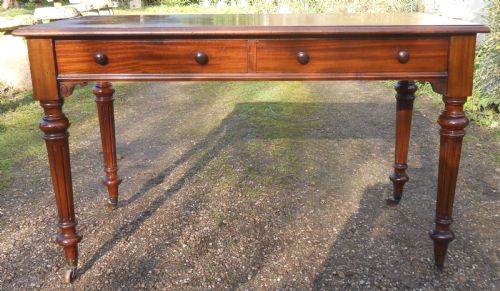


Mahogany Frieze Drawer Desk
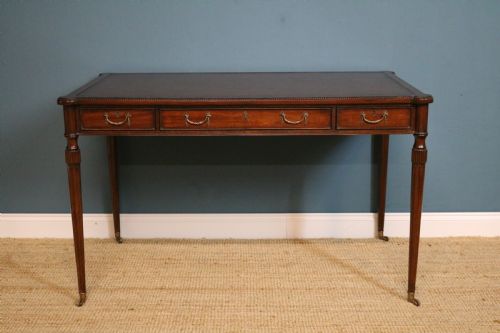
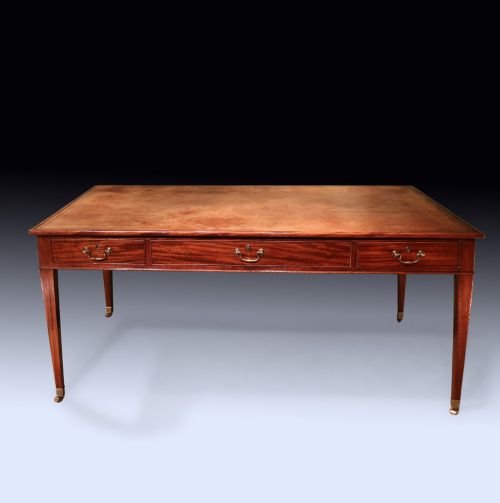
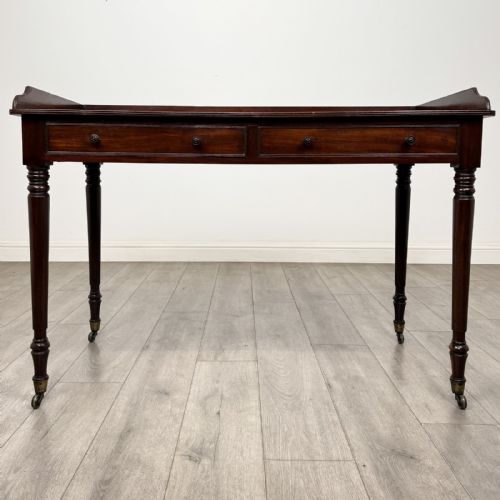
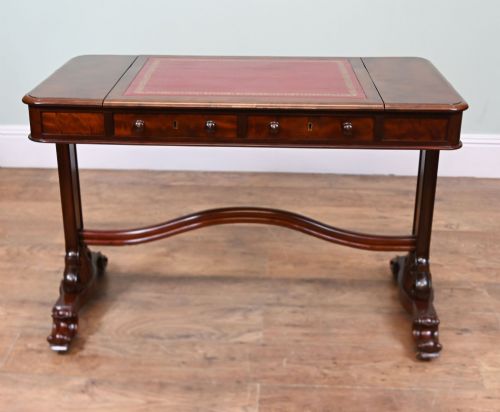
A mahogany frieze drawer desk brings functional timber craftsmanship and classic writing surfaces into your study or library.
Mahogany Frieze Drawer Desk
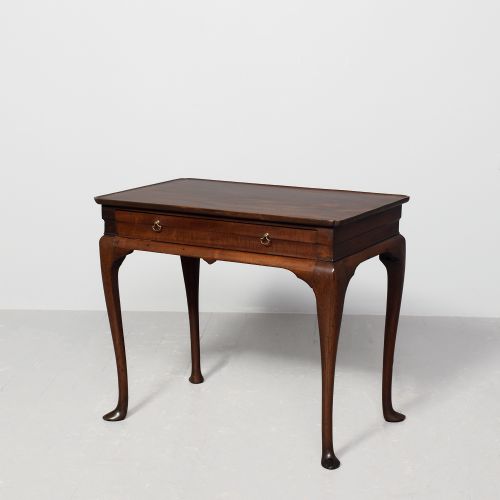
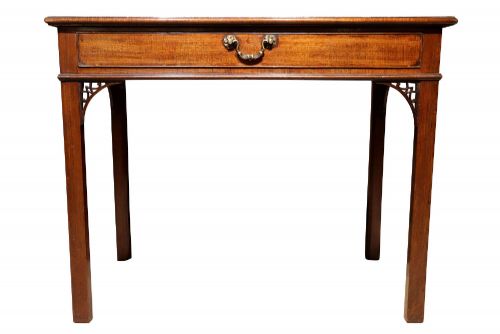
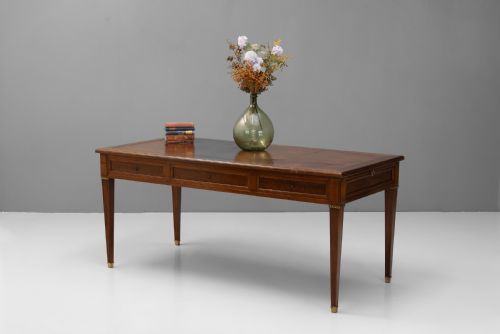
A mahogany frieze drawer desk combines practical workspace with integrated storage set directly beneath the writing surface. These pieces emerge from 18th Century, 19th Century, Regency, Victorian, and Edwardian periods, reflecting the shifting domestic tastes of British homes.
You will encounter various forms across this inventory, including side tables, library tables, sofa tables, and traditional writing tables. Many incorporate brass hardware, leather writing inserts, and subtle satinwood stringing to accent the rich mahogany grain.
The construction spans formal Georgian elegance, austere William IV proportions, and later revival movements like Queen Anne Revival. Buyers typically find sturdy freestanding examples designed to anchor the centre of a room rather than sit flush against a wall.
Materials and construction methods
Cabinet makers relied primarily on dense mahogany timber for carcases and drawer fronts, often selecting figured veneers for crossbanding on the top surfaces. Secondary woods provided structural stability inside the frieze compartments while the exterior displayed polished grain.
Brass handles, escutcheons, and occasional castors added functional hardware detail to the heavy wooden frames. Writing surfaces were frequently inset with tooled leather panels to provide a durable working plane.
Mahogany Frieze Drawer Desk Retail Price Guide 2026
Typical asking prices for mahogany frieze drawer desk among the pieces listed under this phrase on Sellingantiques today, from the lower quarter to the upper quarter. They describe what is for sale here now, not the wider market.
Some drum tables spin like giant wooden coins while you search for a misplaced fountain pen.
Differentiating quality across pieces
The division between standard workshop production and superior cabinet making rests in the selection of timber figures and the precision of drawer construction. Finer examples display continuous grain matching across the frieze and meticulous dovetailing inside the drawer boxes.
Hardware integrity and secondary wood selection reveal much about original manufacturing standards. Superior pieces retain matching period brass handles and smooth-running drawers that indicate careful initial assembly.
Whytock & Reid·W. Priest·Gillows of Lancaster
The Mahogany Frieze Drawer Desk Glossary
- Frieze
- The architectural band immediately below the top surface of a table or desk which houses the concealed drawers.
- Crossbanding
- A border of veneer laid with the grain running perpendicular to the main surface timber to frame the desk top.
- Lowboy
- A small low dressing table or side table featuring one or more rows of drawers in the frieze.
- Drum table
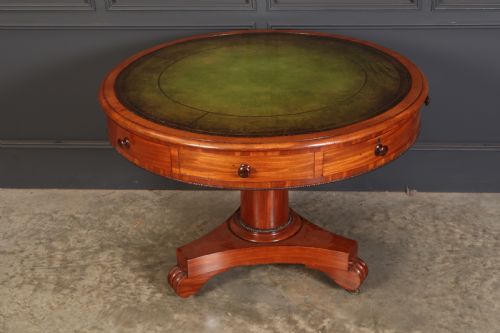
- A circular library table with a deep frieze containing alternating real and dummy drawers revolving on a central pillar.
- Sofa table
- An oblong occasional table fitted with drop leaves at either end and twin frieze drawers.
Mahogany Frieze Drawer Desk: Frequently Asked Questions
What is a frieze drawer?
A frieze drawer is a shallow compartment built directly beneath the top surface of a desk or table.
These drawers sit within the structural rail of the furniture piece and are designed to hold paper, ink, and writing implements without disturbing the clean lines of the design.
How do I care for leather desk tops?
Leather inserts require gentle cleaning with a slightly damp cloth followed by a suitable leather balsam.
Avoid using harsh chemical polishes on the hide, and protect the surface from direct sunlight to prevent drying and cracking over time.
Are these desks suitable for daily work?
These tables and desks were originally built for heavy administrative or literary use in studies and libraries.
Modern laptop or paper use fits comfortably on the generous writing planes, provided you respect the antique timber and leather surfaces during daily tasks.
How do I distinguish Regency from Victorian examples?
Regency desks typically display restrained classical restraint, clean linear proportions, and architectural brass mounts influenced by ancient Greek and Roman forms.
Victorian pieces often introduce heavier proportions, bolder turning on the legs, and darker finishes that reflect mid-nineteenth century manufacturing expansion.